
빠른 제작과 다양한 마감 옵션을 제공하는 박물관 품질의 지클레이 또는 캔버스 프린트. ( 손으로 그린 그림 구매 이미지 구매)





























작품의 원본 비율을 유지하는 미리 설정된 크기 중에서 선택하세요.

특정 프레임이나 공간에 맞춰 직접 치수를 입력하실 수 있습니다. 선택하신 사이즈가 원본 이미지의 비율과 일치하지 않을 경우, 작품을 크롭(자르기)하거나 이미지를 대칭 또는 단색 채우기로 확장하여 제작합니다. 제작 시작 전, 최종 확인을 위해 디지털 목업이 전송됩니다.
화면상의 미리보기는 실제 크롭이나 확장 상태를 반영하지 않으므로, 최종 구도는 오직 목업을 통해서만 정확하게 확인하실 수 있습니다.
맞춤 사이즈 제작도 가능하지만, 원본 비율을 유지하기 위해서는 사전 정의된 목록에서 치수를 선택하시는 것을 권장합니다.

Young Acrobat on a Ball
복제본 크기
Pablo Picasso's "Young Acrobat on a Ball," painted in 1905, isn’t merely a depiction of a circus performer; it’s a radical declaration of artistic intent. Created during his pivotal Rose Period, the painting embodies the burgeoning spirit of Cubism – a movement that would irrevocably alter the course of modern art. The image captures a fleeting moment, a young girl poised on a precarious ball, her body fractured and reassembled before our eyes in a dance of geometric shapes. It’s a work brimming with dynamism, hinting at both the physical exertion of the acrobat and the intellectual challenge posed by Picasso's revolutionary approach to representation.
The painting immediately draws the viewer into its fragmented world. Picasso abandons traditional perspective, presenting multiple viewpoints simultaneously. The girl isn’t simply standing; she’s viewed from above, from below, even seemingly dissolving into a collection of planes and angles. This deliberate distortion forces us to actively engage with the artwork, reconstructing the image in our minds as we observe its intricate details. Notice how the curves of her body are broken down into sharp triangles and rectangles – a key characteristic of Cubism’s analytical phase. The muted palette—primarily ochres, browns, and grays—further enhances the sense of depth and spatial ambiguity, creating an atmosphere that is both intimate and unsettling.
Understanding “Young Acrobat on a Ball” requires placing it within the context of Picasso’s Rose Period. Following a period of intense personal grief – the loss of his sister, Elena – Picasso sought solace in depicting circus performers and other marginalized figures. These subjects, often associated with poverty and hardship, offered him a way to explore themes of vulnerability, mortality, and the transient nature of beauty. The acrobat, despite her youthful appearance, embodies this underlying melancholy; she’s caught in a moment of precarious balance, suggesting a fragility that transcends mere physical skill.
The use of warmer tones during this period – hence “Rose” – is significant. These colors contrast with the cooler hues of the background, drawing attention to the central figure and intensifying her emotional presence. The geometric shapes themselves aren’t simply abstract; they subtly evoke the forms of the human body, hinting at a deeper connection between the physical and the symbolic.
“Young Acrobat on a Ball” is a cornerstone in the development of Cubism. Picasso wasn’t interested in faithfully reproducing reality; he sought to represent it through a process of intellectual analysis and reconstruction. He dissected objects into their fundamental geometric components – circles, squares, triangles – and then reassembled them on the canvas according to his own logic. This approach challenged the established conventions of Western art, which had long prioritized realistic representation. The painting’s power lies in its ability to simultaneously depict a tangible subject and an abstract concept: the very nature of perception itself.
Consider the background – a deliberately ambiguous space composed of overlapping planes and geometric shapes. It's not merely decorative; it actively participates in the deconstruction of reality, mirroring the fragmentation of the figure within. The absence of clear spatial relationships forces us to question our assumptions about depth, perspective, and the way we perceive the world around us.
“Young Acrobat on a Ball” is more than just a beautiful painting; it’s a pivotal moment in art history. It demonstrated that art could be both intellectually stimulating and emotionally resonant, paving the way for subsequent movements like Futurism and Constructivism. Picasso's innovative use of form, color, and perspective continues to inspire artists today. Reproductions of this iconic work offer a unique opportunity to experience firsthand the genius of one of history’s most influential figures – a testament to the enduring power of Cubist vision.

1881 - 1973 , 스페인

파블로 피카소의 시대를 초월하는 25개의 걸작을 만나보세요. 입체주의부터 꿈까지, 각 작품에 담긴 예술과 영감을 TopImpressionists에서 감상하세요. 고품질 유화와 판화를 소장하고 특별한 공간을 완성해보세요! 지금 바로 TopImpressionists.com에서 컬렉션을 탐험하세요.
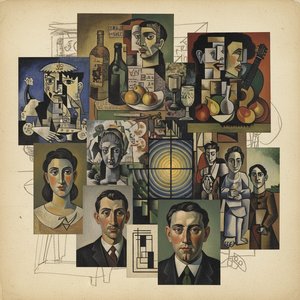
Explore 10 Cubist masterpieces by Picasso, Braque & more! Delve into the history of this revolutionary art movement. Find museum-quality reproductions and elevate your home decor with TopImpressionists. Discover all masterpieces on TopImpressionists.com

피카소, 브라크의 큐비즘 걸작 10선! 혁신적인 예술 세계를 만나보세요. 각 작품의 숨겨진 이야기와 감동을 TopImpressionists에서 경험하고, 당신의 공간에 특별한 예술적 영감을 더하세요. 지금 바로 TopImpressionists.com에서 모든 명작을 발견해보세요!

Explore 10 Cubist masterpieces by Picasso, Braque & more! Discover the stories behind these revolutionary paintings and their impact on modern art. Find museum-quality reproductions for your home at TopImpressionists.com – where art comes to life.

Explore the revolutionary world of Cubism. Discover how masters Pablo Picasso and Georges Braque dismantled reality through geometric abstraction to redefine modern art history.


최신 미술 뉴스, 특별 혜택 및 인테리어 아이디어를 가장 먼저 만나보세요.
프로젝트에 대해 알려주시면 저희 미술 전문가들이 맞춤형 아트 제안 3가지를 전달해 드립니다.
당신만을 위한 맞춤형 옵션 3가지를 무료로 추천해 드립니다!


 미리보기
미리보기
 공유하기
공유하기 공유하기
공유하기
 상세 정보
상세 정보

 다운로드
다운로드
 유사 작품
유사 작품 X-레이
X-레이 슬라이드 쇼

 더 보기
더 보기









 유리 옵션은 110cm 미만 크기에서만 선택 가능합니다.


