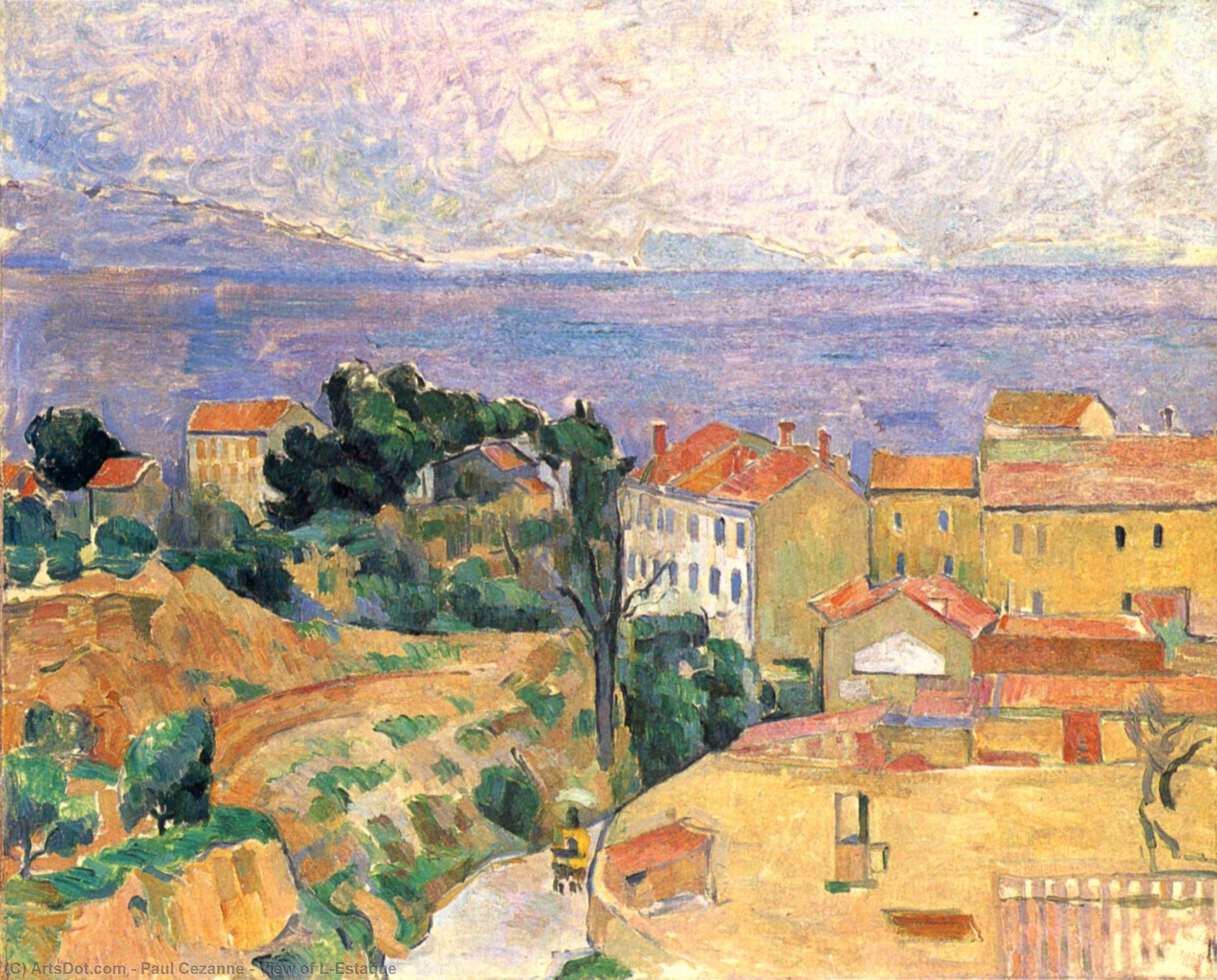
View of L'Estaque
Paul Cézanne’s
View of L'Estaque, created in 1883, stands as a cornerstone of Post-Impressionism and Cézanne’s singular contribution to the artistic landscape of his era. Measuring 60 x 73 cm and executed in oil on canvas, this painting transcends mere representation; it embodies Cézanne's revolutionary approach to capturing visual experience—a method that would profoundly influence subsequent movements like Cubism.
Contextual Background
The Impressionist movement championed fleeting moments of light and color, prioritizing sensory perception over meticulous detail. Cézanne reacted against this aesthetic preoccupation, arguing for a deeper engagement with the underlying structure of nature. He sought to depict not what the eye sees but what it remembers—a conviction that propelled him toward exploring geometric forms and tonal variations as expressive tools. This pivotal shift marks Cézanne’s role as a bridge between Impressionism's luminous idealism and Cubism’s fragmented perspectives, establishing him as an innovator who fundamentally reshaped artistic conventions.
Artistic Innovations
View of L'Estaque exemplifies Cézanne’s distinctive technique—characterized by repetitive brushstrokes that build up to form complex planes of color and texture. Unlike Impressionists who blended pigments to achieve atmospheric effects, Cézanne employed short, broken strokes to delineate contours and suggest volume. This method deliberately departs from traditional perspective, prioritizing spatial relationships over accurate depiction. The hillside town depicted in L’Estaque—houses clustered together, a winding street, and figures engaged in daily life—is rendered with meticulous attention to tonal gradations and subtle color harmonies. Cézanne's masterful use of color contributes significantly to the painting's mood, conveying both warmth and serenity.
Artistic Legacy
Initially met with skepticism from critics who deemed Cézanne’s style “primitive” and “unfinished,” L’Estaque garnered recognition from fellow artists like Camille Pissarro and Ambroise Vollard, who championed his vision early on. Henri Matisse and Pablo Picasso famously acknowledged Cézanne as "the father of us all," recognizing his indelible influence on their artistic development—particularly the emergence of Cubism's geometric schemas and simplified color palettes. Cézanne’s pioneering spirit paved the way for groundbreaking explorations in abstraction, securing his place as a monumental figure in modern art history.
Paul Cézanne: View of L'Estaque and
Vincent Van Gogh: Pine Trees in Front of the Wall of the Asylum on TopImpressionists. To delve deeper into the Post-Impressionist movement and its influence, refer to
Post-Impressionism Art Movement Introduction and
Paul Cézanne on Wikipedia.


 프린트 구매하기
 공유하기
공유하기 공유하기
공유하기
 상세 정보
상세 정보

 다운로드
다운로드
 유사 작품
유사 작품 X-레이
X-레이 슬라이드 쇼


 더 보기
더 보기






































 유리 옵션은 110cm 미만 크기에서만 선택 가능합니다.



