


 실제 크기로 보기
 보내기
보내기 공유하기
공유하기
 상세 보기
상세 보기 가이드 보기

 이미지 다운로드
 유사 작품 더 보기
 X-레이
X-레이 슬라이드 쇼 보기
 통계 정보
통계 정보Still Life


 상세 보기
상세 보기
핸드메이드 유화 복제화
작가가 직접 캔버스에 손으로 그린 유화 작품으로, 원하는 크기와 액자로 맞춤 제작해 드립니다. ( 프린트 판매로 전환 디지털 이미지 판매 채널로 전환)




P118B ₩10

P118H ₩10

P118W ₩10

P438Z ₩10

P508JH ₩12

P508YH ₩12

P805H ₩10

P805Z ₩10

P919BZ ₩10

P919G ₩10

P919XJ ₩10

P959ZH ₩10

P968JZ ₩12

W106C ₩8

W218G ₩10

W218JH ₩8

W218Y ₩10

W307PJ ₩10

W316G ₩10

W316PJ ₩8

W316Y ₩10

W398PJ ₩8

W4111J ₩10

W500HY ₩15

W500JH ₩15

W692G ₩12

W849H ₩8

W940BG ₩15

W953PJ ₩8




표준 규격
맞춤 제작
CM
INCH
작품의 원본 비율을 그대로 유지하는 프리셋 사이즈 중에서 선택해 보세요.
Loading sizes...

가로 너비
높이
액자나 벽면 크기에 맞춰 필요한 가로와 세로 길이를 입력해 주세요. 본 작품은 수작업으로 제작되므로, 요청하신 비율에 따라 작가가 그림의 가장자리를 조금 더 넓게 그리거나 일부를 조정하여 작업할 수 있습니다. 작업 시작 전, 최종 확인을 위해 디지털 목업 이미지를 보내드립니다. 이 페이지에 표시된 이미지는 실제 결과물과 다를 수 있으며, 오직 목업 이미지만이 정확한 결과물을 보여줍니다.
변경 가능한 예시: 얼굴을 고객님의 사진으로 교체, 반려동물 추가(예: 고양이를 강아지로 변경), 배경에 숨겨진 메시지 삽입, 배경 풍경 또는 요소 변경 등
주문 완료 후 TopImpressionists.com 팀에서 상세 안내를 위해 고객님께 이메일을 보내드리며, 미리보기 시안을 함께 제공해 드립니다.
주문 완료 후 TopImpressionists.com 팀에서 상세 안내를 위해 고객님께 이메일을 보내드리며, 미리보기 시안을 함께 제공해 드립니다.


 유리 옵션은 110cm 미만 크기에서만 선택 가능합니다.

Still Life
재현 매체
복제본 규격
-


총 결제 금액
₩ 364339
Paul Cézanne’s Still Life: A Bridge Between Worlds
Paul Cézanne's "Still Life," painted around 1879, isn’t merely a depiction of objects arranged on a table; it’s a profound exploration of form, space, and the very nature of seeing. This work, often considered a pivotal moment in Cézanne’s artistic evolution, represents a deliberate departure from the prevailing Impressionist techniques while simultaneously building upon their foundations. It's a painting that invites prolonged contemplation, revealing layers of complexity beneath its seemingly simple arrangement of a metal bucket, ceramic bowl, apples, and bottles.
Cézanne’s early influences—Romanticism with its emphasis on emotional intensity and Realism with its commitment to accurate representation—are subtly present. However, he quickly moved beyond these styles, embarking on a rigorous investigation into the underlying structure of his subjects. He meticulously studied the way light interacts with form, how objects appear to exist in three-dimensional space, and how these perceptions can be translated onto a two-dimensional canvas. This pursuit led him to develop a unique pictorial language characterized by flattened planes, broken brushstrokes, and an almost sculptural quality to his compositions.
Composition and the Illusion of Depth
The arrangement within "Still Life" is deceptively straightforward. A prominent metal bucket anchors the scene, its cylindrical form dominating the central space. Around it, a ceramic bowl holds two apples, their rounded shapes contrasting with the angularity of the bucket. Three bottles—one on the left, one on the right, and one partially obscured behind the other—add further layers of visual interest. Yet, Cézanne doesn’t simply present these objects as they appear; he actively manipulates perspective and form to create an illusion of depth. The table itself is rendered with a subtle recession, drawing the eye into the painting's space.
Notice how Cézanne avoids traditional linear perspective. Instead, he employs overlapping planes and variations in color and tone to suggest spatial relationships. The apples, for instance, are not depicted as sharply defined spheres but rather as slightly flattened forms with subtle gradations of light and shadow. This technique, combined with his broken brushstrokes—short, choppy marks that build up to create texture and volume—creates a sense of dynamism and movement within the still life.
Post-Impressionist Innovation and Artistic Legacy
“Still Life” is a cornerstone of Post-Impressionism, a movement characterized by its rejection of Impressionism’s fleeting effects of light and color in favor of more subjective and expressive approaches. Cézanne's work paved the way for Cubism, with its fragmented forms and multiple perspectives, demonstrating a willingness to challenge traditional notions of representation. His emphasis on geometric structure and his exploration of form as an independent entity profoundly influenced artists like Picasso and Braque.
Initially, Cézanne’s radical approach was met with skepticism and ridicule by contemporary critics who found his work “unintelligible” and “ugly.” However, figures like Camille Pissarro and Ambroise Vollard recognized the significance of his innovations and championed his art. In 1895, Vollard organized a solo exhibition in Paris that brought Cézanne to wider recognition, solidifying his place as a pivotal figure in modern art. His legacy continues to resonate today, reminding us of the power of observation, experimentation, and a willingness to break with convention.
A Masterpiece for Reproduction
TopImpressionists offers meticulously hand-painted reproductions of Paul Cézanne’s “Still Life,” capturing the essence of this iconic work in stunning detail. Our artists replicate Cézanne's distinctive brushwork, rich colors, and nuanced use of light with exceptional skill. Whether you seek a vibrant addition to your art collection or a unique piece for your interior design scheme, our reproductions provide an authentic representation of this groundbreaking masterpiece. Explore the full range of sizes and canvas options available on TopImpressionists.com, and delve deeper into Cézanne’s life and work through the provided links for further research.
Further Resources:
- Paul Cézanne: Peaches, Pears and Grapes
- Paul Cézanne: Still Life with Milk Can and Apples
- Paul Cézanne: Still life with open drawer
- Paul Cézanne: Dish of Apples
Additional Information:
- Artist: Paul Cézanne
- Birth Year: 1839
- Death Year: 1906
- Birth City: Aix-en-Provence
- Birth Country: France
Learn More:
질의응답
"Still Life"에서 매체와 움직임은 어떻게 결합되어 있나요?
세잔의 "Still Life"은 Acrylic On Canvas 기법과 Post-Impressionism 양식을 결합한 작품입니다. 기법과 양식은 작품의 제작 방식과 스타일을 설명합니다.
세잔의 "Still Life"의 주요 색상은 무엇인가요?
세잔의 "Still Life"의 주요 색상은 Espresso (#564738)입니다.
세잔의 "Still Life"은 어떤 소재와 분위기를 결합하고 있나요?
"Still Life"은(는) still life, apples, bucket, ceramics, cézanne, composition, post-impressionism을(를) 보여주며, 기록된 분위기는 Calm입니다.
관련 작품들


작가 소개
폴 세잔: 자연의 구조를 탐구한 혁신의 선구자
폴 세잔은 1839년 에이즈-프랑스 프로방스에서 태어나 인상주의의 순간적인 감각을 넘어 입체주의의 파편화된 형태로 이어지는 예술계에 지대한 영향을 미친 거장입니다. 그의 여정은 즉각적인 찬사를 받는 것이 아니라, 자기 의심과 비판적 무시로 점철된 예술 탐구의 느린 연소였으며, 결국 현대 미술의 흐름을 영원히 바꾸어 놓을 유산을 남겼습니다. 그의 아버지는 처음에는 모자 장인이었지만 나중에는 은행가가 되어 번영한 가정에서 태어난 세잔은 야심 찬 예술가에게는 드문 재정적 안정을 누렸고, 상업적 성공의 즉각적인 압박 없이 자신의 열정에 헌신할 수 있는 자유를 누렸습니다. 처음에는 아버지의 야망에 따라 법학을 전공하도록 유도되었지만, 예술적 표현의 힘은 너무나 강렬하여 결국 법학을 포기하고 그림을 그리는 길을 선택했습니다. 이는 그의 삶을 정의하는 결정이었습니다. 초기에는 젊은 시절 널리 퍼져 있던 낭만주의와 바비종파 화가들의 풍경에 대한 헌신 등 다양한 영향들을 받았지만, 폴 고갱과 조르주 세라티 같은 예술가들과의 만남을 통해 그들의 혁신적인 색채와 형태 접근 방식을 접하면서 자신만의 독특한 길을 개척하기 시작했습니다.어둠에서 구조로: 스타일 진화
세잔의 초기 작품은 종종 유진 들라크루아의 영향을 받은 낭만주의 회화의 특징인 극적이고 감정적으로 격앙된 주제를 반영하며, 어두운 팔레트와 표현적인 붓놀림이 그의 캔버스를 지배했습니다. 그러나 이 초기 단계는 훨씬 더 분석적이고 혁신적인 접근 방식으로 나아가기 위한 단순한 발판에 불과했습니다. 인상주의자들이 선호하는 빛의 순간적인 감각을 단순히 포착하는 데 만족하지 못한 세잔은 사물의 근본적인 구조를 이해하고 표현하려는 탐구를 시작했습니다. 그는 자신이 보는 것이 아니라, 현실을 구성하는 기본적인 형태가 어떻게 인식되는지를 알고 싶어 했습니다. 이러한 갈망은 자연의 모양을 기하학적 등가물로 분해하게 되었고, 이는 수십 년 후 입체주의 혁명을 예견했습니다. 그의 기술은 복잡한 색채와 질감을 구축하기 위해 세심하게 겹쳐진 작은 반복적인 붓놀림으로 특징지어지며, 이전에는 회화에서 볼 수 없었던 견고함과 깊이를 만들어냈습니다. 그는 환상적인 공간에 관심이 없었으며, 대신 전통적인 관점에 도전하고 그의 구성의 구축된 본성을 적극적으로 참여하도록 강요하는 동시에 여러 관점에서 객체를 제시했습니다. 이러한 의도적인 왜곡은 임의적이지 않았지만, 시간의 단일한 순간을 나타내는 것이 아니라 인식의 종합인 형태에 대한 보다 완전한 이해를 전달하려는 시도였습니다.풍경, 정물, 인체: 주요 작품과 반복되는 모티프
세잔의 작품 세계는 놀라울 정도로 다양하며 풍경, 정물, 초상화, 그리고 수영하는 사람들의 묘사를 포괄하지만, 모든 작품은 그의 독특한 형태와 색채 접근 방식으로 통일되어 있습니다. 1880년에 그려진 <자스 드 부팡 연못>은 그의 풍경 작업을 보여주며, 형태와 음색의 신중한 배열을 통해 자연의 본질을 포착하는 그의 능력을 보여줍니다. 1866년에 제작된 <에밀 졸라 초상화>는 그의 발달하는 스타일을 드러내고 가까운 친구이자 동료 작가인 에밀 졸라의 지적인 강렬함에 대한 설득력 있는 통찰력을 제공합니다. 사과와 다른 과일을 특징으로 하는 정물은 단순히 물체의 표현이 아니라 부피, 빛, 공간 관계 탐구입니다. <몽 생트 빅투아르> 시리즈는 세잔에게 집착이었으며, 수십 년 동안 형태와 관점을 끊임없이 조사할 수 있게 해준 반복적인 모티프였습니다. 이러한 그림들은 산의 묘사가 아닌 깊이, 부피 및 빛과 그림자의 상호 작용에 대한 연구입니다. 마지막으로, 유토피아 풍경 속에 있는 누드 인물을 묘사한 <수영하는 사람> 시리즈는 인체 탐구와 자연과의 연결을 나타내며 종종 시대를 초월하고 조용한 사색의 감각이 스며 있습니다.혁신으로 단련된 유산: 현대 미술에 대한 세잔의 영향
폴 세잔의 후대 예술가들에게 미치는 영향은 측정할 수 없을 정도입니다. 그는 20세기 주요 예술 운동의 길을 열어 그의 선구적인 기여로 인해 "현대 미술의 아버지"로 널리 알려져 있습니다. 파블로 피카소와 조르주 브라크는 세잔의 기하학적 형태와 다중 관점에 대한 강조에 깊이 의존했으며, 이는 입체주의의 핵심 원칙이 되었습니다. 그의 대담한 색채 사용은 앙리 마티스를 비롯한 야수파 운동에도 영감을 주어 자연스럽지 않은 생생한 색조를 포용했습니다. 심지어 초현실주의자 예술가들도 세잔의 주관적인 인식과 심리적 깊이에 대한 탐구에서 공감대를 찾았습니다. 특정 운동을 넘어, 세잔은 전통적인 학문적 제약을 거부하고 자신의 개인적인 비전을 강조하면서 수많은 화가가 새로운 표현 방식을 탐색할 수 있도록 해방했습니다. 그는 현실의 모방이라는 정의 자체를 도전하며, 기본 구조와 주관적인 인식에 기반한 시각적 경험을 구축하는 데 초점을 맞추어 미술사의 새로운 시대가 시작되었습니다. 1906년 그의 죽음은 끝이 아니라 시작 – 그의 혁신적인 비전으로 인해 깊이 형성된 현대 미술사 한 페이지의 여명이었다.
세잔
1839 - 1906 , 프랑스
작가 정보 요약
- 국적: 프랑스
- 대표작:
- 자스 드 부팡 연못
- 에밀 졸라 초상
- 숲
- 생트 빅투아르 산 시리즈
- 목욕하는 사람들
- 사망일: 1906년 10월 22일
- 영향을 받은 예술 사조:
- 입체주의
- 야수파
- 초현실주의
- 영향을 준 예술가:
- 낭만주의
- 바비종파
- 폴 고갱
- 조르주 세라
- 미켈란젤로
- 루벤스
- 피에르 푸제
- 예술 사조: 후기 인상주의
- 전체 이름: 폴 세잔
- 출생일: 1839년 1월 19일
- 출생지: 에이구스탱-프로방스, 프랑스
관련 기사
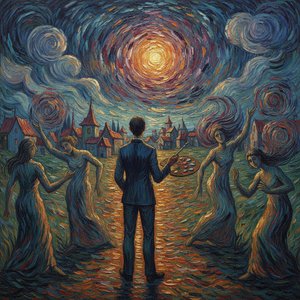
Beyond the Light: Capturing Emotion Through the Expressive Soul of Post-Impressionism
Explore the profound emotional depth of Post-Impressionism. Discover how masters like Van Gogh and Cézanne moved beyond light to capture raw feeling through color and texture. A journey into art history for the true connoisseur.

Beyond the Light: Discovering the Soul and Emotional Depth of Post-Impressionism
Embark on a cultural journey through Post-Impressionism. Discover the profound emotional depth of masters like Van Gogh and Cézanne, exploring how they moved beyond light to capture the very soul of human experience through vibrant color and symbolic form.
테마, 스타일, 특징별로 큐레이션된 작품들을 만나보세요.


