
 Oil On CanvasWallArtNeoclassical Revival
 181219th Century
 270.0 x 450.0 cm
 퀴리날레 궁전
빠른 제작과 다양한 마감 옵션을 제공하는 박물관 품질의 지클레이 또는 캔버스 프린트. ( 손으로 그린 그림 구매 이미지 구매)





























작품의 원본 비율을 유지하는 미리 설정된 크기 중에서 선택하세요.

특정 프레임이나 공간에 맞춰 직접 치수를 입력하실 수 있습니다. 선택하신 사이즈가 원본 이미지의 비율과 일치하지 않을 경우, 작품을 크롭(자르기)하거나 이미지를 대칭 또는 단색 채우기로 확장하여 제작합니다. 제작 시작 전, 최종 확인을 위해 디지털 목업이 전송됩니다.
화면상의 미리보기는 실제 크롭이나 확장 상태를 반영하지 않으므로, 최종 구도는 오직 목업을 통해서만 정확하게 확인하실 수 있습니다.
맞춤 사이즈 제작도 가능하지만, 원본 비율을 유지하기 위해서는 사전 정의된 목록에서 치수를 선택하시는 것을 권장합니다.

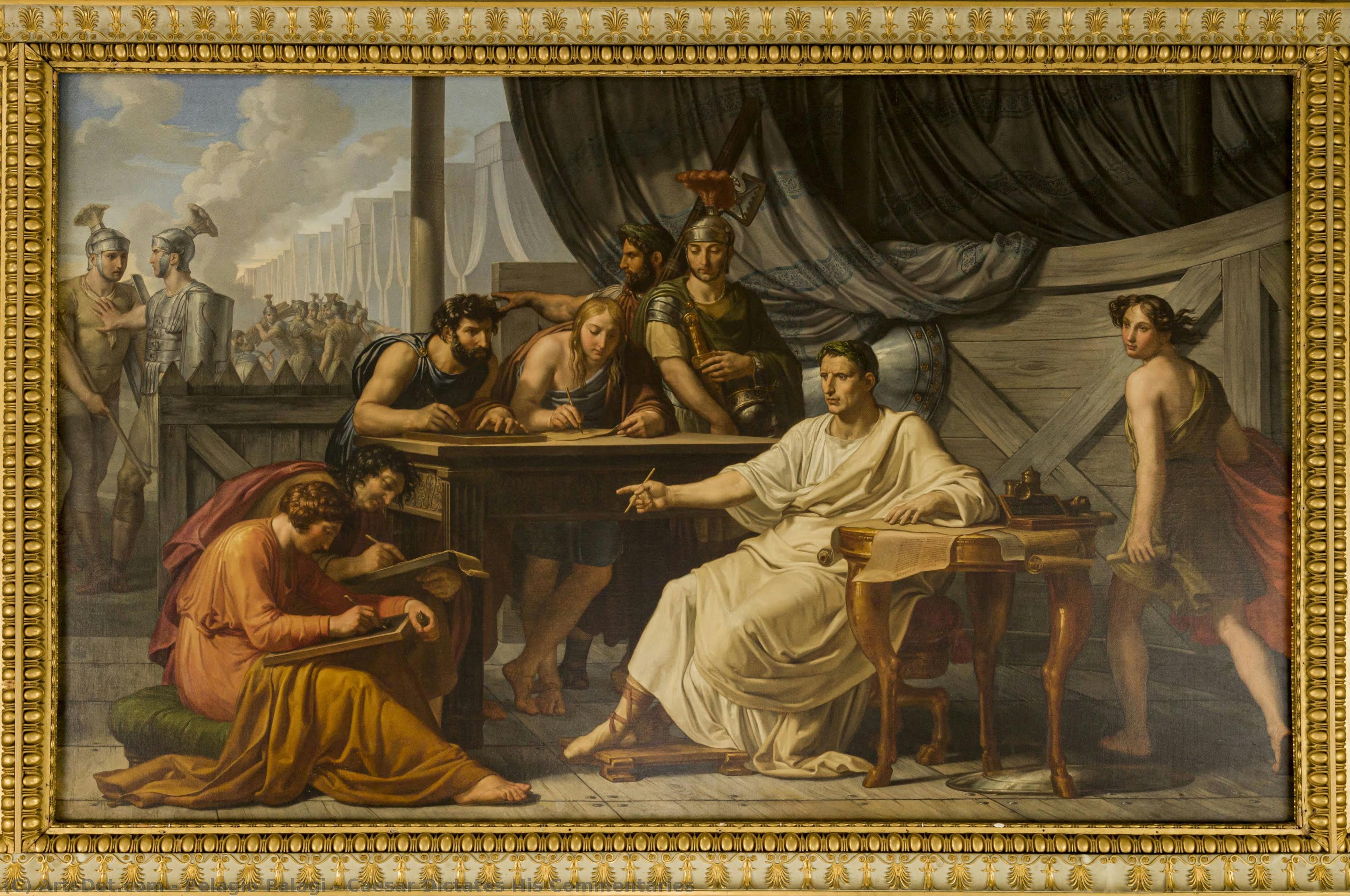
Caesar Dictates His Commentaries
복제본 크기
To stand before this monumental canvas is to be transported across the centuries, into the very heart of Roman intellectual power. Depicting the scene inspired by Plutarch’s biography, Caesar Dictates His Commentaries captures a moment of profound historical weight—the mind of Julius Caesar at work. The setting itself speaks volumes; confined within the intimate yet grand space of a tent that opens dramatically onto the bustling energy of the military camp beyond. This contrast between focused scholarly endeavor and martial might is palpable, drawing the viewer into the gravity of empire-building thought.
The composition centers on Caesar himself, rendered with an unmistakable air of luminous authority as he sits near a tripod adorned with zoomorphic legs. Clad in a brilliant white cloak, his posture suggests both deep contemplation and absolute command. He is surrounded by scribes, their bent forms illustrating the meticulous act of recording history onto tablets, while Caesar holds the stylus—the instrument through which immortal words are shaped. The artist masterfully employs oil on canvas to achieve rich textures, from the sumptuous folds of drapery to the polished wood of the furniture and the sheen of the parchment. The sheer scale of this work, measuring 270 x 450 cm, demands attention, allowing every detail—from scattered books suggesting vast libraries of knowledge to the distant boat visible in the background—to contribute to a tapestry of ancient Roman life.
The painting is more than just a portrait; it is an allegory of historical legacy. The likeness given to Caesar evokes parallels with Napoleon, suggesting that the themes of military genius intertwined with literary record have echoed through epochs. This connection subtly nods toward Giorgio Vasari’s earlier depiction in Florence, grounding the piece within a lineage of artistic commemoration of great leaders. Symbolically, the act of dictation itself represents the eternal struggle to document and interpret human action—the moment history is fixed into permanence by genius. The presence of the scribes underscores that even the greatest minds require diligent hands to translate vision into tangible record.
For the collector or designer whose taste leans toward narratives of enduring power and classical sophistication, this reproduction offers an unparalleled focal point. Its dramatic scale ensures it will anchor any grand hall or library, lending an air of cultivated erudition to the space. It is a piece that does not merely decorate; it narrates. Owning this work means embracing a dialogue with antiquity—a celebration of intellect, military prowess, and the enduring power of the written word.

1775 - 1860 , Italy

Journey through Neo-Classicism's finest! Explore 10 iconic masterpieces by David, Ingres & Canova. Discover art history, techniques & timeless beauty – perfect for inspiring your home decor. Find museum-quality reproductions at

Explore the enduring legacy of Classicism in Western art! Discover its historical context, key principles, iconic masterpieces & lasting influence. Learn about Renaissance and Neoclassical movements with TopImpressionists.

Explore the rich history & enduring aesthetic of Classicism art! Discover key movements, iconic artists like Raphael & David, and its lasting influence on Western art. Deepen your appreciation today.

Explore the rich history of formal portraiture & its enduring power to capture identity and shape perception. Discover investment-worthy artworks, expert appraisals, and custom reproduction services at TopImpressionists.

Explore the rich history of classical portraiture with TopImpressionists. Discover symbolism, techniques & enduring influence on art collecting. Expert appraisals & custom reproductions available.


최신 미술 뉴스, 특별 혜택 및 인테리어 아이디어를 가장 먼저 만나보세요.
프로젝트에 대해 알려주시면 저희 미술 전문가들이 맞춤형 아트 제안 3가지를 전달해 드립니다.
당신만을 위한 맞춤형 옵션 3가지를 무료로 추천해 드립니다!

 미리보기
미리보기
 공유하기
공유하기 공유하기
공유하기
 상세 정보
상세 정보

 다운로드
다운로드
 유사 작품
유사 작품 X-레이
X-레이 슬라이드 쇼
 더 보기
더 보기









 유리 옵션은 110cm 미만 크기에서만 선택 가능합니다.


