


 실제 크기로 보기
 보내기
보내기 공유하기
공유하기
 상세 보기
상세 보기 가이드 보기

 이미지 다운로드
 유사 작품 더 보기
 X-레이
X-레이 슬라이드 쇼 보기
 통계 정보
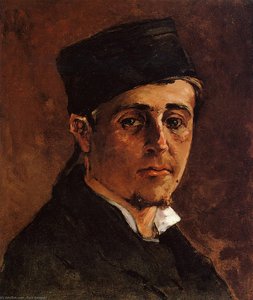
통계 정보Self Portrait
 Acrylic On Canvas
- WallArt
- British Impressionism
 1920
1920 74.0 x 59.0 cm
 피츠윌리엄 칼리지
Philip Wilson Steer's "The President Woodrow Wilson House" captures a contemplative man in a suit, showcasing his signature Impressionistic style and masterful use of light & shadow. Explore this evocative portrait.
 상세 보기
상세 보기
Philip Wilson Steer(1860-1942)는 빛과 색채를 활용한 인상주의 풍경화와 해경화를 그린 영국 화가입니다. 마네와 휘슬러의 영향을 받아 Tate, Uffizi 등 세계 주요 미술관에 작품이 소장되어 있습니다.
핸드메이드 유화 복제화
작가가 직접 캔버스에 손으로 그린 유화 작품으로, 원하는 크기와 액자로 맞춤 제작해 드립니다. ( 프린트 판매로 전환 디지털 이미지 판매 채널로 전환)




P118B ₩10

P118H ₩10

P118W ₩10

P438Z ₩10

P508JH ₩12

P508YH ₩12

P805H ₩10

P805Z ₩10

P919BZ ₩10

P919G ₩10

P919XJ ₩10

P959ZH ₩10

P968JZ ₩12

W106C ₩8

W218G ₩10

W218JH ₩8

W218Y ₩10

W307PJ ₩10

W316G ₩10

W316PJ ₩8

W316Y ₩10

W398PJ ₩8

W4111J ₩10

W500HY ₩15

W500JH ₩15

W692G ₩12

W849H ₩8

W940BG ₩15

W953PJ ₩8




표준 규격
맞춤 제작
CM
INCH
작품의 원본 비율을 그대로 유지하는 프리셋 사이즈 중에서 선택해 보세요.
Loading sizes...

가로 너비
높이
특정 프레임이나 공간에 맞춰 원하는 크기를 직접 입력하실 수 있습니다. 선택하신 크기가 원본 이미지의 비율과 일치하지 않을 경우, 작품을 자르거나 추가적인 수작업 요소를 더해 그림을 확장하여 제작합니다. 제작 시작 전, 최종 확인을 위해 디지털 목업을 보내드립니다.
화면상의 미리 보기는 실제 크롭(자르기)이나 확장된 상태를 완벽히 반영하지 않을 수 있습니다. 최종 구도는 오직 목업을 통해서만 정확하게 확인하실 수 있습니다.
맞춤 크기 제작도 가능하지만, 원본의 비율을 그대로 유지하기 위해서는 미리 정의된 목록에서 크기를 선택하시는 것을 권장합니다.
변경 가능한 예시: 얼굴을 고객님의 사진으로 교체, 반려동물 추가(예: 고양이를 강아지로 변경), 배경에 숨겨진 메시지 삽입, 배경 풍경 또는 요소 변경 등
주문 완료 후 TopImpressionists.com 팀에서 상세 안내를 위해 고객님께 이메일을 보내드리며, 미리보기 시안을 함께 제공해 드립니다.
주문 완료 후 TopImpressionists.com 팀에서 상세 안내를 위해 고객님께 이메일을 보내드리며, 미리보기 시안을 함께 제공해 드립니다.


 유리 옵션은 110cm 미만 크기에서만 선택 가능합니다.

Self Portrait
재현 매체
복제본 규격
-


총 결제 금액
₩ 360762
A Portrait of Quiet Intensity: Philip Wilson Steer’s “The President Woodrow Wilson House”
Philip Wilson Steer's "The President Woodrow Wilson House," painted in 1920, isn’t merely a depiction of a building; it’s a carefully constructed tableau brimming with subtle symbolism and imbued with the melancholic beauty characteristic of the artist. This oil-on-canvas work, measuring 74 x 59 cm, transports us to a moment suspended between formality and introspection – a visual poem reflecting on leadership, memory, and the quiet dignity of American history. Steer, a pivotal figure in British Impressionism, masterfully employs a muted palette dominated by greys, blues, and browns, creating an atmosphere of subdued light and contemplative stillness. The composition itself is deliberately restrained, focusing intently on the imposing façade of the Wilson House in Washington D.C., rendered with a remarkable sensitivity to texture and light.
The Impressionist’s Lens: Technique and Style
Steer's approach aligns closely with the tenets of Impressionism, yet he transcends simple replication. He doesn’t strive for photographic accuracy but rather captures an *impression* – a fleeting moment imbued with feeling. Notice how he utilizes broken brushstrokes to suggest the play of light on the stone walls and the subtle shifts in shadow. The artist's layering technique is particularly evident in the rendering of the building’s surface, where individual strokes coalesce to create a sense of depth and volume. Steer was deeply influenced by John Constable and J.M.W. Turner, artists known for their atmospheric landscapes and masterful use of light and color. This influence is palpable in Steer's ability to evoke a specific mood through his manipulation of tone and texture – a feeling of quiet contemplation and perhaps even a touch of wistful nostalgia.
Symbolism Within the Frame: Leadership and Reflection
The choice of subject matter—the Wilson House—is rich in symbolic potential. Woodrow Wilson, the 28th President of the United States, was a complex figure – lauded for his leadership during World War I but also criticized for his handling of racial issues at home. Steer’s painting doesn't offer a straightforward portrait of Wilson himself, instead focusing on the building that housed him and, by extension, representing the weight of responsibility and the enduring legacy of power. The muted colors and the solitary nature of the scene suggest a reflection on leadership itself – its burdens, its triumphs, and its inevitable passage of time. The composition’s stillness invites viewers to contemplate the unseen narratives contained within those walls.
A Legacy of Light: Steer's Influence and Artistic Context
Philip Wilson Steer was a significant figure in British art, bridging the gap between Impressionism and a more traditional English style. His work gained recognition during his time as a painting tutor at the Slade School of Fine Art, where he profoundly influenced generations of young artists. His exploration of coastal scenes, particularly those along the Suffolk coast, cemented his reputation for capturing the ethereal beauty of the British landscape. “The President Woodrow Wilson House” stands as a testament to Steer’s ability to imbue seemingly simple subjects with profound emotional resonance. It's a poignant reminder that even in grand architectural settings, moments of quiet contemplation and subtle symbolism can hold immense artistic value. Reproductions of this piece offer a captivating glimpse into the artist’s world and invite viewers to engage with the complexities of American history through the lens of Impressionist artistry.
질의응답
1920년에 제작된 "Self Portrait"은(는) 필립 윌슨 스티어의 커리어 중 어느 시기에 해당하나요?
1920년에 제작된 "Self Portrait"은 필립 윌슨 스티어의 예술적 발전 과정 중 Late Period에 해당합니다.
필립 윌슨 스티어은(는) 몇 세에 "Self Portrait"을(를) 제작했을까요?
1920년에 "Self Portrait"이(가) 제작되었을 당시, 1860년에 태어난 필립 윌슨 스티어의 나이는 60세였습니다.
필립 윌슨 스티어의 "Self Portrait"의 특징적인 기법과 화풍은 무엇인가요?
"Self Portrait"은(는) Acrylic On Canvas 기법을 사용하여 British Impressionism 양식으로 제작되었습니다.
필립 윌슨 스티어의 "Self Portrait"은(는) British Impressionism 내에서 어떤 분위기를 자아내나요?
"Self Portrait"의 Reflective한 감정은 그 British Impressionism 양식과 함께 어우러집니다.
필립 윌슨 스티어의 "Self Portrait"은(는) 몇 년도에 제작되었나요?
필립 윌슨 스티어의 "Self Portrait"은(는) 1920년에 제작되었습니다.
"Self Portrait"은(는) 어느 작가의 작품인가요?
"Self Portrait"의 작가는 필립 윌슨 스티어입니다. 이 작품은 필립 윌슨 스티어의 이름으로 등록되어 있습니다.
필립 윌슨 스티어의 "Self Portrait"은(는) 어떤 미술 사조에 속하나요?
"Self Portrait"은(는) British Impressionism 양식의 작품입니다. 이 사조는 해당 작품이 속한 예술적 전통을 나타냅니다.
관련 작품들


작가 소개
초기 생애와 예술적 기반
1860년 버켄헤드에서 태어난 필립 윌슨 스티어는 예술가 가문 출신이었다. 그의 아버지는 초상화 화가이자 헌신적인 미술 교사였다. 이러한 어린 시절의 경험은 그의 삶을 정의할 감성을 키워주었다. 세 살 때 먼모스 근처 휘트처치로 이사하면서 그는 작품 전체에 울려 퍼질 영국 전원과의 연결고리를 다졌다. 공식 교육은 히어퍼드 대성당 학교에서 시작하여 탄탄한 기초를 쌓았지만, 그의 예술적 야망을 본격적으로 추구하기 시작했다. 스티어의 훈련은 글루체스터 미술학교와 사우스 켄싱턴 드로잉 학교에서 이어졌지만, 1880년부터 1884년까지 파리로 떠난 여정이 진정으로 혁신적인 전환점이 되었다. 아카데미 줄리앙에서 공부하고 에콜 데 보자르에서 알렉상드르 카바넬의 지도를 받으면서 그는 새로운 아이디어와 회화 접근 방식이 넘쳐나는 세계를 접했다.인상주의 수용과 독특한 스타일
파리는 스티어의 예술적 발전을 위한 용광로가 되었다. 그는 에두아르 마네와 제임스 맥닐 휘슬러의 작품에 깊은 감명을 받아 빛, 색채, 분위기를 포착하는 혁신적인 기법을 흡수했다. 이러한 경험은 그에게 인상주의에 대한 열정을 불러일으켰지만, 그는 단순히 모방하지 않았다. 스티어는 프랑스의 영향을 본능적인 영국적 감성과 능숙하게 결합하여 자신만의 독특한 스타일을 창조했다. 그의 그림은 햇빛이 물 위에서 춤추는 순간, 해안 공기의 일시적인 특성 등 변화무쌍한 순간을 포착하는 놀라운 능력으로 특징지어진다. 그는 느슨한 붓놀리와 생생한 색채를 사용하여 장면을 묘사할 뿐만 아니라 감정을 불러일으키고 몰입감 있는 느낌을 조성했다. 그의 작품에서 반복적으로 등장하는 주제는 은빛 투명한 빛에 잠긴 해변 풍경과 바다 풍경이며, 이러한 환경의 신선함과 광휘를 묘사하는 능력을 보여준다. 초기 작품인 음악 방은 구성 및 빛에 대한 그의 뛰어난 재능을 보여주며, 서퍽 연안 마을의 활기찬 에너지가 넘치는 월버스윅 부두에서 달리는 소녀들과 같은 작품은 그의 성숙한 기량을 드러낸다.현대 미술 옹호와 에타플 영향
스티어는 단순히 그림을 그리는 데 만족하지 않고 영국 예술계를 적극적으로 형성했다. 그는 현대적인 예술적 표현을 옹호하는 조직인 뉴잉글리시 아트 클럽 설립에 중요한 역할을 했다. 이는 전통적인 취향이 여전히 지배적이던 시대에 대담한 움직임이었다. 정기적인 전시회와 1889년 런던 인상주의 전시회 참여를 통해 그는 새로운 아이디어를 소개하고 기존 규범에 도전했다. 1887년 에타플 예술가 식민지에서 보낸 시간은 그의 예술적 비전을 더욱 발전시켰다. 이 활기찬 공동체는 실험과 협업을 위한 자극적인 환경을 제공하여 빛과 분위기를 점점 더 미묘하고 능숙하게 포착하는 능력을 강화했다. 스티어는 존 콘스터블, J.M.W. 터너, 심지어 프랑수아 부셰와 같은 다양한 거장의 영감을 받았지만, 항상 이러한 영향을 자신만의 독특한 관점을 통해 걸러냈다.유산, 인정 및 지속적인 영향
필립 윌슨 스티어는 건강 문제로 인해 1940년에 그림을 그리는 것을 중단하고 2년 후 81세의 나이로 세상을 떠날 때까지 끊임없이 작품 활동을 이어갔다. 그의 공헌은 생전에 널리 인정받았으며, 공훈 훈장을 받았다. 오늘날 그의 작품은 테이트 갤러리와 우피치 미술관을 포함한 전 세계 유명 컬렉션에 소장되어 국제적인 명성을 입증한다. 그림 자체 외에도 스티어의 유산은 슬레이드 미술학교에서 오랜 기간 동안 가르친 교수 활동을 통해 이어졌다. 수년 동안 그는 젊은 예술가들에게 기술적 기량뿐만 아니라 관찰력과 예술적 성실성에 대한 깊은 감상을 심어주었다. 영국 인상주의 발전 및 수용에 대한 그의 공헌은 부인할 수 없으며, 전통과 현대 사이의 격차를 성공적으로 해소하고 영국 미술 풍경에 지울 수 없는 흔적을 남긴 중요한 인물로서의 그의 입지를 확고히 했다. 회복 중인 환자와 같은 주목할 만한 작품은 풍부한 질감과 감동적인 시선으로, 그리고 러들로의 테임 강은 고요한 아름다움과 능숙한 붓놀기를 강조하며 오늘날에도 관객을 사로잡고 있으며 그의 예술적 비전의 시대를 초월하는 품질을 보여준다.
필립 윌슨 스티어
1860 - 1942 , 영국
작가 정보 요약
- 국적: 영국
- 사망일: 1942년
- 영향을 받은 예술가: ['영국 인상주의']
- 영향을 준 예술가:
- 마네
- 휘슬러
- 터너
- 예술 사조: 인상주의
- 이름: 필립 윌슨 스티어
- 주요 작품:
- 음악실
- 달리는 소녀들
- 회복 중 환자
- 출생일: 1860년
- 출생지: 버켄헤드, 영국
관련 기사

Beyond the Light: Discovering the Soul and Emotional Depth of Post-Impressionism
Embark on a cultural journey through Post-Impressionism. Discover the profound emotional depth of masters like Van Gogh and Cézanne, exploring how they moved beyond light to capture the very soul of human experience through vibrant color and symbolic form.

Capturing the Light: A Journey Through the Ethereal Magic of Impressionism and Post-Impressionism
Embark on a cultural journey through the luminous world of Impressionism. Discover the profound beauty of Monet, Van Gogh, and Cézanne through expert art history insights and explore how to bring these timeless masterpieces into your home with museum-quality hand-painted reproductions.
