





























작품의 원본 비율을 유지하는 미리 설정된 크기 중에서 선택하세요.

특정 프레임이나 공간에 맞도록 직접 크기를 입력할 수 있습니다. 선택하신 크기가 원본 이미지의 비율과 일치하지 않는 경우, 작품을 자르거나 추가적인 손으로 그린 요소를 사용하여 그림을 확장합니다. 제작 시작 전 승인을 위해 디지털 목업을 보내드립니다.
화면 미리 보기는 실제 자르기 또는 확장을 반영하지 않습니다. 최종 구성은 목업을 통해서만 정확하게 확인하실 수 있습니다.
맞춤 크기 제작도 가능하지만, 원본 비율을 유지하기 위해 사전 정의된 목록에서 크기를 선택하시는 것을 권장합니다.

Quadro I
복제본 크기
Pieter Cornelis Mondriaan’s artistic odyssey began in Amersfoort, Netherlands, amidst the familiar landscapes of his youth – a stark contrast to the radical transformations that would define his legacy. Initially drawn to landscape painting influenced by the Hague School and Dutch Impressionism, notably *The Red Mill*, young Piet diligently honed his craft, mastering technique while simultaneously grappling with an unspoken desire for something more profound than mere visual imitation.
Early explorations encompassed Pointillism and Fauvism, each offering a distinct perspective on color and form. However, Mondrian swiftly recognized that these styles lacked the capacity to capture the core of his artistic aspirations – a yearning for simplification that transcended stylistic conventions. He wasn’t merely replicating nature; he sought to distill its fundamental principles into geometric abstraction.
This pivotal shift towards geometric abstraction marked a decisive break from traditional representation. Mondrian abandoned naturalistic depictions altogether, opting instead for a visual language comprised exclusively of straight lines and squares – a deliberate rejection of organic forms and a commitment to pure abstraction.
The resulting canvases—characterized by their monochrome palette and rigorously structured compositions—became emblems of modern art’s quest for universality. Mondrian believed that these geometric elements could express the underlying harmony of the cosmos, mirroring the mathematical order he perceived as inherent in nature itself. This conviction fueled his unwavering dedication to his artistic vision throughout his prolific career.
Despite his rejection of naturalism, Mondrian’s artistic development was undeniably shaped by Cubism, particularly Picasso's pioneering experiments with fractured perspectives. The influence of Cézanne’s emphasis on underlying geometric forms can also be discerned in Mondrian’s approach to depicting space.
However, Mondrian steadfastly maintained his commitment to pure abstraction, refining his technique and expanding his palette—introducing subtle variations in color—to heighten the expressive potential of his compositions. He meticulously considered every element within each painting, striving for a balance between visual clarity and emotional resonance.
Beyond its formal rigor, Mondrian’s art carries profound symbolic significance. The black lines represent stability and horizontality—reflecting the grounding forces of earth—while the white squares symbolize purity and verticality—representing the aspiration towards heaven. Together, these elements convey a sense of spiritual contemplation and affirm Mondrian's belief in the transformative power of geometric abstraction.
Today, Mondrian’s paintings continue to inspire artists and designers alike, captivating viewers with their timeless elegance and conveying an enduring message of harmony and balance. Reproductions of his iconic canvases offer a window into the intellectual and aesthetic convictions that underpinned one of modern art's most influential figures—a testament to the enduring beauty and profound contemplation inherent in pure geometric abstraction.

1872 - 1944 , 네덜란드

몬드리안, 말레비치 등 거장들의 기하학적 추상 미술 명작 10선을 만나보세요. 각 작품의 예술사적 의미와 색채, 구성을 탐구하고 TopImpressionists.com에서 고품질 아트 프린트를 소장하세요. 지금 바로 온라인 컬렉션을 확인하세요!

Journey through Wassily Kandinsky's 25 most iconic abstract paintings. Explore his revolutionary use of color, form & spiritual expressionism. Find museum-quality Kandinsky reproductions and elevate your home decor with TopImpressionists.com. Discover all masterpieces on TopImpressionists.com!

Explore the evolution of geometric abstraction from Cubism to contemporary art. Discover key artists like Malevich & Mondrian, investment insights, and expert collecting advice at TopImpressionists.
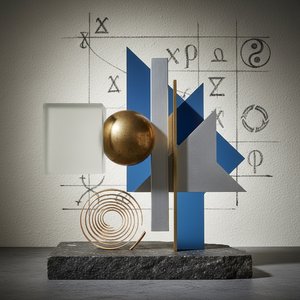
Explore the philosophical roots & artistic evolution of geometric abstraction with TopImpressionists. Discover Mondrian, Malevich, De Stijl & more. Expert insights for collectors and art enthusiasts.

페르낭 레제의 최고 걸작 25선을 만나보세요. 큐비즘, 추상 미술의 거장이 그린 명작들의 탄생 비화와 예술적 의미를 탐구합니다. TopImpressionists에서 고품질 아트 프린트와 인테리어 액자로 공간에 예술을 더하세요. 지금 바로 컬렉션을 확인하세요!


최신 미술 뉴스, 특별 혜택 및 인테리어 아이디어를 가장 먼저 만나보세요.
프로젝트에 대해 알려주시면 저희 미술 전문가들이 맞춤형 아트 제안 3가지를 전달해 드립니다.
당신만을 위한 맞춤형 옵션 3가지를 무료로 추천해 드립니다!


 미리보기
미리보기
 프린트 구매
 공유하기
공유하기 공유하기
공유하기
 상세 정보
상세 정보

 다운로드
다운로드
 유사 작품
유사 작품 X-레이
X-레이 슬라이드 쇼
 더 보기
더 보기









 유리 옵션은 110cm 미만 크기에서만 선택 가능합니다.


