


 실제 크기로 보기
 보내기
보내기 공유하기
공유하기
 상세 보기
상세 보기 가이드 보기

 이미지 다운로드
 유사 작품 더 보기
 X-레이
X-레이 슬라이드 쇼 보기
 통계 정보
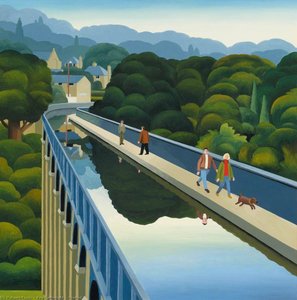
통계 정보Canal Boat
 1992
1992 52.0 x 51.0 cm
 The British Postal Museum - Archive
Discover the serene landscapes & still lifes of reg cartwright, a British artist known for capturing rural England's beauty with detailed realism.
 상세 보기
상세 보기
이 페이지에 표시된 작품은 저작권법의 보호를 받으며, 이에 따라 동일한 복제품을 제작하거나 판매하는 것은 법으로 금지되어 있습니다. 이러한 권리 보호는 다음과 같은 국제 협약에 따라 시행됩니다. 베른 협약 또한 다음에서 명시하는 법률을 포함한 국내법에 의해 보호됩니다. 미국 저작권법 제17조.
저희는 존중을 담은 합법적인 대안으로서, 원작에서 영감을 받은 맞춤형 수제 유화 작품을 제공합니다. 저희의 숙련된 전문 화가들은 원작의 스타일, 분위기, 예술적 정수를 면밀히 연구하여, 그 자체로 독창적인 창작물이면서도 원작과 동일한 감동을 불러일으키는 새로운 작품을 만들어냅니다.
이 방식은 저작권 보호를 받는 예술 작품을 복제하거나 그대로 재현하는 것이 아니기에 저작권 규정을 완벽히 준수합니다. 대신, 이는 창의적인 재해석의 과정을 거칩니다. 즉, 원작에서 영감을 받되 원작과 동일하지 않은 새로운 회화 작품을 의미합니다.
핸드메이드 유화 복제화
작가가 직접 캔버스에 손으로 그린 유화 작품으로, 원하는 크기와 액자로 맞춤 제작해 드립니다. ( 프린트 판매로 전환 디지털 이미지 판매 채널로 전환)




































표준 규격
맞춤 제작
CM
INCH
작품의 원본 비율을 그대로 유지하는 프리셋 사이즈 중에서 선택해 보세요.
Loading sizes...

가로 너비
높이
액자나 벽면 크기에 맞춰 필요한 가로와 세로 길이를 입력해 주세요. 본 작품은 수작업으로 제작되므로, 요청하신 비율에 따라 작가가 그림의 가장자리를 조금 더 넓게 그리거나 일부를 조정하여 작업할 수 있습니다. 작업 시작 전, 최종 확인을 위해 디지털 목업 이미지를 보내드립니다. 이 페이지에 표시된 이미지는 실제 결과물과 다를 수 있으며, 오직 목업 이미지만이 정확한 결과물을 보여줍니다.
변경 가능한 예시: 얼굴을 고객님의 사진으로 교체, 반려동물 추가(예: 고양이를 강아지로 변경), 배경에 숨겨진 메시지 삽입, 배경 풍경 또는 요소 변경 등
주문 완료 후 TopImpressionists.com 팀에서 상세 안내를 위해 고객님께 이메일을 보내드리며, 미리보기 시안을 함께 제공해 드립니다.
주문 완료 후 TopImpressionists.com 팀에서 상세 안내를 위해 고객님께 이메일을 보내드리며, 미리보기 시안을 함께 제공해 드립니다.


 유리 옵션은 110cm 미만 크기에서만 선택 가능합니다.

Canal Boat
재현 매체
복제본 규격
-


총 결제 금액
₩ 364339
작가 소개
Reg Cartwright: A Quiet Master of British Pastoral
Reg Cartwright, born in Leicester in 1938, is a quietly compelling figure within the landscape of British contemporary art. His career, spanning over seven decades, has been marked by a dedication to capturing the subtle beauty and enduring character of rural England – not through grand vistas or dramatic storms, but with an intimate focus on everyday objects and the quiet rhythms of the countryside. Cartwright’s work isn't about shouting; it whispers, inviting contemplation and a deep appreciation for the understated elegance of the natural world.
Cartwright’s early life offered little indication of his future artistic path. After attending Gateway grammar school, he initially pursued a pattern-making role in a shoe factory, a seemingly conventional route that ultimately proved unsatisfying. National service followed, and then a period working in advertising, experiences which, paradoxically, provided him with the foundational skills – particularly in design and composition – that would later inform his painting. It was within the bustling environment of Frank Gayton Advertising that he truly began to hone his artistic eye, absorbing techniques and developing a keen understanding of visual hierarchy and balance.
The Evolution of Still Life
Cartwright’s artistic trajectory shifted decisively in 1976 when he embraced full-time painting. Initially exploring various mediums, he quickly found his voice within the realm of still life. This choice wasn't a rejection of landscape, but rather a deliberate narrowing of focus that allowed him to delve into the intricacies of form, texture, and light with unparalleled precision. He’s often described as a “cubist” in his approach, not in the revolutionary sense of Picasso or Braque, but in his ability to deconstruct familiar objects – plates, jugs, flowers, fish – and rearrange them within a carefully constructed composition. This process isn't about creating abstract representations; it’s about revealing the inherent beauty and complexity of these commonplace subjects.
Influences on Cartwright’s work are subtle yet discernible. The traditions of British landscape painting, particularly the quiet realism of artists like Constable and Turner, undoubtedly played a role. However, he also draws inspiration from the precision of Dutch still life painters – masters of light, shadow, and meticulous detail – as well as the understated elegance of 20th-century European modernists. His work possesses a unique blend of these influences, resulting in a style that is both deeply rooted in tradition and refreshingly contemporary.
Technique and Style
Cartwright’s technique is characterized by its remarkable control and restraint. He works primarily in oil on canvas, employing a muted palette dominated by earthy tones – browns, greys, ochres, and subtle greens – that evoke the textures and colors of the English countryside. His brushwork is often delicate and precise, meticulously building up layers of paint to create a sense of depth and luminosity. A key element of his style is his masterful use of light; he captures the fleeting effects of sunlight on surfaces with remarkable accuracy, creating an illusion of three-dimensionality that draws the viewer into the scene.
He frequently incorporates elements of landscape – often estuaries or coastal scenes – as a backdrop to his still lifes. These landscapes aren’t rendered in grand detail but rather serve as subtle anchors, grounding the compositions and reinforcing the connection between the objects within and the natural world outside. The effect is one of quiet harmony and understated beauty.
Recognition and Legacy
Cartwright's work has been exhibited widely throughout the United Kingdom and internationally, including shows in London, Cambridge, New York, and Japan. He’s received numerous awards and commissions, including the ‘Mother Goose Award’ for illustration and recognition from the MSIA (Museum of Society Illustrators). His paintings are held in private and public collections across the globe, testament to their enduring appeal.
Today, Reg Cartwright remains a vital voice within British contemporary art. His work speaks to a deep appreciation for the beauty of the everyday, inviting viewers to slow down, observe closely, and find solace in the quiet rhythms of rural England. He is an artist who has quietly, yet powerfully, captured the essence of a disappearing world – a testament to his skill, dedication, and profound understanding of the art of observation.
Reg Cartwright
1938 -
작가 정보 요약
- Artistic Movement Or Style: British Modernism
- Artists Or Movements Influenced By This Artist: ['Cambridge Contemporary Art']
- Artists Who Influenced This Artist:
- Cubism
- Still life painters
- Date Of Birth: 1938
- Full Name: Reg Cartwright
- Nationality: British
- Notable Artworks:
- Viaduct
- Blue Still Life
- Estuary Still Life
- Place Of Birth: Leicester, UK