


 실제 크기로 보기
 보내기
보내기 공유하기
공유하기
 상세 보기
상세 보기 가이드 보기

 이미지 다운로드
 유사 작품 더 보기
 X-레이
X-레이 슬라이드 쇼 보기
 Q&A
Q&A 통계 정보
통계 정보Harbor Scene

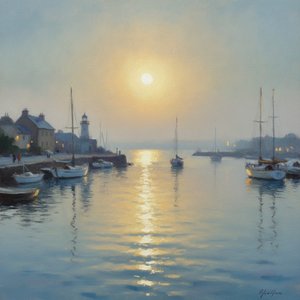
Discover Richard Hayley Lever’s "Harbor Scene," an impressionistic nighttime harbor painting. Explore loose brushstrokes, muted colors & maritime themes – a captivating artwork!
Richard Hayley Lever (1876-1958) was an Australian/American Post-Impressionist painter known for vibrant marine scenes, Cornish landscapes & American coastal views. Influenced modernism; exhibited widely. Discover his art!
 상세 보기
상세 보기
이 페이지에 표시된 작품은 저작권법의 보호를 받으며, 이에 따라 동일한 복제품을 제작하거나 판매하는 것은 법으로 금지되어 있습니다. 이러한 권리 보호는 다음과 같은 국제 협약에 따라 시행됩니다. 베른 협약 또한 다음에서 명시하는 법률을 포함한 국내법에 의해 보호됩니다. 미국 저작권법 제17조.
이 방식은 저작권 보호를 받는 예술 작품을 복제하거나 그대로 재현하는 것이 아니기에 저작권 규정을 완벽히 준수합니다. 대신, 이는 창의적인 재해석의 과정을 거칩니다. 즉, 원작에서 영감을 받되 원작과 동일하지 않은 새로운 회화 작품을 의미합니다.
지클레 / 아트 프린트
빠른 제작과 다양한 마감 옵션을 선택할 수 있는 박물관 수준의 지클레이 및 캔버스 프린트. ( 수작업 채색 복제본 주문하기 디지털 이미지 판매 채널로 전환)




































표준 규격
맞춤 제작
CM
INCH
작품의 원본 비율을 그대로 유지하는 프리셋 사이즈 중에서 선택해 보세요.
Loading sizes...

가로 너비
높이
액자나 벽면 크기에 맞춰 필요한 가로와 세로 길이를 입력해 주세요. 프린트는 원본 이미지보다 크게 제작할 수 없으며 오직 자르는 것만 가능하므로, 비율이 다른 사이즈를 선택할 경우 이미지의 일부가 잘려 나갈 수 있습니다. 인쇄 작업에 들어가기 전, 최종 확인을 위해 디지털 목업을 보내드립니다. 이 페이지에 표시된 이미지는 실제 잘리는 영역을 나타내지 않으며, 오직 목업을 통해서만 정확한 확인이 가능합니다.


 유리 옵션은 110cm 미만 크기에서만 선택 가능합니다.

Harbor Scene
지클레 / 아트 프린트
복제본 규격
-


총 결제 금액
₩ 93821
관련 작품들


작가 소개
A Life Painted in Light: Richard Hayley Lever and the Pursuit of Atmospheric Impressionism
Richard Hayley Lever, born in Bowden, South Australia in 1876, embarked on a journey that would carry him across continents and immerse him in the evolving currents of Post-Impressionist painting. His story is one of relentless artistic exploration, fueled by an early talent nurtured at Prince Alfred College under James Ashton and further honed within the vibrant art communities of England, France, and ultimately, America. Lever wasn’t merely a painter; he was a seeker of light, atmosphere, and the emotional resonance embedded within landscapes and marine scenes. The inheritance received after his maternal grandfather's death in 1882 provided the crucial opportunity for him to pursue formal training abroad, setting the stage for a career defined by both technical skill and an increasingly personal artistic vision.From Cornish Shores to Parisian Studios: Early Influences and Development
Lever’s initial foray into the art world led him to St. Ives, Cornwall in 1899—a fishing port already renowned as a haven for marine painters like Julius Olsson. This proved pivotal. He shared studio space with Frederick Judd Waugh and absorbed techniques from both Olsson and Algernon Talmage, figures who championed capturing the raw energy of the sea. The Cornish coast became his initial canvas, imbued with the spirit of Impressionism but already hinting at a bolder approach to color and form. A subsequent period in France, specifically in Douarnenez and Concarneau, Brittany, further solidified his understanding of light and its transformative power on the landscape. These early works demonstrate a commitment to *plein air* painting—a dedication to capturing the immediacy of observation directly from nature. However, Lever wasn’t content with mere replication; he sought to convey not just what he saw, but how it *felt*. A return trip to Adelaide in 1904 allowed him to exhibit and teach, briefly grounding him within his native Australia before a renewed pull towards Europe and the burgeoning artistic movements taking shape there. His marriage to Aida Smith Gale in St. Ives in 1906 marked a period of personal stability that coincided with an intensification of his artistic exploration, culminating in the evocative “Van Gogh’s Hospital, Holland” series of 1908—a clear indication of the profound influence Van Gogh's expressive use of color and emotion had on his developing style.The American Embrace: Finding a Voice in New England
A turning point arrived in 1911 when Ernest Lawson, an American Impressionist painter, encouraged Lever to relocate to the United States. Arriving in New York City in 1912, he initially focused on urban scenes—the bustling energy of Times Square and the serene expanse of Central Park. Yet, it was the discovery of the American East Coast, particularly Gloucester, Massachusetts, that truly ignited his artistic passion. He spent several summers painting there and at Marblehead, captivated by the rugged beauty of the coastline and the vibrant light reflecting off the water. This period saw Lever fully integrate into a circle of influential artists—Robert Henri, William Glackens, John Sloan, and George Bellows—who championed realism and direct engagement with American life. While exhibiting alongside these figures, he maintained his distinct voice, developing a spontaneous, bold style that blended Impressionistic techniques with a heightened sense of emotional intensity.Teaching and Legacy: A Philosophy of “Having a Good Time”
From 1919 to 1931, Lever dedicated himself to teaching at the Art Students League of New York, establishing a studio in Gloucester and continuing his travels throughout New England, Nantucket, and Martha’s Vineyard. His pedagogical approach was remarkably free-spirited, encapsulated by his belief that “Art is the re-creation of mood in line, form and color” and the simple yet profound assertion: “If I were confined to my own back yard for the rest of my life, I'd still have more pictures in my mind than I would have time to paint. Art is nothing but having a good time.” This philosophy encouraged his students to find inspiration within themselves and their surroundings, prioritizing emotional expression over rigid technique. Lever’s work gained recognition through numerous exhibitions—including the Pennsylvania Academy of Fine Arts Annual, Corcoran Gallery biennials, and the National Academy of Design—and found its way into prominent collections such as those of the Metropolitan Museum of Art, Brooklyn Museum, and even the White House, where he was commissioned to paint a portrait of the presidential yacht USS Mayflower in 1924.A Lasting Impression: Richard Hayley Lever’s Historical Significance
Richard Hayley Lever died in Mount Vernon, New York, in 1958, leaving behind a rich body of work that reflects his lifelong pursuit of atmospheric impressionism. He wasn't simply replicating scenes; he was translating emotions onto canvas—the power of the sea, the warmth of sunlight, the quiet beauty of coastal landscapes. His ability to blend Impressionistic techniques with a uniquely personal and expressive style cemented his place within American art history. Lever’s legacy lies not only in the captivating beauty of his paintings but also in his unwavering commitment to artistic freedom and the joy of creation. He stands as a testament to the enduring power of observation, emotion, and the transformative potential of light—a painter who truly lived and breathed the landscapes he so passionately depicted.
Richard Hayley Lever
1876 - 1958
작가 정보 요약
- Full Name: Richard Hayley Lever
- Nationality: Australian/American
- Date Of Birth: 1876
- Date Of Death: 1958
- Place Of Birth: Bowden, Australia
- Notable Artworks:
- Van Gogh's Hospital
- Swimming Hole
- Sunset on the Bay
- Artistic Movement Or Style: Post-Impressionism
- Artists Who Influenced This Artist:
- Vincent Van Gogh
- Julius Olsson
관련 기사

Celestial Dreams: Capturing the Cosmic Magic and Emotional Depth of Impressionist Nightscapes
Explore the ethereal beauty of Impressionist nightscapes. From Van Gogh's swirling stars to luminous river scenes, discover how masters captured cosmic magic through light and emotion. Perfect for art lovers seeking deep cultural connection and timeless inspiration.
Where Water Meets Light: Discovering the Ethereal Beauty of Impressionist Harbors and Maritime Masterpieces
Immerse yourself in the ethereal beauty of Impressionist harbors. Discover how masters like Claude Monet captured light and water, and bring that luminous magic into your home with our exquisite, hand-painted oil reproductions. Experience museum-quality art curated for true enthusiasts.

Capturing the Soul: The Most Emotionally Moving Impressionist and Post-Impressionist Masterpieces
Discover the profound emotional depth of Impressionist and Post-Impressionist masterpieces. Explore how legends like Monet, Van Gogh, and Gauguin captured light and soul through evocative landscapes and vibrant brushwork for a timeless connection to art history.

The Beauty of Impermanence: Capturing Decay through Impressionist Eyes
Explore the profound beauty of impermanence through Impressionist and Post-Impressionist eyes. Discover how masters like Monet and Van Gogh captured fleeting light and the poetic essence of nature's transitions in our deep dive into art history and emotional landscapes.

Eternal Bonds in Dappled Light: Capturing the Tender Warmth of Family Gatherings in Impressionist Masterpieces
Step into a world of dappled sunlight and tender connections. Explore how Impressionist masters like Renoir captured the warmth of family life. At TopImpressionists.com, we transform your cherished memories into exquisite, hand-painted oil masterpieces that celebrate eternal bonds.