
빠른 제작과 다양한 마감 옵션을 제공하는 박물관 품질의 지클레이 또는 캔버스 프린트. ( 손으로 그린 그림 구매 이미지 구매)
작품의 원본 비율을 유지하는 미리 설정된 크기 중에서 선택하세요.

특정 프레임이나 공간에 맞춰 직접 치수를 입력하실 수 있습니다. 선택하신 사이즈가 원본 이미지의 비율과 일치하지 않을 경우, 작품을 크롭(자르기)하거나 이미지를 대칭 또는 단색 채우기로 확장하여 제작합니다. 제작 시작 전, 최종 확인을 위해 디지털 목업이 전송됩니다.
화면상의 미리보기는 실제 크롭이나 확장 상태를 반영하지 않으므로, 최종 구도는 오직 목업을 통해서만 정확하게 확인하실 수 있습니다.
맞춤 사이즈 제작도 가능하지만, 원본 비율을 유지하기 위해서는 사전 정의된 목록에서 치수를 선택하시는 것을 권장합니다.

L
복제본 크기
Born on August 12, 1900, in the vibrant heart of Kingston, Jamaica, Ron Clive Moody was a sculptor whose hands possessed the rare ability to breathe life into the silent medium of wood. While his early path seemed destined for the clinical precision of medicine—having moved to England in 1923 to pursue dentistry at King's College London—his spirit was irrevocably drawn to the tactile and the expressive. After earning his degree in 1930, Moody underwent a profound metamorphosis, setting aside the scalpel for the chisel. This transition from the scientific to the sculptural allowed him to approach his medium with a unique blend of anatomical understanding and raw, creative intuition.
The genesis of Moody's aesthetic was deeply rooted in his encounters with the British Museum’s vast collection of non-Western art. These ancient, powerful forms provided a spiritual blueprint for his burgeoning style. He found himself captivated by the rhythmic strength and symbolic depth of African and indigenous carvings, which inspired him to teach himself the intricate complexities of woodcarving. His first significant carved figure, Wohin, emerged in 1934, marking the beginning of a prolific career that would bridge the gap between Caribbean identity and international modernism.
Moody’s artistic development was characterized by an extraordinary ability to manipulate texture and volume. His sculptures are not merely representations but are evocations of presence. Through his mastery of wood, he captured the essence of human emotion and cultural narrative. His works often possess a rhythmic, organic quality that suggests movement even within the stillness of the grain. This is perhaps most evident in his celebrated pieces such as Midonz (1937) and the profound Savacou (1964), where the interplay of light and shadow on the carved surfaces creates a sense of living breath.
The significance of his work lies in its ability to transcend geographical boundaries. While deeply influenced by the ancestral echoes found in non-Western art, Moody’s voice was distinctly his own—a synthesis of his Jamaican heritage and his European training. His sculptures serve as a testament to the power of cultural fusion, standing as monumental achievements in 20th-century woodcarving. The following elements define his artistic essence:
Throughout his life, Ron Clive Moody achieved a level of recognition that placed his work in some of the most prestigious institutions in the world. His sculptures are not merely objects of beauty but historical artifacts that reside within the National Portrait Gallery and Tate Britain in London, as well as the National Gallery of Jamaica. These placements ensure that his contribution to the sculptural canon remains accessible to scholars and art lovers alike, bridging the Atlantic through his carved legacies.
Beyond his individual achievements, Moody belonged to a family of significant intellectual influence, being the brother of the renowned anti-racist campaigner Harold Moody and the award-winning physiologist Ludlow Moody. When he passed away on February 6, 1984, at the age of 83, he left behind more than just a collection of carvings; he left a legacy of transformation. His journey from a dental student to a master sculptor remains an inspiring narrative of following one's true calling, proving that art is not just something one makes, but something one becomes.

1900 - 1984 , Jamaica

Explore 10 iconic paintings with captivating 'mushroom' tones! Discover Van Gogh, Monet & Rembrandt’s masterpieces—earthy palettes, rich history & artistic techniques. Find museum-quality art reproductions and curated decor ideas at

Explore 10 famous paintings bathed in rich 'burly wood' tones! Discover masterpieces by Rembrandt, Van Gogh & more. Learn their stories and find museum-quality art reproductions for your home at TopImpressionists.com.

Explore 10 iconic paintings bathed in captivating rosy brown tones! From Rembrandt to Titian, discover the stories behind these masterpieces & their warm color palettes. Find museum-quality art reproductions and decor inspiration at .
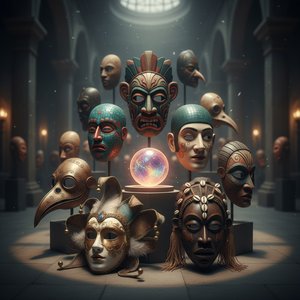
Embark on a profound journey through the world's most iconic mask artworks. Explore the spiritual depth, intricate craftsmanship, and rich cultural heritage of global traditions, from Chhau to Gomira, in this expert-led exploration of ancestral artistry and symbolic beauty.

Explore 10 iconic paintings bathed in captivating sandy brown tones! From Rembrandt to Monet, discover the stories behind these timeless masterpieces & find museum-quality art reproductions for your home. Explore the full collection on TopImpressionists.com.


최신 미술 뉴스, 특별 혜택 및 인테리어 아이디어를 가장 먼저 만나보세요.
프로젝트에 대해 알려주시면 저희 미술 전문가들이 맞춤형 아트 제안 3가지를 전달해 드립니다.
당신만을 위한 맞춤형 옵션 3가지를 무료로 추천해 드립니다!


 공유하기
공유하기 공유하기
공유하기
 상세 정보
상세 정보

 다운로드
다운로드
 유사 작품
유사 작품 슬라이드 쇼


 더 보기
더 보기






































 유리 옵션은 110cm 미만 크기에서만 선택 가능합니다.


