






























작품의 원본 비율을 유지하는 미리 설정된 크기 중에서 선택하세요.

특정 프레임이나 공간에 맞춰 직접 치수를 입력하실 수 있습니다. 선택하신 사이즈가 원본 이미지의 비율과 일치하지 않을 경우, 작품을 크롭(자르기)하거나 이미지를 대칭 또는 단색 채우기로 확장하여 제작합니다. 제작 시작 전, 최종 확인을 위해 디지털 목업이 전송됩니다.
화면상의 미리보기는 실제 크롭이나 확장 상태를 반영하지 않으므로, 최종 구도는 오직 목업을 통해서만 정확하게 확인하실 수 있습니다.
맞춤 사이즈 제작도 가능하지만, 원본 비율을 유지하기 위해서는 사전 정의된 목록에서 치수를 선택하시는 것을 권장합니다.

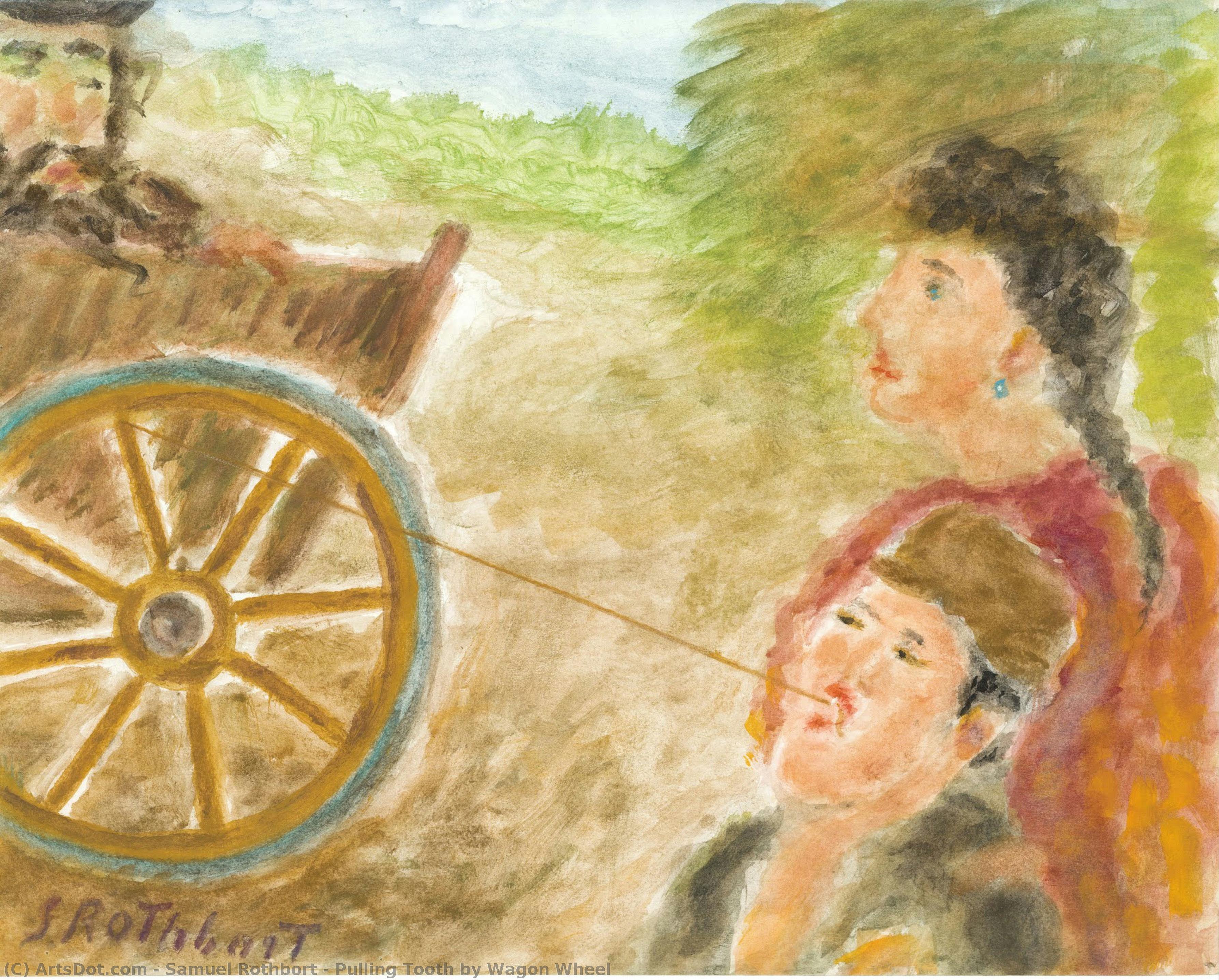
Pulling Tooth by Wagon Wheel
복제본 크기
In the quiet, evocative strokes of Samuel Rothbort’s Pulling Tooth by Wagon Wheel, we are transported to a bygone era, a time when life moved at the rhythmic pace of a horse-drawn carriage. Painted in 1950, this piece serves as a profound window into the mid-century fascination with Americana and the preservation of folk memory. The scene captures a visceral, almost cinematic moment: a man seated within the sturdy frame of an old-fashioned wagon, surrounded by figures that populate a landscape of shared human experience. There is an undeniable sense of storytelling embedded in the composition, as if Rothbort has paused a moving picture to allow us to contemplate the grit and grace of rural life.
The painting’s strength lies in its ability to evoke nostalgia—not merely as a longing for the past, but as a deep respect for the textures of history. The prominent wagon wheel, with its meticulously rendered spokes, acts as both a structural anchor and a symbol of the cyclical nature of time and progress. As we gaze upon the figures positioned around this central element, we feel the weight of their presence; they are not mere bystanders but participants in a communal narrative that feels both intimate and universal.
Technically, Rothbort demonstrates a masterful command over chiaroscuro, using the interplay of light and shadow to breathe life into the scene. The way light catches the edges of the wooden wheel and illuminates the faces of the onlookers creates a sense of three-dimensional realism that draws the viewer inward. This careful manipulation of illumination does more than just define form; it sets an emotional tone of quiet reflection. The shadows are not merely dark spaces but are filled with mystery, suggesting the untold stories of the characters inhabiting this rustic setting.
For the discerning collector or interior designer, this artwork offers a sophisticated layer of depth to any space. Its palette, grounded in earthy, organic tones, provides a sense of stability and warmth, making it an ideal centerpiece for rooms designed for contemplation or conversation. The painting does not shout; rather, it invites a lingering gaze, rewarding the observer with new details upon every encounter. It is a piece that bridges the gap between historical documentation and fine art, offering a soulful connection to the craftsmanship of the early 20th century.
Choosing a reproduction of Pulling Tooth by Wagon Wheel is an investment in atmosphere. It brings into a modern interior a sense of heritage and permanence. Whether placed in a sunlit study or a grand hallway, the painting acts as an anchor of character, providing a conversation starter that speaks to the enduring human condition. Rothbort’s ability to blend the mundane—a simple moment by a wagon—with the profound makes this work a timeless treasure for those who appreciate art that possesses both a historical heartbeat and a lasting aesthetic elegance.

1882 - 1971 , Russia

Explore 10 defining masterpieces of Romantic Realism! Discover Courbet, Millet & Daumier's powerful paintings—capturing emotion and social realities. Find museum-quality reproductions for your home at TopImpressionists.com.

Explore 10 defining American Realism masterpieces – Hopper, Homer & more. Discover the stories behind these iconic paintings and bring timeless art to your home with TopImpressionists's museum-quality reproductions. Explore the full collection online.

Explore the captivating world of Romantic Realism! Discover key artists like Courbet & Millet, masterpieces, and the social context behind this influential art movement. Expert insights for collectors at TopImpressionists.

Explore the powerful world of Social Realism art! Discover key artists, masterpieces & its profound social commentary. Expert insights into this influential movement's history and enduring legacy.

Explore the captivating world of 19th-century Realism! Discover key artists like Courbet & Millet, masterpieces, and the powerful social commentary behind this influential art movement. Expert insights at TopImpressionists.


최신 미술 뉴스, 특별 혜택 및 인테리어 아이디어를 가장 먼저 만나보세요.
프로젝트에 대해 알려주시면 저희 미술 전문가들이 맞춤형 아트 제안 3가지를 전달해 드립니다.
당신만을 위한 맞춤형 옵션 3가지를 무료로 추천해 드립니다!
 Preview
 작품 구매하기
 공유하기
공유하기 공유하기
공유하기
 상세 정보
상세 정보

 다운로드
다운로드
 유사 작품
유사 작품 X-레이
X-레이 슬라이드 쇼


 더 보기
더 보기









 유리 옵션은 110cm 미만 크기에서만 선택 가능합니다.


