

Shown: · With its frame:
 실제 크기로 보기
 보내기
보내기 공유하기
공유하기
 상세 보기
상세 보기 가이드 보기

 이미지 다운로드
 유사 작품 더 보기
 X-레이
X-레이 슬라이드 쇼 보기
 Q&A
Q&A 통계 정보
통계 정보


₩ 361761
핸드메이드 유화 복제화
작가가 직접 캔버스에 손으로 그린 유화 작품으로, 원하는 크기와 액자로 맞춤 제작해 드립니다. ( 프린트 판매로 전환 디지털 이미지 판매 채널로 전환)
Size
·표준 규격
맞춤 제작
CM
INCH
작품의 원본 비율을 그대로 유지하는 프리셋 사이즈 중에서 선택해 보세요.
Loading sizes...

가로 너비
높이
액자나 벽면 크기에 맞춰 필요한 가로와 세로 길이를 입력해 주세요. 본 작품은 수작업으로 제작되므로, 요청하신 비율에 따라 작가가 그림의 가장자리를 조금 더 넓게 그리거나 일부를 조정하여 작업할 수 있습니다. 작업 시작 전, 최종 확인을 위해 디지털 목업 이미지를 보내드립니다. 이 페이지에 표시된 이미지는 실제 결과물과 다를 수 있으며, 오직 목업 이미지만이 정확한 결과물을 보여줍니다.
 상세 보기
상세 보기Finish
·
White ₩1

Blurside ₩1

Extended ₩1

P118B ₩10

P118H ₩10

P118W ₩10

P438Z ₩10

P508JH ₩12

P508YH ₩12

P805H ₩10

P805Z ₩10

P919BZ ₩10

P919G ₩10

P919XJ ₩10

P959ZH ₩10

P968JZ ₩12

W106C ₩8

W218G ₩10

W218JH ₩8

W218Y ₩10

W307PJ ₩10

W316G ₩10

W316PJ ₩8

W316Y ₩10

W398PJ ₩8

W4111J ₩10

W500HY ₩15

W500JH ₩15

W692G ₩12

W849H ₩8

W940BG ₩15

W953PJ ₩8

H24-GOLD ₩30

H24-SILVER ₩30

H36-GOLD ₩45

H36-SILVER ₩45
Shipped in a protective tube, ready for your own framer.
Above 105 cm the frame is shipped as a kit for a professional framer — read the details.
Extras
optionalWhat do the extras include?
Examples of what can be changed: Replace face with customer photo; Add pet (e.g., replace cat with dog); Include hidden message in background; Change background landscape or elements.
After order, TopImpressionists.com team will email client for instructions and provide a mockup preview
After order, TopImpressionists.com team will email client for instructions and provide a mockup preview
전 세계 배송()은 표준 5주 대신 3~4주 내에 완료됩니다. (2 11월). 품질에는 어떠한 타협도 하지 않습니다.
보호용 바니시
캡션
동판 각인 상세 정보
This elegant plaque features the artist's name and the title of the artwork, finely engraved for a timeless presentation.
It is made from bronze with a refined, elegant finish. The text is precisely laser-engraved for a sharp and permanent result. Measuring 9x2 cm, the plaque is compact yet easy to read. It's built to be durable and scratch-resistant, offering a professional, museum-quality look. Mounting is simple thanks to the included adhesive backing.
투명 아크릴 명판 상세 정보
The plaque includes essential engraved details such as the artist's name, the title of the artwork, the date it was created, the type of media used-like oil on canvas or watercolor-a brief description of the piece, and a QR code that links to the complete artwork information.
It is crafted from clear acrylic, offering a sleek, modern appearance. The text is UV-engraved in black to ensure strong visual contrast. With a size of 10x15 cm, it ensures optimal readability. It comes equipped with two metal hooks for secure wall mounting. The plaque is designed to be weather-resistant, making it suitable for various environments, and it includes interactive features that work seamlessly with smartphone scanning.
블랙 아크릴 명판 상세 정보
This elegant plaque includes engraved information such as the artist's name, the title of the artwork, the date it was created, the type of media used (like oil on canvas or watercolor), a short description of the artwork, and a QR code for quick access to more information.
The plaque itself is made from refined black acrylic with a premium finish. The text is laser-engraved in white for high contrast and readability. Its size is 10x15 cm, designed to be easy to read. It comes with two metal hooks for professional mounting. The design is sleek and fits any interior style. It is also weather-resistant and durable, with built-in digital integration for mobile compatibility.
유리 옵션은 110cm 미만 크기에서만 선택 가능합니다.
 유리 옵션은 110cm 미만 크기에서만 선택 가능합니다.
- 전 세계 무료 특급 배송
- 고품질 린넨 캔버스
- 배송 전 과정 보험 적용
- 관세 환급 보장 서비스
- 원본 색상 일치 보장
- 제조 결함 발견 시 100일 이내 반품 가능
- 100% 환불 보장
- 다량 구매 할인 혜택


컬렉션 상세 정보
Discover "St Matthew" by Titian Ramsay Peale II – a rediscovered Renaissance masterpiece showcasing the artist's refined style and attention to detail. Explore this sacred art piece today!
작가 소개
19세기 미국 화가 티티안 램지 피일 2세는 르네상스 시대의 영향을 받아 자연과 신성한 주제를 아름답게 표현했습니다. 섬세한 디테일과 풍부한 색채로 빛나는 그의 작품은 고전주의와 새로운 세계의 조화를 보여줍니다.
About the painting
A Renaissance Echo in American Shores: Titian Ramsay Peale II’s “St Matthew”
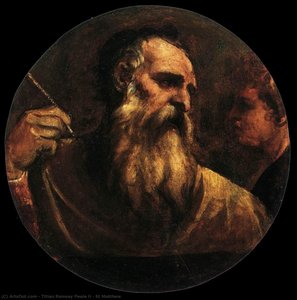
Titian Ramsay Peale II's “St Matthew” is not merely a portrait; it’s a quiet contemplation rendered in oil, a testament to the enduring influence of the High Renaissance filtered through the sensibilities of an early 19th-century American artist. The painting depicts two figures engaged in what appears to be earnest conversation – one, presumably St. Matthew himself, distinguished by a flowing robe and a thoughtful beard, holding a pencil as if poised to capture inspiration. His companion, younger and clean-shaven, listens intently, creating a dynamic interplay of age and experience, wisdom and receptivity. The intimacy of the scene is striking; the figures are closely positioned, drawing the viewer into their private world. The circular frame adds an unusual depth, almost like peering through a window into another time, enhancing the sense of focused introspection.
Inheriting a Legacy: Peale II and the Renaissance Revival
To understand “St Matthew,” one must consider Titian Ramsay Peale II’s lineage. Born in 1799, he was the son of Charles Willson Peale, a pivotal figure in American portraiture and founder of one of the nation's first museums. This familial connection wasn’t simply about inheritance; it was an immersion into a world where art was intertwined with scientific inquiry and civic duty. Peale II consciously embraced the aesthetic principles of the High Renaissance – a period characterized by harmonious composition, idealized forms, and a profound interest in humanism. While many American artists of his time were grappling with distinctly national styles, Peale II looked to Italy for inspiration, specifically to masters like Raphael and Titian (from whom he took his first name), seeking to recreate the elegance and spiritual depth of their work. This dedication to classical ideals is evident in the careful modeling of forms, the subtle use of chiaroscuro – the play of light and shadow – and the overall sense of balance and serenity that permeates “St Matthew.”
Decoding the Symbolism: Faith, Knowledge, and Artistic Creation
The symbolism within "St. Matthew" is layered and invites contemplation. The inclusion of a pencil in the hand of St. Matthew is particularly significant. Traditionally depicted with writing implements like quills or books, the pencil suggests a more modern approach to recording divine inspiration – perhaps alluding to the evolving role of art itself as a means of interpreting faith. It’s a subtle nod towards the artist's own profession and the power of visual representation. The attentive posture of the younger man could represent the burgeoning Christian community or even the artist himself, seeking guidance from the apostle. The painting isn’t a dramatic narrative scene; it’s a moment of quiet revelation, emphasizing the intellectual and spiritual journey inherent in both faith and artistic creation. It's a visual meditation on how knowledge is passed down, interpreted, and ultimately, given new form.
A Rediscovered Voice: The Enduring Appeal of Peale II
For many years, Titian Ramsay Peale II remained somewhat overshadowed by his more famous father and brother, Rembrandt. However, recent scholarship has begun to recognize the unique qualities of his work – a refined technique, a deep understanding of Renaissance principles, and a quiet emotional resonance that sets him apart. “St Matthew” exemplifies this rediscovery. It’s a painting that rewards close viewing, revealing subtle details and inviting viewers to engage with its timeless themes. As an artwork for the modern home, it offers a touch of historical elegance and intellectual depth, capable of transforming any space into a haven of contemplation and beauty. A reproduction of “St Matthew” isn't just acquiring a beautiful image; it’s welcoming a piece of American artistic heritage – a Renaissance echo resonating across time.
질의응답
"St Matthew" 프린트의 권장 용도는 무엇인가요?
티티안 램지 필 Ii의 "St Matthew"의 권장 용도는 Accent입니다. 그 외에도 다양한 용도로 활용하실 수 있습니다.
티티안 램지 필 Ii의 다른 이름이나 별칭에는 무엇이 있나요?
"St Matthew"의 작가인 티티안 램지 필 Ii의 다른 이름으로는 티티안 필, Titian Ramsay Peale Ii 등이 있습니다.
티티안 램지 필 Ii의 "St Matthew"의 방문객들은 어디에서 오나요?
"St Matthew"에 대한 통계 페이지가 존재합니다. 이 페이지에는 해당 작품과 작가의 다른 작품들에 대한 월별 방문자 수가 국가 및 언어별로 상세히 표시됩니다.
Quick facts and art quiz
About 티티안 램지 필 Ii

티티안 램지 필 Ii
1799 - 1885, 미국
작가 소개
르네상스 정신을 담은 신세계의 화가, 티티안 램지 필 II
1799년 필라델피아에서 태어난 티티안 램지 필 II는 미국의 초기 미술계에 깊숙이 뿌리내린 예술적 혈통을 자랑했습니다. 그는 조부인 찰스 윌슨 필의 아들로서, 미국 최초의 박물관 설립자이자 뛰어난 초상화가였던 아버지의 그림자에 가려졌지만, 자신만의 독특한 길을 개척했습니다. 티티안은 고대 미술, 특히 베네치아 화파의 미학적 이상에 깊이 뿌리를 둔 예술가였습니다. 그는 단순히 스타일을 모방하는 것이 아니라, 깊은 예술적 감성을 불어넣으며 캔버스에 정교한 디테일과 생생한 색채를 담아냈습니다. 격동적인 미국 사회 속에서 그의 예술적 심장은 고전주의에 대한 존경심과 새로운 세계의 표현 사이의 긴장감을 만들어냈습니다.
자연주의 스케치북에서 화가의 캔버스로
필 II의 어린 시절은 예술과 자연 역사라는 이중적인 매력으로 가득했습니다. 그의 아버지는 다방면으로 활동하며 이러한 조합을 키워주었습니다. 그는 1819년~20년에 스티븐 해리먼 롱이 이끄는 로키산맥 탐험에 동행하며, 식물과 동물들을 점점 더 정교한 시각으로 기록했습니다. 이는 단순한 관찰 기록이 아니라 형태, 빛, 질감을 이해하는 과정이었으며, 이후 그림 작업에 전념할 때 큰 도움이 되었습니다. 자연주의자로서의 경험은 그의 예술에 과학적인 정확성을 부여했을 뿐만 아니라, 단순한 묘사를 넘어 감정적 울림을 더했습니다. 그는 단순히 보이는 대로 그리는 것이 아니라, 사물의 본질적인 아름다움과 영적인 의미를 드러냈습니다.
베네치아의 영향과 신성한 비전
티티안(Titian)에게서 이름을 얻은 그는 베네치아 색채주의의 영향을 받았습니다. 이는 풍부하고 빛나는 색상과 대기 효과를 옹호하는 예술가들의 스타일입니다. 그는 이러한 거장들을 단순히 모방하는 것이 아니라, 그들의 원리를 내면화하여 자신의 예술적 비전에 적용했습니다. 특히 종교 작품에서 두드러지는데, “성스러운 네 명의 성인 제단”, "목자들의 경배"와 같은 그림들은 단순한 장면 묘사가 아닌, 정교하게 구성된 구도와 색채를 통해 감정을 불러일으키는 몰입적인 경험을 선사합니다. 이러한 작품에 나타난 세부 사항에 대한 세심한 주의는 그의 뛰어난 기술뿐만 아니라 주제에 대한 깊은 경외심을 보여줍니다. "미녀"는 인간의 형태와 개성을 우아함과 정교함으로 포착하는 그의 능력을 더욱 입증합니다.
재발견과 지속적인 의의
20세기 대부분 동안 티티안 램지 필 II는 미술사적 서술에서 큰 주목을 받지 못했습니다. 그의 작품은 기존의 유행에 쉽게 들어맞지 않았고, 급변하는 예술계에서 고전주의에 대한 헌신이 시대에 뒤떨어진다고 여겨졌습니다. 그러나 최근 몇 년 동안 그의 공헌에 대한 재평가가 이루어지고 있습니다. 학자와 수집가들은 그의 그림을 특징짓는 미국적 감성과 유럽 전통의 독특한 조화에 주목하고 있습니다. 그의 작품의 재발견은 미술사의 빈틈을 메우는 것 이상으로, 19세기 미국의 복잡한 문화적 힘을 더 깊이 이해하는 데 도움이 됩니다. 필 II는 세계를 연결하는 다리이며, 고전적인 이상의 지속적인 힘에 대한 증거이자 예술적 혁신이 예상치 못한 영향력의 조합에서 자주 발생하는 것을 상기시켜 주는 존재입니다.
주요 작품
- 성스러운 네 명의 성인 제단 – 신성한 주제를 묘사하는 그의 대표작 중 하나로, 섬세한 디테일과 풍부한 색채가 특징입니다.
- 목자들의 경배 – 빛과 그림자의 사용이 인상적인 종교화 작품으로, 깊은 영적 사색을 불러일으킵니다.
- 미녀 – 인간의 형태와 개성을 우아함과 정교함으로 포착한 초상화입니다.
- 헌납의 돈 - 르네상스 시대 화가 루벤스의 영향을 받은 작품으로, 빛과 그림자의 극명한 대비가 특징입니다.
- 님프와 목자 – 자연, 신화, 감각적인 아름다움을 결합한 작품으로, 그의 예술적 비전을 잘 보여줍니다.
Quick facts about 티티안 램지 필 Ii
- 국적: 미국인
- 영향을 준 예술가:
- 티치아노
- 베네치아 화가들
- 예술 사조: 고대 르네상스
- 전체 이름: 티티안 램지 필 II
- 주요 작품:
- 헌금의 이야기
- 목자들과 순례자의 예배
- 미녀
- 성가족
- 출생일: 1799년




티티안 램지 필 Ii
St Matthew
() ·
With its frame: · Hand-painted in oil on linen
Total