
 1949
1949 40.0 x 33.0 cm
 USC 피셔 미술관
작품의 원본 비율을 유지하는 미리 설정된 크기 중에서 선택하세요.

특정 프레임이나 공간에 맞도록 직접 크기를 입력할 수 있습니다. 선택하신 크기가 원본 이미지의 비율과 일치하지 않는 경우, 작품을 자르거나 추가적인 손으로 그린 요소를 사용하여 그림을 확장합니다. 제작 시작 전 승인을 위해 디지털 목업을 보내드립니다.
화면 미리 보기는 실제 자르기 또는 확장을 반영하지 않습니다. 최종 구성은 목업을 통해서만 정확하게 확인하실 수 있습니다.
맞춤 크기 제작도 가능하지만, 원본 비율을 유지하기 위해 사전 정의된 목록에서 크기를 선택하시는 것을 권장합니다.

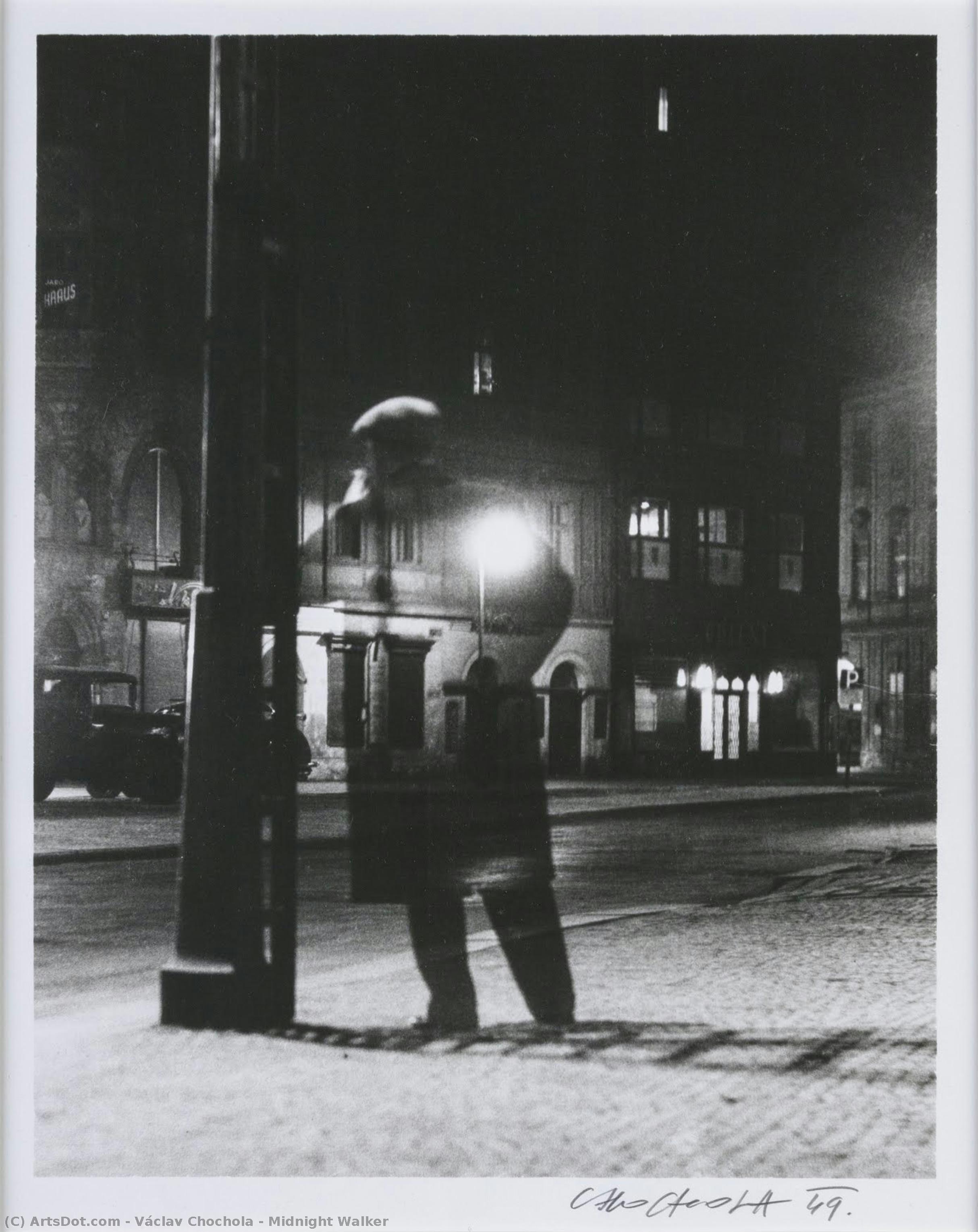
Midnight Walker
복제본 크기
Václav Chochola (1923–2005) was far more than a mere chronicler of the Czech capital; he was a poet of light and shadow, an artist who breathed life into the cobblestone streets and silent corners of Prague. Born in the Libeň district during the transformative years following World and I, Chochola’s very existence was intertwined with the shifting tides of Czechoslovak history. His journey began not in a formal studio, but through the lens of a 6x9 cm Voigtlander camera, capturing the kinetic energy of athletic competitions. This early fascination with movement and precision would later evolve into a sophisticated photographic language that bridged the gap between raw documentary reporting and profound artistic contemplation.
As his talent matured, Chochola’s work became deeply embedded in the cultural fabric of his era. During the 1940s, he navigated an apprenticeship in the studios of Prague, absorbing the technical rigors of the craft while simultaneously engaging with the avant-garde movements of his time. His photographic eye was profoundly shaped by the urban poetry of Group 42 and the lingering echoes of Surrealism. He possessed a rare ability to find the extraordinary within the ordinary, transforming the industrial outskirts of Prague and the bustling city center into stages for existential drama. Whether through the stark geometry of architecture or the intimate vulnerability of a portrait, Chochola’s work resonated with the post-war spirit of Existentialism, capturing the solitude and resilience of the human condition.
The technical brilliance of Chochola lies in his masterful command over the fundamental elements of photography: light, composition, and texture. Eschewing a singular, rigid style, he moved fluidly between various modes of expression. In his early years, the influence of the Pictorialist movement was evident, as he sought to elevate the medium through soft, atmospheric compositions reminiscent of great painters. Yet, as he progressed, he embraced the clarity and depth afforded by large-format cameras, allowing him to document both expansive urban vistas and the minute details of human expression with breathtaking precision.
His repertoire was remarkably diverse, showcasing a fearless experimentation with form:
To understand Václav Chochola is to understand the struggle for artistic truth within a landscape of political constraint. Living through the era of Socialist Realism and the complexities of Soviet-aligned rule, Chochola faced the challenge of maintaining an authentic creative voice amidst pervasive ideological pressures. He skillfully navigated these tensions, using his camera to document the daily realities of life during the Cold War without succumbing to the hollow promises of state propaganda. His work remains a vital historical record, offering a nuanced glimpse into the soul of a nation navigating profound political instability.
Ultimately, Chochola’s significance transcends the borders of Czechia. He stands as an exceptional figure in 20th-century photography, a master who could pivot from the straightforward reporting of the Prague Uprising to the most abstract photographic games. His legacy is found in the way he taught us to look at our surroundings—to see the haunting beauty in a lonely fisherman on the Vltava or the quiet drama in a midnight walker on a deserted street. Through his lens, Prague was not just a city of stone and history, but a living, breathing entity, forever captured in the eternal dance of light and shadow.

1923 - 2005 , Czechia


최신 미술 뉴스, 특별 혜택 및 인테리어 아이디어를 가장 먼저 만나보세요.
프로젝트에 대해 알려주시면 저희 미술 전문가들이 맞춤형 아트 제안 3가지를 전달해 드립니다.
당신만을 위한 맞춤형 옵션 3가지를 무료로 추천해 드립니다!

 미리보기
미리보기
 프린트 구매
 공유하기
공유하기 공유하기
공유하기
 상세 정보
상세 정보

 다운로드
다운로드
 유사 작품
유사 작품 X-레이
X-레이 슬라이드 쇼
 더 보기
더 보기






































 유리 옵션은 110cm 미만 크기에서만 선택 가능합니다.


