


 실제 크기로 보기
 보내기
보내기 공유하기
공유하기
 상세 보기
상세 보기 가이드 보기

 이미지 다운로드
 유사 작품 더 보기
 X-레이
X-레이 슬라이드 쇼 보기
 통계 정보
통계 정보Zoe Grigorieff (recto)
 Contemporary Realism
 60.0 x 44.0 cm
 Harbour Cottage Gallery
Discover 'Zoe Grigorieff (recto)' by Vera Alabaster – a captivating portrait exploring intimacy & emotion. Explore this serene painting at Harbour Cottage Gallery.
Explore the evocative paintings of Vera Alabaster – capturing intimate portraits & serene landscapes with a distinctive style. Discover her work at Stedley Art Foundation.
 상세 보기
상세 보기
이 페이지에 표시된 작품은 저작권법의 보호를 받으며, 이에 따라 동일한 복제품을 제작하거나 판매하는 것은 법으로 금지되어 있습니다. 이러한 권리 보호는 다음과 같은 국제 협약에 따라 시행됩니다. 베른 협약 또한 다음에서 명시하는 법률을 포함한 국내법에 의해 보호됩니다. 미국 저작권법 제17조.
저희는 존중을 담은 합법적인 대안으로서, 원작에서 영감을 받은 맞춤형 수제 유화 작품을 제공합니다. 저희의 숙련된 전문 화가들은 원작의 스타일, 분위기, 예술적 정수를 면밀히 연구하여, 그 자체로 독창적인 창작물이면서도 원작과 동일한 감동을 불러일으키는 새로운 작품을 만들어냅니다.
이 방식은 저작권 보호를 받는 예술 작품을 복제하거나 그대로 재현하는 것이 아니기에 저작권 규정을 완벽히 준수합니다. 대신, 이는 창의적인 재해석의 과정을 거칩니다. 즉, 원작에서 영감을 받되 원작과 동일하지 않은 새로운 회화 작품을 의미합니다.
핸드메이드 유화 복제화
작가가 직접 캔버스에 손으로 그린 유화 작품으로, 원하는 크기와 액자로 맞춤 제작해 드립니다. ( 프린트 판매로 전환 디지털 이미지 판매 채널로 전환)




P118B ₩10

P118H ₩10

P118W ₩10

P438Z ₩10

P508JH ₩12

P508YH ₩12

P805H ₩10

P805Z ₩10

P919BZ ₩10

P919G ₩10

P919XJ ₩10

P959ZH ₩10

P968JZ ₩12

W106C ₩8

W218G ₩10

W218JH ₩8

W218Y ₩10

W307PJ ₩10

W316G ₩10

W316PJ ₩8

W316Y ₩10

W398PJ ₩8

W4111J ₩10

W500HY ₩15

W500JH ₩15

W692G ₩12

W849H ₩8

W940BG ₩15

W953PJ ₩8




표준 규격
맞춤 제작
CM
INCH
작품의 원본 비율을 그대로 유지하는 프리셋 사이즈 중에서 선택해 보세요.
Loading sizes...

가로 너비
높이
액자나 벽면 크기에 맞춰 필요한 가로와 세로 길이를 입력해 주세요. 본 작품은 수작업으로 제작되므로, 요청하신 비율에 따라 작가가 그림의 가장자리를 조금 더 넓게 그리거나 일부를 조정하여 작업할 수 있습니다. 작업 시작 전, 최종 확인을 위해 디지털 목업 이미지를 보내드립니다. 이 페이지에 표시된 이미지는 실제 결과물과 다를 수 있으며, 오직 목업 이미지만이 정확한 결과물을 보여줍니다.
변경 가능한 예시: 얼굴을 고객님의 사진으로 교체, 반려동물 추가(예: 고양이를 강아지로 변경), 배경에 숨겨진 메시지 삽입, 배경 풍경 또는 요소 변경 등
주문 완료 후 TopImpressionists.com 팀에서 상세 안내를 위해 고객님께 이메일을 보내드리며, 미리보기 시안을 함께 제공해 드립니다.
주문 완료 후 TopImpressionists.com 팀에서 상세 안내를 위해 고객님께 이메일을 보내드리며, 미리보기 시안을 함께 제공해 드립니다.


 유리 옵션은 110cm 미만 크기에서만 선택 가능합니다.

Zoe Grigorieff (recto)
재현 매체
복제본 규격
-


총 결제 금액
₩ 365046
작가 소개
Vera Alabaster: A Life Painted in Intimacy and Reflection
Born Petschatkinoz in 1889, Vera Alabaster’s life was a tapestry woven across continents and marked by a profound engagement with the human condition. Her early years in St. Petersburg provided a foundation of artistic training, later enriched by studies in Florence and Munich – cities renowned for their rich artistic heritage and diverse cultural influences. These formative experiences shaped her distinctive style, characterized by an intimate portrayal of subjects, often rendered with a delicate sensitivity that belies a deep understanding of psychology and emotion. Alabaster’s journey wasn't merely one of geographical relocation; it was a constant process of absorbing and reinterpreting artistic traditions, ultimately forging a unique voice within the broader landscape of early 20th-century art.
Alabaster’s career unfolded primarily in Britain, particularly during the mid-20th century. She established herself as a significant figure in the Scottish art scene, finding a home and community in Kirkcudbright, a coastal town renowned for its artistic patronage. This period witnessed a shift towards a more personal and introspective approach to her work. Her subjects – frequently women engaged in quiet contemplation or domestic activities – were not simply depicted; they were imbued with a sense of vulnerability and resilience. The influence of Russian Symbolism is evident in the atmospheric quality of many of her paintings, particularly the use of muted colors and subtle lighting to evoke mood and emotion.
The Language of Portraiture
Alabaster’s most celebrated work lies within her portraiture. She possessed a remarkable ability to capture not just physical likeness but also the inner lives of her subjects. Her portraits are rarely static; instead, they convey a sense of movement and feeling—a fleeting expression, a subtle shift in posture, or an unspoken narrative. Works like “Zoe Grigorieff (recto)” exemplify this approach, offering a glimpse into the intimate relationship between artist and model, revealing layers of emotion beneath the surface. The meticulous detail with which she rendered fabrics and textures further enhances the sense of realism and immediacy, drawing the viewer into the scene.
The “Zoe Grigorieff” series, particularly the recto and verso panels, is a cornerstone of Alabaster’s oeuvre. These paintings are not merely representations of a single subject; they are explorations of memory, identity, and the complexities of human connection. The choice to depict Grigorieff in such an intimate setting—a quiet room bathed in soft light—suggests a desire to capture a moment of profound stillness and reflection. The subtle variations between the recto and verso panels offer further insight into Alabaster’s artistic process, revealing her willingness to experiment with composition and technique to achieve her desired effect.
Beyond Portraiture: Landscapes of Emotion
While portraiture constitutes a significant portion of Alabaster's output, she also produced a series of evocative landscapes. These works, often characterized by muted colors and atmospheric perspective, are imbued with a similar emotional depth as her portraits. The “Building in a Landscape (verso)” exemplifies this duality—a seemingly simple depiction of a building set within a rural landscape becomes a meditation on the relationship between humanity and nature. The subtle details – the texture of the stone, the play of light and shadow – invite contemplation and suggest a deeper symbolic meaning.
These landscapes are not merely scenic representations; they are reflections of Alabaster’s own emotional state. The use of color and composition is carefully calibrated to evoke feelings of solitude, nostalgia, and perhaps even melancholy. They stand as testaments to her ability to translate complex emotions into visual form.
Legacy and Recognition
Vera Alabaster's work has enjoyed a resurgence in recent years, with increasing recognition from art historians and collectors alike. Her paintings are now exhibited in galleries and museums across the United Kingdom, and her legacy as one of Britain’s most accomplished portraitists continues to grow. Her unique style—characterized by its intimacy, sensitivity, and psychological depth—has resonated with viewers for decades, and her work remains a powerful reminder of the enduring power of art to capture the complexities of human experience.
Notable sources documenting Alabaster’s life and work include articles from *Reading and Art*, mutualart.com, and artprice.com, which provide valuable insights into her artistic development and career trajectory. Her connection with Kirkcudbright and Anna Hotchkis further illuminates the context in which she created some of her most enduring works.

작가 정보 요약
- Artistic Movement Or Style: Portraiture, Landscape
- Artists Or Movements Influenced By This Artist: ['Impressionism']
- Artists Who Influenced This Artist: ['Anna Hotchkis']
- Date Of Birth: 1889
- Date Of Death: 1964
- Full Name: Vera Alabaster
- Nationality: Russian/British
- Notable Artworks:
- Three Indochinese Women
- Portrait of a girl
- Venus De Milo
- Place Of Birth: Petschatkinoz, Russia
관련 기사

Serene Blue Backgrounds: Discover Soulful Art to Transform Your Space with Timeless Elegance
Transform your home with soulful blue art. From serene Monet impressions to modern textured sculptures, discover curated masterpieces designed to inspire calm. Explore expert art consultations and bespoke hand-painted reproductions to create your personal sanctuary.

Liquid Vibes: Bold Water Landscapes & Deep Blue Textures to Level Up Your Space
Elevate your space with bold water landscapes and deep blue textures. Discover trending abstract art, from sculptural textiles to premium oil reproductions, designed to bring high-impact, liquid vibes to modern urban interiors.
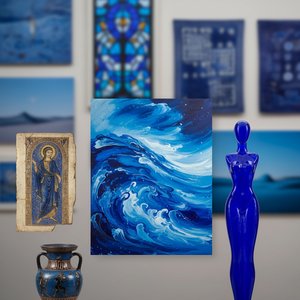
The Allure of Azure: Exploring the Symbolic & Aesthetic Depths of Blue in Art History
Explore the rich history of blue in art! Discover its symbolism, from ancient pigments to modern masterpieces by Kandinsky & Seurat. Uncover the psychological impact and cultural meanings behind this captivating hue.

Azure Visions: Exploring Representations of the Blue Dress in Western Art History
Explore the rich history of the blue dress in Western art! Discover its symbolism, from Renaissance masterpieces to modern interpretations by artists like Martin & Schiele. Uncover cultural meanings and artistic techniques.

Slate Blue Masterpieces: 10 Iconic Paintings & Timeless Home Decor Ideas
Immerse yourself in the captivating world of slate blue! Explore 10 iconic paintings by Monet, Van Gogh & Renoir. Discover their stories, techniques & find museum-quality art reproductions for your home at .