

빠른 제작과 다양한 마감 옵션을 제공하는 박물관 품질의 지클레이 또는 캔버스 프린트. ( Switch to hand made Painting Switch to Image)





























작품의 원본 비율을 유지하는 미리 설정된 크기 중에서 선택하세요.

특정 프레임이나 공간에 맞춰 직접 치수를 입력하실 수 있습니다. 선택하신 사이즈가 원본 이미지의 비율과 일치하지 않을 경우, 작품을 크롭(자르기)하거나 이미지를 대칭 또는 단색 채우기로 확장하여 제작합니다. 제작 시작 전, 최종 확인을 위해 디지털 목업이 전송됩니다.
화면상의 미리보기는 실제 크롭이나 확장 상태를 반영하지 않으므로, 최종 구도는 오직 목업을 통해서만 정확하게 확인하실 수 있습니다.
맞춤 사이즈 제작도 가능하지만, 원본 비율을 유지하기 위해서는 사전 정의된 목록에서 치수를 선택하시는 것을 권장합니다.

Zig-Zag
복제본 크기
Victor Vasarely's "Zig-Zag" is more than just a decorative painting; it’s an invitation to question the very nature of visual perception. This striking work, rendered in bold blues and whites, exemplifies the groundbreaking principles of Op Art – Optical Art – that emerged in the mid-20th century. Created by Hungarian artist Károly Vaszary (later known as Victor Vasarely), this piece embodies a fascination with geometric abstraction and its ability to manipulate our senses. The intricate arrangement of circles, both large and small, creates an illusion of depth and movement, drawing the viewer into a mesmerizing dance of light and shadow.
Vasarely’s artistic journey began far from the canvas, initially driven by a pursuit of medical studies. However, a pivotal shift occurred with his enrollment in Sándor Bortnyik’s “Műhely” workshop, profoundly influenced by the revolutionary ideas of the Bauhaus movement. This exposure ignited a lifelong exploration into the science of perception – how our eyes and brains interpret visual information. The Bauhaus emphasis on functional design and geometric abstraction provided the foundational principles for Vasarely's signature style: precise, mathematically-derived compositions designed to elicit specific optical effects. “Zig-Zag” is a direct descendant of this intellectual and aesthetic lineage, reflecting a deliberate attempt to control and manipulate the viewer’s visual experience.
The seemingly chaotic arrangement within "Zig-Zag" is, in fact, meticulously constructed. The overlapping circles, arranged in a zig-zag pattern, generate an optical illusion that creates a sense of movement and depth. Vasarely employed techniques borrowed from kinetic art – the idea that visual experience can be created through controlled motion – to achieve this effect. The precise execution highlights the artist’s dedication to scientific principles applied to artistic creation. The use of contrasting colors further amplifies the illusion, guiding the eye across the surface and reinforcing the dynamic interplay between form and space.
"Zig-Zag" transcends mere visual stimulation; it evokes a feeling of dynamism and controlled chaos. The geometric forms suggest order within apparent disorder, mirroring the complexities of modern life. Vasarely’s work is often interpreted as reflecting the anxieties and excitement of the post-war era – a period marked by rapid technological advancements and shifting social landscapes. The painting's impact lies in its ability to challenge our assumptions about reality, prompting us to consider how we perceive and interpret the world around us. This piece offers a captivating visual experience that is both intellectually stimulating and emotionally resonant.

1906 - 1997 , 크로아티아
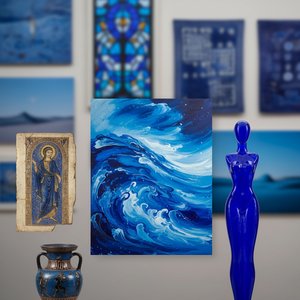
Explore the rich history of blue in art! Discover its symbolism, from ancient pigments to modern masterpieces by Kandinsky & Seurat. Uncover the psychological impact and cultural meanings behind this captivating hue.

Explore the revolutionary world of Victor Vasarely, father of Op Art. Discover his geometric masterpieces, artistic system, & lasting impact on modern design. A guide for discerning art collectors.

호안 미로의 최고 걸작 25선을 만나보세요. 꿈과 상상의 세계를 담은 추상 미술 작품들의 탄생 비화와 예술적 의미를 탐구합니다. TopImpressionists.com에서 고품질 미로 그림을 감상하고, 공간에 특별한 색채를 더해보세요! 지금 바로 컬렉션을 확인하세요.

Explore the captivating history of geometric abstraction in art, from ancient roots to contemporary masters. Expert insights for collectors & enthusiasts. Discover key artists, movements & investment potential.

Immerse yourself in the captivating world of slate blue! Explore 10 iconic paintings by Monet, Van Gogh & Renoir. Discover their stories, techniques & find museum-quality art reproductions for your home at .


최신 미술 뉴스, 특별 혜택 및 인테리어 아이디어를 가장 먼저 만나보세요.
프로젝트에 대해 알려주시면 저희 미술 전문가들이 맞춤형 아트 제안 3가지를 전달해 드립니다.
당신만을 위한 맞춤형 옵션 3가지를 무료로 추천해 드립니다!

 Preview
 공유하기
공유하기 공유하기
공유하기
 상세 정보
상세 정보

 다운로드
다운로드
 유사 작품
유사 작품 X-레이
X-레이 슬라이드 쇼

 더 보기
더 보기









 유리 옵션은 110cm 미만 크기에서만 선택 가능합니다.


