
작품의 원본 비율을 유지하는 미리 설정된 크기 중에서 선택하세요.

특정 프레임이나 공간에 맞도록 직접 크기를 입력할 수 있습니다. 선택하신 크기가 원본 이미지의 비율과 일치하지 않는 경우, 작품을 자르거나 추가적인 손으로 그린 요소를 사용하여 그림을 확장합니다. 제작 시작 전 승인을 위해 디지털 목업을 보내드립니다.
화면 미리 보기는 실제 자르기 또는 확장을 반영하지 않습니다. 최종 구성은 목업을 통해서만 정확하게 확인하실 수 있습니다.
맞춤 크기 제작도 가능하지만, 원본 비율을 유지하기 위해 사전 정의된 목록에서 크기를 선택하시는 것을 권장합니다.

Search
복제본 크기
In the grand tapestry of American history, certain names are woven into the fabric of military triumph, while others reside in the quiet, contemplative corners of fine art. William Frederick Halsey Jr. (1882–1959) is a figure who occupies both realms, though his identity is often bifurcated by the sheer magnitude of his naval command. Born on October 30, 1882, in Elizabeth, New Jersey, Halsey’s early years were shaped by a discipline that would later define his leadership during World War II. Before he was a Fleet Admiral commanding vast oceanic theaters, he was a young man navigating the academic and social landscapes of the University of Virginia and the United States Naval Academy. His time at the Academy was marked not only by rigorous study but by a spirited athleticism, earning his letter in football as a fullback and contributing to the "Lucky Bag" yearbook—a subtle hint at the creative inclinations that would persist beneath his military exterior.
While history books predominantly celebrate his strategic brilliance and his role in shaping United States Navy strategy, there exists a more delicate, artistic dimension to his life. Halsey’s engagement with the arts provides a fascinating counterpoint to the steel and salt of his naval career. His work, though often overshadowed by the thunder of naval battles, possesses a quiet dignity that speaks to the observant eye of a man accustomed to watching the horizon. This artistic pursuit was not merely a hobby but a way of interpreting the world through a lens of composition and light, finding beauty in the maritime environments that would later become his professional domain.
The art of William Frederick Halsey Jr. is characterized by its connection to the sea and the subtle nuances of American life. Unlike the grand, sweeping historical canvases of his era, much of his contribution lies in a more subdued, evocative style that captures the essence of maritime themes. His ability to translate the vastness of the ocean and the specificities of naval atmosphere into visual form allows us to glimpse the world through the eyes of a commander who lived among the waves. This connection is most notably seen in works such as Search, which resides within the prestigious Gibbes Museum of Art in Charleston, showcasing his ability to contribute meaningfully to the American artistic canon.
His collection of work serves as a bridge between the rigid structure of military life and the fluid expression of fine art. The presence of his pieces in significant institutions highlights a legacy that transcends the battlefield:
To study Halsey is to study the complexity of a man who could command fleets and contemplate canvas with equal intensity. His life serves as a profound testament to the multifaceted nature of human endeavor. While his naval achievements—reaching the highest ranks and influencing the course of global conflict—are well-documented and undeniably monumental, his artistic endeavors offer a more intimate portrait of his character. He was a man of action, yes, but also a man of observation.
The historical significance of Halsey lies not just in the victories won at sea, but in the quiet persistence of his creative spirit. He reminds us that even amidst the most harrowing responsibilities of leadership, there remains a space for the aesthetic and the contemplative. His legacy is a dual one: a pillar of American military strength and a subtle, enduring contributor to the visual history of his nation. Through his art, we are invited to look past the uniform and discover the soul of an artist hidden within the commander.

1882 - 1959 , United States of America

마크 로스코 최고작 25선을 만나보세요. 추상 표현주의 거장의 색채로 표현된 심오한 감정과 예술의 세계를 탐험하고, TopImpressionists에서 명화 복제본과 특별한 인테리어 아이디어를 찾아보세요. 지금 바로 컬렉션을 확인하세요!

Explore the rich symbolism of the red dress in art history! From ancient power displays to iconic portraits like Cézanne’s 'Madame Cezanne', discover the cultural and artistic significance behind this captivating color. Expert analysis & insights.
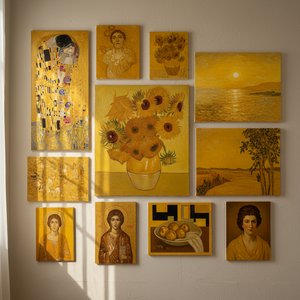
Explore 10 iconic paintings bathed in golden yellow ochre! From Van Gogh's sunflowers to Monet’s haystacks, discover the stories behind these masterpieces. Find museum-quality art reproductions & elevate your home decor on .

Immerse yourself in golden light! Explore 10 famous paintings dominated by 'Chrome Yellow', from Van Gogh’s Sunflowers to Monet's Haystacks. Discover the stories behind these iconic Impressionist & Post-Impressionist masterpieces and find museum-quality art reproductions at TopImpressionists.com.

Explore the rich symbolism & emotional power of yellow in art history! From Van Gogh to Kandinsky, discover how artists used this vibrant hue. Expert analysis & high-quality reproductions at TopImpressionists.


최신 미술 뉴스, 특별 혜택 및 인테리어 아이디어를 가장 먼저 만나보세요.
프로젝트에 대해 알려주시면 저희 미술 전문가들이 맞춤형 아트 제안 3가지를 전달해 드립니다.
당신만을 위한 맞춤형 옵션 3가지를 무료로 추천해 드립니다!


 미리보기
미리보기
 프린트 구매
 공유하기
공유하기 공유하기
공유하기
 상세 정보
상세 정보

 다운로드
다운로드
 유사 작품
유사 작품 X-레이
X-레이 슬라이드 쇼


 더 보기
더 보기






































 유리 옵션은 110cm 미만 크기에서만 선택 가능합니다.


