Early Life and Education
Anton Rosen (13 September 1859 – 2 July 1928) was a Danish architect, furniture designer, decorative artist, and professor at the Royal Danish Academy of Fine Arts. Born in Horsens, Jutland, he descended from a family with roots in stonemasonry—his father, Carl Julius Rosen, served as master mason at the Royal Danish Theatre—providing him with an early understanding of craftsmanship and architectural principles. Moving to Copenhagen as a young man, Rosen pursued his education diligently at the Copenhagen Technical College, equipping himself with the technical skills necessary for his burgeoning artistic ambitions. His enrollment in the Royal Danish Academy of Fine Arts in 1877 marked a pivotal moment, shaping his aesthetic sensibilities and fostering connections within Denmark’s artistic community. He graduated in 1882, establishing a foundation upon which he would build his illustrious career.Career Highlights
Rosen's professional life unfolded with remarkable success, characterized by collaborations with prominent figures like Vilhelm Dahlerup and marked by significant contributions to the architectural landscape of Denmark. His early work involved overseeing the construction of Silkeborg Bath (1902), a project that showcased his commitment to functionality alongside artistic vision. Simultaneously, he undertook the design and construction of Vibensgaard (1903–05), a stately villa reflecting the grandeur of Danish aristocratic residences. Rosen’s architectural prowess reached its zenith with the ambitious undertaking of Savoy Hotel, Copenhagen (1906), demonstrating his mastery of contemporary styles—particularly English influences—and incorporating Jugendstil ornamentation. Notably, he served as the principal architect for the Danish National Exhibition of 1909 in Århus, a monumental event that cemented his reputation as a visionary leader and garnered him the Eckersberg Medal, awarded jointly by Hack Kampmann and Heinrich Wenck, recognizing his exceptional talent and dedication.Architectural Style and Influences
Rosen’s architectural style was distinguished by its harmonious blend of Historicist traditions with the dynamism of Jugendstil. He drew inspiration from English architecture—particularly Tudor Revival—incorporating elements such as arched windows, timber framing, and decorative detailing into his buildings. However, Rosen skillfully infused these influences with Jugendstil’s characteristic curvilinear forms, vibrant colors, and stylized floral motifs, creating a distinctive aesthetic that captured the spirit of its time. This stylistic fusion reflected Denmark's broader artistic engagement with European trends while maintaining a distinctly Danish identity.Notable Buildings
Rosen left an indelible mark on the cityscape of Silkeborg, where he oversaw the construction of the Silkeborg Watertower (1902), a landmark structure symbolizing civic pride and technological innovation. He also designed the chimney at Silkeborg Paperworks (1906), demonstrating his ability to adapt architectural forms to industrial contexts. Perhaps Rosen’s most celebrated achievement was the Palace Hotel in Copenhagen (1903–05), a magnificent edifice embodying the elegance of Danish aristocratic taste and showcasing masterful craftsmanship—a testament to his enduring legacy as one of Denmark's foremost architects.Legacy and Recognition
Anton Rosen’s contributions to Danish architecture and design were recognized by the Royal Danish Academy of Fine Arts, which bestowed upon him the gold medal and Eckersberg Medal in 1909—a prestigious honor reflecting his artistic excellence and scholarly pursuits. His work continues to inspire admiration for its blend of historical grandeur and stylistic innovation, securing his place as a pivotal figure in Denmark’s cultural heritage.Q&A
Anton Rosén은(는) 어느 시대의 작품을 남겼나요?
Anton Rosén은(는) 19th Century 시대에 활동했습니다. 이 시기는 역사적 맥락 속에서 작가의 예술적 위치를 보여줍니다.
Anton Rosén 작가의 국적은 어디인가요?
Anton Rosén은(는) Denmark 출신입니다.
Anton Rosén의 작품 중 몇 점을 둘러보실 수 있나요?
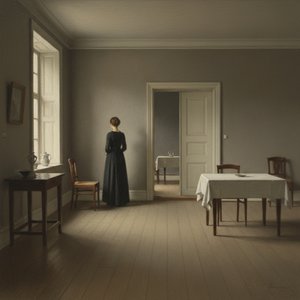
전체 작품 보기 페이지에서 Anton Rosén의 작품 작품 1점점을 만나보실 수 있습니다.
Anton Rosén의 다른 이름이나 별칭에는 무엇이 있나요?
Anton Rosén은(는) Anton Rosen라는 이름으로도 활동하고 있습니다.