The Life and Artistic Journey of Hendra Gunawan
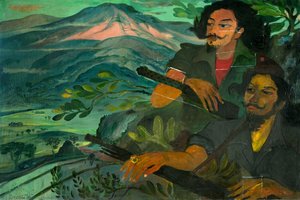
Born in Bandung, West Java, in the Dutch East Indies, Hendra Gunawan was the son of Raden Prawiradilaga and Raden Odah Tejaningsih. After running away from home to pursue the arts, he worked as a healer and freelance painter before meeting Affandi, who inspired him to focus on his craft. During the Japanese occupation, he gained prominence and later participated in the Indonesian National Revolution with the Pelukis Front, capturing the realities of the battlefield. His work eventually earned him a solo exhibition sponsored by President Sukarno in 1946.
Hendra's career was marked by significant political involvement. He co-established the Pelukis Rakjat artist collective and was a member of the Institute for People's Culture (LEKRA). Due to his political affiliations, he was arrested in December 1965 and held at Kebon Waru Prison for almost thirteen years without trial. Following his release in 1978, he faced health challenges and moved to Bali, where he eventually passed away in 1983.
Style and Subject Matter
Hendra Gunawan's artistic style evolved from early realism toward an increasingly impressionist approach. His works are characterized by:
His subject matter often drew from wayang (shadow puppetry), Balinese culture, and scenes of people at work, in play, or in struggle. While landscapes are rare in his oeuvre, his paintings frequently depicted the human condition, from burdened women traveling roads to historical scenes of conflict.
Q&A
Hendra Gunawan의 작품 중 몇 점을 둘러보실 수 있나요?
전체 작품 보기 페이지에서 Hendra Gunawan의 작품 작품 55점점을 만나보실 수 있습니다.
Hendra Gunawan의 모든 작품은 어디에서 볼 수 있나요?
이 사이트에 등록된 Hendra Gunawan의 모든 작품은 작가의 전체 작품 보기 페이지에서 만나보실 수 있습니다.
Hendra Gunawan의 작품을 연도순으로 어디에서 볼 수 있나요?
Hendra Gunawan의 작품을 연도별로 정리하여 보여주는 작품 연대기 페이지입니다.
Hendra Gunawan의 작품을 컬러 팔레트별로 둘러볼 수 있나요?
컬러 팔레트별로 보기 페이지에서는 Hendra Gunawan의 작품들을 색상 팔레트별로 모아볼 수 있습니다.