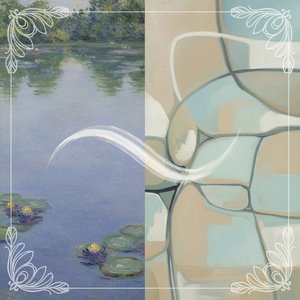
A Life Subtly Painted: The Rediscovery of Marie Bracquemond
Marie Anne Caroline Quivoron, known to the world as Marie Bracquemond, was a French Impressionist painter whose talent blossomed amidst a period of artistic revolution yet faced decades of obscurity. Born in 1840 in Argenton-en-Landunvez, Brittany, her early life was marked by movement and a lack of formal training—a circumstance that would ironically shape the independent spirit evident in her work. Unlike many artists of her time who benefited from established academies, Bracquemond’s artistic journey began with private lessons and an innate sensitivity to color and light. Her initial success came quickly; a portrait of her mother and sister was accepted by the prestigious Paris Salon in 1857, a remarkable feat for a young, self-taught artist. This early recognition led to mentorship under Jean Auguste Dominique Ingres, though their relationship proved complex—Ingres encouraged technical skill but cautioned against the ambitions of a woman pursuing painting beyond traditional subjects like flowers and portraits.Impressionism & Domestic Constraints
Bracquemond’s life took a pivotal turn with her marriage to Félix Bracquemond in 1869, an engraver and friend of many burgeoning Impressionists—Monet, Degas, and Gauguin among them. This connection opened doors to the heart of the avant-garde movement. She actively participated in the first seven Impressionist exhibitions (1879–1886), showcasing her evolving style alongside some of the most innovative artists of the era. However, this period of artistic freedom was shadowed by a growing domestic struggle. Félix, despite his initial encouragement, became increasingly critical and dismissive of Marie’s work, actively hindering her career. Accounts from their son, Pierre, reveal a pattern of emotional manipulation and suppression—paintings hidden from view, public exhibitions discouraged, and constant undermining of her confidence. This environment gradually led Bracquemond to withdraw from the art world, effectively abandoning painting by 1890, though she continued to create watercolors privately.A Style Defined by Intimacy & Observation
Bracquemond’s paintings are characterized by a delicate intimacy and keen observation of everyday life. She eschewed grand historical narratives or dramatic compositions in favor of scenes depicting women engaged in quiet moments—reading, sewing, or simply lost in thought. Her palette is often soft and muted, employing subtle gradations of color to capture the play of light and shadow. “Woman with Umbrella” (1880), for example, exemplifies her mastery of watercolor, portraying a solitary figure enveloped in an ethereal atmosphere. Similarly, “Self Portrait” (1870), rendered in oil, reveals a melancholic gaze and intricate detail—a poignant self-reflection that hints at the artist’s inner complexities. Her landscapes, though less numerous, demonstrate a similar sensitivity to mood and place, often featuring the serene countryside around her home in Aix-en-Provence. Unlike some of her Impressionist contemporaries who focused on capturing fleeting moments, Bracquemond's work possesses a quiet stillness—a contemplative quality that sets it apart.Rediscovery & Lasting Legacy
For decades, Marie Bracquemond remained largely forgotten, overshadowed by the more celebrated male figures of Impressionism. Her story is a stark reminder of the challenges faced by women artists in the 19th century—the societal pressures, lack of institutional support, and often-destructive influence of patriarchal structures. However, recent years have witnessed a remarkable resurgence of interest in her work. Scholarly research has brought to light the extent of Félix Bracquemond’s suppression, revealing the deliberate attempts to erase Marie's artistic contributions from history. This rediscovery is not merely about correcting historical omissions; it’s about recognizing the profound beauty and originality of an artist whose voice was silenced for too long. Exhibitions, publications, and increasing market value are testament to her growing recognition. The acquisition of her paintings by major institutions like the Walker Art Gallery in Liverpool signifies a commitment to showcasing diverse artistic perspectives and challenging traditional art historical narratives. Marie Bracquemond’s legacy is one of resilience, quiet strength, and an enduring passion for capturing the subtle poetry of everyday life—a testament to the power of art to transcend personal hardship and illuminate the human spirit.Q&A
Marie Bracqemond의 작품을 색상별로 정렬해서 볼 수 있나요?
Marie Bracqemond의 컬러 인덱스에서는 작가의 작품들을 색상별로 모아 보실 수 있습니다.
Marie Bracqemond의 작품을 분위기별로 찾아볼 수 있나요?
Marie Bracqemond의 무드 룸에서는 작가의 작품들을 분위기별로 만나보실 수 있습니다.
Marie Bracqemond 작가는 어떤 사조의 작품 활동을 했나요?
Marie Bracqemond 작가의 작품을 예술 사조별로 모아둔 모든 미술 사조 페이지에서 해당 작가가 활동했던 사조를 확인하실 수 있습니다.