

 Peržiūrėti realaus dydžio版
 Pasidalinti
 Dalintis
 Išsamiau
 Vadovas

 Atsisiųsti
 Panašūs eksponatai
 Rentgeno spindulių nuotrauka
 Automatinė diorama
 Q&A
Q&A Statistika
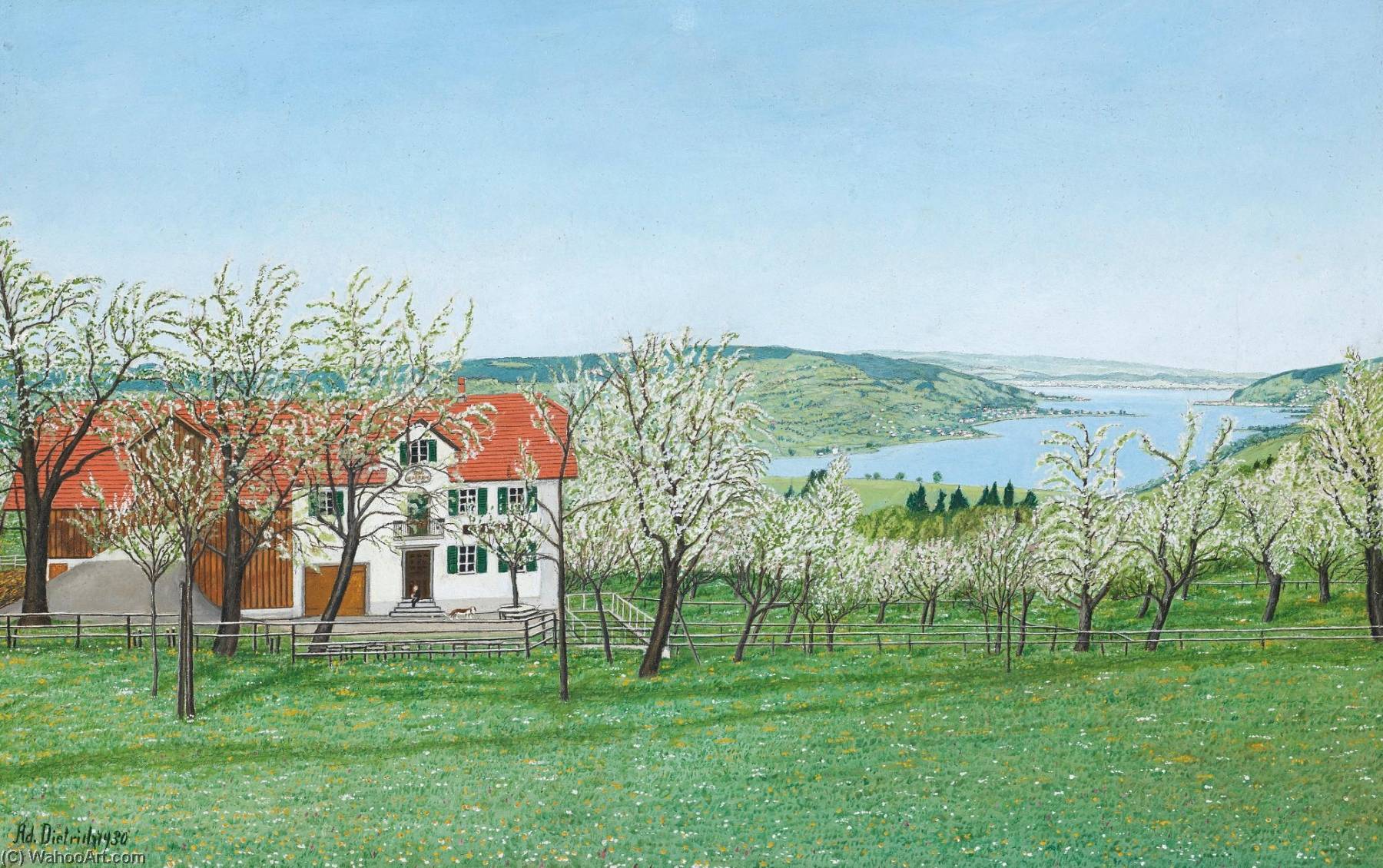
Eppenberg bei Eschenz, 1930
Adolf Dietrich (1877-1957) was a renowned Swiss Naïve artist of the 20th century, associated with New Objectivity. Explore his vibrant paintings of rural landscapes, still lifes & scenes of daily life. A key figure in Swiss art history.
 Skaityti daugiau
Šiame puslapyje rodomas meno kūrinys yra saugomas autorių teisių įstatymais, todėl neturime teisės legaliai kurti ar parduoti jo identiškos reprodukcijos. Ši apsauga užtikrinama remiantis tokiais tarptautiniais susitarimais kaip Bernės konvencija ir pagal nacionalines įstatymų nuostatas, įskaitant tas, kurias nurodo JAV autoriškos teisės įstatymas – 17-asis skyrius.
Kaip pagarbią ir teisėtą alternatyvą, mes siūlome pagal užsakymą rankomis dažytus paveikslus, įkvėptus originalo. Mūsų įgudę ir profesionalūs menininkai kruopščiai tiria originalo stilių, nuotaiką ir meninę esmę, kad sukurtų naują, unikalią kūrinį, kuris sukelia tą paties jausmą – išlikdamas tuo tarciau originaliu, savarankišku kūrybiniu darbu.
Šis metodas visiškai atitinka autorių teises, nes jame nėra saugomo kūrinio kopijavimo ar dubliavimo. Tai yra kūrybinė reinterpretacija – naujas paveikslas, kurį įkvėpė originalas, tačiau kuris nėra jo identiškas.
Rankų darbo aliejinės reprodukcijos
Rankiniu būdu tapytas aliejus ant droblio jūsų pageidaujamame dydį ir rėmuose – tai mūsų menininkų pagal užsakymą sukurtas darbas. ( Perjungti į spausdinamus版作品 Perejti prie skaitmeninių vaizdų)




































Standartinis dydis
pagal užsakymą
CM
INCH
Pasirinkite iš mūsų nustatytų dydžių, atitinkančių originalaus meno kūrinio proporcijas.
Loading sizes...

plotis
aukštis
Įveskite jums reikiamą plotį ir aukštį, kad paveikslas atitiktų jūsų rėmą ar sieną. Kadangi šis darbas yra rankinio darbo, siekiant išgauti kitokios formos dydį, paveikslas gali būti šiek tiek didesnis (nuo kraštų bus palikta daugiau erdvės) arba mažesnis – pasirinkite jums patogiausią variantą. Prieš pradedant tapyti, atsiųsime jums skaitmeninį maketą patvirtinimui. Šioje puslapio nuotraukoje matomas vaizdas nėra galutinis rezultatas – jį parodys tik sukurtas maketas.
Ką galima pakeisti (pavyzdžiai): Pakeisti veidą į kliento nuotrauką; Pridėti augintinį (pvz., pakeisti katę šunimi); Įtraukti paslėptą žinutę fone; Pakeisti fono kraštovaizdį ar elementus.
Gavus užsakymą, TopImpressionists.com komanda susisieks su klientu el. paštu dėl instrukcijų ir pateiks maketo pavyzdį
Gavus užsakymą, TopImpressionists.com komanda susisieks su klientu el. paštu dėl instrukcijų ir pateiks maketo pavyzdį
Pristatymas visame pasaulyje () per 3–4 savaites, o ne įprastai – per 5 savaites. (28 spalis). Kokybė lieka nepakeičiama.

Nemokamas greitasis pristatymas visame pasaulyje

Aukštos kokybės lininis drobė

Pilnas siuntimo draudimas

Muitinės mokesčių grąžinimo garantija

Tikro spalvų atitikimo garantija

100 dienų grąžinimo politika (tik esant įtaigoms)

100% pinigų grąžinimo garantija

Nuolaida dideliems užsakymams
 Stiklo variantas prieinamas tik pasirinkus dydį iki 110 cm

Eppenberg bei Eschenz, 1930
Reprodukcijos technika
Reprodukcijos matmenys
-


Bendroji kaina
€ 237
Autoriaus biografija
A Life Rooted in the Swiss Landscape
Adolf Dietrich, born in 1877 and passing away in 1957, was a quietly significant figure in 20th-century Swiss art. Though not widely known internationally during his lifetime, he has since been recognized as a leading exponent of Naïve art, deeply connected to the traditions of New Objectivity. His life unfolded largely within the serene setting of Berlingen, Switzerland, on Lake Constance, and this geographical anchoring profoundly shaped both the subject matter and spirit of his work. Dietrich wasn’t an artist who sought out bustling urban scenes or avant-garde experimentation; instead, he turned inward, meticulously documenting the rhythms of rural existence with a unique blend of precision and heartfelt simplicity. He was, in essence, a chronicler of a disappearing world—a world of farmers, orchards, and the quiet dignity of everyday labor. His artistic journey wasn’t one of dramatic shifts or stylistic revolutions but rather a consistent refinement of his vision, a deepening engagement with the visual language of his surroundings.The Painterly Language of Simplicity
Dietrich's paintings are immediately recognizable for their distinctive style. He eschewed academic conventions in favor of a deliberately naive approach—a term that shouldn’t be mistaken for lack of skill, but rather an intentional rejection of illusionistic depth and perspective. His forms are solid and clearly defined, often outlined with dark contours, reminiscent of folk art traditions and children's drawings. Colors are vibrant yet grounded, reflecting the natural hues of the Swiss countryside: the rich greens of meadows, the warm ochres of barns, the deep blues of the lake. He possessed an extraordinary eye for detail, rendering each leaf, flower, and cobblestone with painstaking accuracy. However, this meticulousness wasn’t employed to create a photographic realism; instead, it served to emphasize the inherent beauty and order within the natural world. His compositions are often characterized by a flattened perspective and a sense of stillness, inviting viewers to linger and contemplate the quiet poetry of his scenes. He frequently depicted still lifes—arrangements of fruit, vegetables, and household objects—that radiate a sense of abundance and contentment.Influences and Artistic Development
While Dietrich’s style is often categorized as Naïve, it wasn't born in isolation. The artistic climate of the early 20th century, particularly the rise of New Objectivity (Neue Sachlichkeit) in Germany, exerted a subtle influence on his work. This movement emphasized clarity, realism, and a rejection of emotional excess—qualities that resonate strongly with Dietrich’s paintings. However, he diverged from the often-critical or satirical tone of many New Objectivity artists, choosing instead to celebrate the beauty and dignity of rural life. His primary influence, however, stemmed from the folk art traditions of Switzerland, particularly the decorative painting found on furniture and houses in his region. He absorbed the bold colors, simplified forms, and directness of expression that characterized these vernacular styles. Over time, Dietrich’s work evolved from a more purely descriptive approach to one that incorporated elements of symbolism and personal narrative. While he rarely depicted dramatic events, his paintings often convey a sense of underlying emotion—a quiet joy in the simple pleasures of life or a subtle melancholy for a world undergoing change.Themes and Recurring Motifs
Several themes recur throughout Dietrich’s oeuvre. Rural landscapes are central to his work, depicting scenes of farming, harvesting, and village life. He frequently painted orchards laden with fruit, vineyards basking in the sun, and fields dotted with wildflowers. These landscapes aren't merely representations of physical places; they are imbued with a sense of nostalgia and reverence for the natural world. Still lifes also occupy a prominent place in his paintings—arrangements of fruits, vegetables, flowers, and household objects that radiate a sense of abundance and contentment.- The depiction of daily life: Dietrich’s scenes often feature ordinary people engaged in everyday activities – tending gardens, washing clothes, or simply enjoying a meal.
- Celebration of the seasons: He captured the changing rhythms of nature with meticulous detail, from the blossoming of spring to the harvest of autumn.
- The importance of community: His paintings often depict scenes of social gathering and communal labor, highlighting the bonds that connect people to their land and each other.
Historical Significance and Legacy
Adolf Dietrich’s historical significance lies in his ability to capture the essence of a disappearing way of life. His paintings offer a poignant glimpse into the rural Switzerland of the early 20th century—a world that was rapidly changing under the pressures of modernization and industrialization. While he wasn't actively engaged in political or social commentary, his work implicitly celebrates the values of simplicity, community, and connection to nature. In recent years, there has been a growing appreciation for Dietrich’s unique artistic vision. His paintings are now recognized as important examples of Naïve art and valuable documents of Swiss cultural history. He stands as a testament to the power of quiet observation—a reminder that beauty can be found in the most ordinary of places and that even the simplest subjects can be imbued with profound meaning. His work continues to resonate with viewers today, offering a sense of peace, nostalgia, and a renewed appreciation for the rhythms of the natural world.
Adolf Dietrich
1877 - 1957
Trumpa informacija
- Full Name: Adolf Dietrich
- Nationality: Swiss
- Date Of Birth: 1877
- Date Of Death: 1957
- Place Of Birth: Berlingen, Switzerland
- Notable Artworks:
- Frühlingslandschaft am Untersee,
- Mädchen mit kurzen Haaren,
- Berlingen vom See aus
- Artistic Movement Or Style: Neue Sachlichkeit, Naïve art