

Shown: · With its frame:
 Peržiūrėti realaus dydžio版
 Pasidalinti
 Dalintis
 Išsamiau
 Vadovas

 Atsisiųsti
 Panašūs eksponatai
 Rentgeno spindulių nuotrauka
 Automatinė diorama
 Q&A
Q&A Statistika
 Oil On Canvas
- WallArt
- Neoclassical Style
 1836
1836- 19th Century
 51.0 x 42.0 cm
 Musée Fabre
€ 239
Rankų darbo aliejinės reprodukcijos
Rankiniu būdu tapytas aliejus ant droblio jūsų pageidaujamame dydį ir rėmuose – tai mūsų menininkų pagal užsakymą sukurtas darbas. ( Perjungti į spausdinamus版作品 Perejti prie skaitmeninių vaizdų)
Size
·Standartinis dydis
pagal užsakymą
CM
INCH
Pasirinkite iš mūsų nustatytų dydžių, atitinkančių originalaus meno kūrinio proporcijas.
Loading sizes...

plotis
aukštis
Įveskite jums reikiamą plotį ir aukštį, kad paveikslas atitiktų jūsų rėmą ar sieną. Kadangi šis darbas yra rankinio darbo, siekiant išgauti kitokios formos dydį, paveikslas gali būti šiek tiek didesnis (nuo kraštų bus palikta daugiau erdvės) arba mažesnis – pasirinkite jums patogiausią variantą. Prieš pradedant tapyti, atsiųsime jums skaitmeninį maketą patvirtinimui. Šioje puslapio nuotraukoje matomas vaizdas nėra galutinis rezultatas – jį parodys tik sukurtas maketas.
 Skaityti daugiau
Finish
·
White €1

Blurside €1

Extended €1

P118B €10

P118H €10

P118W €10

P438Z €10

P508JH €12

P508YH €12

P805H €10

P805Z €10

P919BZ €10

P919G €10

P919XJ €10

P959ZH €10

P968JZ €12

W106C €8

W218G €10

W218JH €8

W218Y €10

W307PJ €10

W316G €10

W316PJ €8

W316Y €10

W398PJ €8

W4111J €10

W500HY €15

W500JH €15

W692G €12

W849H €8

W940BG €15

W953PJ €8

H24-GOLD €30

H24-SILVER €30

H36-GOLD €45

H36-SILVER €45
Shipped in a protective tube, ready for your own framer.
Above 105 cm the frame is shipped as a kit for a professional framer — read the details.
Extras
optionalWhat do the extras include?
Examples of what can be changed: Replace face with customer photo; Add pet (e.g., replace cat with dog); Include hidden message in background; Change background landscape or elements.
After order, TopImpressionists.com team will email client for instructions and provide a mockup preview
After order, TopImpressionists.com team will email client for instructions and provide a mockup preview
Pristatymas visame pasaulyje () per 3–4 savaites, o ne įprastai – per 5 savaites. (30 spalis). Kokybė lieka nepakeičiama.
Apsauginis lakas
Pavadinimo lentelė
Išgraviruotos bronzinės plokštelės detalės
This elegant plaque features the artist's name and the title of the artwork, finely engraved for a timeless presentation.
It is made from bronze with a refined, elegant finish. The text is precisely laser-engraved for a sharp and permanent result. Measuring 9x2 cm, the plaque is compact yet easy to read. It's built to be durable and scratch-resistant, offering a professional, museum-quality look. Mounting is simple thanks to the included adhesive backing.
Skaidrios akrilo plokštelės informacija
The plaque includes essential engraved details such as the artist's name, the title of the artwork, the date it was created, the type of media used-like oil on canvas or watercolor-a brief description of the piece, and a QR code that links to the complete artwork information.
It is crafted from clear acrylic, offering a sleek, modern appearance. The text is UV-engraved in black to ensure strong visual contrast. With a size of 10x15 cm, it ensures optimal readability. It comes equipped with two metal hooks for secure wall mounting. The plaque is designed to be weather-resistant, making it suitable for various environments, and it includes interactive features that work seamlessly with smartphone scanning.
Juodos akrilo plokštelės informacija
This elegant plaque includes engraved information such as the artist's name, the title of the artwork, the date it was created, the type of media used (like oil on canvas or watercolor), a short description of the artwork, and a QR code for quick access to more information.
The plaque itself is made from refined black acrylic with a premium finish. The text is laser-engraved in white for high contrast and readability. Its size is 10x15 cm, designed to be easy to read. It comes with two metal hooks for professional mounting. The design is sleek and fits any interior style. It is also weather-resistant and durable, with built-in digital integration for mobile compatibility.
Stiklo variantas prieinamas tik pasirinkus dydį iki 110 cm
 Stiklo variantas prieinamas tik pasirinkus dydį iki 110 cm
- Nemokamas greitasis pristatymas visame pasaulyje
- Aukštos kokybės lininis drobė
- Pilnas siuntimo draudimas
- Muitinės mokesčių grąžinimo garantija
- Tikro spalvų atitikimo garantija
- 100 dienų grąžinimo politika (tik esant įtaigoms)
- 100% pinigų grąžinimo garantija
- Nuolaida dideliems užsakymams


Kolekcinio objekto aprašas
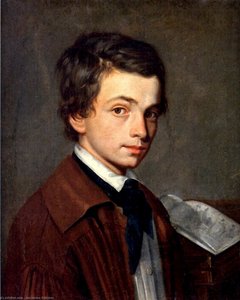
Admire Alexandre Cabanel's "Self Portrait as a Child" (1836), a poignant early work showcasing youthful introspection & academic mastery. Oil on canvas, Musée Fabre. Shop high-quality reproductions now!
Autoriaus biografija
Atsipalaiduokite su Alexandre Cabanel (1823–1889) pasauliu – prancūzų akademinio tapybos meistru, garsėjusiu klasikiniais ir istoriniais kūriniais, tokiais kaip „Veneros gimimas“. Tyrinėkite portretus, religines scenas ir jo ilgalaikį įtaką.
About the painting
Self Portrait as a Child: A Window into Cabanel’s Soul
Alexandre Cabanel's "Self Portrait as a Child," painted in 1836, is more than just a charming depiction of youth; it’s a profoundly intimate glimpse into the formative years of one of France’s most celebrated academic artists. Housed within the walls of the Musée Fabre in Montpellier, this oil on canvas piece transcends its modest dimensions (51 x 42 cm) to offer a poignant meditation on identity, aspiration, and the very beginnings of artistic vision. The painting immediately draws the viewer in with its quiet intensity – a young man, barely into his teens, sits thoughtfully, a book open before him, his gaze direct and unwavering.
Neoclassical Roots & Romantic Awakening
Cabanel’s work exemplifies the fascinating transitional period between Neoclassicism and Romanticism in French art. Born in Montpellier in 1823, he was steeped in the classical ideals championed by Jacques-Louis David – a legacy evident in the meticulous detail of his brushwork and the idealized beauty of his subject. However, "Self Portrait as a Child" hints at the burgeoning Romantic sensibility, particularly in the boy’s contemplative pose and the subtle melancholy that permeates the scene. This early work demonstrates Cabanel's mastery over both style and technique, foreshadowing his later successes in depicting historical and mythological narratives with remarkable realism and emotional depth.
A Study in Technique & Composition
The painting’s technical brilliance is immediately apparent. Cabanel’s command of oil on canvas is exceptional; the smooth gradations of color, the delicate modeling of form, and the precise rendering of textures – particularly in the book and the boy's clothing – speak to years of dedicated training. The composition itself is carefully considered. The seated pose, with the direct gaze and the open book, creates a sense of immediacy and invites the viewer into the young man’s world. It’s not merely a portrait; it’s an intimate dialogue between artist and subject, a self-examination captured on canvas.
Symbolism & The Artist's Journey
"Self Portrait as a Child" is laden with symbolic weight. The book represents knowledge, aspiration, and the pursuit of artistic excellence – qualities that were central to Cabanel’s own life. The contemplative pose suggests a moment of self-reflection, a questioning of one’s place in the world and the path one intends to follow. This early work is crucial because it reveals Cabanel's dedication to his craft from a young age, demonstrating an innate talent nurtured by rigorous training. It offers a rare and valuable insight into the genesis of a master artist’s career – a testament to the power of observation, discipline, and a profound connection with one’s artistic heritage.
Klausimai ir atsakymai
Kokia buvo Aleksandras Kabnelis amžius sukuriant „Self Portrait as a Child“?
Aleksandras Kabnelis „Self Portrait as a Child“ sukūrė būdamas 13 metų amžiaus.ت Artistas gimė 1823, o kūrinys datuojamas 1836 metais.
Ar yra galima peržiūrėti „Self Portrait as a Child“ – Aleksandras Kabnelis asmenines nuotraukų rodyklę?
Galima peržiūrėti nuotraukų rodyklę: Slaydšou puslapį kūriniam „Self Portrait as a Child“ – Aleksandras Kabnelis.
Kokią vietą meno istorijoje užima „Self Portrait as a Child“ – Aleksandras Kabnelis?
Dailos istorinė „Self Portrait as a Child“ – Aleksandras Kabnelis klasifikacija – tai Neoclassical Style stilius, 19th Century laikotarpiu.
Quick facts and art quiz
About Aleksandras Kabnelis

Aleksandras Kabnelis
1823 - 1889, Prancūzija
Autoriaus biografija
Ankstyvas gyvenimas ir meninis formavimasis
Aleksandras Kabnelis, vardas neatsiejamas nuo XIX amžiaus Prancūzijos akademinio meno, gimė Montpeljė 1823 metų rugsėjo 28 dieną. Jo kelionė link meistriškumo prasidėjo ne šeimoje, kurioje vyravo menininkai, o kuklaus stalioriaus sūnaus gyvenime – aplinka, įskiepijusi jam stiprų darbo etiką ir galbūt didesnį vertinimą amato. Dar jaunystėje Kabnelio talentas buvo neabejotinas; dešimties metų jis jau lankė vietinę meno mokyklą Montpeljė, rodydamas gebėjimus, nusipelniusius ypatingo dėmesio. Ši ankstyva pažanga užtikrino jam stipendiją studijuoti Paryžiuje 1839 metais, įžengiant į prestižinę École des Beaux-Arts po Fransua Eduardo Piko globoja. Pikot, pats Žako Lui Davido mokinys, perteikė griežtą mokymą, įsišaknijusį klasikiniais principais – pagrindą, kuris giliai paveiks Kabnelio meninį kelią. Mokymo programa neapsiribojo technika; ji apėmė platų literatūros, istorijos ir filosofijos išsilavinimą, ugdant intelektualų gilumą, kuri formavo jo tematiką. Jo ankstyvos pastangos laimėti geidžiamą Romos premiją, nors ir nesėkmingos, parodė ambicijas ir norą tobulinti įgūdžius. Galiausiai 1845 metais jis pasiekė šį apdovanojimą, suteikdamas jam galimybę studijuoti Vila Medičyje Romoje – esminę patirtį bet kuriam pradedančiam prancūzų menininkui.Romos metai ir iškilimas į viršūnę
Roma buvo transformuojanti Kabnelio gyvenime. Panaręs į antikinių laikų menus ir kultūrą, jis įsisavino Renesanso meistrų pamokas, studijuodamas jų kompozicijas, technikas ir formos įvaldymą. Šis laikotarpis nebuvo tik apie senųjų meistrų kopijavimą; tai buvo procesas internalizuojant klasikines idėjas ir pritaikant jas prie savo meninės vizijos. Tuo metu jis užmezgė lemiamus santykius su Alfredu Briua, taip pat kilusiu iš Montpeljė ir aštriu meno kolekcioneriumi, kuris tapo Kabnelio globėju. Briua užsakė kelis darbus menininkui, įskaitant *Albaydé*, *La Chiaruccia* ir *Vyras apmąstant, Jaunas romų vienuolis* – paveikslus, atskleidžiančius Kabnelio augantį įgūdį vaizduoti istorinius objektus ir jausmingas scenas, persmelktas romantikos. Grįžęs į Paryžių, Kabnelis greitai įsitvirtino kaip pagrindinė Salonų sistemos figūra – oficialios Académie des Beaux-Arts meno parodos. Jo paveikslai nuolat sulaukė giriamųjų atsiliepimų dėl techninio meistriškumo, elegantiškos kompozicijos ir žavingo grožio. Proveržis įvyko 1863 metais su *Veneros gimimu*. Šis paveikslas – stulbinantis vaizdas apie deivę iškylantį iš jūros – sukėlė didelį rezonansą, ir ne be kontroversijų. Nors jį gyrė už puikų moteriškos figūros atvaizdavimą ir meistrišką techniką, kai kurie kritikai teigė, kad jis yra per daug jausmingas arba neturi originalumo. Tačiau pats Napoleonas III įsigijo šį darbą savo asmeninei kolekcijai, įtvirtindamas Kabnelio reputaciją ir užtikrindamas jam vietą tarp geičiausių Antrosios imperijos menininkų.Akademinio stiliaus meistras
Kabnelio meno stilius tvirtai įsitvirtinęs akadinis realizmas – tradicija, pabrėžianti tikslų braižymą, kruopštų dėmesį detalėms ir atsidavimą klasikinėms grožio idealams. Jis puikiai sekėsi vaizduojant istorinius, mitologinius ir religinius objektus, dažnai įskiepijant juos dramos ir emocinio intensyvumo jausmą. Jo portretai taip pat buvo gerbiami už gebėjimą perteikti ne tik sėdėjimo fizinį panašumą, bet ir jų charakterį bei asmenybę. Kabnelio techniką apibūdino lygūs potepiai, subtilūs tono perėjimai ir meistriškas šviesos ir šešėlio naudojimas. Jis turėjo išskirtinį talentą atvaizduoti odos tonus nepaprastai tikroviškai, kurdamas figūras, atrodo, kvėpuojančias drobėje. Jis tiesiogiai nekopijavo realybės; jis ją idealizavo – siekdamas sukurti vaizdus, įkūnijančius klasikinius harmonijos, pusiausvyros ir proporcingumo principus. Šis idealizuoto grožio siekis dažnai vedė jį tobulinti ir šlifuoti savo objektus, sukuriant paveikslus, kurie buvo tiek techniškai nepriekaištingi, tiek estetiškai patrauklūs. *Ofelija*, nutapyta 1883 metais, yra puikus pavyzdys; tragiškė herojė vaizduojama su gaudria grožiu, jos poza ir išraiška perteikia gilų liūdesio jausmą. Panašiai jo *Grafienės E. A. Vorontsovos Daškovos portretas* demonstruoja jo gebėjimą užfiksuoti tiek sėdėjimo eleganciją, tiek vidinę jėgą.Palikimas ir įtaka
Iki 1864 metų Kabnelis pasiekė tokio lygio sėkmės, kad galėjo priimti profesoriaus pareigas École des Beaux-Arts – poziciją, kurią jis užėmė iki savo mirties 1889 metais. Kaip mokytojas, jis turėjo įtakos ištisoms kartoms menininkų, perteikdamas savo žinias ir įgūdžius siekiantiems tapytojams. Tarp jo žymiausių mokinių buvo daugybė sėkmingų menininkų, tęsusių akademinio meno tradicijas. Nepaisant iššūkių, kylančių iš naujų meninių judėjimų, tokių kaip Impresionizmas, jo gyvenimo pabaigoje, Kabnelis liko tvirtai įsipareigojęs klasikiniams idealams. Jo darbai ir toliau buvo eksponuojami ir švęsti, o jis išlaikė lojalią gerbėjų tarptautinę bendruomenę tarp kolekcionierių ir globėjų. Nors vėlesnės kartos gali žiūrėti į akademinį meną su tam tikra skepticizmu, Kabnelio indėlis lieka reikšmingas. Jis reprezentuoja XIX amžiaus prancūzų tapybos viršūnę – meistrišką amatininką, kuris turėjo neprivalomą gebėjimą kurti vaizdus, kurie buvo tiek gražūs, tiek techniškai įvykdyti. Jo paveikslai ir šiandien žavi publiką, siūlydami žvilgsnį į pasaulį, kuriame meno meistriškumas, įgūdžiai ir klasikinės idėjos viešpatavo. Jo įtaka matoma jo pasekėjų darbuose, netgi tų, kurie sąmoningai atmetė akademinio meno konvencijas – tai yra patvirtinimas jo meninės vizijos ilgiamajam galiu.Quick facts about Aleksandras Kabnelis
- Gimimo Data: 1823 rugsėjo 28 d.
- Gimimo Vieta: Montpeljė, Prancūzija
- Meninis Stilius: Akademinė tapyba
- Mirties Data: 1889 sausio 23 d.
- Pilietybė: Prancūzas
- Pilnas Vardas: Alexandre Cabanel
- Įtakoję Menininkai: ['François-Édouard Picot']
- Žymiausi Darbai:
- Ofelija
- Veneros gimimas
- Faedra
Tyrinėkite meno kūrinius, suskirstytus pagal temas, stilius ir savybes.

Aleksandras Kabnelis
Self Portrait as a Child
() ·
With its frame: · Hand-painted in oil on linen
Total