


 Siųsti
 Dalintis
 Išsamiau
 Vadovas

 Atsisiųsti
 Panašūs eksponatai
 Diaporama
 Statistika
Venus and Mars


Marvel at Antonio Canova's 'Venus and Mars,' a neoclassical sculpture celebrating peace & harmony. This iconic marble masterpiece, commissioned by the Prince Regent, embodies love and war’s union.
 Rodyti daugiau
Ištykite nepasiulyomo neoklasicizmo skulptoriaus Antonio Canovos (1757–1822) pasaulį! Admiraudite kvapą gąsdinančias marmuro statulas, tokias kaip Kupido ir Psyche, Gražiosios ir kitas. Atraskite jo gyvenimą bei palikimą!
Rankų darbo aliejinės reprodukcijos
Rankiniu būdu tapytas aliejus ant droblio jūsų pageidaujamame dydį ir rėmuose – mūsų menininkų darbas pagal užsakymą. ( Perjungti į spausdinimą Perejti prie skaitmeninių vaizdų)




































Standartinis
individualaus dydžio
CM
INCH
Pasirinkite iš mūsų nustatytų dydžių, atitinkančių originalaus meno kūrinio proporcijas.
Loading sizes...

plotis
aukštis
Galite įvesti savo matmenis, kad jie atitiktų konkretų rėmą ar erdvę. Jei pasirinktas dydis neatitinka originalaus paveikslėlio proporcijų, mes arba apkropsime meno kūrinį, arba papildysime tapybą rankomis dažytい elementais. Prieš pradėdami gamybą, jūsų patvirtinimui atsiųsime skaitmeninį maketą.
Atkreipkite dėmesį, kad ekrane rodomas vaizdas neatspindi tikrojo apkarpymo ar papildymo. Tik maketas tiksliai parodys galutinę kompoziciją.
Nors galima rinktis ir individualius dydžius, rekomenduojame pasirinkti matmenis iš nustatytos sąrašo, kad būtų išlaikytos originalios proporcijos.
Ką galima pakeisti (pavyzdžiai): Pakeisti veidą į kliento nuotrauką; Pridėti augintinį (pvz., pakeisti katę šunimi); Įtraukti paslėptą žinutę fone; Pakeisti fono kraštovaizdį ar elementus.
Gavus užsakymą, TopImpressionists.com komanda susisieks su klientu el. paštu dėl instrukcijų ir pateiks maketo pavyzdį
Gavus užsakymą, TopImpressionists.com komanda susisieks su klientu el. paštu dėl instrukcijų ir pateiks maketo pavyzdį
Pristatymas visame pasaulyje () per 3–4 savaites, o ne įprastai – per 5 savaites. (10 spalis). Kokybė lieka nepakeičiama.

Nemokamas greitasis pristatymas visame pasaulyje

Aukštos kokybės lininis drobė

Pilnas siuntimo draudimas

Muitinės mokesčių grąžinimo garantija

Tikro spalvų atitikimo garantija

100 dienų grąžinimo politika (tik esant įtaigoms)

100% pinigų grąžinimo garantija

Nuolaida dideliems užsakymams
 Stiklo variantas prieinamas tik pasirinkus dydį iki 110 cm

Venus and Mars
Reprodukcijos technika
Reprodukcijos dydis
-


Visų pasirinktų variantų kaina
€ 232
A Moment of Divine Union: Antonio Canova’s “Venus and Mars”
Antonio Canova's "Venus and Mars," completed in 1822, is more than just a sculpture; it’s a carefully orchestrated tableau of opposing forces achieving an unexpected harmony. This magnificent marble work, currently residing within the Royal Collection at Buckingham Palace, offers a profound meditation on love, war, peace, and the enduring power of artistic creation. Commissioned by Prince Regent George IV during his visit to London, the sculpture represents a pivotal moment in Canova’s career – a bold departure from the rigid formality of Neoclassicism while firmly rooted in classical ideals.
The subject matter itself is strikingly original for its time. Rather than depicting Venus and Mars engaged in battle or mythological drama, as was common in earlier representations, Canova presents them in an intimate embrace. The goddess Venus, a figure synonymous with beauty, fertility, and love, is rendered with exquisite sensuality – her flesh soft and yielding, her limbs draped in delicate folds of fabric that hint at both vulnerability and power. Her gaze is directed towards Mars, the god of war, creating a dynamic tension within the composition. Mars, traditionally portrayed as a stern and imposing figure, stands powerfully upright, his musculature meticulously sculpted to convey strength and resolve. He holds his spear firmly in one hand, a symbol of his dominion over conflict, yet his posture suggests a willingness to yield to the allure of Venus’s affection.
The Neoclassical Masterstroke: Technique and Form
Canova's mastery of marble carving is immediately evident. The sheer scale of “Venus and Mars” – standing nearly two meters tall – commands attention, while the intricate detail of each muscle fiber, wrinkle, and drapery fold speaks to his unparalleled skill. The sculpture exemplifies the Neoclassical style, drawing inspiration from the idealized forms and balanced compositions of ancient Greek and Roman art. However, Canova transcends mere imitation; he infuses these classical elements with a profound sense of emotion and psychological depth. The smooth, polished surface of the marble creates an illusion of life, capturing the subtle nuances of human expression and movement.
The technique employed is particularly noteworthy. Canova utilized a subtractive method, carefully removing material from a larger block of Carrara marble to reveal the desired form. This process demanded immense patience and precision, allowing him to achieve an astonishing level of realism and anatomical accuracy. The subtle gradations in tone – achieved through meticulous polishing and shading – further enhance the sculpture’s three-dimensionality, creating a captivating interplay of light and shadow.
A Symbol of Reconciliation: Historical Context and Meaning
The creation of “Venus and Mars” coincided with the Congress of Vienna (1814–1815), an international conference that reshaped Europe after Napoleon’s defeat. The sculpture, therefore, can be interpreted as a potent symbol of reconciliation – a visual representation of the end of war and the dawn of a new era of peace. Venus, representing love and harmony, gently embraces Mars, signifying the triumph of diplomacy over conflict. This theme resonated deeply with Prince George IV, who commissioned the work to celebrate the restored stability of Europe.
Furthermore, Canova’s choice of depicting the figures in the nude was a deliberate artistic statement. In classical art, nudity served as a means of celebrating human beauty and virtue, stripping away artificial conventions to reveal the inherent dignity of the human form. By presenting Venus and Mars unclothed, Canova elevates their union to a realm of pure emotion and spiritual significance.
An Enduring Legacy: Emotional Impact and Artistic Significance
“Venus and Mars” continues to captivate viewers with its profound emotional resonance. The sculpture’s inherent tension – the interplay between love and war, beauty and strength – invites contemplation on the complexities of human nature. The figures' embrace is not merely a physical gesture; it represents a merging of opposing forces, suggesting that even the most seemingly irreconcilable elements can find harmony within themselves.
Beyond its historical and symbolic significance, “Venus and Mars” stands as a testament to Canova’s artistic genius. It remains one of his most celebrated works, admired for its technical brilliance, emotional depth, and enduring beauty. Reproductions of this iconic sculpture offer an opportunity to experience the power and grace of Canova's vision in any setting – a timeless reminder of the transformative potential of art.
问答 (or more naturally for a website heading): Klausimai ir atsakymai
Kur galiu atsisiųsti „Venus and Mars“, autorius – Antonio Canova?
Galimybę atsisiųsti „Venus and Mars“ galima rasti šio kūrinio Atsisiųsti puslapį, kuriame siūloma aukštos raiškos skaitmeninio vaizdo atsisiuntimas.
Kas yra „Venus and Mars“ autorius ir kokiu stiliaus metu?
„Venus and Mars“ kūrybinį darbu pasižymi Antonio Canova, taikantis Neoclassical Sculpture stilių. Autorius ir stilius nurodo šio kūrinio tradiciją.
Kada buvo sukurta „Venus and Mars“?
„Venus and Mars“, autorius – Antonio Canova sukurtas 1816 m.
Kas sukūrė „Venus and Mars“?
„Venus and Mars“ priskiriamas Antonio Canova.
Kiek plačiai žinomas kūrinys „Venus and Mars“, kurį sukūrė Antonio Canova?
Darbui „Venus and Mars“, autorius – Antonio Canova suteiktas Iconic populiarumumo lygis. Ši klasifikacija atspindi, kaip plačiai šis kūrinys yra atpažįstamas.
Kiek metų buvo Antonio Canova, kai sukūrė „Venus and Mars“ 1816 m.?
Antonio Canova buvo 59 metų, kai 1816 m. sukūrė kūrinį „Venus and Mars“. Amžius apskaičiuotas remiantis gimimo metais 1757.
Ar „Venus and Mars“, autorius – Antonio Canova yra viešosios teisės?
Autorių teisių statusas kūriniui „Venus and Mars“, autorius – Antonio Canova: kūrinys priklauso pripa принадле belongs to the public domain – jo autorinė teisė pasibaigusi. Tai nulemia, ar galima laisvai reprodukciuoti šį vaizdą.
Autoriaus biografija
Antonio Canova: Gyvenimas marmure
- Gimė: Possagno, Italija (1757)
- Mirė: 1822
Antonio Canova yra milžiniška figūra Vakarų meno istorijoje, plačiai pripažįstama kaip išaukščiausias klasicizmo skulptorius. Jo meistriškumas drožiant marmurą ir gebėjimas į klasicines formas įkvėpti gilių emocijų užtikrino jam vietą tarp didžiausių visų laikų menininkų. Gimęs Italijos Possagno mieste, akmens drožybininko Pietro Canovos sūnus, Antonio ankstyvojo gyvenimo aplinką formavo meniška aplinka, kurioje jis augo.
Ankstyvasis gyvenimas ir mokslas
- Šeiminis kilmė: Tėvo profesija suteikė pirmąjį susipažinimą su akmens drožyba, o senelis Pasino Canova, skulptorius, specializavęs się alteriams ir mažam reliefui로, vaidino lemiamą vaidmenį ugdant talento kūrybinę galią.
- Ankstyvasis meninis vystymasis: Net prieš aštuoniolika metų Canova rodė neįtikėtiną įgūdį, kurdamas mažas marmuro šventovės, kurios parodė jo prigimtį. Jis mokėsi dirbdamas su Giuseppe Bernardi („Torretto“) ir Giovanni Ferrari, toliau tobulindamas savo meistriškumą.
- Akademiniai studijų: Studijos Venecijos grožio menų akademijoje atnešė daugybę prizimų, sutvirtindamos jo reputaciją kaip perspektyvaus jauno menininko. Vienas vienuolyno darbo atelierė suteikė jam erdvę tobulinti savo amatą.
- Ankstyvieji užsakymai: Ankstyvieji užsakymai, tokie kaip Orfeo ir Eurydikos statulos senatoriui Giovanni Falier (1775–1777), rodė pradinį Rokoko stilių, iš anksto užsimindant vėlesnį jo klasicizmo subtilumą.
Kylimas į šlovę ir klasicizmo stilius
- Klasicizmo apibrėžimas: Canovos kūriniai pasižymi elegantiškomis formomis, idealizuotomis figūromis ir grįžimu prie senosios Graikijos bei Romos estetinės principų. Jis meistriškai išvengė baroko meno melodramatiškumo, kartu atsisakydamas šaltumo, kuris dažnai siejimas su ankstyvaisiais klasikinio atgimimo bandymais.
- Pagrindiniai darbai ir pripažinimas: Skulptūros, tokios kaip Amžininkas ir Psyche (apie 1787–1793), Pičiausios Magdalenos ir Herkulys ir Lichas, užtvirtino jo reputaciją visoje Europoje. Jo darbai buvo itin pagevidinti karališkųjų šeimų ir bajorų.
- Reputacijos skelbimas: Canova strateginiu būdu skelbė savo karjerą per savo darbų graviūrų ledymą ir gipso kastių marmuro versijų kūrimą, užtikrindamas plačią savo meno plitimą.
- Tarptautinis pripažinimas: Užsakymai iš visos Europos, įskaitant Teseju ir Minoto statlą Girolamo Zulianui (Venecijos ambasadoriui Romoje), užtvirtino jo statusą kaip vieno garsiausių menininkų Europoje.
Didieji darbai ir palikimas
- Žinomos skulptūros: Be jau minėtų, svarbiai Canovos kūriniai apima Italinę Venerą, Muzą Polyhymnią, Tris Graices šoktančias ir jo jautrią Eurydikos vaizdą.
- Monumentalūs užsakymai: Jis gavo prestižinius užsakymus kalvos, ypač iškilmingą Šv. apaštalų apaštalo Klimento XIII kapą Romos Šv. Petro bazilikoje – tai yra įrodymas apie jo meistriškumą tiek skulptūros, tiek architektūros dizaino srityse.
- Antonio Canova gipso galerija: Antonio Canova gipso galerijos muziejuje saugoma svarbiausia jo kūrinių kolekcija, suteikianti neįkainojamą įžvalgą į jo kūrybinį procesą ir meninę evoliuciją.
- Įtaka būsimoms kartoms: Canovos įtaka išsivystė daug ilgiau nei jo gyvenimas, formuojant klasicizmo skulptūros kelią ir įkvėpdami pokštų menininkų savo techniniu meistriškumu bei išraiškos jėga.
Istorinė reikšmė
- Klasicizmo įžymėtis: Antonio Canova tapo klasicizmo judėjimo sinonimu, įkūnijant jo idėles – tvarką, aiškumą ir grįžimą prie senovės.
- Dvaro skulptorius ir diplomatas: Jo padėtis kaip daugybės Europos valdovų dvaro skulptoriaus suteikė jam didelę politinę įtaką ir leido formuoti menines gabalas visoje kontinente.
- Techninė inovacija: Neparedis Canovos gebėjimas drožti marmurą išskyrė ribas to, kas buvo laikoma įmanoma, nustatydamas naują skulptūrinio meistriškumo standartą.
- Ilgaamžis meninis palikimas: Jo skulptūros ir toliau užburia auditoriją visame pasaulyje, tvirtindamos jo vietą kaip vieno svarbiausių ir įtakingiausių menininkų istorijoje.

Antonio Canova
1757 - 1822 , इटalinija
Trumpa informacija apie kūrėją
- Gimimo Data: 1757
- Gimimo Vieta (Miestas Ir Šalis): Possagno, Italija
- Menininkai, Kurie Paveikė Šį Artistą: ['Vėlio baroko skulptoriai']
- Menų Kryptis Ar Stilius: Neoklasicizmas
- Mirties Data: 1822
- Tautybė: Italų
- Visas Vardas Ir Pavardė: Antonio Canova
- Šį Artistą Įkvėlusios Menų Kryptys Arba Menininkai: ['Vėlesni neoklasicizmo menininkai']
- Žinomos Kūriniai:
- Ambrozija ir Psyche
- Kaltinanti Magdalena
- Herkulis ir Lichas
- Tezejas ir Minotauras
- Trys Graždės šokantisios
- Eurydika
- Italinė Venera
Susiję straipsniai
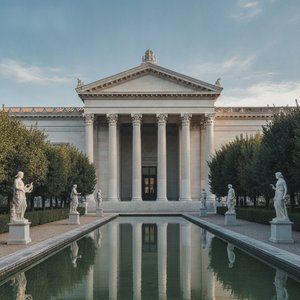
Neoclassicism Unveiled: Discovering the Timeless Elegance and Rational Order of Classical Art
Unveil the timeless elegance of Neoclassicism. Journey through an era defined by reason, order, and the revival of Greco-Roman ideals. Our expert exploration offers a sophisticated look at the transition from Rococo excess to classical precision for the true art enthusiast.

The Timeless Elegance of Academic Classicism: A Journey Through Order, Precision, and the Pursuit of Perfection
Explore the profound beauty of Academic Classicism. Discover how masters used order, precision, and classical ideals to achieve timeless perfection in art history, from Neoclassical portraits to the pursuit of ideal beauty.

The Eternal Beauty of Marble: A Guide to Sculpting Light, Stone, and the Soul of Art History
Explore the sublime artistry of marble sculpture. From Greek antiquity to the masters of light, discover how stone captures the eternal essence of human beauty and emotion through expert craftsmanship and historical mastery.
Tyrinėkite meno kūrinius, suskirstytus pagal temas, stilius ir savybes.
