

Paveikslėlyje: · Su rėmu:
 Peržiūrėti realaus dydžio版
 Pasidalinti
 Dalintis
 Išsamiau
 Vadovas

 Atsisiųsti
 Panašūs eksponatai
 Rentgeno spindulių nuotrauka
 Automatinė diorama
 问答
问答 Statistika


€ 285
Rankų darbo aliejinės reprodukcijos
Rankiniu būdu tapytas aliejus ant droblio jūsų pageidaujamame dydį ir rėmuose – tai mūsų menininkų pagal užsakymą sukurtas darbas. ( Perjungti į spausdinamus版作品 Perejti prie skaitmeninių vaizdų)
Šis kūrinys yra saugomas autorinės teisės
Šiame puslapyje rodomas meno kūrinys yra saugomas autorių teisių įstatymais, todėl neturime teisės legaliai kurti ar parduoti jo identiškos reprodukcijos. Ši apsauga užtikrinama remiantis tokiais tarptautiniais susitarimais kaip Bernės konvencija ir pagal nacionalines įstatymų nuostatas, įskaitant tas, kurias nurodo JAV autoriškos teisės įstatymas – 17-asis skyrius.
Kaip pagarbią ir teisėtą alternatyvą, mes siūlome pagal užsakymą rankomis dažytus paveikslus, įkvėptus originalo. Mūsų įgudę ir profesionalūs menininkai kruopščiai tiria originalo stilių, nuotaiką ir meninę esmę, kad sukurtų naują, unikalią kūrinį, kuris sukelia tą paties jausmą – išlikdamas tuo tarciau originaliu, savarankišku kūrybiniu darbu.
Šis metodas visiškai atitinka autorių teises, nes jame nėra saugomo kūrinio kopijavimo ar dubliavimo. Tai yra kūrybinė reinterpretacija – naujas paveikslas, kurį įkvėpė originalas, tačiau kuris nėra jo identiškas.
 Skaityti daugiau
Dydis
·Standartinis dydis
pagal užsakymą
CM
INCH
Pasirinkite iš mūsų nustatytų dydžių, atitinkančių originalaus meno kūrinio proporcijas.
Kraunami dydžiai...

plotis
aukštis
Įveskite jums reikiamą plotį ir aukštį, kad paveikslas atitiktų jūsų rėmą ar sieną. Kadangi šis darbas yra rankinio darbo, siekiant išgauti kitokios formos dydį, paveikslas gali būti šiek tiek didesnis (nuo kraštų bus palikta daugiau erdvės) arba mažesnis – pasirinkite jums patogiausią variantą. Prieš pradedant tapyti, atsiųsime jums skaitmeninį maketą patvirtinimui. Šioje puslapio nuotraukoje matomas vaizdas nėra galutinis rezultatas – jį parodys tik sukurtas maketas.
Baigiamasis etapas
·
Baltas apasutojimas €1

Išblėstantis šonas €1

Išplėstinis €1

P118B €10

P118H €10

P118W €10

P438Z €10

P508JH €12

P508YH €12

P805H €10

P805Z €10

P919BZ €10

P919G €10

P919XJ €10

P959ZH €10

P968JZ €12

W106C €8

W218G €10

W218JH €8

W218Y €10

W307PJ €10

W316G €10

W316PJ €8

W316Y €10

W398PJ €8

W4111J €10

W500HY €15

W500JH €15

W692G €12

W849H €8

W940BG €15

W953PJ €8

H24-GOLD €30

H24-SILVER €30

H36-GOLD €45

H36-SILVER €45
Siunčiama saugiame vamzdelyje, paruošta patys sukomentuoti jūsų rėmeliais.
Virš 105 cm rėmas siunčiamas kaip rinkinys profesionaliam rėmininkui — skaitykite detales.
Papildomos paslaugos
nebūtinaKą apima papildomos paslaugos?
Pavyzdžiai, ką galima pakeisti: pakeisti veidą nuotrauka su klientu; pridėti augintinį (pvz., pakeisti kucingą šuniu); įtraukti paslaptingą žinutę fone; pakeisti fono kraštotvę ar elementus.
Gavus užsakymą, TopImpressionists.com komanda susisieks su klientu el. paštu dėl nurodymų ir pateiks preliminarią maketą.
Gavus užsakymą, TopImpressionists.com komanda susisieks su klientu el. paštu dėl nurodymų ir pateiks preliminarią maketą.
Pristatymas visame pasaulyje () per 3–4 savaites, o ne įprastai – per 5 savaites. (4 lapkritis). Kokybė lieka nepakeičiama.
Apsauginis lakas
Pavadinimo lentelė
Išgraviruotos bronzinės plokštelės detalės
This elegant plaque features the artist's name and the title of the artwork, finely engraved for a timeless presentation.
It is made from bronze with a refined, elegant finish. The text is precisely laser-engraved for a sharp and permanent result. Measuring 9x2 cm, the plaque is compact yet easy to read. It's built to be durable and scratch-resistant, offering a professional, museum-quality look. Mounting is simple thanks to the included adhesive backing.
Skaidrios akrilo plokštelės informacija
The plaque includes essential engraved details such as the artist's name, the title of the artwork, the date it was created, the type of media used-like oil on canvas or watercolor-a brief description of the piece, and a QR code that links to the complete artwork information.
It is crafted from clear acrylic, offering a sleek, modern appearance. The text is UV-engraved in black to ensure strong visual contrast. With a size of 10x15 cm, it ensures optimal readability. It comes equipped with two metal hooks for secure wall mounting. The plaque is designed to be weather-resistant, making it suitable for various environments, and it includes interactive features that work seamlessly with smartphone scanning.
Juodos akrilo plokštelės informacija
This elegant plaque includes engraved information such as the artist's name, the title of the artwork, the date it was created, the type of media used (like oil on canvas or watercolor), a short description of the artwork, and a QR code for quick access to more information.
The plaque itself is made from refined black acrylic with a premium finish. The text is laser-engraved in white for high contrast and readability. Its size is 10x15 cm, designed to be easy to read. It comes with two metal hooks for professional mounting. The design is sleek and fits any interior style. It is also weather-resistant and durable, with built-in digital integration for mobile compatibility.
Stiklo variantas prieinamas tik pasirinkus dydį iki 110 cm
 Stiklo variantas prieinamas tik pasirinkus dydį iki 110 cm
- Nemokamas greitasis pristatymas visame pasaulyje
- Aukštos kokybės lininis drobė
- Pilnas siuntimo draudimas
- Muitinės mokesčių grąžinimo garantija
- Tikro spalvų atitikimo garantija
- 100 dienų grąžinimo politika (tik esant įtaigoms)
- 100% pinigų grąžinimo garantija
- Nuolaida dideliems užsakymams


Kolekcinio objekto aprašas
Explore Dame Barbara Hepworth’s ‘Three Figures’ (1951), a captivating abstract study of human forms. Discover her pioneering modernist style & layered brushwork in this evocative piece.
Autoriaus biografija
Atraskite Dame Barbara Hepworth (1903-1975) modernistines skulptūras. Kaip abstrakčiosios dailės pionierė, Hepworth kūriniai – įskaitant „Oval Form“ ir „Two Forms“ – sujungia surrealizmą bei abstraktumą. Atraskite jos palikimą Hepworth Wakefield.
Apie paveisdelį
Barbara Hepworth’s ‘Three Figures – Project for Sculpture’: A Meditation on Form and Connection
“Three Figures – Project for Sculpture,” created in 1951 by the influential British sculptor Barbara Hepworth, offers a compelling glimpse into her exploration of form and space during a pivotal moment in modern art. This work, rendered in a luminous golden hue, transcends mere representation to become a deeply evocative study of human presence—a testament to Hepworth’s mastery of abstraction and her profound engagement with the fundamental principles of sculpture. The painting's strength lies not in literal depiction but in its ability to conjure a sense of quiet contemplation, inviting viewers to consider the relationships between individuals and their shared experience.
A Modernist Vision: Style and Technique
Hepworth’s approach aligns squarely with the modernist movement, particularly its emphasis on reducing forms to their essential geometric elements. The composition is dominated by rectangular and triangular shapes, meticulously constructed to create a sense of depth through overlapping planes and subtle tonal variations. Visible brushstrokes, layered and glazed with oil paint, contribute significantly to the artwork's tactile quality – an invitation to almost reach out and touch the implied solidity of the figures. The directional lighting further enhances this three-dimensionality, casting carefully considered shadows that sculpt the forms themselves. This technique, rooted in Hepworth’s training at the Royal College of Art, demonstrates a sophisticated understanding of both representational space and abstract form.
Historical Context and Influences
Created in 1951, “Three Figures” reflects a period of significant artistic innovation. Hepworth was a key figure within the Unit One movement, alongside Ben Nicholson and Paul Nash, which sought to bridge the gap between Surrealism and Abstraction – a bold experiment that challenged traditional notions of representation. Her earlier work, heavily influenced by her time in Paris and engagement with abstraction-création, paved the way for this exploration of simplified forms and spatial relationships. The painting’s restrained style echoes the growing interest in geometric abstraction prevalent throughout Europe at the time, while retaining a distinctly humanistic focus.
Symbolism and Emotional Resonance
While overtly symbolic elements are absent, “Three Figures” possesses a powerful emotional resonance. The solemn postures of the figures suggest introspection and perhaps a shared experience – a quiet connection forged through form and space. Hepworth’s work often explored themes of human vulnerability and resilience, and this piece is no exception. It invites viewers to contemplate their own place within the larger world, prompting a sense of empathy and understanding. The painting's enduring appeal lies in its ability to tap into these universal emotions, making it a timeless meditation on the nature of human connection.
Klausimai ir atsakymai
Atsižvelgiant į kūrinio datą, prie kokios Barbara Hepworth karjeros etapos galima priskirti „Three Figures – Project for Sculpture“?
1951 m. data įtraugia „Three Figures – Project for Sculpture“ į Barbara Hepworth kūrybinio plėtojimo Mature Period laikotarpį.
Kaip „Three Figures – Project for Sculpture“ – Barbara Hepworth sujungia Modernism su autoriaus gimtinė?
„Three Figures – Project for Sculpture“ sujungia Modernism stilių su Jungtinė Karalystė, atspindėdama kūrėjo gimimo vietą.
Kokio išdėstymo formatas tinka kūriniui „Three Figures – Project for Sculpture“ – Barbara Hepworth?
Savo Portrait forma „Three Figures – Project for Sculpture“ reprodukcija siūloma Living Room kambariui.
Trumpos faktinės datos ir meno viktorina
Apie Barbara Hepworth

Barbara Hepworth
1903 - 1975, Jungtinė Karalystė
Autoriaus biografija
ankstyvasis gyvenimas ir išsilavinimas
dame barbara hepworth, žinomą anglų menininko ir skulptūrinės formos meistrinė, gimė 1903 m. sausio 10 d. Wakefield, Yorkshire. Savo meninę kelią pradėjo studijuodama Leedso dailės mokykloje nuo 1920 m., o vėliau, laimėjęs apylios stipendiją, nuo 1921 m. iki diplomui įgauti 1924 m. studijavo Londone, prestižiniame Karališkajame meno kolegyje (RCA).meninė karjera
- dame barbara hepworth kūryba yra modernizmo, o ypač šiuolaikinės skulptūros pavyzdys. ji buvo viena iš retų moteriškų menininkių, pasiekusi tarptautinę pradinę svarbą.
- 1933 m. kartu su ben nicholson, paul nash ir kitais, ji bendrakūrė „Unit One“ meno judėjimą, siekdama Britanijos mene sujungti surrealizmą ir abstraktumą.
- hepworth ankstyvųjų darbų savybė buvo abstraktumas bei jos dalyvavimas Paryzuje veikiančiame meno judėjime „Abstraction-Création“.
pastebimiausi darbai ir parodos
- oval form (trezion), bronzinė skulptūra, yra Kimbell meno muziejaus kolekcijoje Fort Worth, JAV. (matyti TopImpressionists)
- two forms, skulptūra, rodoma The Hepworth Wakefield muziejuje, Wakefield, Jungtinėje Karalystėje. (matyti TopImpressionists)
- totem, marmurinė skulptūra, taip pat yra „The Hepworth Wakefield“ kolekcijos dalis. (matyti TopImpressionists)
paliktis ir muziejų kolekcijos
barbara hepworth kūryba yra plačiai pripažinta, o jos skulptūros bei tapybos darbai sudaro įvairių pasaulio muziejų kolekcijų dalį. The Hepworth Wakefield, pavadintas menininko vardu, saugo daugybę meistriškų kūrybinės vertės pabrėžiančių šedevrų, įskaitant ir pačios hepworth darbus. (sužinokite daugiau apie The Hepworth Wakefield TopImpressionists svetainėje)išvados
dame barbara hepworth novatoriškas darbas moderniojoje britų skulptūroje paliko neištriniamą žymą meno pasaulyje. jos paliktis ir toliau įkvepia tiek menininkus, tiek meno entuziastus, o jos kūriniai išlieka įrodymu apie jos kūrybinę dvasią ir meninę genijų. daugiau apie barbara hepworth wikipediaTrumpa informacija apie Barbara Hepworth
- Artinis Stilius Ar Kryptis: Modernizmas, Abstrakcija
- Gimimo Data: 1903-01-10
- Gimimo Vieta: Wakefield, JK
- Menininkai, Paveikę Šį Meno Kūriją:
- Henry Moore
- Ben Nicholson
- Mirties Data: 1975-05-20
- Tautybė: Britų
- Vardas Ir Pavardė: Barbara Hepworth
- Šio Meno Kūrėjo Paveikti Buvę Menininkai Ar Kryptys:
- Abstraction-Création
- Unit One
- Žinomos Kūriniai:
- Oval Form (Trezion)
- Two Forms
- Totem
Tyrinėkite meno kūrinius, suskirstytus pagal temas, stilius ir savybes.


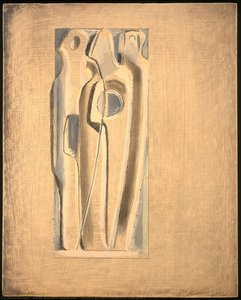
Barbara Hepworth
Three Figures – Project for Sculpture
() ·
Su rėmu: · Rankiniu būdu tapyta aliejumi ant lineno
Viso suma