

Paveikslėlyje: · Su rėmu:
 Pasidalinti
 Dalintis
 Išsamiau
 Vadovas

 Atsisiųsti
 Panašūs eksponatai
 Automatinė diorama
 问答
问答 Statistika
- 26.0 x 33.0 cm


€ 240
Rankų darbo aliejinės reprodukcijos
Rankiniu būdu tapytas aliejus ant droblio jūsų pageidaujamame dydį ir rėmuose – tai mūsų menininkų pagal užsakymą sukurtas darbas. ( Perjungti į spausdinamus版作品 Perejti prie skaitmeninių vaizdų)
Dydis
·Standartinis dydis
pagal užsakymą
CM
INCH
Pasirinkite iš mūsų nustatytų dydžių, atitinkančių originalaus meno kūrinio proporcijas.
Kraunami dydžiai...

plotis
aukštis
Įveskite jums reikiamą plotį ir aukštį, kad paveikslas atitiktų jūsų rėmą ar sieną. Kadangi šis darbas yra rankinio darbo, siekiant išgauti kitokios formos dydį, paveikslas gali būti šiek tiek didesnis (nuo kraštų bus palikta daugiau erdvės) arba mažesnis – pasirinkite jums patogiausią variantą. Prieš pradedant tapyti, atsiųsime jums skaitmeninį maketą patvirtinimui. Šioje puslapio nuotraukoje matomas vaizdas nėra galutinis rezultatas – jį parodys tik sukurtas maketas.
 Skaityti daugiau
Baigiamasis etapas
·
Baltas apasutojimas €1

Išblėstantis šonas €1

Išplėstinis €1

P118B €10

P118H €10

P118W €10

P438Z €10

P508JH €12

P508YH €12

P805H €10

P805Z €10

P919BZ €10

P919G €10

P919XJ €10

P959ZH €10

P968JZ €12

W106C €8

W218G €10

W218JH €8

W218Y €10

W307PJ €10

W316G €10

W316PJ €8

W316Y €10

W398PJ €8

W4111J €10

W500HY €15

W500JH €15

W692G €12

W849H €8

W940BG €15

W953PJ €8

H24-GOLD €30

H24-SILVER €30

H36-GOLD €45

H36-SILVER €45
Siunčiama saugiame vamzdelyje, paruošta patys sukomentuoti jūsų rėmeliais.
Virš 105 cm rėmas siunčiamas kaip rinkinys profesionaliam rėmininkui — skaitykite detales.
Papildomos paslaugos
nebūtinaKą apima papildomos paslaugos?
Pavyzdžiai, ką galima pakeisti: pakeisti veidą nuotrauka su klientu; pridėti augintinį (pvz., pakeisti kucingą šuniu); įtraukti paslaptingą žinutę fone; pakeisti fono kraštotvę ar elementus.
Gavus užsakymą, TopImpressionists.com komanda susisieks su klientu el. paštu dėl nurodymų ir pateiks preliminarią maketą.
Gavus užsakymą, TopImpressionists.com komanda susisieks su klientu el. paštu dėl nurodymų ir pateiks preliminarią maketą.
Pristatymas visame pasaulyje () per 3–4 savaites, o ne įprastai – per 5 savaites. (9 lapkritis). Kokybė lieka nepakeičiama.
Apsauginis lakas
Pavadinimo lentelė
Išgraviruotos bronzinės plokštelės detalės
This elegant plaque features the artist's name and the title of the artwork, finely engraved for a timeless presentation.
It is made from bronze with a refined, elegant finish. The text is precisely laser-engraved for a sharp and permanent result. Measuring 9x2 cm, the plaque is compact yet easy to read. It's built to be durable and scratch-resistant, offering a professional, museum-quality look. Mounting is simple thanks to the included adhesive backing.
Skaidrios akrilo plokštelės informacija
The plaque includes essential engraved details such as the artist's name, the title of the artwork, the date it was created, the type of media used-like oil on canvas or watercolor-a brief description of the piece, and a QR code that links to the complete artwork information.
It is crafted from clear acrylic, offering a sleek, modern appearance. The text is UV-engraved in black to ensure strong visual contrast. With a size of 10x15 cm, it ensures optimal readability. It comes equipped with two metal hooks for secure wall mounting. The plaque is designed to be weather-resistant, making it suitable for various environments, and it includes interactive features that work seamlessly with smartphone scanning.
Juodos akrilo plokštelės informacija
This elegant plaque includes engraved information such as the artist's name, the title of the artwork, the date it was created, the type of media used (like oil on canvas or watercolor), a short description of the artwork, and a QR code for quick access to more information.
The plaque itself is made from refined black acrylic with a premium finish. The text is laser-engraved in white for high contrast and readability. Its size is 10x15 cm, designed to be easy to read. It comes with two metal hooks for professional mounting. The design is sleek and fits any interior style. It is also weather-resistant and durable, with built-in digital integration for mobile compatibility.
Stiklo variantas prieinamas tik pasirinkus dydį iki 110 cm
 Stiklo variantas prieinamas tik pasirinkus dydį iki 110 cm
- Nemokamas greitasis pristatymas visame pasaulyje
- Aukštos kokybės lininis drobė
- Pilnas siuntimo draudimas
- Muitinės mokesčių grąžinimo garantija
- Tikro spalvų atitikimo garantija
- 100 dienų grąžinimo politika (tik esant įtaigoms)
- 100% pinigų grąžinimo garantija
- Nuolaida dideliems užsakymams


Kolekcinio objekto aprašas
Marvel at Benvenuto Cellini's opulent 'Salt Cellar,' a Renaissance masterpiece of gold, enamel, and intricate symbolism—a testament to artistry & luxury from 1543 Vienna.
Autoriaus biografija
Benvenuto Cellini (1500-1571): Renesanso laikų auksakalis ir skulptorius, žinomas dėl dramatiškos 'Persejaus' skulptūros bei išskirtinio Cellini druskos indelio. Tyrinėkite jo meną ir gyvenimą!
Apie paveisdelį
A Gilded Echo of Antiquity
Benvenuto Cellini's Salt Cellar, a shimmering testament to the heights of Renaissance goldsmithing, isn’t merely a container for salt; it’s a miniature cosmos, a meticulously crafted allegory brimming with symbolism and technical brilliance. Completed in 1543 for King Francis I of France, this extraordinary object transcends its functional purpose, becoming a profound meditation on the relationship between earth and sea, divinity and humanity. It's a piece that whispers tales of ambition, artistry, and the intoxicating allure of the Italian Renaissance—a world where beauty was paramount and skill elevated to an almost religious pursuit.
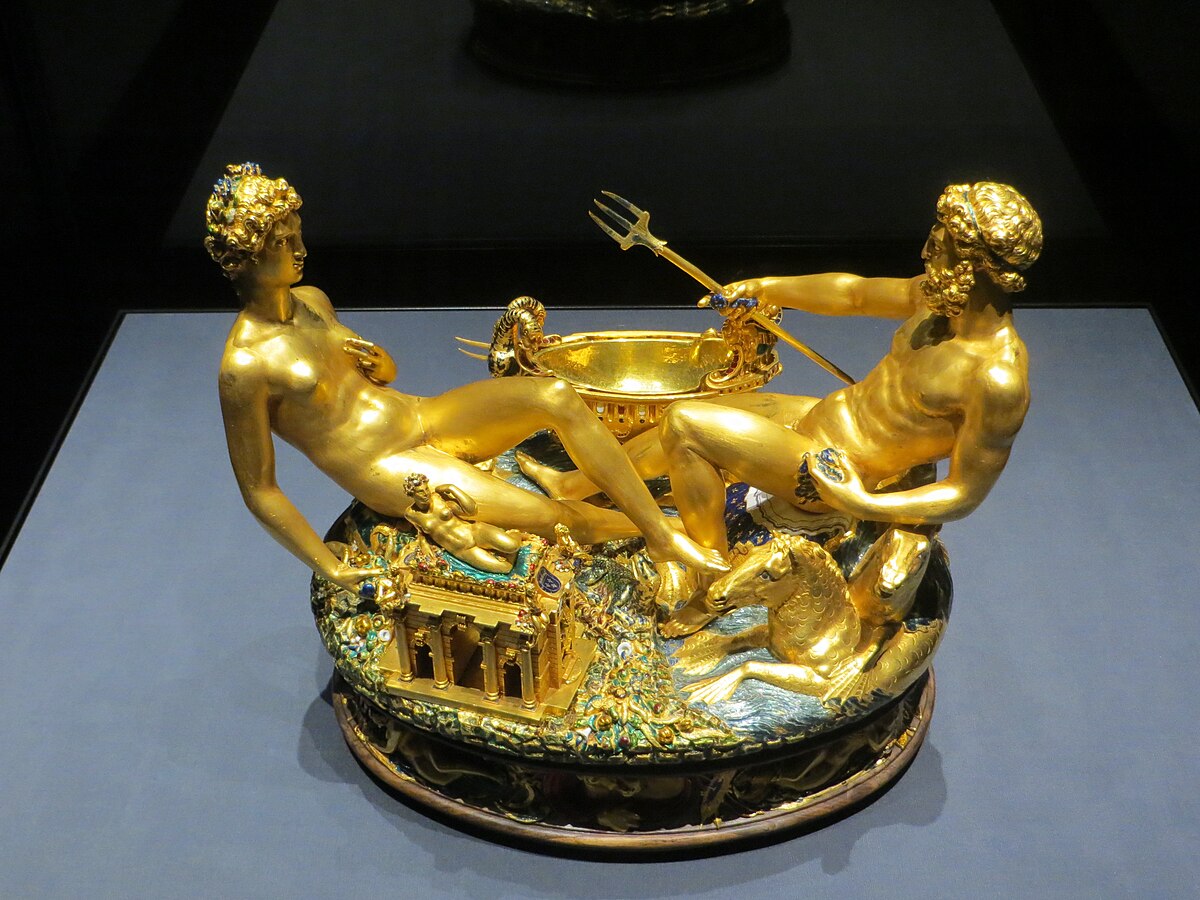
Image of Benvenuto Cellini’s Salt Cellar
The Anatomy of a Masterpiece
Crafted primarily from gold, the Salt Cellar is an astonishing feat of technical mastery. Cellini, renowned for his flamboyant personality and equally impressive skill, eschewed traditional casting methods, instead meticulously hammering the gold into its delicate, flowing form by hand. The base is elegantly fashioned from ebony, providing a striking contrast to the radiant gold, while ivory bearings allow the sculpture to gracefully roll across a banquet table – a deliberate feature designed for display and conversation. But it’s the enameling that truly elevates the piece; intricate scenes depicting figures representing the four seasons and the four winds are painstakingly applied, adding layers of visual complexity and narrative depth. The sheer scale of detail—from the meticulously rendered folds of clothing to the lifelike expressions on the faces of Neptune and Tellus – speaks volumes about Cellini’s dedication and unparalleled skill.
- Material: Gold, Ebony, Ivory, Enamel
- Dimensions: Approximately 10.5 inches (267 mm) tall, 13.1 inches (333 mm) wide
- Technique: Hand-hammered gold, intricate enamel work
A Dialogue with the Divine
The Salt Cellar’s symbolism is as captivating as its aesthetic beauty. At its heart lies a potent allegory of Terra e Mare – Earth and Sea – embodied by the figures of Neptune, god of the ocean, and Tellus, goddess of the earth. These two powerful deities are depicted in an intimate embrace, their legs intertwined, suggesting a harmonious connection between the terrestrial and aquatic realms. The sculpture is further enriched with symbolic details: a small boat carries the salt, representing the flow of commerce and sustenance; a temple dedicated to peppercorns stands alongside Tellus, signifying the pleasures of earthly life. The inclusion of animals—horses, dogs, dolphins—adds another layer of meaning, drawing upon classical iconography and reinforcing the sculpture’s connection to mythology and antiquity.
A Legacy Forged in Ambition
Cellini's autobiography, *Vita*, offers invaluable insight into the creation of this extraordinary piece. He recounts his initial reluctance to accept the commission from Cardinal Ippolito d’Este, dismissing the cardinal’s suggestions with characteristic arrogance and asserting sole credit for the design. The story is rife with anecdotes about Cellini’s daring exploits—including a dramatic escape from bandits while transporting the gold—further cementing his image as a larger-than-life figure of Renaissance Italy. The Salt Cellar, therefore, isn't just an artistic achievement; it’s a reflection of Cellini’s own complex and often contradictory personality – a testament to ambition, skill, and a profound appreciation for beauty. It remains one of the most celebrated examples of Renaissance goldsmithing, captivating viewers with its exquisite detail and enduring symbolism.
Klausimai ir atsakymai
Koks kontrastas yra darbe „Salt Cellar“ – Benvenutas Čelinis?
„Salt Cellar“ – Benvenutas Čelinis pasižymi Gentle šviesių ir tamsių sričių kontrastu.
Kaip emocijos ir dovanojimo proga susilieja su kūryiniu darbu „Salt Cellar“ – Benvenutas Čelinis?
Reflective kūrinio „„Salt Cellar“ – Benvenutas Čelinis“ nuotaika dera su jo rekomenduojama progia: Anniversary.
Kokį Benvenutas Čelinis kūrybos etapą atitinka „Salt Cellar“ data, nurodyta kaip 1540?
Atsižvelgiant į 1540 datą, kūrinys „Salt Cellar“ priskiriamas Benvenutas Čelinis Mature Renaissance laikotarpiui.
Trumpos faktinės datos ir meno viktorina
Apie Benvenutas Čelinis

Benvenutas Čelinis
1500 - 1571, Italija
Autoriaus biografija
Benvenuto Cellini: Renesanso Polimatas
Benvenuto Cellini (1500-1571) – tai iškili italų Renesanso asmenybė, garsėjusi ne tik kaip talentingas auksakalys ir skulptorius, bet ir kaip sumanus karys, muzikantas bei rašytojas. Jo daugiaprasmiškumas ir ryškus charakteris puikiai atsispindi jo autobiografijoje, laikomoje reikšmingu literatūros kūriniu kartu su jo meniniais pasiekimais. Cellini įkūnija manierizmo dvasią – epochą, sekusią Aukštajam Renesansui ir pasižymėjusią dramatiškumu bei stilistiniu sudėtingumu.
Ankstyvieji Metai Ir Meninis Ugdymas
Gimęs Florencijoje šeimoje, kurioje muzika užėmė svarbią vietą – jo tėvas buvo muzikantas ir instrumentų gamintojas – Cellini iš pradžių demonstravo talentus muzikos srityje. Tačiau būdamas penkiolikos metų jis aštriai pasirinko auksakalybės kelią, įtikindamas nenorų tėvą priimti jį pas Antonio di Sandro (žinomą kaip Marcone) mokytis. Tai buvo jo formalios meninės karjeros pradžia. Ankstyvieji metai nebuvo be incidentų; šešiolikos metų jis pateko į konfliktinę situaciją su draugais, dėl ko buvo ištremtas iš Florencijos ir kurį laiką dirbo Sienoje pas auksakalį Fracastoro.
Pagrindiniai Kūriniai Ir Stilius
Cellini meninis stilius pasižymi dinamizmu, realizmu ir dėmesiu detalėms. Jis semiasi įkvėpimo iš klasikinės antikybės bei Mikelandželo stiprių figūrų, tačiau savo kūriniuose įneša savitą manierizmo pojūtį – prailgintas formas, padidintus pozas ir teatrališkumą. Jo darbai atspindi Renesanso žmogaus idealą – polimatą, kuris siekia tobulybės visose srityse.
- Druskos indas: Šis išskirtinis sidabro šedevras, užsakyta Prancūzijos karaliaus Pranciškaus I-ojo, laikomas vienu žymiausių jo darbų. Jame puikiai atsispindi sudėtingos detalės ir dinamiškos figūros, dabar saugomos Kunsthistorisches muziejuje Vienoje.
- Persejas su Medūzos galva: Bronzinė skulptūra, vaizduojanti Perseją triumfuojančiai laikantį nukirstą Medūzos galvą, yra puikus pavyzdys Cellini meistriškumo formos ir dramatiškos kompozicijos srityje. Tai liudija jo gebėjimą perteikti judesį ir emocijas metaluose.
- Auksas medalis su Leda ir gulbė: Sukurtas Gonfaloniere Gabriello Cesarino, šis medalis demonstruoja Cellini gebėjimą derinti klasikinę mitologiją su puikiu meistriškumu.
Gyvenimas Už Meno Ribų: Kareivis, Muzikantas Ir Autobiografijos Autorius
Cellini gyvenimas neapsiribojo dirbtuvėmis. Jis tarnavo kariuomenėje apgulimų metu, teigdamas, jog vaidino lemiamą vaidmenį ginant Romą nuo imperijos pajėgų. Taip pat jis buvo talentingas muzikantas, grojo kornetą ir fleitą popiežiaus dvare. Tačiau būtent jo autobiografija jį išskiria iš kitų.
- Benvenuto Cellini Gyvenimas: Ši atviras ir dažnai savimi pasigyręs pasakojimas suteikia vertingų įžvalgų apie Renesanso meną, kultūrą ir visuomenę. Tai įtraukiantis naratyvas, kupinas anekdotų apie globėjus, konkurentus ir asmeninius nuotykius, siūlantis unikalų požiūrį į tą epochą.
Jo autobiografija nėra tik įvykių aprašymas; tai kruopščiai sukonstruotas savęs portretas, skirtas parodyti jo talentus ir pateisinti veiksmus. Nors kartais ji gali būti nepatikima dėl paties Cellini nusistatymo, ji išlieka esminiu pirminiu šaltiniu Renesanso gyvenimo supratimui.
Paveldo Ir Istorinė Reikšmė
Benvenuto Cellini mirė Florencijoje 1571 metais, palikęs paveldą kaip vienas svarbiausių manierizmo menininkų. Jo techninis įgūdis, meninė inovacija ir įtraukianti autobiografija tebeturi įtakos menininkams ir meno entuziastams visame pasaulyje. Jis reprezentuoja esencinį Renesanso idealą – polimatą, apdovanotą daugybe disciplinų, skatinamą ambicijų ir nebijo išreikšti savo individualumo. Jo darbai yra švenčiami dėl grožio, meistriškumo ir dramatiškos galios, įtvirtindami jo vietą Vakarų meno istorijoje.
Trumpa informacija apie Benvenutas Čelinis
- Artistic Movement Or Style: Manjerizmas
- Artists Who Influenced This Artist: ['Michelangelo']
- Date Of Birth: 1500 m. lapkričio 1 d.
- Date Of Death: 1571 m. vasario 13 d.
- Full Name: Benvenuto Cellini
- Nationality: Italas
- Notable Artworks:
- Perseus su Medūzos galva
- Cellini druskos indas
- Place Of Birth: Florencija, Italija
Tyrinėkite meno kūrinius, suskirstytus pagal temas, stilius ir savybes.


Benvenutas Čelinis
Salt Cellar
() ·
Su rėmu: · Rankiniu būdu tapyta aliejumi ant lineno
Viso suma