

Paveikslėlyje: · Su rėmu:
 Peržiūrėti realaus dydžio版
 Pasidalinti
 Dalintis
 Išsamiau
 Vadovas

 Atsisiųsti
 Panašūs eksponatai
 Rentgeno spindulių nuotrauka
 Automatinė diorama
 问答
问答 Statistika

€ 240
Rankų darbo aliejinės reprodukcijos
Rankiniu būdu tapytas aliejus ant droblio jūsų pageidaujamame dydį ir rėmuose – tai mūsų menininkų pagal užsakymą sukurtas darbas. ( Perjungti į spausdinamus版作品 Perejti prie skaitmeninių vaizdų)
Dydis
·Standartinis dydis
pagal užsakymą
CM
INCH
Pasirinkite iš mūsų nustatytų dydžių, atitinkančių originalaus meno kūrinio proporcijas.
Kraunami dydžiai...

plotis
aukštis
Įveskite jums reikiamą plotį ir aukštį, kad paveikslas atitiktų jūsų rėmą ar sieną. Kadangi šis darbas yra rankinio darbo, siekiant išgauti kitokios formos dydį, paveikslas gali būti šiek tiek didesnis (nuo kraštų bus palikta daugiau erdvės) arba mažesnis – pasirinkite jums patogiausią variantą. Prieš pradedant tapyti, atsiųsime jums skaitmeninį maketą patvirtinimui. Šioje puslapio nuotraukoje matomas vaizdas nėra galutinis rezultatas – jį parodys tik sukurtas maketas.
 Skaityti daugiau
Baigiamasis etapas
·
Baltas apasutojimas €1

Išblėstantis šonas €1

Išplėstinis €1

P118B €10

P118H €10

P118W €10

P438Z €10

P508JH €12

P508YH €12

P805H €10

P805Z €10

P919BZ €10

P919G €10

P919XJ €10

P959ZH €10

P968JZ €12

W106C €8

W218G €10

W218JH €8

W218Y €10

W307PJ €10

W316G €10

W316PJ €8

W316Y €10

W398PJ €8

W4111J €10

W500HY €15

W500JH €15

W692G €12

W849H €8

W940BG €15

W953PJ €8

H24-GOLD €30

H24-SILVER €30

H36-GOLD €45

H36-SILVER €45
Siunčiama saugiame vamzdelyje, paruošta patys sukomentuoti jūsų rėmeliais.
Virš 105 cm rėmas siunčiamas kaip rinkinys profesionaliam rėmininkui — skaitykite detales.
Papildomos paslaugos
nebūtinaKą apima papildomos paslaugos?
Pavyzdžiai, ką galima pakeisti: pakeisti veidą nuotrauka su klientu; pridėti augintinį (pvz., pakeisti kucingą šuniu); įtraukti paslaptingą žinutę fone; pakeisti fono kraštotvę ar elementus.
Gavus užsakymą, TopImpressionists.com komanda susisieks su klientu el. paštu dėl nurodymų ir pateiks preliminarią maketą.
Gavus užsakymą, TopImpressionists.com komanda susisieks su klientu el. paštu dėl nurodymų ir pateiks preliminarią maketą.
Pristatymas visame pasaulyje () per 3–4 savaites, o ne įprastai – per 5 savaites. (3 lapkritis). Kokybė lieka nepakeičiama.
Apsauginis lakas
Pavadinimo lentelė
Išgraviruotos bronzinės plokštelės detalės
This elegant plaque features the artist's name and the title of the artwork, finely engraved for a timeless presentation.
It is made from bronze with a refined, elegant finish. The text is precisely laser-engraved for a sharp and permanent result. Measuring 9x2 cm, the plaque is compact yet easy to read. It's built to be durable and scratch-resistant, offering a professional, museum-quality look. Mounting is simple thanks to the included adhesive backing.
Skaidrios akrilo plokštelės informacija
The plaque includes essential engraved details such as the artist's name, the title of the artwork, the date it was created, the type of media used-like oil on canvas or watercolor-a brief description of the piece, and a QR code that links to the complete artwork information.
It is crafted from clear acrylic, offering a sleek, modern appearance. The text is UV-engraved in black to ensure strong visual contrast. With a size of 10x15 cm, it ensures optimal readability. It comes equipped with two metal hooks for secure wall mounting. The plaque is designed to be weather-resistant, making it suitable for various environments, and it includes interactive features that work seamlessly with smartphone scanning.
Juodos akrilo plokštelės informacija
This elegant plaque includes engraved information such as the artist's name, the title of the artwork, the date it was created, the type of media used (like oil on canvas or watercolor), a short description of the artwork, and a QR code for quick access to more information.
The plaque itself is made from refined black acrylic with a premium finish. The text is laser-engraved in white for high contrast and readability. Its size is 10x15 cm, designed to be easy to read. It comes with two metal hooks for professional mounting. The design is sleek and fits any interior style. It is also weather-resistant and durable, with built-in digital integration for mobile compatibility.
Stiklo variantas prieinamas tik pasirinkus dydį iki 110 cm
 Stiklo variantas prieinamas tik pasirinkus dydį iki 110 cm
- Nemokamas greitasis pristatymas visame pasaulyje
- Aukštos kokybės lininis drobė
- Pilnas siuntimo draudimas
- Muitinės mokesčių grąžinimo garantija
- Tikro spalvų atitikimo garantija
- 100 dienų grąžinimo politika (tik esant įtaigoms)
- 100% pinigų grąžinimo garantija
- Nuolaida dideliems užsakymams


Kolekcinio objekto aprašas
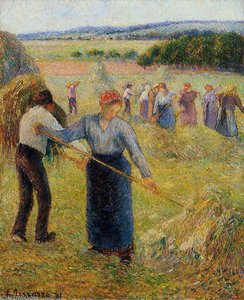
Experience Camille Pissarro’s idyllic Haymaking 1, a vibrant Impressionist scene capturing rural teamwork and the beauty of harvest time – perfect for art lovers and collectors seeking a timeless pastoral masterpiece.
Autoriaus biografija
Kamilis Pisaro – impresionizmo pradininkas! Mėgaukitės jo peizažais ir kasdienio gyvenimo scenomis, atspindinčiais 19-ojo amžiaus Prancūziją. Paveikslų serija, įkviepusi Van Gogą ir Sezaną.
Apie paveisdelį
Camille Pissarro’s ‘Haymaking 1’: A Symphony of Rural Labor
Haymaking 1, a captivating depiction of rural life by Camille Pissarro, offers a poignant glimpse into the heart of Impressionist observation. Painted around 1892, this artwork transcends a simple representation of agricultural work; it’s an exploration of human connection, community, and the enduring rhythms of nature. The scene unfolds with remarkable clarity – a bustling farmyard bathed in the warm light of a summer afternoon. Nine figures, rendered with Pissarro's characteristic loose brushstrokes and vibrant palette, are engaged in the meticulous task of gathering hay, their movements suggesting both industry and camaraderie. The sheer abundance of golden hay, meticulously scattered across the field, immediately draws the eye, creating a visual feast that speaks to the bounty of the land.
Impressionist Technique and Color
Pissarro’s mastery lies in his ability to capture fleeting moments and atmospheric effects. Executed with the hallmark Impressionistic technique, Haymaking 1 showcases broken color applied in short, visible strokes. This method wasn't merely a stylistic choice; it was a deliberate attempt to record the way light interacts with surfaces – the shimmering reflections on the hay, the subtle gradations of tone in the sky, and the warmth radiating from the figures themselves. The artist’s use of complementary colors—the blues and oranges—intensifies the vibrancy of the scene, creating a dynamic visual experience. The loose brushwork contributes to an overall sense of movement and immediacy, as if we are witnessing this rural activity unfold before our eyes.
Historical Context: Pissarro and the Rise of Impressionism
Painted in the late 1890s, Haymaking 1 reflects Pissarro’s pivotal role in the development of Impressionism. Having initially embraced Realist principles, he gradually shifted his focus towards capturing the subjective experience of light and color. This work aligns with a period where Pissarro was increasingly interested in depicting everyday scenes of rural life – a departure from the grand historical or mythological subjects favored by earlier generations of artists. His connection to the Société des Artistes Indépendants, a group that championed independent artistic expression, further solidified his position as a key figure in challenging established artistic conventions. The painting’s subject matter—a common, unromanticized view of peasant labor—was deliberately chosen to reflect the burgeoning interest in social realism within the Impressionist movement.
Symbolism and Emotional Impact
Beyond its technical brilliance, Haymaking 1 carries a profound symbolic weight. The act of haymaking itself represents more than just harvesting; it embodies hard work, community cooperation, and the cyclical nature of life. The figures’ engaged postures and shared task evoke a sense of unity and purpose. The painting's emotional impact is one of quiet contentment and appreciation for the simple pleasures of rural existence. It’s a reminder of a time when labor was inextricably linked to sustenance and connection – values increasingly absent in modern society. This artwork offers a serene and evocative portrayal of a timeless scene, inviting viewers to contemplate the beauty and significance of everyday life.
Klausimai ir atsakymai
Ar „Haymaking 1“ – Kamilis Pisaro yra ryškus ar tamsus kūrinys?
Perceptinio ryškumo prasme, „Haymaking 1“ – Kamilis Pisaro yra bright.
Kokia yra autorinės teisės situacijos priežastis kūriniam darbui „Haymaking 1“ – Kamilis Pisaro?
Autorinės teisės statusas kūriniui „Haymaking 1“ – yra viešosios erdvės dalis – jo autorinė teisė pasibaigusi – nustatomas remiantis to, kad menininkas mirė 1903 m.
Ar „Haymaking 1“ yra viešosios teisės kūrinys?
Kalbant apie autorišką teisę, „Haymaking 1“ yra yra viešosios erdvės dalis – jo autorinė teisė pasibaigusi.
Trumpos faktinės datos ir meno viktorina
Apie Kamilis Pisaro

Kamilis Pisaro
1830 - 1903, JAV Mergelių salos
Autoriaus biografija
Šviesos ir Gyvenimo Atvaizdas: Kamilio Pisaro Pasaulis
Kamilis Pisaro, vardas sinonimiškas impresionizmo gimimui ir jo evoliucijai, buvo menininkas, kurio gyvenimas atspindėjo nuolat besikeičiančius peizažus, kuriuos jis tokia uole užfiksavo ant drobės. Gimė Jakobas Abrahomas Kamilis Pisaro 1830 metų liepos 10 dieną Šarlotė Amalijoje, Sent Tomo saloje – tuometinėje Danijos Vakarų Indijos teritorijoje, dabar JAV Mergelių salos – jo kilmės buvo tokios pat įvairialypės ir ryškios, kaip scenos, kurios vėliau apibrėžė jo meninę viziją. Jo tėvas, portugalų žydas prekiautojas su prancūziškomis giminės šaknimis, o motina – iš prancūzų-žydų šeimos saloje, įskiepijo jam unikalų kultūrinį palikimą. Ši vaikystė, kiek neįprasta dėl šeimyninių sudėtingumų, skatino ankstyvąjį pasaulio suvokimą – kokybę, kuri taps pagrindiniu jo meninės praktikos akmeniu. Jo pradiniai formalūs mokymai Savario akademijoje netoliese Paryžiaus suteikė tradicinių technikų pagrindą, tačiau tik grįžęs į Sent Tomą ir vėlesnis darbas kaip krovinių muitininkas iš tiesų uždegė jo aistrą stebėjimuisi. Upiantis uostas, gyvybingas vietos gyvenimas ir Karibų salyno žavi gamta tapo jo pirmomis temomis, formavusios akį, kuri buvo imlus kasdienio buities niuansams.Nuo Realizmo iki Revoliucijos: Meninis Ugdymasis
Pisaro meninis kelias buvo nuolatinio tyrinėjimo ir tobulinimo procesas. Po laikotarpio, kai jis padėjo danų tapytojui Anton Melbye Paryžiuje, jis panėrė į Gustave Courbet, Jean-Baptiste-Camille Corot ir Honoré Daumier darbą – menininkus, kurie propagavo realizmą ir socialinę kritiką. Jis pirmiausia siekė pripažinimo užmegdęs ryšius su įkurtaisiais meno pasaulio sluoksniais, eksponuodamas Paryžiaus Salone, tačiau netrukus pajuto, kad jo ribos yra ribojančios. Esminis momentas atėjo su *plein air* tapybos priėmimu – dirbant tiesiogiai iš gamtos lauke – praktika, kurią skatino Corot ir kuri taps centrine impresionizmo dalimi. Šis poslinkis nebuvo tik technologinis; tai reiškė filosofinį pokytį, norimą užfiksuoti šviesos ir atmosferos praskrendančius efektus, scenos esmę, o ne jos tikslų atvaizdą. Jis pradėjo eksperimentuoti su laisvesniais teptukų judesiais ir ryškesnėmis paletėmis, atsisakydamas akademinių konvencijų link labiau subjektyvaus ir ekspresyvaus stiliaus. Jo ankstyvieji peizažai, nors vis dar remiasi realizmu, numatė revoliucinį kelią, kuriuo jis ruošės žengti. Šis laikotarpis parodė jam kovojant su savo balso paieškos procesais tarp Paryžiaus besisklandančio meno fermento, miesto, kuris patyrė greitas transformacijas ir suteikė begalę įkvėpimo šaltinių.Impresionizmo Tėvo Figūra
Kamilis Pisaro nebuvo tik *vienas* impresionistas; galima sakyti, kad jis buvo labiausiai stabilus ir suvienijantis jėga. Unikalus faktas yra tai, kad jis eksponavo visose aštuoniose Paryžiaus impresionistų parodose tarp 1874 m. ir 1886 m., veikdamas stabilizuojančia jėga grupėje, kurią dažnai pasižymėjo vidiniais nesutarimais ir individualiomis ambicijomis. Jis nebuvo tik dalyvis – jis aktyviai skatino savo kolegų menininkus, suteikdavo paramą, patarimus ir reikalingą bendruomenės jausmą. Dėl to jam buvo duotas meilužis pravardė „tėvo figūra“. Jo atsisakymas pripažinti kritikos neigiamumą ir visuomenės abejingumą buvo nepajudinas. Jis tikėjo kolektyvaus veiksmo galia ir propagavo menininkų nepriklausomą ekspoziciją nuo Salono ribojančių taisyklių. Be savo darbų, Pisaro įtaka išsiplėtė ir į jaunesnę menininkų kartą, įskaitant Paul Cézanne, Vincent van Gogh ir Paul Gauguin, kuriems jis buvo mentorius ir giliai paveikė. Jis suteikė jiems ne tik techninius patarimus, bet ir filosofinę priemonę jų meninių tyrimų atžvilgiu. Jo noras eksperimentuoti trumpam nuvedė jį į Neo-Impresionizmą, įkvėptas Georges Seurat ir Paul Signac taškų technikomis, prieš galutinai grįždamas prie asmeniškesnio stiliaus, kuriame susijungia jo ankstyvesnės įtakos su naujais atradimais.Gyvenimo Peizažai: Temos ir Palikimas
Pisaro kūrybos apimtis buvo nepaprastai įvairi, tačiau nuolat sutelkiama į jį supantį pasaulį. Jis yra gerbiamas už savo kaimo ir miesto peizažų atvaizdus, dažnai vaizduodamas kasdienio gyvenimo scenas – laukuose dirbančius valstiečius, judrius Paryžiaus gatves, ramus kaimo aikštes. Jo paveikslai nebuvo tik gražūs vaizdai; tai buvo socialinės komentarų, atspindinčių jo gilią empatiją darbininkų klasės atžvilgiu ir įsipareigojimą pavaizduoti jų gyvenimus su orumu ir pagarba.- Peizažai: Gerbiamas už gebėjimą užfiksuoti tiek kaimo, tiek miesto gyvenimo grožį.
- Paryžiaus Gyvenimo Scenos: Ryškūs greitai besikeičiančio didmiesčio vaizdai.
- Valstiečių Gyvenimas: Atspindi jo socialinį sąmoningumą ir empatiją darbininkų klasės atžvilgiu.
Trumpa informacija apie Kamilis Pisaro
- Gimimo Data: 1830 m. liepos 10 d.
- Gimimo Vieta: Šarlotė Amalija, JAV Mergelių salos
- Meninis Stilius: Impresionizmas, neoinpresionizmas
- Mirties Data: 1903 m. lapkričio 13 d.
- Pilnas Vardas: Kamilis Pisaro
- Poveikį Patyrę Dailininkai:
- Sesanas
- Van Gogas
- Goginas
- Tautybė: Danijos-prancūzų
- Įtakingiausi Dailininkai:
- Korbetas
- Koro
- Daumjė
panašūs kūriniai



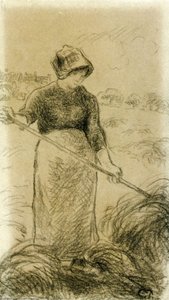


Tyrinėkite meno kūrinius, suskirstytus pagal temas, stilius ir savybes.


Kamilis Pisaro
Haymaking 1
() ·
Su rėmu: · Rankiniu būdu tapyta aliejumi ant lineno
Viso suma