

Shown: · With its frame:
 Peržiūrėti realaus dydžio版
 Pasidalinti
 Dalintis
 Išsamiau
 Vadovas

 Atsisiųsti
 Panašūs eksponatai
 Rentgeno spindulių nuotrauka
 Automatinė diorama
 Q&A
Q&A Statistika
 Oil On Canvas
- WallArt
- Contemporary Realism
 1880
1880- 19th Century
 14.0 x 22.0 cm
€ 237
Rankų darbo aliejinės reprodukcijos
Rankiniu būdu tapytas aliejus ant droblio jūsų pageidaujamame dydį ir rėmuose – tai mūsų menininkų pagal užsakymą sukurtas darbas. ( Perjungti į spausdinamus版作品 Perejti prie skaitmeninių vaizdų)
Size
·Standartinis dydis
pagal užsakymą
CM
INCH
Pasirinkite iš mūsų nustatytų dydžių, atitinkančių originalaus meno kūrinio proporcijas.
Loading sizes...

plotis
aukštis
Įveskite jums reikiamą plotį ir aukštį, kad paveikslas atitiktų jūsų rėmą ar sieną. Kadangi šis darbas yra rankinio darbo, siekiant išgauti kitokios formos dydį, paveikslas gali būti šiek tiek didesnis (nuo kraštų bus palikta daugiau erdvės) arba mažesnis – pasirinkite jums patogiausią variantą. Prieš pradedant tapyti, atsiųsime jums skaitmeninį maketą patvirtinimui. Šioje puslapio nuotraukoje matomas vaizdas nėra galutinis rezultatas – jį parodys tik sukurtas maketas.
 Skaityti daugiau
Finish
·
White €1

Blurside €1

Extended €1

P118B €10

P118H €10

P118W €10

P438Z €10

P508JH €12

P508YH €12

P805H €10

P805Z €10

P919BZ €10

P919G €10

P919XJ €10

P959ZH €10

P968JZ €12

W106C €8

W218G €10

W218JH €8

W218Y €10

W307PJ €10

W316G €10

W316PJ €8

W316Y €10

W398PJ €8

W4111J €10

W500HY €15

W500JH €15

W692G €12

W849H €8

W940BG €15

W953PJ €8

H24-GOLD €30

H24-SILVER €30

H36-GOLD €45

H36-SILVER €45
Shipped in a protective tube, ready for your own framer.
Above 105 cm the frame is shipped as a kit for a professional framer — read the details.
Extras
optionalWhat do the extras include?
Examples of what can be changed: Replace face with customer photo; Add pet (e.g., replace cat with dog); Include hidden message in background; Change background landscape or elements.
After order, TopImpressionists.com team will email client for instructions and provide a mockup preview
After order, TopImpressionists.com team will email client for instructions and provide a mockup preview
Pristatymas visame pasaulyje () per 3–4 savaites, o ne įprastai – per 5 savaites. (29 spalis). Kokybė lieka nepakeičiama.
Apsauginis lakas
Pavadinimo lentelė
Išgraviruotos bronzinės plokštelės detalės
This elegant plaque features the artist's name and the title of the artwork, finely engraved for a timeless presentation.
It is made from bronze with a refined, elegant finish. The text is precisely laser-engraved for a sharp and permanent result. Measuring 9x2 cm, the plaque is compact yet easy to read. It's built to be durable and scratch-resistant, offering a professional, museum-quality look. Mounting is simple thanks to the included adhesive backing.
Skaidrios akrilo plokštelės informacija
The plaque includes essential engraved details such as the artist's name, the title of the artwork, the date it was created, the type of media used-like oil on canvas or watercolor-a brief description of the piece, and a QR code that links to the complete artwork information.
It is crafted from clear acrylic, offering a sleek, modern appearance. The text is UV-engraved in black to ensure strong visual contrast. With a size of 10x15 cm, it ensures optimal readability. It comes equipped with two metal hooks for secure wall mounting. The plaque is designed to be weather-resistant, making it suitable for various environments, and it includes interactive features that work seamlessly with smartphone scanning.
Juodos akrilo plokštelės informacija
This elegant plaque includes engraved information such as the artist's name, the title of the artwork, the date it was created, the type of media used (like oil on canvas or watercolor), a short description of the artwork, and a QR code for quick access to more information.
The plaque itself is made from refined black acrylic with a premium finish. The text is laser-engraved in white for high contrast and readability. Its size is 10x15 cm, designed to be easy to read. It comes with two metal hooks for professional mounting. The design is sleek and fits any interior style. It is also weather-resistant and durable, with built-in digital integration for mobile compatibility.
Stiklo variantas prieinamas tik pasirinkus dydį iki 110 cm
 Stiklo variantas prieinamas tik pasirinkus dydį iki 110 cm
- Nemokamas greitasis pristatymas visame pasaulyje
- Aukštos kokybės lininis drobė
- Pilnas siuntimo draudimas
- Muitinės mokesčių grąžinimo garantija
- Tikro spalvų atitikimo garantija
- 100 dienų grąžinimo politika (tik esant įtaigoms)
- 100% pinigų grąžinimo garantija
- Nuolaida dideliems užsakymams


Kolekcinio objekto aprašas
Édouard Manet’s ‘The Lemon,’ a vibrant Impressionist still life from 1880, captures the artist's revolutionary approach to light and form with its striking lemon subject. Discover this iconic piece and bring art home.
Autoriaus biografija
Pažinkite Édouard Manetą (1832–1883), reikšmingą figūrą tarp realizmo ir impresionizmo! Apžiūrėkite ikoninius kūrinius 'Pusryčiai ant žolės' ir 'Olimpija', bei jo palikimą moderniajame mene.
About the painting
A Singular Still Life: ‘The Lemon’ by Édouard Manet
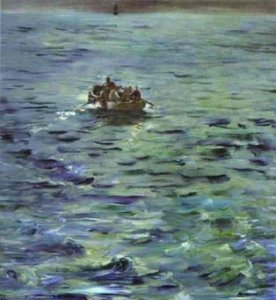
Édouard Manet's “The Lemon,” painted in 1880, isn’t merely a depiction of citrus fruit; it’s a deliberate provocation—a cornerstone of Impressionism’s rebellion against academic tradition. Captured on canvas measuring 14 x 22 cm, this deceptively simple composition embodies Manet’s unwavering commitment to portraying the world as he perceived it, rejecting idealized representations in favor of capturing fleeting moments and atmospheric nuances.
Realism Revisited: Technique and Observation
Manet eschewed the meticulous glazing techniques favored by his predecessors. Instead, he employed a looser brushstroke style—a technique honed through extensive study of Caravaggio and Velázquez—to achieve remarkable luminosity and immediacy. The artist meticulously observed the lemon’s form, capturing its subtle variations in color and texture with confident strokes. Notice how Manet skillfully renders the orange hues radiating from the lemon's peel, creating a vibrant interplay of light and shadow that elevates it beyond a mere botanical specimen.
A Parisian Snapshot: Context and Influence
Painted during a period of significant artistic ferment in Paris, “The Lemon” reflects the burgeoning interest in capturing everyday life—a departure from the grand narratives favored by Romanticism. Manet’s studio was situated amidst the vibrant intellectual landscape of Montmartre, where artists like Monet and Renoir were experimenting with new approaches to color and light. This influence is palpable in the painting's airy atmosphere and its rejection of theatrical poses.
Symbolic Resonance: Beyond Appearance
While seemingly unassuming, “The Lemon” carries symbolic weight. The lemon itself has long been associated with freshness, vitality, and optimism—qualities Manet sought to convey through his masterful rendering. Furthermore, the bowl’s stark black rim serves as a visual counterpoint to the lemon's brilliance, emphasizing its prominence within the composition and subtly hinting at themes of contrast and duality.
Emotional Impact: Capturing Transient Beauty
"The Lemon" transcends mere representation; it aspires to evoke emotion. Manet’s deliberate disregard for academic conventions—his focus on capturing a single, luminous object—demonstrates his belief that art should strive to capture the essence of experience. It's a testament to Manet’s genius that this seemingly simple still life continues to resonate with viewers today, reminding us of the transformative power of observation and the enduring beauty of fleeting moments.
Klausimai ir atsakymai
Kokia spausdinimo konfigūracija rekomenduojama kūriniui „The lemon, Musée d'Orsay“ – Eduaras Manė?
Rekomenduojama spausdinti „The lemon, Musée d'Orsay“ – Eduaras Manė reprodukciją Large dydį, Landscape formatu.
Kokia yra „The lemon, Musée d'Orsay“ – Eduaras Manė technika ir kūrybos data?
„The lemon, Musée d'Orsay“ sukurtas 1880 m. naudojant Oil On Canvas techniką. Medžiaga ir data nurodo, kaip ir kada buvo sukurtas originalas.
Kokie kiti Eduaras Manė vardai yra žinomi?
Kiti Eduaras Manė, „The lemon, Musée d'Orsay“ kūrybos autoriaus, vardai apima E. Manė, Édouard Manet, Eduaras Manė (Pranc. Édouard Manet).
Quick facts and art quiz
About Eduaras Manė

Eduaras Manė
1832 - 1883, Prancūzija
Autoriaus biografija
Paryžiaus Maištininkas: Édouard Manet ir Jo Amžininkų Dailė
Édouard Manetas, gimęs 1832 metais Paryžiuje turtingoje ir tvirtoje šeimoje, nuo pat pradžių atrodė netinkamas revoliucinio meno gyvenimui. Jo tėvas, gerbiamas teisėjas, vylėsi saugumo sūnaus ateities teisininko arba galbūt jūroje – garbūs profesijos, derantys su jų visuomeniniu statusu. Tačiau net ir jaunystėje Maneto širdis priklausė menui. Būdamas vienuolikos metų jis pradėjo formalizuotus piešimo pamokslų kursus, nors trumpam buvo apmokytas akademinis dailininkas Thomas Couture, jis greitai pajuto, kad Couture’s griežtos metodikos yra ribojančios. Šis ankstyvas pasipriešinimas pranašavo visą gyvenimą, skiriamą meninių konvencijų iššūkio metimui. Manetas ne norėjo tiesiogiai atkartoti praeitį; jis siekė užfiksuoti šiuolaikinio Paryžiaus gyvybingumą – ir kartais neramus realumus. Jis lankydavosi Luvre, ne tik kopijuodamas Senos meistrus, bet ir analizuodamas jų technikas, mokydamasis iš tokių dailininkų kaip Caravaggio ir Velázquez, kaip šviesa ir šešėlis gali skulptūruoti formas ir sužadinti emocijas. Tačiau meno srautų poslinkis, ypač Gustave Courbet‘o remiamas Realizmas, tikrai įžiebė Maneto kūrybinę kelią. Courbet‘o užsispyrimas vaizduoti kasdienį gyvenimą be idealizavimo giliai atrezonavo su Manetu, išlaisvindamas jį nuo istorinių ar mitologinių temų apribojimų.Tradicijų Sulaužymas: Skandalai ir Inovacijos
1860-ųjų dešimtmetis Paryžiuje buvo kupinas intensyvaus meno fermento, o Manetas atsidūrė jo epicentre. Japonų gravirų – *ukiyo-e* – atėjimas giliai paveikė jo estetinę suvokimą. Jis buvo sužavėtas jų plokščių perspektyvų, ryžių kompozicijų ir striking spalvų naudojimo, elementais, kurie taps jo stiliaus bruksniais. Šis įtaka, kartu su augančiu akademiniu poliruojimu atmetimu, sukėlė darbus, kurie šokiravo ir skandalizavo Paryžiaus meno pasaulį. Le Déjeuner sur l'herbe (Pietūs ant žolės), parodytas Salon des Refusés parodoje 1863 metais – paroda darbams, atsisakytoms oficialiojo Salono – tapo kontroversijų epicentru. Paveikslas, kuriame pavaizduota nuoga moteris paprastai piknikuojanti su dviem visiškai apsirengusiais vyrais, nebuvo tik apie nuotykį; tai buvo apie tai, *kaip* šis nuotykis buvo pateiktas. Maneto figūros neturėjo tradicinių nuotykių idealizuotų formų ir mitologinio konteksto. Jie buvo neabejotinai modernūs, priešpriešinant žiūrovą nerimą keliančiu tiesiogumu. Skandalas aplink Le Déjeuner tik sustiprėjo su jo 1865 metų šedevru, Olympia. Šis paveikslas, sąmoningai perkurpintas Titiano *Urbino Veneros*, pateikė šiuolaikinę prostitutę, drąsiai žiūrinčią į žiūrovą. Neatpažįstama realizacija ir provokuojanti tema buvo sutiktos su plačiu pasmerkimo. Kritikų apkaltintas grubumu ir meniniu netobulumu, tačiau neapykantos požiūriu slypėjo pripažinimas, kad jis fundamentaliai keičia tapybos kalbą.Tiltas į Impresionizmą: Šviesa, Teptukai ir Šiuolaikinis Gyvenimas
Nors Manetas niekada visiškai neprisiėmė “Impresionisto” etiketės, jo įtaka judėjui buvo nepaneigiama. Jis dalijosi jų atmetimu akademinių konvencijų ir pasiryžimu užfiksuoti praeinančių šviesos ir atmosferos efektus. Jis parodė darbą su Monetu, Renoir, Degas ir kitais Nepriklausomų impresionistų parodose, įtvirtindamas savo poziciją avangardo veikėjui. Maneto technika vystėsi link laisvesnio teptukų braižymo, prioritetą skyrus formos įspūdžiui, o ne tikslioms detalėms. Jis eksperimentavo su spalvomis, dažnai naudodamas ryškias kontrasto efektus, kad sukurtų dramatiškus efektus. Be skandalinių nuotykių, Manetas tyrė platų temų spektrą: portretus – įskaitant striking vaizdus savo žmonos Suzanne ir kolegos dailininko Émile Zola; Paryžiaus naktinio gyvenimo scenas, tokias kaip A Bar at the Folies-Bergère, kuri meistriškai užfiksuoja modernaus miesto gyvenimo atskyrimą ir spektaklį; ir intymius buitinius vaizdus. Jis ne tik dokumentavo šias temas; jis jas nagrinėjo, klausdamosis visuomenės normų ir iššūkio konvencinėms grožio sąvokoms.Palikimas ir Nuolatinis Poveikis
Édouard Maneto ankstyva mirtis 1883 metais nuo sifilio nutraukė karjerą, kuri jau negrįžtamai pakeitė meno istorijos eigą. Nors jo reputacija po mirties žymiai padidėjo, jo įtaka buvo pajusta jaunesnių dailininkų, kurie jame atpažino išvaduotoją. Jis sudraskė sienas, iššūkio konvencinėms temoms, technikoms ir meniniam tikslui.- Jo pabrėžimas šiuolaikinį gyvenimą paveikė Impresionizmą ir Post-Impressionizmą.
- Jo naujoji teptukų braižymo ir spalvų naudojimo technika įkvėpė daugybės dailininkų kartas.
- Jo pasiryžimas susidurti su nepatogiomis tiesomis apie visuomenę privertė žiūrovus abejoti savo pačių prielaidomis.
Quick facts about Eduaras Manė
- Artistic Movement Or Style: Realizmas, Impresionizmas
- Artists Or Movements Influenced By This Artist:
- Claude Monet
- Pierre-Auguste Renoir
- Edgar Degas
- Impresionizmas
- Artists Who Influenced This Artist:
- Caravaggio
- Diego Velázquez
- Gustave Courbet
- Date Of Birth: Sausio 23, 1832
- Date Of Death: 1883 m. balandžio 30 d.
- Full Name: Édouard Manet
- Nationality: Prancūzas
- Notable Artworks:
- Le Déjeuner sur l'herbe
- Olympia
- A Bar at the Folies-Bergère
- Place Of Birth: Paryžius, Prancūzija
panašūs kūriniai




Tyrinėkite meno kūrinius, suskirstytus pagal temas, stilius ir savybes.


Eduaras Manė
The lemon, Musée d'Orsay
() ·
With its frame: · Hand-painted in oil on linen
Total