
Paveikslėlyje: · Su rėmu:
 Peržiūrėti realaus dydžio版
 Pasidalinti
 Dalintis
 Išsamiau
 Vadovas

 Atsisiųsti
 Panašūs eksponatai
 Rentgeno spindulių nuotrauka
 Automatinė diorama
 问答
问答 Statistika
- 187.0 x 107.0 cm


€ 241
Rankų darbo aliejinės reprodukcijos
Rankiniu būdu tapytas aliejus ant droblio jūsų pageidaujamame dydį ir rėmuose – tai mūsų menininkų pagal užsakymą sukurtas darbas. ( Perjungti į spausdinamus版作品 Perejti prie skaitmeninių vaizdų)
Dydis
·Standartinis dydis
pagal užsakymą
CM
INCH
Pasirinkite iš mūsų nustatytų dydžių, atitinkančių originalaus meno kūrinio proporcijas.
Kraunami dydžiai...

plotis
aukštis
Įveskite jums reikiamą plotį ir aukštį, kad paveikslas atitiktų jūsų rėmą ar sieną. Kadangi šis darbas yra rankinio darbo, siekiant išgauti kitokios formos dydį, paveikslas gali būti šiek tiek didesnis (nuo kraštų bus palikta daugiau erdvės) arba mažesnis – pasirinkite jums patogiausią variantą. Prieš pradedant tapyti, atsiųsime jums skaitmeninį maketą patvirtinimui. Šioje puslapio nuotraukoje matomas vaizdas nėra galutinis rezultatas – jį parodys tik sukurtas maketas.
 Skaityti daugiau
Baigiamasis etapas
·
Baltas apasutojimas €1

Išblėstantis šonas €1

Išplėstinis €1

P118B €10

P118H €10

P118W €10

P438Z €10

P508JH €12

P508YH €12

P805H €10

P805Z €10

P919BZ €10

P919G €10

P919XJ €10

P959ZH €10

P968JZ €12

W106C €8

W218G €10

W218JH €8

W218Y €10

W307PJ €10

W316G €10

W316PJ €8

W316Y €10

W398PJ €8

W4111J €10

W500HY €15

W500JH €15

W692G €12

W849H €8

W940BG €15

W953PJ €8

H24-GOLD €30

H24-SILVER €30

H36-GOLD €45

H36-SILVER €45
Siunčiama saugiame vamzdelyje, paruošta patys sukomentuoti jūsų rėmeliais.
Virš 105 cm rėmas siunčiamas kaip rinkinys profesionaliam rėmininkui — skaitykite detales.
Papildomos paslaugos
nebūtinaKą apima papildomos paslaugos?
Pavyzdžiai, ką galima pakeisti: pakeisti veidą nuotrauka su klientu; pridėti augintinį (pvz., pakeisti kucingą šuniu); įtraukti paslaptingą žinutę fone; pakeisti fono kraštotvę ar elementus.
Gavus užsakymą, TopImpressionists.com komanda susisieks su klientu el. paštu dėl nurodymų ir pateiks preliminarią maketą.
Gavus užsakymą, TopImpressionists.com komanda susisieks su klientu el. paštu dėl nurodymų ir pateiks preliminarią maketą.
Pristatymas visame pasaulyje () per 3–4 savaites, o ne įprastai – per 5 savaites. (10 lapkritis). Kokybė lieka nepakeičiama.
Apsauginis lakas
Pavadinimo lentelė
Išgraviruotos bronzinės plokštelės detalės
This elegant plaque features the artist's name and the title of the artwork, finely engraved for a timeless presentation.
It is made from bronze with a refined, elegant finish. The text is precisely laser-engraved for a sharp and permanent result. Measuring 9x2 cm, the plaque is compact yet easy to read. It's built to be durable and scratch-resistant, offering a professional, museum-quality look. Mounting is simple thanks to the included adhesive backing.
Skaidrios akrilo plokštelės informacija
The plaque includes essential engraved details such as the artist's name, the title of the artwork, the date it was created, the type of media used-like oil on canvas or watercolor-a brief description of the piece, and a QR code that links to the complete artwork information.
It is crafted from clear acrylic, offering a sleek, modern appearance. The text is UV-engraved in black to ensure strong visual contrast. With a size of 10x15 cm, it ensures optimal readability. It comes equipped with two metal hooks for secure wall mounting. The plaque is designed to be weather-resistant, making it suitable for various environments, and it includes interactive features that work seamlessly with smartphone scanning.
Juodos akrilo plokštelės informacija
This elegant plaque includes engraved information such as the artist's name, the title of the artwork, the date it was created, the type of media used (like oil on canvas or watercolor), a short description of the artwork, and a QR code for quick access to more information.
The plaque itself is made from refined black acrylic with a premium finish. The text is laser-engraved in white for high contrast and readability. Its size is 10x15 cm, designed to be easy to read. It comes with two metal hooks for professional mounting. The design is sleek and fits any interior style. It is also weather-resistant and durable, with built-in digital integration for mobile compatibility.
Stiklo variantas prieinamas tik pasirinkus dydį iki 110 cm
 Stiklo variantas prieinamas tik pasirinkus dydį iki 110 cm
- Nemokamas greitasis pristatymas visame pasaulyje
- Aukštos kokybės lininis drobė
- Pilnas siuntimo draudimas
- Muitinės mokesčių grąžinimo garantija
- Tikro spalvų atitikimo garantija
- 100 dienų grąžinimo politika (tik esant įtaigoms)
- 100% pinigų grąžinimo garantija
- Nuolaida dideliems užsakymams


Kolekcinio objekto aprašas
Édouard Manet's 'The Philosopher' (1867) captures a contemplative figure amidst nature, blending Realism and Impressionism. Explore the painting’s symbolism, artistic context, and legacy at The Art Institute of Chicago.
Autoriaus biografija
Manetas su „Olimpija“ sujungė realizmą ir impresionizmą. Atraskite šio paryžiečių meistro revoliucinius kūrinius.
Apie paveisdelį
The Philosopher: A Window into Manet’s Modern Soul
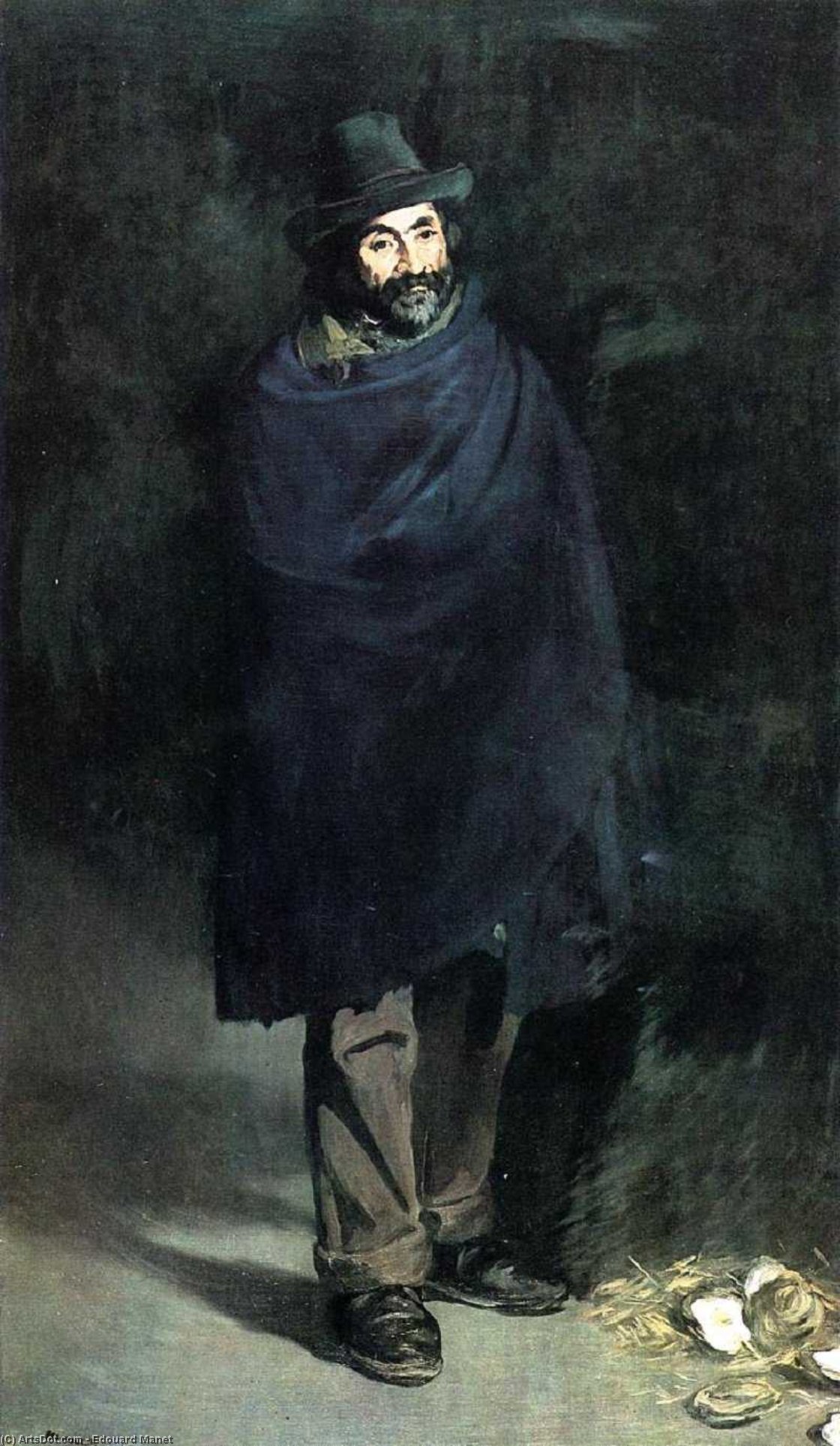
Édouard Manet's *The Philosopher*, painted in 1867, isn’t merely a portrait; it’s a carefully constructed tableau that encapsulates the burgeoning spirit of modern art. This oil-on-canvas work, measuring a substantial 187 x 107 cm, invites us into a quiet contemplation, a moment suspended between observation and thought. The subject, a man draped in a long coat and hat – a figure instantly recognizable as embodying intellectualism – stands on a Parisian street, his hands tucked casually into his pockets, radiating an aura of profound introspection. Yet, it’s not the individual that commands our attention entirely, but rather the subtle orchestration of elements surrounding him: the birds perched above, the clock subtly hinting at time's passage, and the carefully chosen background details. These aren’t merely decorative flourishes; they contribute to a layered narrative, inviting us to consider the nature of existence itself. The painting emerged from a pivotal moment in art history – a period of intense transition between Realism and Impressionism. Manet, already known for his provocative works like *Le Déjeuner sur l'herbe* and *Olympia*, was pushing boundaries with each new creation. He deliberately challenged academic conventions by depicting everyday life, often featuring ordinary people in unidealized ways. *The Philosopher* exemplifies this approach, eschewing the polished surfaces and heroic narratives favored by earlier generations of artists. Instead, Manet presents a scene stripped bare of sentimentality, focusing on the raw reality of urban existence. The muted palette – dominated by browns, grays, and ochres – reinforces this sense of understated observation. Notice how he employs loose brushstrokes, characteristic of his style, creating an almost hazy effect that softens the edges and contributes to the painting’s contemplative mood. Manet's stylistic choices are deeply rooted in both Realism and Impressionism. He retains a degree of realism in his depiction of the subject and setting, meticulously rendering the details of the man’s clothing and the streetscape. However, he also embraces the Impressionist emphasis on capturing fleeting moments of light and color. The dappled sunlight filtering through the background suggests movement and atmosphere, while the subtle shifts in tone create a sense of depth and spatial ambiguity. This blending of styles – realism tempered by impressionistic sensitivity – is what makes Manet such a revolutionary figure. He wasn’t simply painting what he saw; he was actively shaping how we perceive the world around us. The inclusion of birds, for instance, adds a layer of symbolic richness. Birds are often associated with freedom and intellect, further reinforcing the subject's philosophical nature. The historical context surrounding *The Philosopher* is crucial to understanding its significance. Manet’s work coincided with a period of rapid social and economic change in Paris – the rise of industrialization, urbanization, and a growing sense of alienation. His paintings reflected this turbulent atmosphere, capturing the anxieties and uncertainties of modern life. The painting's placement within the broader context of Manet's career reveals his deliberate attempt to challenge established artistic norms and pave the way for future generations of artists. *The Philosopher* stands as a testament to Manet’s innovative spirit and his profound impact on the development of modern art, ultimately finding its home in the prestigious Art Institute of Chicago, where it continues to captivate viewers with its quiet intensity and enduring relevance.Artistic Details & Symbolism
Let's delve deeper into the specific details that contribute to *The Philosopher’s* evocative power. The man himself is presented in a state of profound contemplation, his gaze directed towards an unseen horizon. His beard and mustache lend him an air of intellectual authority, solidifying his role as a philosopher. Note the careful rendering of his clothing – the long coat, the hat, the simple pocket watch – each element contributing to a sense of timelessness and dignity. The background is equally significant. The two birds perched above suggest a connection to nature, while the clock subtly reminds us of the relentless passage of time. These seemingly minor details are carefully orchestrated to create a harmonious whole, inviting viewers to engage in their own interpretations.Manet’s Legacy & Influence
Édouard Manet's influence on subsequent generations of artists is undeniable. His willingness to challenge conventions and depict modern life with unflinching honesty paved the way for Impressionism and beyond. Artists like Claude Monet, Pierre-Auguste Renoir, and Edgar Degas were deeply influenced by Manet’s techniques and his approach to subject matter. *The Philosopher*, in particular, demonstrates Manet's ability to capture a fleeting moment of human experience with remarkable sensitivity and insight. His work continues to inspire artists today, reminding us of the power of art to challenge our perceptions and expand our understanding of the world.Reproductions & Viewing Experience
TopImpressionists offers meticulously crafted hand-painted reproductions of *The Philosopher*, capturing the essence of Manet’s original masterpiece with unparalleled fidelity. Our skilled artisans employ traditional oil painting techniques, carefully recreating every brushstroke and nuance of color. These reproductions are not merely copies; they are works of art in their own right, imbued with the same spirit and emotion as the original. Whether you choose a large-scale statement piece for your home or a smaller, more intimate reproduction to adorn your office, our hand-painted versions will bring this iconic artwork into your space, allowing you to appreciate its beauty and complexity for years to come. Explore our collection today and experience *The Philosopher* in a whole new light.Klausimai ir atsakymai
Kas yra „The philosopher“ kūrybos autorius?
Kūrinį „The philosopher“ sukūrė Édouard Manet. Darbas katalogizuojamas Édouard Manet vardu.
Kokio tipo kūrinys yra „The philosopher“ – Édouard Manet?
„The philosopher“ – Édouard Manet klasifikuojamas kaip Sieninis menas. Ši kategorija aprašo originalo kūrinio tipą.
Ar Édouard Manet kūrinys „The philosopher“ yra viešosios nuoslegos ir kodėl?
Autorinės teisės statusas kūriniui „The philosopher“ – yra viešosios erdvės dalis – jo autorinė teisė pasibaigusi – nustatomas remiantis to, kad menininkas mirė 1883 m.
Trumpos faktinės datos ir meno viktorina
Apie Édouard Manet

Édouard Manet
1832 - 1883, Prancūzija
Autoriaus biografija
Paryžiaus Maištininkas: Édouard Manet ir Jo Amžininkų Dailė
Édouard Manetas, gimęs 1832 metais Paryžiuje turtingoje ir tvirtoje šeimoje, nuo pat pradžių atrodė netinkamas revoliucinio meno gyvenimui. Jo tėvas, gerbiamas teisėjas, vylėsi saugumo sūnaus ateities teisininko arba galbūt jūroje – garbūs profesijos, derantys su jų visuomeniniu statusu. Tačiau net ir jaunystėje Maneto širdis priklausė menui. Būdamas vienuolikos metų jis pradėjo formalizuotus piešimo pamokslų kursus, nors trumpam buvo apmokytas akademinis dailininkas Thomas Couture, jis greitai pajuto, kad Couture’s griežtos metodikos yra ribojančios. Šis ankstyvas pasipriešinimas pranašavo visą gyvenimą, skiriamą meninių konvencijų iššūkio metimui. Manetas ne norėjo tiesiogiai atkartoti praeitį; jis siekė užfiksuoti šiuolaikinio Paryžiaus gyvybingumą – ir kartais neramus realumus. Jis lankydavosi Luvre, ne tik kopijuodamas Senos meistrus, bet ir analizuodamas jų technikas, mokydamasis iš tokių dailininkų kaip Caravaggio ir Velázquez, kaip šviesa ir šešėlis gali skulptūruoti formas ir sužadinti emocijas. Tačiau meno srautų poslinkis, ypač Gustave Courbet‘o remiamas Realizmas, tikrai įžiebė Maneto kūrybinę kelią. Courbet‘o užsispyrimas vaizduoti kasdienį gyvenimą be idealizavimo giliai atrezonavo su Manetu, išlaisvindamas jį nuo istorinių ar mitologinių temų apribojimų.Tradicijų Sulaužymas: Skandalai ir Inovacijos
1860-ųjų dešimtmetis Paryžiuje buvo kupinas intensyvaus meno fermento, o Manetas atsidūrė jo epicentre. Japonų gravirų – *ukiyo-e* – atėjimas giliai paveikė jo estetinę suvokimą. Jis buvo sužavėtas jų plokščių perspektyvų, ryžių kompozicijų ir striking spalvų naudojimo, elementais, kurie taps jo stiliaus bruksniais. Šis įtaka, kartu su augančiu akademiniu poliruojimu atmetimu, sukėlė darbus, kurie šokiravo ir skandalizavo Paryžiaus meno pasaulį. Le Déjeuner sur l'herbe (Pietūs ant žolės), parodytas Salon des Refusés parodoje 1863 metais – paroda darbams, atsisakytoms oficialiojo Salono – tapo kontroversijų epicentru. Paveikslas, kuriame pavaizduota nuoga moteris paprastai piknikuojanti su dviem visiškai apsirengusiais vyrais, nebuvo tik apie nuotykį; tai buvo apie tai, *kaip* šis nuotykis buvo pateiktas. Maneto figūros neturėjo tradicinių nuotykių idealizuotų formų ir mitologinio konteksto. Jie buvo neabejotinai modernūs, priešpriešinant žiūrovą nerimą keliančiu tiesiogumu. Skandalas aplink Le Déjeuner tik sustiprėjo su jo 1865 metų šedevru, Olympia. Šis paveikslas, sąmoningai perkurpintas Titiano *Urbino Veneros*, pateikė šiuolaikinę prostitutę, drąsiai žiūrinčią į žiūrovą. Neatpažįstama realizacija ir provokuojanti tema buvo sutiktos su plačiu pasmerkimo. Kritikų apkaltintas grubumu ir meniniu netobulumu, tačiau neapykantos požiūriu slypėjo pripažinimas, kad jis fundamentaliai keičia tapybos kalbą.Tiltas į Impresionizmą: Šviesa, Teptukai ir Šiuolaikinis Gyvenimas
Nors Manetas niekada visiškai neprisiėmė “Impresionisto” etiketės, jo įtaka judėjui buvo nepaneigiama. Jis dalijosi jų atmetimu akademinių konvencijų ir pasiryžimu užfiksuoti praeinančių šviesos ir atmosferos efektus. Jis parodė darbą su Monetu, Renoir, Degas ir kitais Nepriklausomų impresionistų parodose, įtvirtindamas savo poziciją avangardo veikėjui. Maneto technika vystėsi link laisvesnio teptukų braižymo, prioritetą skyrus formos įspūdžiui, o ne tikslioms detalėms. Jis eksperimentavo su spalvomis, dažnai naudodamas ryškias kontrasto efektus, kad sukurtų dramatiškus efektus. Be skandalinių nuotykių, Manetas tyrė platų temų spektrą: portretus – įskaitant striking vaizdus savo žmonos Suzanne ir kolegos dailininko Émile Zola; Paryžiaus naktinio gyvenimo scenas, tokias kaip A Bar at the Folies-Bergère, kuri meistriškai užfiksuoja modernaus miesto gyvenimo atskyrimą ir spektaklį; ir intymius buitinius vaizdus. Jis ne tik dokumentavo šias temas; jis jas nagrinėjo, klausdamosis visuomenės normų ir iššūkio konvencinėms grožio sąvokoms.Palikimas ir Nuolatinis Poveikis
Édouard Maneto ankstyva mirtis 1883 metais nuo sifilio nutraukė karjerą, kuri jau negrįžtamai pakeitė meno istorijos eigą. Nors jo reputacija po mirties žymiai padidėjo, jo įtaka buvo pajusta jaunesnių dailininkų, kurie jame atpažino išvaduotoją. Jis sudraskė sienas, iššūkio konvencinėms temoms, technikoms ir meniniam tikslui.- Jo pabrėžimas šiuolaikinį gyvenimą paveikė Impresionizmą ir Post-Impressionizmą.
- Jo naujoji teptukų braižymo ir spalvų naudojimo technika įkvėpė daugybės dailininkų kartas.
- Jo pasiryžimas susidurti su nepatogiomis tiesomis apie visuomenę privertė žiūrovus abejoti savo pačių prielaidomis.
Trumpa informacija apie Édouard Manet
- Artinis Stilius Ar Mokslas: Realizmas, Impresionizmas, Avangarda
- Dailininkai Ar Mokslai, Kuriuos Paveikė Šis Menininkas:
- Impresionizmas
- Avangarda
- Claude Monet
- Berthe Morisot
- Edgar Degas
- Gauguin
- Dailininkai, Kurie Paveikė Šį Menininką:
- Caravaggio
- Diego Velázquez
- Francisco Goya
- Titian
- Raphael
- Frans Hals
- Peter Paul Rubens
- Gimimo Data: 1832
- Gimimo Vieta: Paris, Prancūzija
- Mirties Data: 1883
- Pilnas Vardas: Édouard Manet
- Tautybė: Prancūzų
- Žinomiausi Darbai:
- Olympia
- Le Déjeuner sur l'herbe
- A Bar at the Folies-Bergère
panašūs kūriniai


Tyrinėkite meno kūrinius, suskirstytus pagal temas, stilius ir savybes.


Édouard Manet
The philosopher
() ·
Su rėmu: · Rankiniu būdu tapyta aliejumi ant lineno
Viso suma