


 Peržiūrėti realaus dydžio版
 Siųsti
 Dalintis
 Išsamiau
 Vadovas

 Atsisiųsti
 Panašūs eksponatai
 Rentgeno spindulių nuotrauka
 Diaporama
 Statistika
Fertility II
 Aliejus ant drobės
- Sieninis menas
- Expressionism
 1902
1902- Modernas
 128.0 x 152.0 cm
Experience Edvard Munch's 'Fertility II,' a hauntingly beautiful Expressionist painting exploring human connection and nature’s duality. A captivating work of art, now available as a premium reproduction.
 Rodyti daugiau
Pažinkite Edvardą Munchą (1863–1944), ekspresionizmo pionierį! Atraskite jo ikoninius kūrinius, pavyzdžiui, 'Šauksmą', bei meno tyrinimus apie nerimą, mirtį, meilę ir psichologines temas. Norvegų dailininkas, paveikęs XX a. avangardą.
Rankų darbo aliejinės reprodukcijos
Rankiniu būdu tapytas aliejus ant droblio jūsų pageidaujamame dydį ir rėmuose – mūsų menininkų darbas pagal užsakymą. ( Perjungti į spausdinimą Perejti prie skaitmeninių vaizdų)




P118B €10

P118H €10

P118W €10

P438Z €10

P508JH €12

P508YH €12

P805H €10

P805Z €10

P919BZ €10

P919G €10

P919XJ €10

P959ZH €10

P968JZ €12

W106C €8

W218G €10

W218JH €8

W218Y €10

W307PJ €10

W316G €10

W316PJ €8

W316Y €10

W398PJ €8

W4111J €10

W500HY €15

W500JH €15

W692G €12

W849H €8

W940BG €15

W953PJ €8




Standartinis
individualaus dydžio
CM
INCH
Pasirinkite iš mūsų nustatytų dydžių, atitinkančių originalaus meno kūrinio proporcijas.
Loading sizes...

plotis
aukštis
Įveskite jums reikiamą plotį ir aukštį, kad paveikslas atitiktų jūsų rėmą ar sieną. Kadangi šis darbas yra rankinio darbo, siekiant išgauti kitokio formos dydį, paveikslas gali būti šiek tiek didesnis (nuo kraštų bus palikta daugiau erdvės) arba mažesnis – pasirinkite jums patogiausią variantą. Prieš pradedant tapyti, atsiųsime jums skaitmeninį maketą patvirtinimui. Šioje puslapio nuotraukoje matomas vaizdas nėra galutinis rezultatas – jį parodys tik sukurtas maketas.
Ką galima pakeisti (pavyzdžiai): Pakeisti veidą į kliento nuotrauką; Pridėti augintinį (pvz., pakeisti katę šunimi); Įtraukti paslėptą žinutę fone; Pakeisti fono kraštovaizdį ar elementus.
Gavus užsakymą, TopImpressionists.com komanda susisieks su klientu el. paštu dėl instrukcijų ir pateiks maketo pavyzdį
Gavus užsakymą, TopImpressionists.com komanda susisieks su klientu el. paštu dėl instrukcijų ir pateiks maketo pavyzdį
Pristatymas visame pasaulyje () per 3–4 savaites, o ne įprastai – per 5 savaites. (25 spalis). Kokybė lieka nepakeičiama.

Nemokamas greitasis pristatymas visame pasaulyje

Aukštos kokybės lininis drobė

Pilnas siuntimo draudimas

Muitinės mokesčių grąžinimo garantija

Tikro spalvų atitikimo garantija

100 dienų grąžinimo politika (tik esant įtaigoms)

100% pinigų grąžinimo garantija

Nuolaida dideliems užsakymams
 Stiklo variantas prieinamas tik pasirinkus dydį iki 110 cm

Fertility II
Reprodukcijos technika
Reprodukcijos dydis
-


Visų pasirinktų variantų kaina
€ 236
A Portrait of Tranquility Haunted by Symbolism
Edvard Munch’s “Fertility II,” completed in 1902, stands as a cornerstone of Norwegian Expressionism—a movement that sought to convey raw emotion rather than objective representation. Housed at the Von Der Heydt Museum in Wuppertal, Germany, this oil on canvas painting transcends mere visual beauty; it delves into profound psychological themes and invites contemplation about the human condition.
- Artist: Edvard Munch (1863 – 1944)
- Medium: Oil on Canvas
- Dimensions: 128 x 152 cm
- Location: Von Der Heydt Museum, Wuppertal
Composition and Narrative Depth
The painting depicts a simple yet arresting scene: two figures—presumably male and female—seated beneath the dappled shade of a tree. Munch’s masterful use of perspective draws the viewer into this intimate tableau, fostering a sense of immediacy and vulnerability. The woman holds a basket in her left hand – a potent symbol of nourishment and potential abundance – while the man stands beside her, engaged in conversation. However, lurking beneath the surface serenity is an unsettling presence.
Symbolism: Knives, Bowls, and Seeds of Anxiety
Several elements contribute to the painting’s complex symbolism. Notably, a knife lies prominently on the ground near the center, juxtaposed with another positioned closer to the man's side. These instruments of harvesting – or perhaps even violence – subtly disrupt the idyllic setting, hinting at anxieties surrounding life and death. Alongside the knives are a bowl and basket placed on the ground, reinforcing the idea of fertility and sustenance but simultaneously underscoring the fragility of existence.
Expressionist Style: Bold Color and Textured Brushstrokes
Munch’s distinctive Expressionist style is immediately recognizable through his bold color palette—primarily muted yellows and greens—and energetic brushstrokes. These techniques aren't merely decorative; they serve to convey emotion directly, mirroring the artist’s inner turmoil and capturing the essence of psychological experience. Influenced by movements like Fauvism and Cubism, Munch pushed boundaries in artistic representation, prioritizing feeling over factual accuracy.
A Legacy of Emotion: Inspiration from Carracci
Munch's artistic vision found inspiration in other artists’ works. Specifically, “Fertility II” echoes the spirit of Annibale Carracci’s painting on a similar theme—a testament to Munch’s ability to synthesize diverse influences and forge his own unique aesthetic voice. This artwork continues to resonate with audiences today, prompting reflection on themes of human connection, mortality, and the enduring power of artistic expression.
问答 (or more naturally for a website heading): Klausimai ir atsakymai
Kokia technika sukurta „Fertility II“, autorius – Edvardas Munkas?
„Fertility II“, autorius – Edvardas Munkas technika – Aliejus ant drobės. Kopijos siekia atkartoti šios technikos vaizdą.
Kokia pagrindinė spalva dominuoja kūrynije „Fertility II“, autorius – Edvardas Munkas?
Per „Fertility II“, autorius – Edvardas Munkas bėgioja Spektras nuo žalios iki violetinės atspalvis.
Ar galiu užsisakyti „Fertility II“ aliejinį reprodukciją?
„Fertility II“ galima įsigyti kaip rankomis dažyta aliejų reprodukcija ant lininio drobos. Užsakymą galite padaryti atskiroje Rankų darbo reprodukcija puslapio, pasirinkę tinkamą dydį.
Susiję kūriniai


Autoriaus biografija
Edvard Munkas: Šešėlių ir Jausmų Simfonija
Edvardas Munkas, gimęs 1863 metais Adalsbruko kaime, Norvegijoje, tapo menininku, kurio kūriniai amžiams įtvirtino modernios eros nerimą ir emocinį sukrėtimą. Jo gyvenimas, giliai pažymėtas nuostolių ir visapusiškos melancholijos, buvo neatsiejamas nuo jo išskirtinio meno. Vaikystės šešėlį metė motinos ir sesers ankstyva mirtis nuo tuberkuliozės – tragedija, kuri įskiepijo jam obsesiją dėl mirtingumo, ligų ir žmogaus egzistencijos trapumo. Tėvo griežtos religinės nuostatos bei jo pačių kovos su psichikos liga dar labiau sustiprino Munką apėmusį baimės jausmą, formavusį ne tik asmeninį gyvenimą, bet ir jo paveikslų simbolinę kalbą. Jis ne tiesiog piešė scenas; jis išreikšdavo savo vidinį pasaulį, psichologinius sukrėtimus paversdamas vizualia forma.Meninės Virsmo Genesis: Įtaka ir Raida
Munkas formaliai mokėsi Karališkajame meno ir dizaino institute Kristianijoje (dabartinė Osle), tačiau jo kūrybos ugnį uždegė susidūrimas su bohemišku pasauliu ir Hanso Jægerio nihiliistinės filosofijos įtaka. Jægeris skatino Munką atsisakyti tradicinių akademinių stilių ir pasinerti į savo subjektyvios patirties gelmes, ką menininkas pavadino „sielos tapybos“ koncepcija. Šis lūžis pažymėjo pradžią Munkui būdingam stiliui – žiauriai emocijai, iškreiptoms formoms ir atsisakymui nuo natūralistinio vaizdavimo. Kelionės į Paryžių 1890-ųjų dešimtmetyje atvėrė jam Post-Impressionistų judėjimo duris, kur jis pasisemė įkvėpimo iš tokių menininkų kaip Paulis Gauguinas, Vincentas van Goghas ir Henri de Toulouse-Lautrec. Šių meistrų ryškios spalvos, ekspresyvūs potėliai ir psichologinis intensyvumas giliai atrezgėjo Munkui. Jis ne tiesiog kopijavo jų techniką; jis sintezavo jas į kažką unikalaus – vizualinę kalbą, pajėgią perteikti pačius giluminius ir nerimą keliantį žmogaus emocijas. Taip pat svarbi buvo jo viešnagė Berlyne, kuri padėjo susipažinti su dramaturgu Augustu Strindbergu, kurio psichologinių temų tyrinimas dar labiau sustūmė Munką į meninius eksperimentus.Ikoniškos Vizijos: Pagrindiniai Darbai ir Jų Simbolinė Naštą
Munkui skirta kūrinių galerija kupina vaizdų, kurie tapo giliai įsišaknyję bendroje sąmonėje. „Šauksmas“, galbūt jo žinomiausias darbas, pranoksta paveikslo statusą ir tampa universaliu egzistencinio nerimo simboliu. Sūkuriuojantis, ugninis kraštovaizdis ir figūros iškreiptas veidas įkūnija pirminį šauksmą prieš visatos abejingumą. „Madona“, kontroversiška ir giliai asmeniška kūrinys, tyrinėja seksualumo, motinystės ir mirtingumo temas su nerimą keliančiu atvirumu. Pakartotiniai motifai, tokie kaip „Sergantis vaikas“ – įkvėptas jo sesers Sofijos netekties – yra skaudūs priminimai apie Munkui vaikystėje paliktą traumą ir visada artėjančią mirties šešėlį. „Melancholija I ir II“, gilią liūdesio ir vienatvės parodantys paveikslai, atskleidžia pažeidžiamumą, kuris yra tiek giliai asmeniškas, tiek universaliai suvokiamas. Šie darbai nėra tiesiog atvaizdai išorinės realybės; tai langai į menininko sielą, suteikiantys žiūrovams beprotišką pažvelgimą į žmogaus psichikos tamsiausius kampelius. Munkas nesiekė sukurti gražių paveikslų; jis siekė perteikti tiesą – net jei ta tiesa buvo skausminga ir nerimą kelianti.Pavelės Palikimas: Istorinė Signifikacija ir Nuolatinis Įtaka
Edvardo Munkui indėlis į moderniąją dailę yra neįvertinamas. Jis stovi kaip kertinis veikėjas formuojant Ekspresionizmą, atverdamas kelią menininkams, kurie prioritetą teikia subjektyvioms emocijoms virš objektyvaus vaizdavimo. Jo nesavanaudingo tyrinimo apie universalią žmogaus patirtį – meilę, nuostolius, nerimą ir mirtį – poveikis išlieka iki šių dienų, įtvirtindamas jo vietą kaip vieno svarbiausių ir ilgiausiai trunkanciu menininkų pasaulyje. Jo darbai giliai paveikė paskesnes kartas menininkų, paveikdami tokius judėjimus kaip Vokietijos ekspresionizmas ir kitus. Jis drąsiai susidūrė su žmogaus būties tamsiais aspektais, iššaukdamas tradicinius grožio ir meno atvaizdo suvokimą. Netgi pasiekęs šlovę ir pripažinimą – kulminacija tapo Munkio muziejaus įkūrimu Osle – jo asmeninis gyvenimas liko neramus, pažymėtas psichikos nestabilumo ir vienatvės laikotarpiais. Tačiau per viską jis tęsė kurti, palikdamas kūrinių rinkinį, kuris ir toliau provokuoja, iššaukia ir įkvepia. Munkui palikimas yra ne tik patys paveikslai; tai drąsa susidurti su žmogaus egzistencijos sudėtingumu ir versti tuos reiškinius į meną, kalbantį į mūsų esybės giliausius aspektus.
Edvardas Munkas
1863 - 1944 , Švedija
Trumpa informacija apie kūrėją
- Artistic Movement Or Style: Ekspresionizmas
- Artists Or Movements Influenced By This Artist: ['Vokietijos ekspresionizmas']
- Artists Who Influenced This Artist:
- Paulius Gogenas
- Van Gogas
- Toulouse-Lautrec
- Date Of Birth: 1863 m. gruodžio 12 d.
- Date Of Death: 1944 m. sausio 23 d.
- Full Name: Edvardas Munkas
- Nationality: Norvegų
- Notable Artworks:
- The Scream
- Madonna
- The Sick Child
- Melancholy I & II
- Place Of Birth: Ådalsbruk, Švedija
Susiję straipsniai
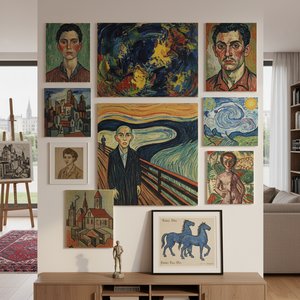
Ekspresionizmo Deimantai: 10 Šedevrai Jūsų Namų Dekorui
Atraskite ekspresionizmo šedevrus! 10 įtakingiausių meno kūrinių, atskleisiančių Muncho, Kirchnerio ir kitų meistrų emocijas. Išmokite apie tapybos stilius bei spalvų paletę. Aukščiausios kokybės dailės reprodukcijos jūsų namams – TopImpressionists.com.

German Expressionism's 10 Defining Masterpieces | Art for Your Home
Explore 10 defining German Expressionism masterpieces – from Munch's 'The Scream' to Kandinsky’s abstracts. Discover the artists, stories & bold colors behind this powerful art movement. Find museum-quality reproductions at TopImpressionists.com.

The Raw Emotion of Expressionism: A Deep Dive into its History, Characteristics & Enduring Influence
Explore the raw emotion of Expressionism with TopImpressionists. Discover its history, key artists like Kirchner & Munch, and lasting influence on modern art. Expert insights for collectors & enthusiasts.

Edvard Munch: Anxiety, Modernity & the Dawn of Expressionism
Explore the profound world of Edvard Munch, pioneer of Expressionism. Discover the origins of 'The Scream' & his haunting depictions of anxiety, mortality, and love. Expert analysis & high-quality reproductions at TopImpressionists.

Edvard Munch: Top 25 Šedevrai – Aliejaus Tapyba Jūsų Interjerui | TopImpressionists
Atraskite 25 įspūdingiausius Edvard Munch šedevrus! Išsami informacija apie aliejaus tapybą, ekspresionizmą ir jo paveikslų istoriją. Meno reprodukcijos interjerui – TopImpressionists.com
Tyrinėkite meno kūrinius, suskirstytus pagal temas, stilius ir savybes.


