
Paveikslėlyje: · Su rėmu:
 Peržiūrėti realaus dydžio版
 Pasidalinti
 Dalintis
 Išsamiau
 Vadovas

 Atsisiųsti
 Panašūs eksponatai
 Rentgeno spindulių nuotrauka
 Automatinė diorama
 问答
问答 Statistika
€ 240
Rankų darbo aliejinės reprodukcijos
Rankiniu būdu tapytas aliejus ant droblio jūsų pageidaujamame dydį ir rėmuose – tai mūsų menininkų pagal užsakymą sukurtas darbas. ( Perjungti į spausdinamus版作品 Perejti prie skaitmeninių vaizdų)
Dydis
·Standartinis dydis
pagal užsakymą
CM
INCH
Pasirinkite iš mūsų nustatytų dydžių, atitinkančių originalaus meno kūrinio proporcijas.
Kraunami dydžiai...

plotis
aukštis
Įveskite jums reikiamą plotį ir aukštį, kad paveikslas atitiktų jūsų rėmą ar sieną. Kadangi šis darbas yra rankinio darbo, siekiant išgauti kitokios formos dydį, paveikslas gali būti šiek tiek didesnis (nuo kraštų bus palikta daugiau erdvės) arba mažesnis – pasirinkite jums patogiausią variantą. Prieš pradedant tapyti, atsiųsime jums skaitmeninį maketą patvirtinimui. Šioje puslapio nuotraukoje matomas vaizdas nėra galutinis rezultatas – jį parodys tik sukurtas maketas.
 Skaityti daugiau
Baigiamasis etapas
·
Baltas apasutojimas €1

Išblėstantis šonas €1

Išplėstinis €1

P118B €10

P118H €10

P118W €10

P438Z €10

P508JH €12

P508YH €12

P805H €10

P805Z €10

P919BZ €10

P919G €10

P919XJ €10

P959ZH €10

P968JZ €12

W106C €8

W218G €10

W218JH €8

W218Y €10

W307PJ €10

W316G €10

W316PJ €8

W316Y €10

W398PJ €8

W4111J €10

W500HY €15

W500JH €15

W692G €12

W849H €8

W940BG €15

W953PJ €8

H24-GOLD €30

H24-SILVER €30

H36-GOLD €45

H36-SILVER €45
Siunčiama saugiame vamzdelyje, paruošta patys sukomentuoti jūsų rėmeliais.
Virš 105 cm rėmas siunčiamas kaip rinkinys profesionaliam rėmininkui — skaitykite detales.
Papildomos paslaugos
nebūtinaKą apima papildomos paslaugos?
Pavyzdžiai, ką galima pakeisti: pakeisti veidą nuotrauka su klientu; pridėti augintinį (pvz., pakeisti kucingą šuniu); įtraukti paslaptingą žinutę fone; pakeisti fono kraštotvę ar elementus.
Gavus užsakymą, TopImpressionists.com komanda susisieks su klientu el. paštu dėl nurodymų ir pateiks preliminarią maketą.
Gavus užsakymą, TopImpressionists.com komanda susisieks su klientu el. paštu dėl nurodymų ir pateiks preliminarią maketą.
Pristatymas visame pasaulyje () per 3–4 savaites, o ne įprastai – per 5 savaites. (8 lapkritis). Kokybė lieka nepakeičiama.
Apsauginis lakas
Pavadinimo lentelė
Išgraviruotos bronzinės plokštelės detalės
This elegant plaque features the artist's name and the title of the artwork, finely engraved for a timeless presentation.
It is made from bronze with a refined, elegant finish. The text is precisely laser-engraved for a sharp and permanent result. Measuring 9x2 cm, the plaque is compact yet easy to read. It's built to be durable and scratch-resistant, offering a professional, museum-quality look. Mounting is simple thanks to the included adhesive backing.
Skaidrios akrilo plokštelės informacija
The plaque includes essential engraved details such as the artist's name, the title of the artwork, the date it was created, the type of media used-like oil on canvas or watercolor-a brief description of the piece, and a QR code that links to the complete artwork information.
It is crafted from clear acrylic, offering a sleek, modern appearance. The text is UV-engraved in black to ensure strong visual contrast. With a size of 10x15 cm, it ensures optimal readability. It comes equipped with two metal hooks for secure wall mounting. The plaque is designed to be weather-resistant, making it suitable for various environments, and it includes interactive features that work seamlessly with smartphone scanning.
Juodos akrilo plokštelės informacija
This elegant plaque includes engraved information such as the artist's name, the title of the artwork, the date it was created, the type of media used (like oil on canvas or watercolor), a short description of the artwork, and a QR code for quick access to more information.
The plaque itself is made from refined black acrylic with a premium finish. The text is laser-engraved in white for high contrast and readability. Its size is 10x15 cm, designed to be easy to read. It comes with two metal hooks for professional mounting. The design is sleek and fits any interior style. It is also weather-resistant and durable, with built-in digital integration for mobile compatibility.
Stiklo variantas prieinamas tik pasirinkus dydį iki 110 cm
 Stiklo variantas prieinamas tik pasirinkus dydį iki 110 cm
- Nemokamas greitasis pristatymas visame pasaulyje
- Aukštos kokybės lininis drobė
- Pilnas siuntimo draudimas
- Muitinės mokesčių grąžinimo garantija
- Tikro spalvų atitikimo garantija
- 100 dienų grąžinimo politika (tik esant įtaigoms)
- 100% pinigų grąžinimo garantija
- Nuolaida dideliems užsakymams


Kolekcinio objekto aprašas
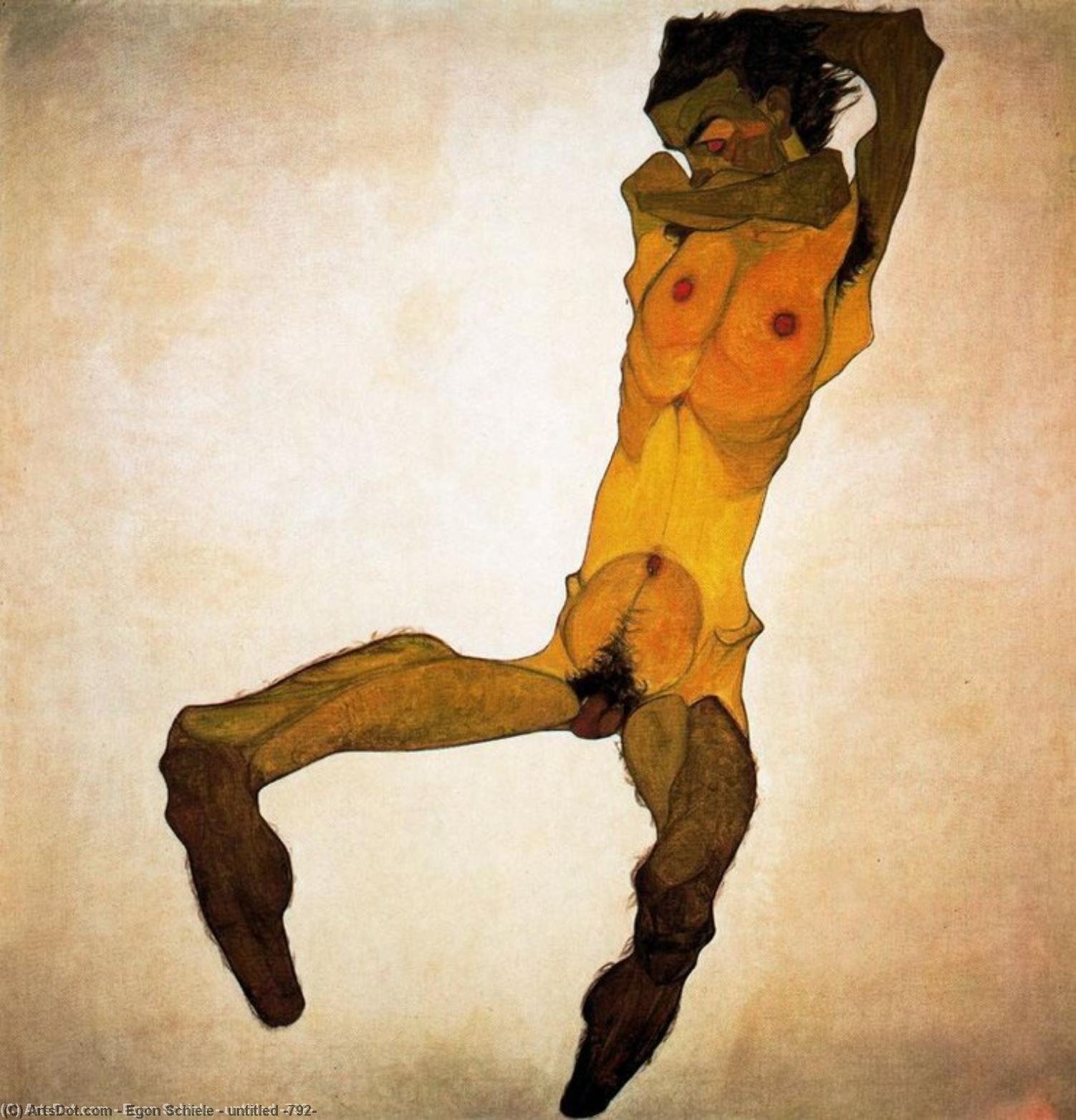
Explore 'untitled (792)' by Egon Schiele – a powerful Expressionist painting capturing raw emotion and the human form with bold lines and striking yellow hues.
Autoriaus biografija
Egon Šylė – Austrių ekspresionizmo dailininkas. Žiūrėkite į jo reikšmę Vienoje ir pasaulyje! Ekspresionistinio meno srovės atstovas, žinomas dėl savo psichologinės gilumo ir išraiškos.
Apie paveisdelį
A Cry from Within: Decoding Egon Schiele’s Untitled (792)
Egon Schiele's untitled (792) is not merely a painting; it’s a visceral outpouring of emotion, a raw and unflinching exploration of the human condition rendered in swirling lines and unsettling color. The work depicts a solitary female figure, dramatically posed with arms raised – an ambiguous gesture that can be interpreted as supplication, ecstasy, or even despair. Her body, painted in a striking shade of yellow, dominates the canvas, its form both vulnerable and defiant. This isn’t a celebration of the nude in the classical sense; rather, it's a psychological portrait, a window into an interior landscape fraught with tension and longing. The presence of two figures in the background, seemingly detached observers or perhaps participants in her emotional turmoil, adds to the painting’s enigmatic quality.
The Expressionist Tempest: Style and Technique
Schiele was a pivotal figure in Austrian Expressionism, a movement that sought to convey subjective emotion and experience rather than objective reality. untitled (792) exemplifies this approach through its distorted forms, jarring color palette, and energetic brushwork. The artist eschews traditional notions of beauty and anatomical accuracy, prioritizing instead the conveyance of inner turmoil. His lines are often jagged and angular, creating a sense of unease and instability. The yellow hue enveloping the figure is particularly significant; it can be seen as representing illness, decay, or perhaps even a feverish intensity of feeling – all themes frequently explored in Schiele’s oeuvre. He wasn't interested in replicating what he *saw*, but rather translating what he *felt* onto the canvas. This painting isn’t about precise representation; it’s about emotional resonance.
A Life Etched in Art: Historical Context and Personal Turmoil
To understand Schiele’s work, one must consider the context of his tragically short life (1890-1918). Born into a world grappling with societal upheaval and personal loss – including the early death of his father to syphilis and a complex upbringing under the control of an uncle – Schiele channeled his experiences into art. His work often reflects themes of sexuality, mortality, and alienation. He was deeply influenced by Gustav Klimt, who served as a mentor, but quickly surpassed his teacher in terms of radical experimentation and emotional intensity. Schiele’s willingness to confront taboo subjects and depict the human body with such unflinching honesty led to controversy during his lifetime; he even faced obscenity charges for his work. Yet, this very boldness is what continues to captivate audiences today.
The Language of Gesture: Symbolism and Emotional Impact
The raised arms in untitled (792) are a powerful symbol open to multiple interpretations. They could represent a reaching out for salvation, a desperate plea for connection, or even an expression of liberation. The figure’s nakedness isn't simply about physical exposure; it symbolizes vulnerability and emotional rawness. The painting doesn’t offer easy answers or comforting resolutions. Instead, it invites the viewer to confront their own anxieties and desires. It is a work that lingers in the mind long after viewing, prompting introspection and challenging conventional notions of beauty and representation. The overall effect is profoundly moving – a testament to Schiele's ability to translate the complexities of the human psyche onto canvas.
Klausimai ir atsakymai
Ar „untitled (792)“ – Egon Šylė vaizdą galima laisvai reprodukcijaoti?
Autorių teisių statusas kūriniui „untitled (792)“ – Egon Šylė: kūrinys priklauso yra viešosios erdvės dalis – jo autorinė teisė pasibaigusi. Tai nulemia, ar galima laisvai reprodukciuoti šį vaizdą.
Ar „untitled (792)“ – Egon Šylė spalvos yra ryškios ar blukusios?
„untitled (792)“ spalvų nasyginimas yra Balanced Soft.
Ar galima atsisiųsti „untitled (792)“ aukštos raiškos vaizdą?
Norėdami gauti „untitled (792)“ – Egon Šylė skaitmeninį failą, užsisakykite aukštos raiškos skaitmeninio vaizdo atsisiuntimas jo Skaitmeninis vaizdas puslapio.
Trumpos faktinės datos ir meno viktorina
Apie Egon Šylė

Egon Šylė
1890 - 1918, Austrija
Autoriaus biografija
Egon Schiele
Austrijos pozicija dviejų pasaulinio karo horizonte buvo labai abejojanti: vienu metu ji buvo šiek tiek iš Šiaurės į rytus, lengvai įsitikinusi veiksmų vyrai. Mažėjęs šalis po 1918 m., beveik visiškai neišplitusi tarptautiniu pasauliu buvo lengvai įvykdinta Hitlerio Reichui 1938 m.; meno srityje tai reiškė kad modernizmo istorija buvo išvykstanti nuo Šiaurės iki pietų, su pagrindiniu dėmesiu į formą. Vokelių šiek tiek pripažino ekspresionizmą kaip svarbų meno srovę; jis buvo vienas iš žymiausius austrių artistas XX amžiaus pradžioje – kartu su Gustavu Klimtu ir Oskar Kokoschka išvykę į Vieną buvo laikomas vienu iš Žyduvo šimtmečio svarbiausių vizualinių menininkų.
Gyvenimas
Egonas Šylė gimė 1890 m. vasario 3 d. Tulne, Austrijoje. Jo tėvas Adolfas Šylė buvo Tulno geležinkelio stoties direktorius ir gimė 1851 m. Vienoje Adolfo Šyly tevai turėjo tris jaunesnes seseris: Elvirą, Melaniją ir Gertrūdą. Elvira mirė vaikyste dėl gimtinių sifiliso. Jo tėvas buvo užsikrėtęs sifiliu įsimėlynėje savo jaunystės metais po vienos jo naujosios žmonos išėjimo iš kambario.
Meno vystymasis
Šylė mokytojo Christian Griepenkerl įtaką išgyveno Vienoje 1907 m. ir G. Klimtas tapo jo svarbiu rėmėju. Šylė paliko akademiją 1906 m., nes jos mokymo metodai buvo labai konservatyvus, ir įkūrė Naują austrių dailės grupę 1909 m. Grupėje vyravo ekspresionistinė estetika, kuri iššūkiant šiuolaikinėms kultūros normas.
Žymūs kūriniai
Šylė buvo vienas iš žymiausius austrių artistas XX amžiaus pradžioje – kartu su Gustavu Klimtu ir Oskar Kokoschka išvykę į Vieną buvo laikomas vienu iš Žyduvo šimtmečio svarbiausių vizualinių menininkų. Šylė buvo ekspresionizmo meno srovės atstovas.
Žymūs veiksniai
Šylė buvo žinomas dėl savo iššūkiantį įžiūrą į pasaulio problemas ir šiuolaikinę estetika, kuri iššūkiant šiuolaikinėms kultūros normas. Šylė buvo ekspresionizmo meno srovės atstovas.
Trumpa informacija apie Egon Šylė
- Artistic Movement Or Style: Ekspresionizmas
- Artists Who Influenced This Artist: ['Gustavas Klimtas']
- Date Of Birth: 1890 m.
- Date Of Death: 1918 m.
- Full Name: Egon Schiele
- Nationality: Austras
- Notable Artworks:
- Savęs portretas su fizižalis
- Porą įemčianti
- Žemės apėjimų kraštovaizdis
- Place Of Birth: Tulnas, Austrija
Tyrinėkite meno kūrinius, suskirstytus pagal temas, stilius ir savybes.


Egon Šylė
untitled (792)
() ·
Su rėmu: · Rankiniu būdu tapyta aliejumi ant lineno
Viso suma