

Paveikslėlyje: · Su rėmu:
 Peržiūrėti realaus dydžio版
 Pasidalinti
 Dalintis
 Išsamiau
 Vadovas

 Atsisiųsti
 Panašūs eksponatai
 Rentgeno spindulių nuotrauka
 Automatinė diorama
 问答
问答 Statistika

€ 240
Rankų darbo aliejinės reprodukcijos
Rankiniu būdu tapytas aliejus ant droblio jūsų pageidaujamame dydį ir rėmuose – tai mūsų menininkų pagal užsakymą sukurtas darbas. ( Perjungti į spausdinamus版作品 Perejti prie skaitmeninių vaizdų)
Dydis
·Standartinis dydis
pagal užsakymą
CM
INCH
Pasirinkite iš mūsų nustatytų dydžių, atitinkančių originalaus meno kūrinio proporcijas.
Kraunami dydžiai...

plotis
aukštis
Įveskite jums reikiamą plotį ir aukštį, kad paveikslas atitiktų jūsų rėmą ar sieną. Kadangi šis darbas yra rankinio darbo, siekiant išgauti kitokios formos dydį, paveikslas gali būti šiek tiek didesnis (nuo kraštų bus palikta daugiau erdvės) arba mažesnis – pasirinkite jums patogiausią variantą. Prieš pradedant tapyti, atsiųsime jums skaitmeninį maketą patvirtinimui. Šioje puslapio nuotraukoje matomas vaizdas nėra galutinis rezultatas – jį parodys tik sukurtas maketas.
 Skaityti daugiau
Baigiamasis etapas
·
Baltas apasutojimas €1

Išblėstantis šonas €1

Išplėstinis €1

P118B €10

P118H €10

P118W €10

P438Z €10

P508JH €12

P508YH €12

P805H €10

P805Z €10

P919BZ €10

P919G €10

P919XJ €10

P959ZH €10

P968JZ €12

W106C €8

W218G €10

W218JH €8

W218Y €10

W307PJ €10

W316G €10

W316PJ €8

W316Y €10

W398PJ €8

W4111J €10

W500HY €15

W500JH €15

W692G €12

W849H €8

W940BG €15

W953PJ €8

H24-GOLD €30

H24-SILVER €30

H36-GOLD €45

H36-SILVER €45
Siunčiama saugiame vamzdelyje, paruošta patys sukomentuoti jūsų rėmeliais.
Virš 105 cm rėmas siunčiamas kaip rinkinys profesionaliam rėmininkui — skaitykite detales.
Papildomos paslaugos
nebūtinaKą apima papildomos paslaugos?
Pavyzdžiai, ką galima pakeisti: pakeisti veidą nuotrauka su klientu; pridėti augintinį (pvz., pakeisti kucingą šuniu); įtraukti paslaptingą žinutę fone; pakeisti fono kraštotvę ar elementus.
Gavus užsakymą, TopImpressionists.com komanda susisieks su klientu el. paštu dėl nurodymų ir pateiks preliminarią maketą.
Gavus užsakymą, TopImpressionists.com komanda susisieks su klientu el. paštu dėl nurodymų ir pateiks preliminarią maketą.
Pristatymas visame pasaulyje () per 3–4 savaites, o ne įprastai – per 5 savaites. (3 lapkritis). Kokybė lieka nepakeičiama.
Apsauginis lakas
Pavadinimo lentelė
Išgraviruotos bronzinės plokštelės detalės
This elegant plaque features the artist's name and the title of the artwork, finely engraved for a timeless presentation.
It is made from bronze with a refined, elegant finish. The text is precisely laser-engraved for a sharp and permanent result. Measuring 9x2 cm, the plaque is compact yet easy to read. It's built to be durable and scratch-resistant, offering a professional, museum-quality look. Mounting is simple thanks to the included adhesive backing.
Skaidrios akrilo plokštelės informacija
The plaque includes essential engraved details such as the artist's name, the title of the artwork, the date it was created, the type of media used-like oil on canvas or watercolor-a brief description of the piece, and a QR code that links to the complete artwork information.
It is crafted from clear acrylic, offering a sleek, modern appearance. The text is UV-engraved in black to ensure strong visual contrast. With a size of 10x15 cm, it ensures optimal readability. It comes equipped with two metal hooks for secure wall mounting. The plaque is designed to be weather-resistant, making it suitable for various environments, and it includes interactive features that work seamlessly with smartphone scanning.
Juodos akrilo plokštelės informacija
This elegant plaque includes engraved information such as the artist's name, the title of the artwork, the date it was created, the type of media used (like oil on canvas or watercolor), a short description of the artwork, and a QR code for quick access to more information.
The plaque itself is made from refined black acrylic with a premium finish. The text is laser-engraved in white for high contrast and readability. Its size is 10x15 cm, designed to be easy to read. It comes with two metal hooks for professional mounting. The design is sleek and fits any interior style. It is also weather-resistant and durable, with built-in digital integration for mobile compatibility.
Stiklo variantas prieinamas tik pasirinkus dydį iki 110 cm
 Stiklo variantas prieinamas tik pasirinkus dydį iki 110 cm
- Nemokamas greitasis pristatymas visame pasaulyje
- Aukštos kokybės lininis drobė
- Pilnas siuntimo draudimas
- Muitinės mokesčių grąžinimo garantija
- Tikro spalvų atitikimo garantija
- 100 dienų grąžinimo politika (tik esant įtaigoms)
- 100% pinigų grąžinimo garantija
- Nuolaida dideliems užsakymams


Kolekcinio objekto aprašas
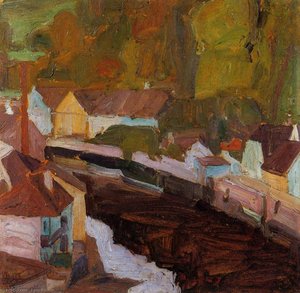
Discover Egon Schiele's 'Village by the River' (1908), an early Expressionist landscape showcasing a quaint village and train, reflecting his unique style.
Autoriaus biografija
Egon Šylė – Austrių ekspresionizmo dailininkas. Žiūrėkite į jo reikšmę Vienoje ir pasaulyje! Ekspresionistinio meno srovės atstovas, žinomas dėl savo psichologinės gilumo ir išraiškos.
Apie paveisdelį
A Glimpse into Tranquility: Egon Schiele’s ‘Village by the River’
Egon Schiele's 1908 painting, ‘Village by the River,’ offers a serene departure from the emotionally charged and often unsettling portraits for which he is best known. This landscape, rendered with an Impressionistic touch, presents a picturesque scene of domesticity nestled along a waterway. Several houses, distinguished by their vibrant red roofs contrasting against white or muted walls, cluster together, creating a sense of community. The inclusion of a passing train—a subtle nod to the artist’s childhood fascination stemming from his father's profession as a station master—adds a touch of modernity and hints at the changing world around this idyllic setting. A small boat gliding along the river further enhances the peaceful atmosphere, completing a vision of tranquil rural life.
Early Expressionism and the Austrian Landscape
Painted during a pivotal period in Schiele’s artistic development, ‘Village by the River’ reveals his early exploration beyond the confines of academic training. While he briefly studied at the Kunstgewerbeschule and later the Akademie der bildenden Künste in Vienna, Schiele quickly diverged from traditional methods, seeking a more direct and emotionally honest form of expression. This painting, created before the full force of Expressionism gripped his work, demonstrates an embrace of Impressionistic techniques – visible brushstrokes and a focus on capturing light and atmosphere. However, even within this seemingly conventional landscape, hints of Schiele’s future style emerge in the slightly fractured forms and the expressive use of color. The painting stands as a testament to a young artist finding his voice amidst the burgeoning artistic movements of early 20th-century Austria.
Symbolism of Place and Passing Time
The village itself, with its tightly grouped houses, can be interpreted as a symbol of human connection and shared existence. The river, a constant flow, represents the passage of time and the enduring nature of life. The train, though seemingly innocuous, introduces an element of transience and change—a foreshadowing of the societal shifts that would soon engulf Europe. Schiele’s choice to depict this scene with a slightly elevated perspective allows the viewer to encompass the entirety of the village, fostering a sense of both intimacy and detachment. It's as if we are observing a moment frozen in time, a fleeting glimpse into a world on the cusp of transformation. The painting isn’t merely a representation of a place; it is an evocation of a feeling—a quiet contemplation of life’s rhythms.
A Collector’s Resonance: Bringing Schiele's Vision Home
For collectors and interior designers, ‘Village by the River’ offers a unique opportunity to introduce a touch of Austrian Expressionism into any space. Unlike many of Schiele’s more intense works, this painting possesses a calming quality that lends itself well to living rooms, studies, or bedrooms. Its warm color palette and inviting subject matter create an atmosphere of serenity and contemplation. A high-quality reproduction captures the delicate brushwork and nuanced colors, allowing the viewer to appreciate Schiele's skill and vision. This artwork is not just a decorative element; it’s a window into a specific moment in art history, a testament to the power of landscape painting, and an invitation to reflect on the beauty of simple, peaceful existence.
Klausimai ir atsakymai
Kas sukūrė „Village by the River“?
„Village by the River“ kūrybinį darbą sukūrė Egon Šylė. Šioje puslapio informacijoje aprašomas Egon Šylė originalus kūrinys.
Kokią nuotaiką į erdvę atneštų „Village by the River“?
„Village by the River“ – Egon Šylė pasižymi Calm atmosfera ir yra rekomenduojamas Living Room. Nuotaika – tai tai, ką šis kūrinys suteikia aplinkinei erdvėje.
Kur galiu atsisiųsti „Village by the River“ – Egon Šylė?
Kūrinį „Village by the River“ galima atsisiųsti: jo Atsisiųsti skaitmeninį vaizdą puslapyje siūloma aukštos raiškos skaitmeninio vaizdo atsisiuntimas.
Trumpos faktinės datos ir meno viktorina
Apie Egon Šylė

Egon Šylė
1890 - 1918, Austrija
Autoriaus biografija
Egon Schiele
Austrijos pozicija dviejų pasaulinio karo horizonte buvo labai abejojanti: vienu metu ji buvo šiek tiek iš Šiaurės į rytus, lengvai įsitikinusi veiksmų vyrai. Mažėjęs šalis po 1918 m., beveik visiškai neišplitusi tarptautiniu pasauliu buvo lengvai įvykdinta Hitlerio Reichui 1938 m.; meno srityje tai reiškė kad modernizmo istorija buvo išvykstanti nuo Šiaurės iki pietų, su pagrindiniu dėmesiu į formą. Vokelių šiek tiek pripažino ekspresionizmą kaip svarbų meno srovę; jis buvo vienas iš žymiausius austrių artistas XX amžiaus pradžioje – kartu su Gustavu Klimtu ir Oskar Kokoschka išvykę į Vieną buvo laikomas vienu iš Žyduvo šimtmečio svarbiausių vizualinių menininkų.
Gyvenimas
Egonas Šylė gimė 1890 m. vasario 3 d. Tulne, Austrijoje. Jo tėvas Adolfas Šylė buvo Tulno geležinkelio stoties direktorius ir gimė 1851 m. Vienoje Adolfo Šyly tevai turėjo tris jaunesnes seseris: Elvirą, Melaniją ir Gertrūdą. Elvira mirė vaikyste dėl gimtinių sifiliso. Jo tėvas buvo užsikrėtęs sifiliu įsimėlynėje savo jaunystės metais po vienos jo naujosios žmonos išėjimo iš kambario.
Meno vystymasis
Šylė mokytojo Christian Griepenkerl įtaką išgyveno Vienoje 1907 m. ir G. Klimtas tapo jo svarbiu rėmėju. Šylė paliko akademiją 1906 m., nes jos mokymo metodai buvo labai konservatyvus, ir įkūrė Naują austrių dailės grupę 1909 m. Grupėje vyravo ekspresionistinė estetika, kuri iššūkiant šiuolaikinėms kultūros normas.
Žymūs kūriniai
Šylė buvo vienas iš žymiausius austrių artistas XX amžiaus pradžioje – kartu su Gustavu Klimtu ir Oskar Kokoschka išvykę į Vieną buvo laikomas vienu iš Žyduvo šimtmečio svarbiausių vizualinių menininkų. Šylė buvo ekspresionizmo meno srovės atstovas.
Žymūs veiksniai
Šylė buvo žinomas dėl savo iššūkiantį įžiūrą į pasaulio problemas ir šiuolaikinę estetika, kuri iššūkiant šiuolaikinėms kultūros normas. Šylė buvo ekspresionizmo meno srovės atstovas.
Trumpa informacija apie Egon Šylė
- Artistic Movement Or Style: Ekspresionizmas
- Artists Who Influenced This Artist: ['Gustavas Klimtas']
- Date Of Birth: 1890 m.
- Date Of Death: 1918 m.
- Full Name: Egon Schiele
- Nationality: Austras
- Notable Artworks:
- Savęs portretas su fizižalis
- Porą įemčianti
- Žemės apėjimų kraštovaizdis
- Place Of Birth: Tulnas, Austrija
Tyrinėkite meno kūrinius, suskirstytus pagal temas, stilius ir savybes.


Egon Šylė
Village by the River
() ·
Su rėmu: · Rankiniu būdu tapyta aliejumi ant lineno
Viso suma