


 Peržiūrėti realaus dydžio版
 Siųsti
 Dalintis
 Išsamiau
 Vadovas

 Atsisiųsti
 Panašūs eksponatai
 Rentgeno spindulių nuotrauka
 Diaporama
 Statistika
Proun 1 C
 Akrilas ant drobės
- Sieninis menas
- Suprematizm
 1919
1919- Modernas
 68.0 x 68.0 cm
Stabdyti El Greko puikų altorių Museo Convento Santo Domingo el Antiguo – šventimo religinio meno ir Toledos turtingo palaimos liudybas.
 Rodyti daugiau
El Lissitzky (1890–1941): Rusų abstraktojo meno reikšmė – Suprematizmas, Konstruktivizmas ir Proun serija. Jo įtaka Bauhaus mokyklai bei estetikai išliko svarbią šiuolaikinės kultūros istorijoje.
Rankų darbo aliejinės reprodukcijos
Rankiniu būdu tapytas aliejus ant droblio jūsų pageidaujamame dydį ir rėmuose – mūsų menininkų darbas pagal užsakymą. ( Perjungti į spausdinimą Perejti prie skaitmeninių vaizdų)




P118B €10

P118H €10

P118W €10

P438Z €10

P508JH €12

P508YH €12

P805H €10

P805Z €10

P919BZ €10

P919G €10

P919XJ €10

P959ZH €10

P968JZ €12

W106C €8

W218G €10

W218JH €8

W218Y €10

W307PJ €10

W316G €10

W316PJ €8

W316Y €10

W398PJ €8

W4111J €10

W500HY €15

W500JH €15

W692G €12

W849H €8

W940BG €15

W953PJ €8




Standartinis
individualaus dydžio
CM
INCH
Pasirinkite iš mūsų nustatytų dydžių, atitinkančių originalaus meno kūrinio proporcijas.
Loading sizes...

plotis
aukštis
Įveskite jums reikiamą plotį ir aukštį, kad paveikslas atitiktų jūsų rėmą ar sieną. Kadangi šis darbas yra rankinio darbo, siekiant išgauti kitokio formos dydį, paveikslas gali būti šiek tiek didesnis (nuo kraštų bus palikta daugiau erdvės) arba mažesnis – pasirinkite jums patogiausią variantą. Prieš pradedant tapyti, atsiųsime jums skaitmeninį maketą patvirtinimui. Šioje puslapio nuotraukoje matomas vaizdas nėra galutinis rezultatas – jį parodys tik sukurtas maketas.
Ką galima pakeisti (pavyzdžiai): Pakeisti veidą į kliento nuotrauką; Pridėti augintinį (pvz., pakeisti katę šunimi); Įtraukti paslėptą žinutę fone; Pakeisti fono kraštovaizdį ar elementus.
Gavus užsakymą, TopImpressionists.com komanda susisieks su klientu el. paštu dėl instrukcijų ir pateiks maketo pavyzdį
Gavus užsakymą, TopImpressionists.com komanda susisieks su klientu el. paštu dėl instrukcijų ir pateiks maketo pavyzdį
Pristatymas visame pasaulyje () per 3–4 savaites, o ne įprastai – per 5 savaites. (27 spalis). Kokybė lieka nepakeičiama.

Nemokamas greitasis pristatymas visame pasaulyje

Aukštos kokybės lininis drobė

Pilnas siuntimo draudimas

Muitinės mokesčių grąžinimo garantija

Tikro spalvų atitikimo garantija

100 dienų grąžinimo politika (tik esant įtaigoms)

100% pinigų grąžinimo garantija

Nuolaida dideliems užsakymams
 Stiklo variantas prieinamas tik pasirinkus dydį iki 110 cm

Proun 1 C
Reprodukcijos technika
Reprodukcijos dydis
-


Visų pasirinktų variantų kaina
€ 237
El Lissitzky’s *Proun 1 C*: A Geometry of Feeling
El Lissitzky's *Proun 1 C*, created in 1919, transcends mere visual representation; it embodies a radical philosophical stance—a conviction that art could actively shape the contours of society and reflect the exhilarating uncertainty of the nascent Soviet era. This deceptively simple painting – a stark white expanse punctuated by precisely positioned geometric forms – pulsates with an inner dynamism, hinting at the revolutionary fervor gripping Russia at the time. Lissitzky wasn’t striving to depict a scene; he was constructing a spatial realm for contemplation, underpinned by the foundational principles of pure form and color—a bold assertion against the conventions of Western art.
The Genesis of *Proun*: Rooted in Suprematism
To grasp the significance of *Proun 1 C*, one must acknowledge its intellectual lineage. Lissitzky’s artistic journey commenced with a profound engagement with Jewish folklore and illustration, yet his breakthrough arrived through immersion in Kazimir Malevich's groundbreaking Suprematism movement. Malevich championed the reduction of painting to its most elemental components – squares and circles on a white background—believing this austere approach held the key to spiritual liberation. Lissitzky initially embraced Suprematist ideals but recognized their limitations; they lacked the grounding in tangible reality that would propel him toward his own distinctive vision. *Proun*, derived from “Project for the Affirmation of the New,” emerged as Lissitzky’s response—a deliberate attempt to synthesize artistic expression with architectural ambition, mirroring the Soviet aspiration to forge a radically transformed world.
Decoding Spatial Dynamics: Technique and Composition
The execution of *Proun 1 C* is characterized by meticulous precision. Lissitzky employs a technique that prioritizes geometric accuracy, utilizing clean lines and sharp edges to delineate shapes against the pristine white canvas. This deliberate flatness disrupts traditional perspective, creating an illusion of depth without resorting to conventional shading or modeling—a stylistic choice reflecting the Constructivist preoccupation with materiality and engineering principles. The arrangement of forms – notably the dominant square positioned centrally, flanked by two triangles – isn’t arbitrary; it embodies a symbolic representation of structural stability and forward momentum. Lissitzky's careful consideration of spatial relationships underscores his belief that art could actively contribute to shaping the physical environment.
Symbolism Within Simplicity: Layers of Meaning
Beyond its formal qualities, *Proun 1 C* harbors layers of symbolic significance. The white ground represents boundless potential and openness—a visual metaphor for the utopian ideals animating the Soviet revolution. The geometric forms themselves are interpreted as emblems of industrial progress and rational thought, mirroring the dominant ethos of the era. Lissitzky’s deliberate use of color – primarily grayscale – reinforces this conceptual framework, eschewing vibrant hues in favor of tonal variations that convey a sense of understated elegance and intellectual seriousness.
A Legacy Enduring: *Proun 1 C*'s Influence Today
*Proun 1 C* continues to inspire artists and designers alike. Its influence can be discerned in contemporary graphic design, architectural spaces, and digital art installations—a testament to the enduring power of abstract geometric forms to communicate ideas and evoke emotions. Owning a high-quality reproduction offers not merely aesthetic pleasure but also access to a pivotal moment in artistic history—a glimpse into Lissitzky’s visionary conception of how art could reshape our understanding of space, form, and the very nature of reality.
问答 (or more naturally for a website heading): Klausimai ir atsakymai
Kokią emociją sukelia „Proun 1 C“, autorius – El Lissitzky spalvos?
„Proun 1 C“, autorius – El Lissitzky sujungia Neutralios spalvos paletę su Refleksyvus tonu.
Kokią nuotaiką „Proun 1 C“, autorius – El Lissitzky išreiškia Suprematizm kontekste?
„Proun 1 C“ Refleksyvus emocija akompaniuoja jo Suprematizm stiliui.
Kokios temos pasireiškia kūrynioje „Proun 1 C“, autorius – El Lissitzky?
„Proun 1 C“, autorius – El Lissitzky vaizdeletas: geometric abstraction, spatial composition, white ground, dynamic tension, pure form color, architectural space, revolutionary art.
Autoriaus biografija
A Revolutionary Vision: The Life and Art of El Lissitzky
El Lissitzky, born Lazar Markovich Lissitzky in 1890 in the small Russian town of Pochinok, emerged as a pivotal figure in the tumultuous landscape of early 20th-century art. His journey was one of constant reinvention, driven by a fervent belief in the power of art to shape society and reflect the dynamism of the modern world. From his initial training as an architect and engineer – pursuits hampered by restrictions placed upon Jewish students – Lissitzky’s path diverged towards artistic expression, initially through illustrations steeped in Jewish folklore. These early works, like his cover for ‘Chad Gadya’, reveal a nascent talent already grappling with narrative and visual storytelling, hinting at the profound cultural roots that would continue to inform his aesthetic. A move to Berlin and Darmstadt broadened his horizons, but it was upon returning to Russia that Lissitzky truly found his artistic voice, becoming inextricably linked with the revolutionary fervor sweeping through the nation.The Embrace of Abstraction: Suprematism and Proun
A defining moment arrived with his encounter with Kazimir Malevich and the embrace of Suprematism. This radical movement, dedicated to pure geometric abstraction, resonated deeply with Lissitzky’s desire to transcend representational art and tap into a universal visual language. He became a key member of UNovis, the Suprematist group established in Vitebsk, actively disseminating its principles through teaching and artistic production. However, Lissitzky didn't simply replicate Malevich’s style; he forged his own distinct path with the development of *Proun*. This unique series, born from a fusion of Suprematism and Constructivism, explored spatial relationships and geometric forms in dynamic compositions that often resembled architectural blueprints or exploded diagrams. Proun wasn't merely painting; it was an investigation into the very structure of space itself, a premonition of future architectural possibilities. These works, with their floating planes and intersecting lines, embodied Lissitzky’s belief in art as a force capable of constructing new realities. The influence of his engineering background is palpable here, lending a structural logic to the abstract forms. He meticulously crafted Proun panels using plywood and lacquer, experimenting with color palettes and spatial arrangements that challenged conventional artistic conventions.Art as Propaganda and Social Commentary
Lissitzky’s artistic vision extended far beyond the canvas. He passionately believed that art should serve a social purpose, actively engaging with political ideologies and seeking ways to integrate design into everyday life. This conviction led him to become deeply involved in Soviet propaganda efforts, creating powerful posters and graphic designs intended to mobilize public support for the Bolshevik regime. His 1941 poster calling for tank construction stands as a testament to this commitment – a stark, impactful image reflecting the urgency of wartime. Beyond propaganda, Lissitzky revolutionized typography, exhibition design, and photomontage. He understood that effective communication required innovative visual strategies, and he fearlessly experimented with new techniques to convey his message. His photomontages, such as ‘The Constructor’ (1924), are particularly striking – self-portraits that blend photography with geometric abstraction, offering a complex commentary on identity and the role of the artist in society. He skillfully combined disparate images and texts into visually arresting compositions, demonstrating his mastery of visual storytelling and challenging viewers to reconsider their perceptions of reality.Bauhaus Influence and Artistic Collaboration
Lissitzky’s artistic trajectory intersected with the Bauhaus movement in Germany, where he taught alongside Walter Gropius and Josef Albers. The Bauhaus ethos – emphasizing functionalism, simplicity, and collaboration – profoundly influenced Lissitzky's aesthetic sensibilities. He embraced geometric abstraction as a means of achieving expressive clarity and promoting social reform, aligning his artistic principles with the broader goals of the Bauhaus school. Furthermore, Lissitzky engaged in fruitful collaborations with fellow artists such as Kurt Schwitters and Theo van Doesburg, fostering a dynamic exchange of ideas that enriched the artistic landscape of Weimar Germany. These partnerships pushed boundaries and challenged conventions, demonstrating Lissitzky’s willingness to embrace experimentation and explore new creative horizons.Legacy and Enduring Influence
El Lissitzky’s life was tragically cut short in 1941 in Moscow, but his legacy continues to resonate today. He bridged the gap between art and architecture, abstraction and social purpose, leaving behind a body of work that is both intellectually stimulating and visually captivating. The establishment of the Lissitzky Foundation in 2014 underscores the ongoing commitment to preserving his artistic heritage and preparing a comprehensive catalogue raisonné of his creations. His innovations in typography, exhibition design, and photomontage continue to inspire contemporary artists and designers, while his unwavering belief in the power of art as a force for social change remains profoundly relevant. He is remembered not merely as an artist but as a visionary who championed radical ideas and transformed visual culture—a testament to the enduring impact of his artistic endeavors.
El Lissitzky
1890 - 1941 , Россия
Trumpa informacija apie kūrėją
- Artistic Movement Or Style: ['Suprematizmą']
- Artists Or Movements Influenced By This Artist: ['Bauhaus']
- Artists Who Influenced This Artist: ['Kazimir Malevič']
- Date Of Birth: Nov 23, 1890
- Date Of Death: Dec 30, 1941
- Full Name: El Lissitzky
- Nationality: Rusijoje
- Notable Artworks:
- Konstruktorius
- Čad Gadja apdaila
- Proun serija
- Place Of Birth: Pochinki, Rusia
Susiję straipsniai
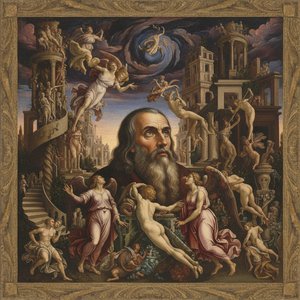
Mannerism Unveiled: The Dramatic Evolution of Renaissance Art and the Visionary Legacy of El Greco
Explore the dramatic transition from High Renaissance harmony to Mannerist tension. Discover how masters like El Greco redefined art through distortion and spiritual intensity. An expert guide for art enthusiasts seeking deep historical context and museum-quality inspiration.

El Greco: Spirituality, Style & Innovation – A Renaissance Master's Legacy
Explore the captivating world of El Greco! Discover his unique style, spiritual intensity, and lasting impact on art history. Learn about this Renaissance master's life, iconic paintings & legacy.

Constructivism: A Revolutionary Aesthetic – Ideology, Form & Impact on 20th-Century Art
Explore the revolutionary world of Constructivism! Discover key artists like Malevich & Lissitzky, its impact on modern art & design, and guidance for building a valuable collection. Expert insights at TopImpressionists.

Kazimiro Malevičiaus Šedevrai: 25 Išskirtiniai Kūriniai Jūsų Interjerui
Atraskite 25 įspūdingiausius Kazimiro Malevičiaus kūrinius! Suprematizmo meistras, Juodas kvadratas ir kiti šedevrai. Įkvėpkite interjero idėjų su abstraktaus meno reprodukcijomis – TopImpressionists.com

El Greco Šedevrai: Top 25 Darbai, Įkvėpę Meną ir Interjerus
Atraskite 25 įspūdingiausius El Greco kūrinius! Išsami analizė, meno istorija ir technikos paslaptys. Renesanso meistro paveikslai jūsų interjerui – aukštos kokybės reprodukcijos TopImpressionists.com. Explore the full collection online!
Tyrinėkite meno kūrinius, suskirstytus pagal temas, stilius ir savybes.

