

Paveikslėlyje: · Su rėmu:
 Peržiūrėti realaus dydžio版

 Pasidalinti
 Dalintis
 Išsamiau
 Vadovas


 Atsisiųsti
 Panašūs eksponatai
 Rentgeno spindulių nuotrauka
 Automatinė diorama
 问答
 Statistika

- 50.0 x 45.0 cm


€ 240
Rankų darbo aliejinės reprodukcijos
Rankiniu būdu tapytas aliejus ant droblio jūsų pageidaujamame dydį ir rėmuose – tai mūsų menininkų pagal užsakymą sukurtas darbas. ( Perjungti į spausdinamus版作品 Perejti prie skaitmeninių vaizdų)
Dydis
·Standartinis dydis
pagal užsakymą
CM
INCH
Pasirinkite iš mūsų nustatytų dydžių, atitinkančių originalaus meno kūrinio proporcijas.
Kraunami dydžiai...

plotis
aukštis
Įveskite jums reikiamą plotį ir aukštį, kad paveikslas atitiktų jūsų rėmą ar sieną. Kadangi šis darbas yra rankinio darbo, siekiant išgauti kitokios formos dydį, paveikslas gali būti šiek tiek didesnis (nuo kraštų bus palikta daugiau erdvės) arba mažesnis – pasirinkite jums patogiausią variantą. Prieš pradedant tapyti, atsiųsime jums skaitmeninį maketą patvirtinimui. Šioje puslapio nuotraukoje matomas vaizdas nėra galutinis rezultatas – jį parodys tik sukurtas maketas.
 Skaityti daugiau
Baigiamasis etapas
·
Baltas apasutojimas €1

Išblėstantis šonas €1

Išplėstinis €1

P118B €10

P118H €10

P118W €10

P438Z €10

P508JH €12

P508YH €12

P805H €10

P805Z €10

P919BZ €10

P919G €10

P919XJ €10

P959ZH €10

P968JZ €12

W106C €8

W218G €10

W218JH €8

W218Y €10

W307PJ €10

W316G €10

W316PJ €8

W316Y €10

W398PJ €8

W4111J €10

W500HY €15

W500JH €15

W692G €12

W849H €8

W940BG €15

W953PJ €8

H24-GOLD €30

H24-SILVER €30

H36-GOLD €45

H36-SILVER €45
Siunčiama saugiame vamzdelyje, paruošta patys sukomentuoti jūsų rėmeliais.
Virš 105 cm rėmas siunčiamas kaip rinkinys profesionaliam rėmininkui — skaitykite detales.
Papildomos paslaugos
nebūtinaKą apima papildomos paslaugos?
Pavyzdžiai, ką galima pakeisti: pakeisti veidą nuotrauka su klientu; pridėti augintinį (pvz., pakeisti kucingą šuniu); įtraukti paslaptingą žinutę fone; pakeisti fono kraštotvę ar elementus.
Gavus užsakymą, TopImpressionists.com komanda susisieks su klientu el. paštu dėl nurodymų ir pateiks preliminarią maketą.
Gavus užsakymą, TopImpressionists.com komanda susisieks su klientu el. paštu dėl nurodymų ir pateiks preliminarią maketą.
Pristatymas visame pasaulyje () per 3–4 savaites, o ne įprastai – per 5 savaites. (17 lapkritis). Kokybė lieka nepakeičiama.
Apsauginis lakas
Pavadinimo lentelė
Išgraviruotos bronzinės plokštelės detalės
This elegant plaque features the artist's name and the title of the artwork, finely engraved for a timeless presentation.
It is made from bronze with a refined, elegant finish. The text is precisely laser-engraved for a sharp and permanent result. Measuring 9x2 cm, the plaque is compact yet easy to read. It's built to be durable and scratch-resistant, offering a professional, museum-quality look. Mounting is simple thanks to the included adhesive backing.
Skaidrios akrilo plokštelės informacija
The plaque includes essential engraved details such as the artist's name, the title of the artwork, the date it was created, the type of media used-like oil on canvas or watercolor-a brief description of the piece, and a QR code that links to the complete artwork information.
It is crafted from clear acrylic, offering a sleek, modern appearance. The text is UV-engraved in black to ensure strong visual contrast. With a size of 10x15 cm, it ensures optimal readability. It comes equipped with two metal hooks for secure wall mounting. The plaque is designed to be weather-resistant, making it suitable for various environments, and it includes interactive features that work seamlessly with smartphone scanning.
Juodos akrilo plokštelės informacija
This elegant plaque includes engraved information such as the artist's name, the title of the artwork, the date it was created, the type of media used (like oil on canvas or watercolor), a short description of the artwork, and a QR code for quick access to more information.
The plaque itself is made from refined black acrylic with a premium finish. The text is laser-engraved in white for high contrast and readability. Its size is 10x15 cm, designed to be easy to read. It comes with two metal hooks for professional mounting. The design is sleek and fits any interior style. It is also weather-resistant and durable, with built-in digital integration for mobile compatibility.
Stiklo variantas prieinamas tik pasirinkus dydį iki 110 cm
 Stiklo variantas prieinamas tik pasirinkus dydį iki 110 cm
- Nemokamas greitasis pristatymas visame pasaulyje
- Aukštos kokybės lininis drobė
- Pilnas siuntimo draudimas
- Muitinės mokesčių grąžinimo garantija
- Tikro spalvų atitikimo garantija
- 100 dienų grąžinimo politika (tik esant įtaigoms)
- 100% pinigų grąžinimo garantija
- Nuolaida dideliems užsakymams


Kolekcinio objekto aprašas
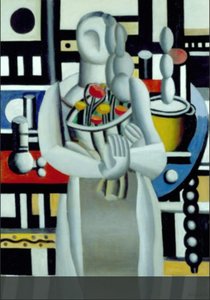
Fernand Léger's 'Head Constructor' is a striking Cubist portrait embodying modernity and industrialization. Bold lines, geometric shapes, and a stark white background create a powerful visual statement of the human form in the machine age.
Autoriaus biografija
Tubizmo pionierius Fernandas Ležė įamžino mašinų amžiaus. Atraskite jo drąkius, ritminius paveikslus jau šiandien.
Apie paveisdelį
A Fragmented Portrait of the Machine Age
Fernand Léger’s “Head Constructor,” painted in 1950, isn't merely a portrait; it’s a distilled essence of the burgeoning modernity that gripped Europe after World War I. This striking monochrome work, rendered in a bold and assertive Cubist style, immediately commands attention with its stark contrast between the solid black outlines and the pristine white background – a deliberate choice that emphasizes the geometric forms at the heart of Léger's vision. The image presents a stylized human head, partially obscured by a simple hat or cap, a subtle detail hinting at a profession or perhaps even anonymity within the rapidly changing urban landscape.
Léger’s approach to Cubism wasn’t about deconstructing reality into an abstract puzzle; rather, he sought to integrate the dynamism and structure of the machine age directly into his representation of the human figure. He viewed industrialization not as a destructive force but as a new form of beauty – one characterized by clean lines, precise angles, and a sense of mechanical order. This is powerfully evident in “Head Constructor,” where the head itself is broken down into a series of interlocking squares, rectangles, and triangles—a deliberate rejection of traditional perspective and a celebration of geometric abstraction. The work feels less like a depiction of an individual and more like a schematic diagram, a blueprint for a new kind of human being shaped by the tools and technologies of his time.
The Language of Form: Cubism and Léger’s Vision
To understand “Head Constructor,” it's crucial to grasp the principles of Cubism as Léger embraced them. Unlike Picasso and Braque, who initially focused on dismantling objects into fragmented planes, Léger retained a sense of volume and three-dimensionality within his compositions. He didn’t entirely abandon representation; instead, he simplified forms to their most essential geometric components, creating an effect that is both abstract and strangely familiar. The thick black lines defining the head, hat, and facial features aren't delicate or subtle—they are assertive and deliberate, conveying a sense of construction and engineering. This bold use of line is characteristic of Léger’s style, which he termed “Tubism,” referencing his fascination with cylindrical forms – a visual echo of the pipes and machinery that dominated the industrial world.
The choice of monochrome—black lines on white—further amplifies this sense of construction. It eliminates any distractions from color, forcing the viewer to focus entirely on the interplay of shapes and lines. This deliberate austerity reflects Léger’s desire to strip away sentimentality and emotionalism, presenting a purely rational and objective view of the human figure. The work evokes a feeling of detachment, almost as if we are observing a machine rather than a person—a powerful statement about the increasing mechanization of modern life.
Symbolism and the Modern Condition
The title itself, “Head Constructor,” offers valuable insight into Léger’s intentions. He was deeply interested in the role of labor and industry in shaping society, and he saw the construction worker as a symbol of progress and innovation. The hat or cap worn by the figure could be interpreted as a uniform—a badge of membership within this new industrial order. The overall effect is one of both celebration and unease; Léger acknowledges the beauty and efficiency of modern technology but also hints at its potential to dehumanize individuals.
“Head Constructor” isn’t simply a depiction of a head; it's a meditation on the nature of humanity in an age of rapid technological change. It’s a work that continues to resonate today, prompting us to consider our relationship with machines and the evolving definition of what it means to be human.
Klausimai ir atsakymai
Kokia yra autorinės teisės situacijos priežastis kūriniam darbui „Head constructor“ – Fernand Léger?
Autorinės teisės statusas kūriniui „Head constructor“ – yra viešosios erdvės dalis – jo autorinė teisė pasibaigusi – nustatomas remiantis to, kad menininkas mirė 1955 m.
Kokia technika buvo panaudota kūriniui „Head constructor“ ir kada jis buvo sukurtas?
„Head constructor“ sukurtas 1950 m., naudojant Oil On Canvas.
Koks spausdinimo dydis ir orientacija rekomenduojami kūriniui „Head constructor“ – Fernand Léger?
Medium dydis, Square orientacija: tai rekomenduojamas spausdinimo nustatymas kūriniui „Head constructor“ – Fernand Léger.
Trumpos faktinės datos ir meno viktorina
Apie Fernand Léger

Fernand Léger
1881 - 1955, Prancūzija
Autoriaus biografija
Fernand Léger: Mašinos Amžius Ant Drobelės
Josefas Fernanas Anri Ležė, gimęs 1881 m. vasario 4 d. nuošaliame Argentano miestelyje Normandijoje, Prancūzijoje, buvo menininkas, kurio kūryba atspindi ir apibūdina modernumo erą – mechanizacijos, industrializacijos ir naujų technologijų triumfo laikotarpį. Jo kelionė nuo kaimo vaikystės iki Paryžiaus avangardo sūnaus yra įkvepiantis pasakojimas apie meninę viziją ir neprilygstančią norą užfiksuoti šiuolaikinio pasaulio esmę. Skirtingai nuo daugelio savo to laikmečio kolegų, kurie abstrakciją suprato kaip pabėgimą nuo realybės, Ležė siekė integruoti modernumą – jo dinamiką, mechaninius motyvus ir pačią širdį – į naują vizualinę kalbą, kuri būtų kartu stipriai abstrakti ir giliai įsišakniusi pastebimame pasaulyje. Jo ankstyvieji metai, praleisti dirbant ūkininkų darbus, suteikė jam tvirtą pagrindą, kontrastuodami su industrializuota ateitimi, kurią jis taip aistringai vaizdavo. Ležės ankstyvoji karjera buvo pažymėta tradiciniu akademiniu lavinimu, tačiau tik susidūrus su Paulio Sezano darbais prasidėjo tikras transformacijos procesas. Sezanas išlaisvino Ležę nuo įprastos reprezentacijos ir paskatino jį labiau geometriniu ir struktūriniu požiūriu. Jis pradėjo demontuoti formas, analizuodamas jų vidinę struktūrą ir vėliau jas atstatydamas ant drobės su nauja dėmesio tvirtumui ir tūriui. Šis tyrimas greitai įtraukė jį į kubizmo orbitą, tačiau Ležė nenusprendė tiesiog kopijuoti Pikaso ar Brako stilių. Jis sukūrė savo unikalų stiliumi – asmeninę kubizmo formą, kurią kritikai juokais pavadino „tubizmu“. Pasižymintis cilindrinėmis formomis, plokščiais paviršiais ir ryškiais spalvų kontrastais, tubizmas šventė mechanikos estetiką dar prieš tai tapus plačiai paplitusia menine tendencija. Tai buvo meno kūrimas, įkvėptas besivystančio pramoninio pasaulio, atrandantis grožį jo funkcinėse formose ir mechaniniuose ritmuose. Šis laikotarpis parodė Ležės aktyvų dalyvavimą avangardinėje scenoje, susijungiant su tokiais menininkais kaip Žanas Metzingeris, Enri Le Fokonjė, Fransua Pikabija ir Marcelis Diušanas Puteaux grupėje, žinomą kaip Aukso skyrius. Grupė tyrė matematikos harmonijos ir proporcijų principus, siekdama įkvėpti savo menui tvarkos ir racionalumo jausmą.Pasaulinis Karas, Mechanizmas ir Nauja Estetika
Pasaulio Pirmojo karo protrūkis giliai paveikė Ležės gyvenimą ir kūrybą. Tarnybos fronte nuo 1914 iki 1916 metų atvėrė jam brutalios modernaus karo realybės – artilerijos apšaudų, oro mūšių ir mechanizuoto konflikto dezumanizavimo – akis. Ši patirtis nevedė prie nusivylimo ar atsisakymo nuo modernumo; priešingai, ji sustiprino jo susidomėjimą mašinomis ir jų galia. Egzaminai, sukaupti tarnybos metu, dokumentavo šiuolaikinės technologijos lakonišką grožį, paversdami sunaikinimo prietaisus meninės kontempliacijos objektais. Grįžęs į civilinę gyvybę, Ležės estetika patyrė dar vieną evoliuciją. Jo paveikslai pradėjo atspindėti srautines mechanines nuotaikas, švenčiant pramoninio pasaulio dinamiką ir efektyvumą. *Karas su rūku* (1916) puikiai iliustruoja šį poslinkį, parodydamas supaprastintas formas ir ryškias spalvas, kurios sukelia mechaninės tikslumo jausmą. Tai nebuvo tiesiog estetinio pasirinkimo klausimas; tai buvo filosofinis pareiškimas – patvirtinimas modernumo potencialo progresui ir atsinaujinimui net po žiaurios konfrontacijos.Palikimas ir Pastovi Poveikis
Vėlesniais metais Ležė toliau tyrė meno ir pramonės sankirtą, sukūręs darbus, kurie šventė modernų gyvenimą su unikalus abstrakcijos ir figūratyvumo derinimu. Jo *Animuoti kraštovaizdyčiai* (1921) serijoje figūrėlės ir gyvūnai sklandžiai integruojami į srautines kompozicijas, sutepdamos ribas tarp organinių ir neorganinių formų. Jis taip pat eksperimentavo su skulptūra ir kino kūrimu, išplėsdamas savo meninę praktiką už tradicinio tapymo ribų. Ležės poveikis paskesnėms kartoms menininkų yra neatsiejamas. Jo ryški formų supaprastinimas, pramoninių vaizdų priėmimas ir populiariosios kultūros šventimas anksčiau nei kiti numatė Pop Art atsiradimą dešimtmečius vėliau. Tokie menininkai kaip Roy Lichtenstein ir Andy Warhol aiškiai skolingis Ležės pionieriškam darbui. Jis užpildė tarpą tarp abstraktaus meno ir figūratyvios reprezentacijos, parodydamas, kad galima sukurti darbus, kurie yra tiek intelektualiai griežti, tiek vizualiai patrauklūs. Šiandien Ležės paveikslai saugomi didžiausiuose muziejuose visame pasaulyje, įskaitant Musée d'Art et d'Histoire Prancūzijoje ir Musée National Fernand Léger, skirtą tik jo darbams. Jis išlieka 20-ojo amžiaus meno titanu – vizionieriumi, kuris drįso rasti grožį mašinos amžiuje ir perkelti jo energiją ant drobės nepriekaištingu ryžtu ir originalumu. Jo palikimas yra ne tik kaip tapytojo, bet ir modernumo pranašo. Tiesą sakant, pionierius, kurio darbai iki šiol sužadina auditoriją visame pasaulyje.Trumpa informacija apie Fernand Léger
- Artinis Stilius Ar Mokslas:
- Kubizmas
- Tubizmas
- Section d'Or
- Purizmas
- Dadaizmas
- Konstruktyvizmas
- Gimimo Data: 1881
- Gimimo Vieta: Argentan, Prancūzija
- Menininkai, Kurie Įkvėpė Šį Menininką: ['Paul Cézanne']
- Mirties Data: 1955
- Mokslas Ar Stilius, Kuriame Buvo Įkvėstas Šis Menininkas:
- Pop artas
- Roy Lichtenstein
- Andy Warhol
- Pilnas Vardas: Joseph Fernand Henri Léger
- Tautybė: Prancūzų
- Žymūs Veikalai:
- Nakedai miške
- Miestas
- Mechanikas
- Trys moterys
- Moteris mėblue
Tyrinėkite meno kūrinius, suskirstytus pagal temas, stilius ir savybes.



Fernand Léger
Head constructor
() ·
Su rėmu: · Rankiniu būdu tapyta aliejumi ant lineno
Viso suma