
Paveikslėlyje: · Su rėmu:
 Peržiūrėti realaus dydžio版
 Pasidalinti
 Dalintis
 Išsamiau
 Vadovas

 Atsisiųsti
 Panašūs eksponatai
 Rentgeno spindulių nuotrauka
 Automatinė diorama
 问答
问答 Statistika
- 142.0 x 210.0 cm


€ 240
Rankų darbo aliejinės reprodukcijos
Rankiniu būdu tapytas aliejus ant droblio jūsų pageidaujamame dydį ir rėmuose – tai mūsų menininkų pagal užsakymą sukurtas darbas. ( Perjungti į spausdinamus版作品 Perejti prie skaitmeninių vaizdų)
Dydis
·Standartinis dydis
pagal užsakymą
CM
INCH
Pasirinkite iš mūsų nustatytų dydžių, atitinkančių originalaus meno kūrinio proporcijas.
Kraunami dydžiai...

plotis
aukštis
Įveskite jums reikiamą plotį ir aukštį, kad paveikslas atitiktų jūsų rėmą ar sieną. Kadangi šis darbas yra rankinio darbo, siekiant išgauti kitokios formos dydį, paveikslas gali būti šiek tiek didesnis (nuo kraštų bus palikta daugiau erdvės) arba mažesnis – pasirinkite jums patogiausią variantą. Prieš pradedant tapyti, atsiųsime jums skaitmeninį maketą patvirtinimui. Šioje puslapio nuotraukoje matomas vaizdas nėra galutinis rezultatas – jį parodys tik sukurtas maketas.
 Skaityti daugiau
Baigiamasis etapas
·
Baltas apasutojimas €1

Išblėstantis šonas €1

Išplėstinis €1

P118B €10

P118H €10

P118W €10

P438Z €10

P508JH €12

P508YH €12

P805H €10

P805Z €10

P919BZ €10

P919G €10

P919XJ €10

P959ZH €10

P968JZ €12

W106C €8

W218G €10

W218JH €8

W218Y €10

W307PJ €10

W316G €10

W316PJ €8

W316Y €10

W398PJ €8

W4111J €10

W500HY €15

W500JH €15

W692G €12

W849H €8

W940BG €15

W953PJ €8

H24-GOLD €30

H24-SILVER €30

H36-GOLD €45

H36-SILVER €45
Siunčiama saugiame vamzdelyje, paruošta patys sukomentuoti jūsų rėmeliais.
Virš 105 cm rėmas siunčiamas kaip rinkinys profesionaliam rėmininkui — skaitykite detales.
Papildomos paslaugos
nebūtinaKą apima papildomos paslaugos?
Pavyzdžiai, ką galima pakeisti: pakeisti veidą nuotrauka su klientu; pridėti augintinį (pvz., pakeisti kucingą šuniu); įtraukti paslaptingą žinutę fone; pakeisti fono kraštotvę ar elementus.
Gavus užsakymą, TopImpressionists.com komanda susisieks su klientu el. paštu dėl nurodymų ir pateiks preliminarią maketą.
Gavus užsakymą, TopImpressionists.com komanda susisieks su klientu el. paštu dėl nurodymų ir pateiks preliminarią maketą.
Pristatymas visame pasaulyje () per 3–4 savaites, o ne įprastai – per 5 savaites. (6 lapkritis). Kokybė lieka nepakeičiama.
Apsauginis lakas
Pavadinimo lentelė
Išgraviruotos bronzinės plokštelės detalės
This elegant plaque features the artist's name and the title of the artwork, finely engraved for a timeless presentation.
It is made from bronze with a refined, elegant finish. The text is precisely laser-engraved for a sharp and permanent result. Measuring 9x2 cm, the plaque is compact yet easy to read. It's built to be durable and scratch-resistant, offering a professional, museum-quality look. Mounting is simple thanks to the included adhesive backing.
Skaidrios akrilo plokštelės informacija
The plaque includes essential engraved details such as the artist's name, the title of the artwork, the date it was created, the type of media used-like oil on canvas or watercolor-a brief description of the piece, and a QR code that links to the complete artwork information.
It is crafted from clear acrylic, offering a sleek, modern appearance. The text is UV-engraved in black to ensure strong visual contrast. With a size of 10x15 cm, it ensures optimal readability. It comes equipped with two metal hooks for secure wall mounting. The plaque is designed to be weather-resistant, making it suitable for various environments, and it includes interactive features that work seamlessly with smartphone scanning.
Juodos akrilo plokštelės informacija
This elegant plaque includes engraved information such as the artist's name, the title of the artwork, the date it was created, the type of media used (like oil on canvas or watercolor), a short description of the artwork, and a QR code for quick access to more information.
The plaque itself is made from refined black acrylic with a premium finish. The text is laser-engraved in white for high contrast and readability. Its size is 10x15 cm, designed to be easy to read. It comes with two metal hooks for professional mounting. The design is sleek and fits any interior style. It is also weather-resistant and durable, with built-in digital integration for mobile compatibility.
Stiklo variantas prieinamas tik pasirinkus dydį iki 110 cm
 Stiklo variantas prieinamas tik pasirinkus dydį iki 110 cm
- Nemokamas greitasis pristatymas visame pasaulyje
- Aukštos kokybės lininis drobė
- Pilnas siuntimo draudimas
- Muitinės mokesčių grąžinimo garantija
- Tikro spalvų atitikimo garantija
- 100 dienų grąžinimo politika (tik esant įtaigoms)
- 100% pinigų grąžinimo garantija
- Nuolaida dideliems užsakymams


Kolekcinio objekto aprašas
Experience the joyous Rococo elegance of Francesco Zuccarelli’s Bacchanal, a vibrant oil masterpiece capturing an idyllic pastoral celebration that invites you to bring timeless Venetian charm into your private collection.
Autoriaus biografija
Ištykite idiliškus Francesco Zuccarelli (1702–1788) peizažus – italietskų rokoko meistro, garsaus savo arkadinėmis scenomis ir venecijos žavesiu.
Apie paveisdelį
Francesco Zuccarelli’s Bacchanal: A Symphony of Pastoral Elegance
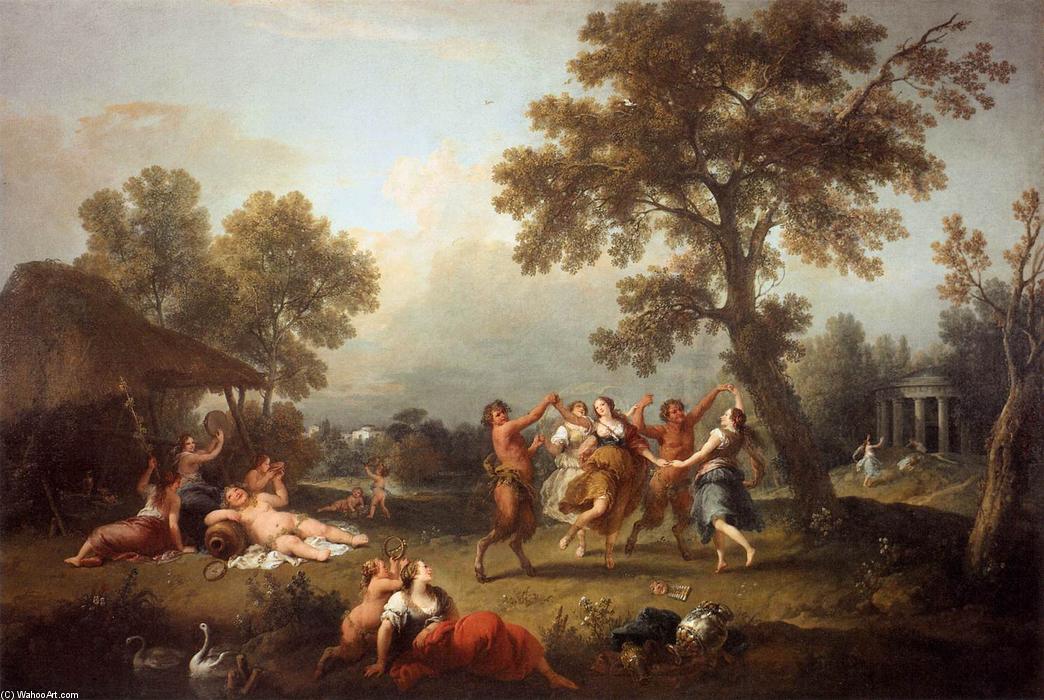
The Bacchanal by Francesco Zuccarelli stands as an emblem of the Rococo artistic movement, capturing not merely a scene but an entire ethos—one steeped in aristocratic indulgence and idealized beauty. Painted circa 1740-50, this oil on canvas masterpiece resides within the Gallerie dell’Accademia in Venice, Italy, offering visitors a glimpse into a period defined by opulent interiors and refined sensibilities. Zuccarelli's skill lies not just in depicting figures engaged in joyous revelry but in crafting an immersive experience that transports the viewer to a realm of pastoral serenity infused with vibrant color and masterful composition.Composition and Style: Balancing Chaos and Harmony
Zuccarelli’s approach distinguishes itself from the more dramatic Baroque tradition, prioritizing balance and grace over theatrical grandeur. The painting depicts a lively bacchanal—a celebration honoring Dionysus, the Greek god of wine and ecstasy—yet it avoids overwhelming visual sensation. A central group of figures dominates the canvas, their postures dynamic yet carefully arranged around a prominent architectural element: a classical structure reminiscent of Roman temples, subtly anchoring the scene in antiquity. The artist employs meticulous detailing to portray each participant’s attire and expression, conveying both physicality and emotion with remarkable precision. Notice how Zuccarelli utilizes light and shadow to sculpt forms, creating depth and enhancing the sense of movement—a hallmark of Rococo aesthetics.Color Palette and Technique: Embracing Pastel Radiance
The color palette is dominated by earthy tones – ochre, umber, Sienna – providing a grounding counterpoint to the splashes of vibrant hues adorning the figures’ clothing. Crimson reds, emerald greens, and sapphire blues punctuate the scene, symbolizing fertility, vitality, and divine inspiration. Zuccarelli's technique showcases exceptional brushwork, layering pigments with subtle gradations to achieve luminous surfaces that shimmer with reflected light. The artist skillfully blends colors on canvas, creating a velvety texture that contributes to the painting’s overall impression of luxurious softness. This meticulous attention to detail underscores Zuccarelli’s dedication to capturing not just what is seen but also how it feels—a testament to the transformative power of art.Historical Context: Venetian Aristocracy and Artistic Patronage
The Bacchanal reflects the cultural landscape of Venice during the mid-18th century, a city ruled by an aristocratic elite deeply invested in artistic patronage. Zuccarelli’s work exemplifies the Rococo style's fascination with idealized landscapes and mythological narratives—themes favored by Venetian noble families eager to express their status and sophistication. The painting aligns perfectly with broader European trends toward decorative art and emotional expression, signaling a shift away from Baroque solemnity towards a celebration of sensual pleasure and imaginative vision.Symbolism: Dionysian Ecstasy and Pastoral Tranquility
Beyond its visual splendor, Bacchanal is laden with symbolic significance. The bacchanalia itself represents the unrestrained pursuit of joy and indulgence—a deliberate rejection of Puritan morality—while simultaneously evoking images of Arcadia, the mythical pastoral paradise inhabited by shepherds and nymphs. The figures’ gestures convey a profound connection to nature and divine inspiration, mirroring the Rococo preoccupation with themes of beauty, harmony, and sensual experience. Zuccarelli's masterful depiction captures not only the outward spectacle of celebration but also its inner resonance—a reminder that art can transcend mere representation to communicate deeper truths about human emotion and spiritual aspiration.Legacy: Rediscovering Zuccarelli’s Vision
Francesco Zuccarelli’s reputation waned in the early 19th century, yet his work has experienced a resurgence of interest in recent decades, displayed prominently in museums worldwide. Bacchanal stands as a cornerstone of Rococo art history—a testament to Zuccarelli's artistic genius and his ability to distill the essence of an era into a single unforgettable image. Its enduring appeal lies in its exquisite beauty, balanced composition, and profound exploration of human emotion, continuing to inspire artists and collectors alike.Klausimai ir atsakymai
Kiek intensyvios yra spalvos kūryboje „Bacchanal“ – Francesco Zuccarelli?
„Bacchanal“ – Francesco Zuccarelli pasižymi Balanced spalvų intensyvumu.
Kokio dydžio „Bacchanal“ – Francesco Zuccarelli spausdinimas tinka rekomenduojamai patalpai?
Rekomenduojamas derinimas kūriniui „Bacchanal“ – Francesco Zuccarelli: Large dydžio spausdinimas, skirtas Living Room.
Kokią vietą Francesco Zuccarelli pasikartojančių temų tarėje užima „Bacchanal“?
Tarp užfiksuotų Francesco Zuccarelli temų – classical ideals, roman mythology, decorative style, venetian tradition, landscape genre – kūrinys „Bacchanal“ akcentuoja bacchanal, landscape, classical, wine, festive, figures, italy.
Trumpos faktinės datos ir meno viktorina
Apie Francesco Zuccarelli

Francesco Zuccarelli
1702 - 1788, इटalija
Autoriaus biografija
Francesco Zuccarelli: Gyvenimas peizažų spalvom %}
- Gimė: Pitigliano, Italija (1702)
- Mirė: 1788
- Kryptis: Vėlyvasis barokas / Rokoko
Giacomo Francesco Zuccarelli, žinomas pirminai kaip Francesco Zuccarelli, buvo itin svarbus Italijos menininkas, garsėjantis savo idiliškais peizažais ir arkadinėmis scenomis. Gimęs 1702 m. Toskanos Pitigliio mieste, jis tapo svarbiausiu Venecijos peizažų paveiksluotoju midur XX amrio viduryje. Jo kūrinys sukėlė gilią atmezgę visoje Europoje, ypač Anglijos širdyse, kur jis praleido ilgą laiką dirbdamas po karališkais globėjais.
Pradinė mokslė ir romos įtampų paveikis
- Mokinystė: Zuccarelli savo meninę kelionę pradėjo Romoje kaip Giovanni Maria Morandi ir Pietro Nelli mokinys, iš pradžių susikoncentruodamas į portretinį žanrą.
- Graviūros ir freskos: 1728–1731 m. jis daug skyrė savo talentą Giovanni da San Giovanni ir Andrea del Sarto nykstančių freskų graviūrom, demonstraydamas itin aštrų detalės suvokimą ir klasikinį įtampą.
- Paolo Anesi vadovavimas: Luigi Lanzi pažymėjo, kad Paolo Anesi playing svarbų vaidmenį nukreipiant Zuccarelli link peizažų tapimo, taip suformuodamas jo meninę kryptį.
Jo ankstyvieji darbai atskleidžia romos klasicizmo įtaką bei augantį susidomėjimą siekiant įamžinti Italijos kaimo gamtos grožį.
Venecijos laikotarpis ir kilimas į aukštumas
- Atvykimas į Veneciją: Verslo 1732 m. Zuccarelli persikėlė į Veneciją, išnaudodamas atsidarysiusią galimybę plėstis peizažų žovyje.
- Išskirtinis stilius: Jis sukūrė išskirtinį stilių, pasižymintį švelnia paleta, lengvomis kompozicijomis ir gyvais figūrais su šviesiais tonais – tai buvo žingsnis atokiau nuo įprastų savo pirmtakų naudojamų veneciečių spalvų.
- Globėjimas ir bendradarbiavimas: Zuccarelli greitai pelnė įtakingų asmenų, tokių kaip maršalas Schulenburgas, Joseph Smith (Didžiosios Britanijos konsulas) ir Francesco Algarotti, paramą. Jis dažnai bendradarbiavo su tokiais menininkais kaip Antonio Visentini ir Bernardo Bellotto. Žinomus bendradarbiavimus apima neo-palladiškos architektūros serijų kūrimas bei Senojo Testamento žaidimų kortų rinkinys su rankiniu būdu spalvintomis scenomis.
- Karališkojo akademijos narystė: 1768 m. jis tapo Londono Karališkosios meno akademijos kuruluşio narys, taip užtvirtindamas savo reputaciją tarptautinėje scenoje.
Šis laikotarpis žymėjo Zuccarelli šlovės įkarščį, kai jo peizažai užburė auditoriją visoje Europoje ir pad 된ė jį vienu pagrindinių Rokoko judėjimo veikėjų.
Vėlesnieji metai, nuotepamų kritika ir atradimo džiaugsmas
- Kritika: Nepaisant pradinio pripažinimo, Zuccarelli reputacija sumažėjo XIX amžiaus pradžioje, kai įprastėjo naturalizmas. Kritikai, tokie kaip Turneris, teikė nuosaikią pagalbą, pripažindami jo figūrų grožį, tačiau abejodami jo bendra stilistika.
- Michaelio Levey analize: Menhistorius Michael Levey vėliau Zuccarelli masinio patrauklumo priežastimi nurodė dekoratyvinį jo darbų pobūdį, ypač tarp angliškosios auditorijos.
- Modernus įvertinimas: Nuo 1990-ųjų metų Italijos mokslininkai pradėjo atstatyti Zuccarelli indė į meną, pabrėždami jo reikšmę peizažų paveikslavime ir pristydami jo kūrinius daugybėje parodų.
Šiandien Francesco Zuccarelli pripažįstamas kaip Rokoko laikotarpio meistras, šlovės skelbiamas dėl savo idiliškų peizažų, kurie sukelia ramybės ir klasikinio grožio pojūtį. Jo palikimas toliau įkvepia menininkus ir užburia auditoriją visame pasaulyje.
Trumpa informacija apie Francesco Zuccarelli
- Artistic Movement Or Style: Rokoko, Barokas
- Artists Who Influenced This Artist:
- Paolo Anesi
- Claude Lorrain
- Andrea del Sarto
- Date Of Birth: 1702 m. rugpjūčio 15 d.
- Date Of Death: 1788 m. gruodžio 30 d.
- Full Name: Giacomo Francesco Zuccarelli
- Nationality: Italių
- Notable Artworks:
- Capriccio su San Giorgio Maggiore
- Klasikinis peisžas
- Peisžas su mergaitėmis prie upės
- Bachanale
- Place Of Birth (City And Country): Pitigliano, Italija

Francesco Zuccarelli
Bacchanal
() ·
Su rėmu: · Rankiniu būdu tapyta aliejumi ant lineno
Viso suma