


 Peržiūrėti realaus dydžio版
 Siųsti
 Dalintis
 Išsamiau
 Vadovas

 Atsisiųsti
 Panašūs eksponatai
 Rentgeno spindulių nuotrauka
 Diaporama
 Statistika
Winter Afternoon


George Bellows’ "Winter Afternoon" captures a serene NYC landscape—a frozen river, snow-laden trees, and two figures enjoying the quiet beauty of winter. A masterpiece of realism.
 Rodyti daugiau
George Bellows (1882-1925) – žymus amerikietis realizmo tapytojas, įamžinęs miesto gyvenimą ir bokso scenas. Ryškus stilius, dinamiški šešėliai, svarbus „Ashcan School“ atstovas.
Giclée / Meno spausdinimas
Muziejų lygio „giclée“ arba drobos spausdinimas: greita gamyba ir lankstios apdailos parinktys. ( Pirkti rankomis tapytą reprodukciją Perejti prie skaitmeninių vaizdų)




P118B €10

P118H €10

P118W €10

P438Z €10

P508JH €12

P508YH €12

P805H €10

P805Z €10

P919BZ €10

P919G €10

P919XJ €10

P959ZH €10

P968JZ €12

W106C €8

W218G €10

W218JH €8

W218Y €10

W307PJ €10

W316G €10

W316PJ €8

W316Y €10

W398PJ €8

W4111J €10

W500HY €15

W500JH €15

W692G €12

W849H €8

W940BG €15

W953PJ €8




Standartinis
individualaus dydžio
CM
INCH
Pasirinkite iš mūsų nustatytų dydžių, atitinkančių originalaus meno kūrinio proporcijas.
Loading sizes...

plotis
aukštis
Galite nurodyti savo matmenis, kad vaizdas atitiktų konkretų rėmą ar erdvę. Jei pasirinktas dydis nesutaps su originalaus paveikslėlio proporcijomis, mes arba apkirpsime kūrinį, arba išplėsime vaizdą naudojant veideliu atspindėtą arba vientisą šoną. Skaitmeninis maketas bus išsiųstas jums patvirtinti prieš pradedant gamybą.
Atkreipkite dėmesį, kad ekrane matomas vaizdinys neatspindi tikrojo apkirpimo ar išplėtimo. Tik maketas tiksliai parodytų galutinę kompoziciją.
Nors galima rinktis ir individualius dydžius, rekomenduojame pasirinkti vieną iš išanksti nustatytų matmenų, kad būtų išlaikytos originalios proporcijos.
Pristatymas visame pasaulyje () per 2 weeks, o ne įprastas 4/5 savaičių laikotarpis. (2 spalis)

Nemokamas greitasis pristatymas visame pasaulyje

Aukštos kokybės lininis drobė

Pilnas siuntimo draudimas

Muitinės mokesčių grąžinimo garantija

Tikro spalvų atitikimo garantija

100 dienų grąžinimo politika (tik esant įtaigoms)

100% pinigų grąžinimo garantija

Nuolaida dideliems užsakymams
 Stiklo variantas prieinamas tik pasirinkus dydį iki 110 cm

Winter Afternoon
Giclée / Meno spausdinimas
Reprodukcijos dydis
-


Visų pasirinktų variantų kaina
€ 59
Winter Afternoon: A Frozen Moment of American Realism
George Wesley Bellows’ “Winter Afternoon,” painted in 1909, isn't merely a depiction of a snowy landscape; it’s a carefully constructed tableau of quiet contemplation and subtle human connection. Housed within the Norton Museum of Art in West Palm Beach, this oil on canvas transports us to a serene winter scene—a frozen body of water reflecting the muted tones of a snow-laden sky and surrounding trees. Yet, beyond the picturesque beauty lies a deeper resonance, rooted in Bellows’ masterful command of realism and his keen observation of American life.
Bellows, a pivotal figure in the Ashcan School movement, rejected idealized romanticism in favor of portraying the gritty realities of urban America. His work often captured the energy and dynamism of New York City, but “Winter Afternoon” offers a respite from that frenetic pace, presenting instead a moment of stillness. The composition is deliberately restrained—a simple, almost austere arrangement—drawing our attention to the details: the delicate tracery of branches against the snow-covered sky, the subtle variations in texture created by Bellows’ brushstrokes, and the two figures positioned within the scene.
The Figures and Their Narrative
Crucially, “Winter Afternoon” isn't a solitary landscape; it features two individuals enjoying the winter day. While the exact identities of these figures remain enigmatic—a deliberate choice by Bellows, perhaps—their posture suggests a comfortable companionship, a shared appreciation for the beauty of the moment. They are positioned near the left side of the image, seemingly engaged in conversation or simply basking in the quietude of the scene. The placement invites us to imagine their story, adding an element of narrative depth to what might otherwise be a purely observational piece.
The presence of these figures elevates the painting beyond a simple landscape study. It speaks to the human need for connection and shared experience—a theme that resonates powerfully across time and cultures. Bellows’ ability to imbue a seemingly ordinary scene with such emotional weight is a testament to his artistic skill and sensitivity.
Technique and Style: A Masterclass in Realism
Bellows' technique in “Winter Afternoon” is characterized by a remarkable blend of observation and expressive brushwork. He meticulously rendered the textures of the snow, ice, and trees—the crispness of the snowflakes, the smoothness of the frozen water, the rough bark of the branches—creating a palpable sense of tactile reality. His use of color is equally deliberate, employing muted tones of gray, blue, and white to evoke the cold, stark beauty of winter.
However, Bellows doesn’t simply aim for photographic accuracy. He employs loose, gestural brushstrokes—particularly evident in the depiction of the sky and trees—to convey a sense of movement and atmosphere. These expressive marks add dynamism to the composition, preventing it from feeling static or lifeless. The interplay between meticulous detail and spontaneous brushwork is what defines Bellows’ distinctive style – a hallmark of his realism.
Historical Context and Legacy
"Winter Afternoon" was painted during a period of significant social and artistic change in America. The Ashcan School, to which Bellows belonged, challenged the prevailing academic traditions of art by depicting everyday life—often with unflinching honesty and a critical perspective. Bellows’ work reflected the growing urbanization of the United States and the increasing awareness of social inequalities.
Despite his early death in 1925, Bellows' legacy endures. His paintings continue to be celebrated for their raw emotional power, their masterful technique, and their insightful portrayal of American life. Reproductions of “Winter Afternoon,” available through platforms like TopImpressionists.com, offer a beautiful way to experience the enduring appeal of this iconic work of art.
问答 (or more naturally for a website heading): Klausimai ir atsakymai
Kaip „Winter Afternoon“, autorius – Džordžas Veslis Belousas sujungia Ashcan School Realism su autoriaus gimtinė?
„Winter Afternoon“ sujungia Ashcan School Realism stilių su Jungtinės Amerikos Valstijos, atspindėdama kūrėjo gimimo vietą.
Kada buvo sukurta „Winter Afternoon“?
„Winter Afternoon“ sukurta 1909 m. Ši data leidžia įvardyti kūrinį Džordžas Veslis Belousas kūrybinėje karjeroje bei jo epochoje.
Kada ir kokiais medžiagomis buvo sukurta „Winter Afternoon“?
„Winter Afternoon“ sukurtas 1909 m., naudojant Oil On Canvas.
Ką „Winter Afternoon“ turi bendro su kitais Džordžas Veslis Belousas kūriniais?
Džordžas Veslis Belousas kūryboje „Winter Afternoon“ pasižymi Ashcan School Realism stiliumi, derinant jį su ashcan school realism, urban life, american modernism, social commentary, boxing scenes, dynamic energy, social critique, working-class themes temomis.
Kokia buvo Džordžas Veslis Belousas amžius sukuriant „Winter Afternoon“?
Džordžas Veslis Belousas buvo 27 metų, kai 1909 m. sukūrė kūrinį „Winter Afternoon“. Amžius apskaičiuotas remiantis gimimo metais 1882.
Kas sukūrė „Winter Afternoon“?
„Winter Afternoon“ kūrybinį darbą sukūrė Džordžas Veslis Belousas. Šioje puslapio informacijoje aprašomas Džordžas Veslis Belousas originalus kūrinys.
Kokia technika buvo panaudota kūriniam darbui „Winter Afternoon“, autorius – Džordžas Veslis Belousas?
„Winter Afternoon“, autorius – Džordžas Veslis Belousas technika – Oil On Canvas. Kopijos siekia atkartoti šios technikos vaizdą.
Susiję kūriniai


Autoriaus biografija
Ankstyvieji Metai ir Formavimasis: Kolumbusas, Ohajas ir Sporto Įtaka
George Wesley Bellows, vardas neatsiejamas nuo ankstyvojo XX amžiaus Amerikos realizmo tapybos energijos ir dinamikos, pasirodė kaip svarbiausias figūra. Gimęs Kolumbuse, Ohajuje, rugpjūčio 12 arba 19 dieną, 1882 metais, jo kelionė nuo sporto perspektyvų iki artistinės šlovės yra aistros ir atsidavimo galios įrodymas. Net prieš formalų mokymą jaunasis George’as demonstravo įgimtą piešimo talentą, užpildydamas sąsiuvinius eskizais, rodančiais stebėjimo aštrumą ir augantį įgūdį. Jo vaikystė nebuvo vien tik skirta menui; jis puikiai sekėsi sporte, žaidžiant beisbolą ir krepšinį Ohajo valstijos universitete – dvilypumas, kuris giliai paveikė jo artistinę perspektyvą, įskiepijantį jo kūriniuose dinamiškumo ir fizinio judesio jausmą. Šis sportinis pagrindas suteikė jam ne tik discipliną, bet ir dėkingumą žmogaus figūrai veiksme – tema, kuri taps centrine jo garsiausių paveikslų dalimi. Prieš baigiant universitetą jis paliko studijas, vedamas nenustebimo potraukio į Niujorko miestą ir artistinio mokymo pažado.Niujorkas ir Aškanų Mokykla: Realizmo Paieškos
Atvykęs į Niujorką 1904 metais, Bellows greitai susirado mentorių Robert Henri, pirmaujančią figūrą Aškanų mokykloje. Ši artistų grupė – įskaitant John Sloan, William Glackens ir George Luks – sąmoningai atsisakė akademinės konvencijos, pasirinkdami vaizduoti miesto gyvenimo kietą realybę: perkrautas būstus, triukšmingas gatves ir paprastų amerikiečių kasdienius sunkumus. Bellows visiškai priėmė šią etiką, iš pradžių atspindėdamas Henri laisvą potepį ir įsipareigojimą socialiniam realizmui. Tačiau jis nebuvo patenkintas vien tik savo mokytojo stiliaus kopijavimu; jis turėjo ambicijų sukurti savitą artistinį balsą. 1906 metais jis įkūrė studiją kartu su kolega Edward Keefe, žymėdama vaisingo eksperimentavimo laikotarpio pradžią. Jo ankstyvieji darbai, parodyti 1908 metais, sulaukė maišytos reakcijos – kai kurie kritikai juos pavadino netvarkingais, o kiti pripažino jų drąsų ryškumą ir novatorišką dvasią. Bellowso tematiką dažnai laikydavo kontroversiška tuo metu, nes ji iššaukdavo vyraujančius požiūrius į tai, kas sudarė „priimtiną“ meną. Jis nebijojo atvaizduoti mažiau glamūrinių miesto gyvenimo aspektų, fiksuodamas skurdo, darbo ir laisvalaikio scenas be jokios užslankos.Arenoje: Bokso Scenos ir Miesto Spektakliai
Nors Bellowso kūryba apėmė platų tematiką – portretus, peizažus, jūros kraštovaizdžius – jis yra žinomas dėl savo galingų bokso rungtynių vaizdavimų. Jam tai nebuvo tik sporto renginiai; jie buvo žmogaus dramos mikrokosmai, įkūnijantys kovos, atsparumo ir pirminio instinkto temas, kurios skatina konkurenciją. Jis dažnai lankydavosi dūminguose bokso klubuose, kruopščiai studijuodamas kovotojų judesius, jų žvilgsnių intensyvumą ir minios žalią energiją. Paveikslai, tokie kaip *Abu šio klubo nariai* (1909) ir *Stag at Sharkey’s* (1909), yra meistriški jo gebėjimo užfiksuoti tą atmosferą pavyzdžiai, naudojant dramatišką apšvietimą, dinamiškas kompozicijas ir juntamą įtampą. Bokso scenos nebuvo tik apie patį sportą; jos buvo gyvenimiškų kovų metaforos, atspindinčios socialinį darvinizmą, vyraujantį Amerikos visuomenėje tuo metu. Be bokso, Bellows taip pat įkvėpimo semdavosi kituose miesto gyvenimo spektakliuose – paraduose, cirkuose ir perkrautose gatvėse – visi suteikdavo galimybių tyrinėti judesio, energijos ir kolektyvinės patirties temas.Evoliuojantis Stilius ir Ilgalaikis Palikimas
Bellows brandus kaip artistas, jo stilius subtiliai, bet reikšmingai kito. Nors jis išlaikė įsipareigojimą realizmui, jis ėmė atsisakyti ankstyvojo laikotarpio laisvų potepių, priimdamas stilizuotesnę estetiką, pasižyminčią lygiais kontūrais, monumentaliais formomis ir sustiprėjusiu dramos jausmu. Šis poslinkis matomas vėlesniuose darbuose, tokiuose kaip *Dempsey and Firpo* (1924), monumentaliniame drobėje, kuri užfiksuoja legendinių bokso rungtynių kulminacinį momentą kvapą gniaužiančiu intensyvumu. Jis eksperimentavo su litografija, sukūręs įspūdingų atspaudų seriją, demonstruojančią jo meistriškumą linijoje ir tone. Nepaisant didelio pasisekimo savo gyvenimo metu – įskaitant 1913 metais buvimą išrinktam į Nacionalinę dizaino akademiją – Bellows liko įsipareigojęs stumti artistines ribas ir mesti iššūkį tradicinėms normoms. Jo ankstyva mirtis 1925 metais, būdamas 42 metų amžiaus, nutraukė žadančią karjerą, tačiau jo palikimas tebestovi kaip vieno svarbiausių Amerikos realistinių tapytojų. *Jis paliko kūrinius, kurie ir šiandien rezonuoja su publika*, siūlydami galingą ir nesuvaržytą amerikiečių gyvenimo portretą ankstyvajame XX amžiuje – pasaulį, kupiną energijos, konflikto ir nuolatinės žmoniškumo dvasios. Jo įtaka matoma vėlesnėse kartose artistų, kurie siekė užfiksuoti modernios miesto patirties dinamiką ir sudėtingumą. George Bellows ne tik tapė paveikslus; jis dokumentavo erą.Pagrindiniai Darbai ir Pripažinimas
- *Abu šio klubo nariai* (1909) – svarbiausias darbas, užfiksuojantis bokso klubo atmosferą.
- *Stag at Sharkey’s* (1909) – kitas ikoniškas bokso rungtynių vaizdavimas, garsėjantis dramatišku apšvietimu ir kompozicija.
- *Men of the Docks* (1912) – galingas darbininkų portretas, demonstruojantis Bellowso gebėjimą užfiksuoti fizinį sudėtingumą ir tekstūrą.
- *The Germans Arrive* (1918) – litografijų serija, vaizduojanti Antrojo pasaulinio karo siaubus, rodanti jo įsitraukimą į socialinius ir politinius klausimus.
- *Dempsey and Firpo* (1924) – monumentaliniame drobėje užfiksuotas svarbus bokso istorijos momentas, demonstruojantis Bellowso evoliuciją stiliaus ir meistriškumą kompozicijoje.

Džordžas Veslis Belousas
1882 - 1925 , Jungtinės Amerikos Valstijos
Trumpa informacija apie kūrėją
- Gimimo Data: 1882
- Gimimo Vieta (Miestas, Šalis): Columbus, JAV
- Meninis Stilius/Judėjimas: Realizmas, Aškanų mokykla
- Mirties Data: 1925
- Pilietybė: Amerikietis
- Pilnas Vardas: George Wesley Bellows
- Įtakoję Menininkai: ['Robert Henri']
- Žymiausi Darbai:
- Central Park
- The Germans Arrive
- Men of the Docks
- Tennis Tournament
Susiję straipsniai
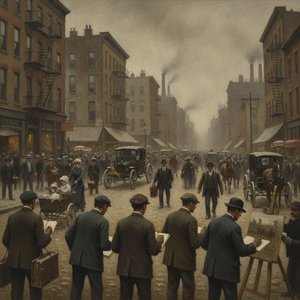
The Ashcan School: Capturing the Raw, Unfiltered Soul of Urban Life through American Realism
Discover the raw beauty of the Ashcan School. Explore how masters like Bellows and Henri captured the gritty, vibrant soul of early 20th-century New York through profound American Realism and evocative urban landscapes.

The Unvarnished Truth: A Cultural Journey Through the Soul of American Realism
Explore the profound beauty of American Realism. From the Ashcan School's urban grit to intimate portraits, discover how artists captured the authentic soul of a nation through unvarnished truth and masterful observation.
Tyrinėkite meno kūrinius, suskirstytus pagal temas, stilius ir savybes.
