

 Peržiūrėti realaus dydžio版
 Siųsti
 Dalintis
 Išsamiau
 Vadovas

 Atsisiųsti
 Panašūs eksponatai
 Rentgeno spindulių nuotrauka
 Diaporama
 Statistika
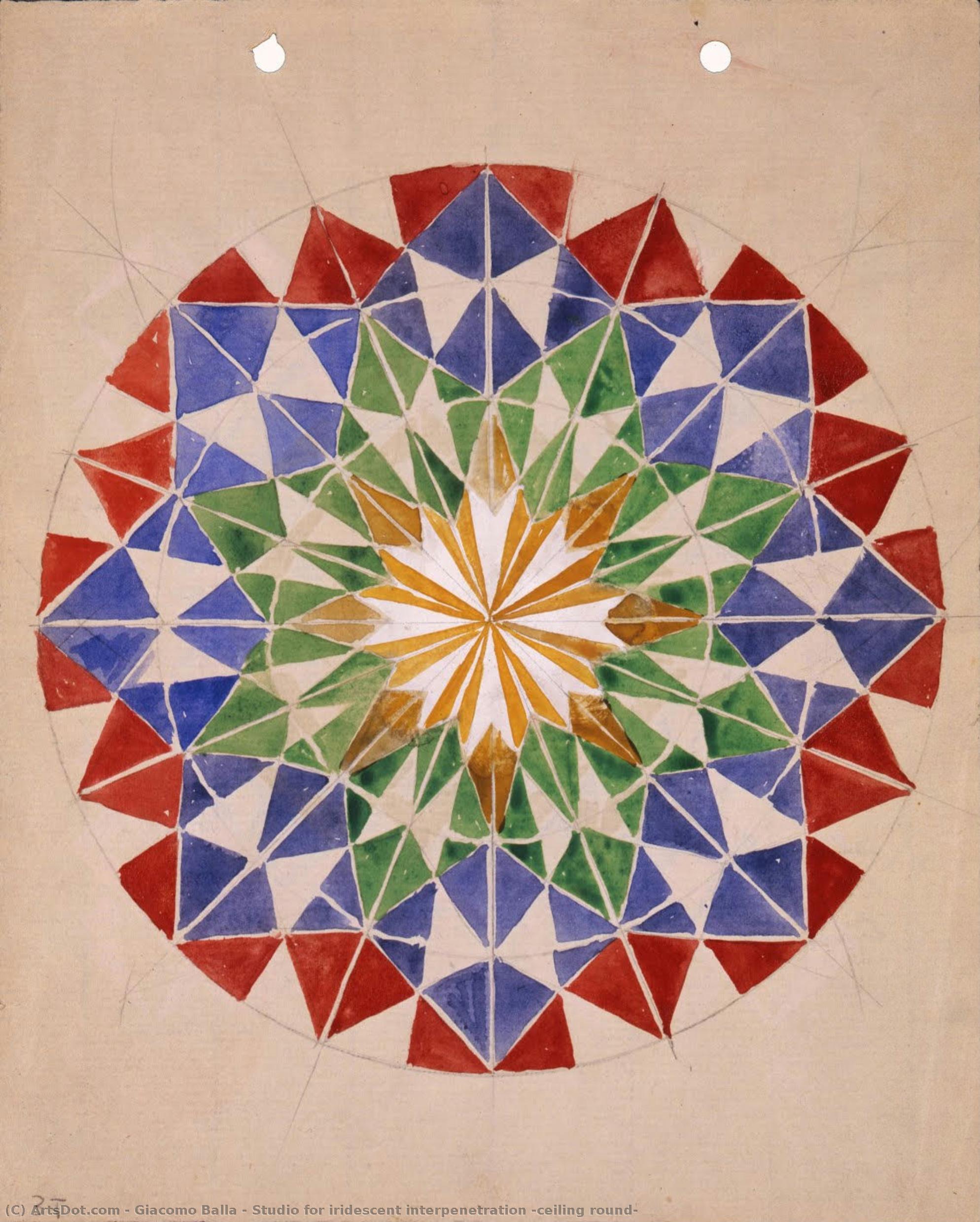
Studio for iridescent interpenetration (ceiling round)
 Acrylic On Canvas
- WallArt
- Futurist Divisionism
 Modern
 7.0 x 22.0 cm
 Galleria Civica di Arte Moderna e Contemporanea Torino
Giacomo Balla’s "Studio for iridescent interpenetration (ceiling round)" is a vibrant watercolor capturing the dynamic energy of Divisionism and Futurism with its swirling colors and luminous circle. Explore this iconic work by the Italian artist and bring home a unique piece.
 Rodyti daugiau
Giacomo Balla (1871-1958) – italų futurizmo pradininkas! Atraskite dinamiškus paveikslus, įkūnijančius greitį, šviesą ir judesį. Pagrindinis moderniosios meno figūra.
Šiame puslapyje rodomas meno kūrinys yra saugomas autorių teisių įstatymais, todėl neturime teisės legaliai kurti ar parduoti jo identiškos reprodukcijos. Ši apsauga užtikrinama remiantis tokiais tarptautiniais susitarimais kaip Bernės konvencija ir pagal nacionalines įstatymų nuostatas, įskaitant tas, kurias nurodo JAV autoriškos teisės įstatymas – 17-asis skyrius.
Šis metodas visiškai atitinka autorių teises, nes jame nėra kūrinio kopijavimo ar dubliavimo. Tai yra kūrybinė reinterpretacija – naujas paveikslas, kurį įkvėpė originalas, tačiau kuris nėra jo identiškas.
Giclée / Meno spausdinimas
Muziejų lygio „giclée“ arba drobos spausdinimas: greita gamyba ir lankstios apdailos parinktys. ( Pirkti rankomis tapytą reprodukciją Perejti prie skaitmeninių vaizdų)




P118B €10

P118H €10

P118W €10

P438Z €10

P508JH €12

P508YH €12

P805H €10

P805Z €10

P919BZ €10

P919G €10

P919XJ €10

P959ZH €10

P968JZ €12

W106C €8

W218G €10

W218JH €8

W218Y €10

W307PJ €10

W316G €10

W316PJ €8

W316Y €10

W398PJ €8

W4111J €10

W500HY €15

W500JH €15

W692G €12

W849H €8

W940BG €15

W953PJ €8




Standartinis
individualaus dydžio
CM
INCH
Pasirinkite iš mūsų nustatytų dydžių, atitinkančių originalaus meno kūrinio proporcijas.
Loading sizes...

plotis
aukštis
Įveskite jums reikiamą plotį ir aukštį, kad atvaizdas derėtų prie jūsų rėmo ar sienos. Spausdiną galima tik sumažinti, bet nepadidinti virš originalaus paveikslėlio dydžio, todėl keičiant proporcijas, dalis vaizdo prarandama. Prieš spausdinimą atsiųsime jums skaitmeninį maketą patvirtinimui. Šioje puslapio nuotraukoje matomas pjūvis nėra tikslus – jį rodo tik maketas.
Pristatymas visame pasaulyje () per 2 weeks, o ne įprastas 4/5 savaičių laikotarpis. (24 spalis)

Nemokamas greitasis pristatymas visame pasaulyje

Aukštos kokybės lininis drobė

Pilnas siuntimo draudimas

Muitinės mokesčių grąžinimo garantija

Tikro spalvų atitikimo garantija

100 dienų grąžinimo politika (tik esant įtaigoms)

100% pinigų grąžinimo garantija

Nuolaida dideliems užsakymams
 Stiklo variantas prieinamas tik pasirinkus dydį iki 110 cm

Studio for iridescent interpenetration (ceiling round)
Giclée / Meno spausdinimas
Reprodukcijos dydis
-


Visų pasirinktų variantų kaina
€ 61
Studio for iridescent interpenetration (ceiling round) – A Window into Balla’s Vision
Giacomo Balla's "Studio for iridescent interpenetration (ceiling round)" is more than just a watercolor; it’s a concentrated distillation of the artist’s revolutionary approach to depicting movement and light. Measuring a modest 7 x 22 cm, this seemingly simple circular composition pulsates with an energy born from Balla’s pivotal embrace of Futurism. Painted in 1913, during a period of intense experimentation within the movement, it offers a rare glimpse into the artist's early explorations of key futurist concepts – ideas that would profoundly influence his later, more celebrated works.
- Subject Matter: The painting’s central subject is an abstract circle, dominated by a vibrant yellow core. This isn’t a literal representation of a sun or star, but rather a carefully constructed visual device designed to capture the fleeting effects of light and movement.
- Technique: Balla employs Divisionist techniques – small, distinct brushstrokes of pure color – to create an illusion of shimmering iridescence. The layering of reds, greens, blues, oranges, and yellows isn’t haphazard; it's meticulously planned to evoke the sensation of light refracting and overlapping, a core tenet of futurist aesthetics.
The Genesis of Futurist Ideas
Balla’s artistic journey began with a grounding in traditional techniques, initially through music lessons and later working in a lithograph print shop. However, his life took a decisive turn upon meeting Filippo Tommaso Marinetti and becoming a signatory of the Futurist Manifesto in 1910. This encounter ignited a passion for capturing dynamism – speed, movement, and the perceived chaos of modern urban life – on canvas. “Studio for iridescent interpenetration (ceiling round)” represents an early manifestation of this shift, predating many of Balla’s more iconic futurist paintings.
The painting's circular form itself is significant. Circles are often associated with wholeness, unity, and the cyclical nature of time – concepts central to futurist thought. The deliberate fragmentation of color within the circle mirrors the futurists’ desire to break down traditional representational forms and embrace a more dynamic, multi-faceted view of reality.
Symbolism and Emotional Impact
Beyond its technical brilliance, the artwork resonates with a profound sense of dynamism. The overlapping colors suggest an interpenetration of light and space, creating a visual experience that is both stimulating and slightly unsettling. It’s a testament to Balla's ambition to capture not just what he *saw*, but how he *felt* about the world – a world in constant motion.
The painting’s small size adds to its intimacy, inviting the viewer to contemplate this complex visual puzzle with focused attention. It is a poignant reminder of Balla's early experimentation and his unwavering commitment to pushing the boundaries of artistic expression.
Historical Context & Provenance
Created in 1913 and currently housed at the Galleria Civica di Arte Moderna e Contemporanea Torino, “Studio for iridescent interpenetration (ceiling round)” offers a valuable window into the formative years of one of Italy’s most important modern artists. Balla's work is inextricably linked to the broader artistic and intellectual currents of the early 20th century – a period marked by rapid technological advancements, social upheaval, and a fervent desire to redefine art’s role in society. This piece stands as a testament to that ambition.
问答 (or more naturally for a website heading): Klausimai ir atsakymai
Kiek plačiai žinomas kūrinys „Studio for iridescent interpenetration (ceiling round)“, kurį sukūrė Džiakomo Bala?
Darbui „Studio for iridescent interpenetration (ceiling round)“, autorius – Džiakomo Bala suteiktas Recognized populiarumumo lygis. Ši klasifikacija atspindi, kaip plačiai šis kūrinys yra atpažįstamas.
Kokią nuotaiką „Studio for iridescent interpenetration (ceiling round)“, autorius – Džiakomo Bala išreiškia Futurist Divisionism kontekste?
„Studio for iridescent interpenetration (ceiling round)“ pasižymi Mysterious emociniu tonu, priklausančiu Futurist Divisionism stiliui.
Kokia bendra "Studio for iridescent interpenetration (ceiling round)" spalvų tonacija – šviesi ar tamsi?
Visapusiškai „Studio for iridescent interpenetration (ceiling round)“ įtvirtinta kaip brilliant. Perceptinis ryškumas apibūdina, koks kūrinys atrodo šviesus ar tamsus.
Autoriaus biografija
Ankstyvas gyvenimas ir ugdymas
- Gimė: Turinas, Italija (liepos 18 d., 1871 m.)
- Mirė: 1958 m.
- Džakomas Bala gimė šeimoje, turinčioje meninių ryšių; jo tėvas buvo fotografas.
- Pradėjo studijuoti muziką iki devynerių metų amžiaus.
- Po tėvo mirties dirbo litografijos spaustuvėje, susidomėdamas vizualiuoju menu.
- Studijavo vietinėse akademijose, vėliau Turino universitete.
- 1895 metais persikėlė į Romą, kur pradėjo dirbti iliustratoriumi, karikatūristu ir portretų tapytoju.
Kūrinių raida ir pagrindiniai meniniai laikotarpiai
- Divisionizmas: Ankstyvieji darbai buvo paveikti divisionizmo, technikos, kurioje naudojami smulkūs grynos spalvos potepiai, kad sukurtų šviesumą. Šis laikotarpis parodė jo susidomėjimą fiksuojant šviesos efektus.
- Futurizmas: Lemingas momentas buvo jo prisijungimas prie futurizmo po to, kai jis susitiko su Filippo Tommaso Marinetti. 1910 metais jis pasirašė Futuristų manifestą.
- Futuristų principai: Balos futuristiniuose darbuose daugiausia dėmesio skiriama šviesos, judėjimo ir greičio vaizdavimui, dažnai įtraukiant abstrakčius elementus. Jis išplėtė futuristinius principus iki baldų dizaino ir drabužių.
- Vėlesnis darbas: Vėliau jis atsiribojo nuo radikalesnių futurizmo aspektų, grįždamas prie tradiciškesnio figūratyvaus stiliaus.
Pagrindiniai darbai ir meninis stilius
- Abstraktus greitis + garsas (Velocità Astratta + Rumore): Svarbus darbas, kuriame tyrinėjamas greitis, simbolizuojamas automobiliu.
- Gatvės žibintas: Pavyzdys jo tyrimų apie šviesą, atmosferą ir judėjimą.
- Dinamiškas šuo su pavadžiu: Pagrindinis kūrinys, demonstruojantis pastangas išreikšti judėjimą tapyboje.
- Boccioni kumštis: Parodo jo darbą kaip skulptorių futuristų judėjime.
- Stilius: Balos stilius evoliucionavo nuo divisionizmo technikų iki dinamiškų ir abstrakčių modernaus gyvenimo judesio, šviesos ir vaizdavimų. Jis naudojo fragmentuotas formas, persidengiančius plokštumus ir ryškias spalvas, kad perteiktų energijos ir greičio pojūtį.
Įtaka ir istorinė reikšmė
- Etienne-Jules Marey: Paveiktas Marey chronofotografinių eksperimentų, kurie užfiksavo judėjimo sėkmingus etapus.
- Filippo Tommaso Marinetti: Futuristų manifestas ir Marinetti idėjos buvo labai svarbios Balos meninei krypčiai.
- Istorinė reikšmė: Kaip vienas iš futuristų judėjimo įkūrėjų, Bala suvaidino gyvybiškai svarbų vaidmenį plėtojant jo estetinę principus ir skatinant jo įtaką įvairiose meno formose. Jo darbas padėjo apibrėžti ankstyvojo XX amžiaus modernizmą ir tebėra švenčiamas dėl novatoriško požiūrio į judesio ir technologijų vaizdavimą.
Palikimas ir pripažinimas
- Narystė: 1935 metais tapo Romos Accademia di San Luca nariu.
- Parodos: Dalyvavo Documenta 1 Kaselyje (1955) ir jo darbai buvo eksponuoti Documenta 8 (1987).
- Muziejų kolekcijos: Jo meno kūriniai laikomi tokiose kolekcijose kaip Albright-Knox Art Gallery, Nacionalinė Švento Lukos akademija Romoje ir Estorick Collection.
- Balos palikimas slypi jo novatoriškame judesio ir dinamiškumo tyrinėjime mene, reikšmingai prisidedant prie futurizmo plėtros ir modernios meninės ekspresijos.

Džiakomo Bala
1871 - 1958 , Italija
Trumpa informacija apie kūrėją
- Gimimo Data: liepos 18 d., 1871
- Gimimo Vieta: Turinas, Italija
- Menininkai, Kuriuos Įtakojo:
- Umberto Boccioni
- Gino Severini
- Meninis Stilius: Futurizmas
- Mirties Data: 1958 m.
- Pilietybė: Italas
- Pilnas Vardas: Giacomo Balla
- Įtakoję Menininkai: ['Etienne-Jules Marey']
- Žymiausi Darbai:
- Abstrakti greitis + garsas
- Gatvės žibintas
- Dinamiškas šuo su pavadžiu
Susiję straipsniai

Ephemeral Visions: Exploring the Artistic Legacy & Nuances of Watercolor Painting
Explore the captivating world of watercolor painting! Discover its rich history, essential techniques, influential artists & collecting tips from art experts. A comprehensive guide for enthusiasts.

Akvarelės meno istorija ir technikos: nuo senovės tradicijų iki šiuolaikinio ekspresionizmo
Atraskite akvarelės meno istoriją ir technikas nuo senovės tradicijų iki šiuolaikinio ekspresionizmo! Ekspertai pataria, meistrų kūriniai, vertinimo gairės. Įkvėpkite naujų idėjų savo kūrybai!

Ephemeral Visions: Exploring the History & Emotional Resonance of Watercolor Painting
Explore the captivating history of watercolor painting, from ancient techniques to modern masters like Kandinsky & Blake. Discover essential artists, collecting tips & the emotional power of this luminous medium. Expert insights for art enthusiasts.

Ephemeral Visions: Exploring the Artistic Legacy & Contemporary Practice of Watercolor Painting
Explore the captivating world of watercolor painting! Discover its rich history, essential techniques, influential artists & collecting tips. A comprehensive guide for art enthusiasts from TopImpressionists.

Watercolor Wonders: 10 Masterpieces That Redefined Art History | TopImpressionists
Journey through 10 legendary watercolor masterpieces by Sargent, Turner & Homer! Explore iconic landscapes, portraits & floral art that redefined history. Find museum-quality reproductions and curated decor ideas at TopImpressionists.com.
Tyrinėkite meno kūrinius, suskirstytus pagal temas, stilius ir savybes.
