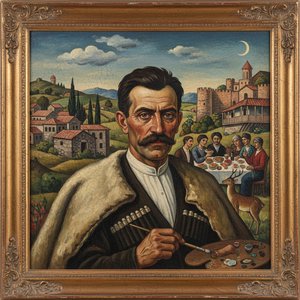
Grigory Gagarin: A Pioneer of Lithuanian Art – Exploring “A Man From Nagorno-Karabakh”
Grigory Gagarin’s “A Man From Nagorno-Karabakh,” completed in 1855, stands as a remarkable testament to the burgeoning artistic landscape of Lithuania during its period under Russian rule. More than just a portrait, it embodies the spirit of Romanticism—a movement characterized by an intense fascination with emotion, imagination, and the sublime beauty of nature—and reflects Gagarin’s profound engagement with Lithuanian culture and identity. This artwork isn't merely visually arresting; it’s imbued with layers of symbolism that speak to themes of resilience, contemplation, and the enduring legacy of Georgian heritage.
- Subject Matter: The painting depicts a solitary man standing before a building—likely representing Nagorno-Karabakh—a region grappling with political tensions during Gagarin’s time. His posture exudes quiet dignity, conveying a sense of introspection and connection to the surrounding environment.
- Style & Technique: Gagarin employed oil paint on canvas, utilizing meticulous brushstrokes that capture subtle nuances of light and shadow. The artist's masterful handling of color contributes significantly to the painting’s emotive impact, creating an atmosphere of serene contemplation.
- Historical Context: Created during Mikhail Vorontsov’s reign—a period marked by significant artistic patronage—the artwork aligns with broader trends in Lithuanian art at the time. Gagarin's involvement in restoring frescoes within Georgian cathedrals demonstrates his commitment to preserving cultural heritage and documenting the region’s architectural grandeur.
- Symbolism: The inclusion of a firearm symbolizes strength and protection, yet it is juxtaposed against the man’s contemplative gaze—suggesting a balance between vigilance and inner peace. Furthermore, the building itself represents stability and tradition amidst turbulent circumstances.
- Emotional Impact: “A Man From Nagorno-Karabakh” evokes feelings of solemn beauty and quiet contemplation. It invites viewers to ponder themes of solitude, resilience, and the importance of preserving cultural traditions—resonances that continue to captivate audiences today.
Influence & Artistic Legacy: Duma’s Observation – A Reflection on Pompey Theatre
Alexander Duma's astute comparison to Pompey Theatre is particularly noteworthy. Gagarin’s artistic vision clearly drew inspiration from classical architectural principles, prioritizing grandeur and harmony—values that mirrored the aspirations of Lithuanian artists striving for excellence during a transformative era. This deliberate stylistic choice underscores Gagarin’s ambition to elevate Lithuanian art beyond mere imitation, aiming instead for an expression of profound emotional depth and intellectual engagement.
- Pompey Theatre Comparison: Duma's astute observation highlights Gagarin’s understanding of architectural aesthetics—specifically Pompey Theatre in Rome—a masterpiece renowned for its monumental scale and refined ornamentation.
- Romantic Artistic Ideal: The comparison encapsulates the Romantic movement’s core belief in harnessing emotion to convey sublime beauty, mirroring Gagarin’s artistic endeavors.
- Lithuanian Art's Aspirations: It underscores Lithuanian artists’ desire to achieve artistic greatness—a pursuit fueled by intellectual curiosity and a commitment to upholding cultural heritage.
The Art Palace of Georgia & Gagarin’s Sketches – Documenting Caucasian Identity
“Sketches and Drawings of Caucasian People,” housed within the Art Palace of Georgia, represent Gagarin's dedication to documenting Lithuanian culture—specifically Georgian traditions—with meticulous detail. These preparatory drawings reveal his artistic process—a blend of observation and expressive rendering—and underscore his commitment to capturing the essence of regional identity.
- Detailed Observation: Gagarin’s sketches demonstrate a profound respect for subject matter, meticulously recording features of Caucasian individuals and landscapes.
- Expressive Rendering: The drawings showcase Gagarin's artistic technique—characterized by expressive brushstrokes that convey emotion and nuance—reflecting the Romantic movement’s emphasis on capturing subjective experience.
- Cultural Documentation: They serve as invaluable records of Georgian culture during Gagarin’s time, preserving visual representations of traditions and customs for posterity.
A Timeless Masterpiece – Exploring “A Man From Nagorno-Karabakh” Today
“A Man From Nagorno-Karabakh” continues to resonate with audiences today—a testament to Gagarin’s artistic genius and the enduring power of Romantic ideals. Its serene beauty, coupled with subtle symbolic layers, invites contemplation on themes of resilience, tradition, and human connection—themes that remain relevant in our contemporary world. Consider commissioning a high-quality reproduction to adorn your home or office – bringing a piece of Lithuanian art history into your space.



 Pirkti atspaudą
 Pasidalinti
 Dalintis
 Išsamiau

 Atsisiųsti
 Panašūs eksponatai
 Rentgeno nuotrauka
 Automatinė diorama


 Skaityti daugiau






































 Stiklo variantas prieinamas tik pasirinkus dydį iki 110 cm