


 Peržiūrėti realaus dydžio版
 Siųsti
 Dalintis
 Išsamiau
 Vadovas

 Atsisiųsti
 Panašūs eksponatai
 Rentgeno spindulių nuotrauka
 Diaporama
 Statistika
Back Garden
 Impressionism
 40.0 x 50.0 cm
Discover "Back Garden" by hilda wardlow woledge – an evocative impressionist oil painting of a rural cottage & garden. Explore its muted tones, textured brushwork & serene beauty. Perfect for art lovers!
Explore the evocative landscapes & still lifes of Hilda Wardlow-Wodledge. Known for her Yorkshire scenes & detailed observations, capturing light & texture in a unique style.
 Rodyti daugiau
Šiame puslapyje rodomas meno kūrinys yra saugomas autorių teisių įstatymais, todėl neturime teisės legaliai kurti ar parduoti jo identiškos reprodukcijos. Ši apsauga užtikrinama remiantis tokiais tarptautiniais susitarimais kaip Bernės konvencija ir pagal nacionalines įstatymų nuostatas, įskaitant tas, kurias nurodo JAV autoriškos teisės įstatymas – 17-asis skyrius.
Kaip pagarbią ir teisėtą alternatyvą, mes siūlome pagal užsakymą rankomis dažytus paveikslus, įkvėptus originalo. Mūsų įgudę ir profesionalūs menininkai kruopščiai tiria originalo stilių, nuotaiką ir meninę esmę, kad sukurtų naują, unikalią kūrinį, kuris sukelia tą paties jausmą – išlikdamas tuo tarciau originaliu, savarankišku kūrybiniu darbu.
Šis metodas visiškai atitinka autorių teises, nes jame nėra kūrinio kopijavimo ar dubliavimo. Tai yra kūrybinė reinterpretacija – naujas paveikslas, kurį įkvėpė originalas, tačiau kuris nėra jo identiškas.
Rankų darbo aliejinės reprodukcijos
Rankiniu būdu tapytas aliejus ant droblio jūsų pageidaujamame dydį ir rėmuose – mūsų menininkų darbas pagal užsakymą. ( Perjungti į spausdinimą Perejti prie skaitmeninių vaizdų)




































Standartinis
individualaus dydžio
CM
INCH
Pasirinkite iš mūsų nustatytų dydžių, atitinkančių originalaus meno kūrinio proporcijas.
Loading sizes...

plotis
aukštis
Įveskite jums reikiamą plotį ir aukštį, kad paveikslas atitiktų jūsų rėmą ar sieną. Kadangi šis darbas yra rankinio darbo, siekiant išgauti kitokio formos dydį, paveikslas gali būti šiek tiek didesnis (nuo kraštų bus palikta daugiau erdvės) arba mažesnis – pasirinkite jums patogiausią variantą. Prieš pradedant tapyti, atsiųsime jums skaitmeninį maketą patvirtinimui. Šioje puslapio nuotraukoje matomas vaizdas nėra galutinis rezultatas – jį parodys tik sukurtas maketas.
Ką galima pakeisti (pavyzdžiai): Pakeisti veidą į kliento nuotrauką; Pridėti augintinį (pvz., pakeisti katę šunimi); Įtraukti paslėptą žinutę fone; Pakeisti fono kraštovaizdį ar elementus.
Gavus užsakymą, TopImpressionists.com komanda susisieks su klientu el. paštu dėl instrukcijų ir pateiks maketo pavyzdį
Gavus užsakymą, TopImpressionists.com komanda susisieks su klientu el. paštu dėl instrukcijų ir pateiks maketo pavyzdį
Pristatymas visame pasaulyje () per 3–4 savaites, o ne įprastai – per 5 savaites. (23 spalis). Kokybė lieka nepakeičiama.

Nemokamas greitasis pristatymas visame pasaulyje

Aukštos kokybės lininis drobė

Pilnas siuntimo draudimas

Muitinės mokesčių grąžinimo garantija

Tikro spalvų atitikimo garantija

100 dienų grąžinimo politika (tik esant įtaigoms)

100% pinigų grąžinimo garantija

Nuolaida dideliems užsakymams
 Stiklo variantas prieinamas tik pasirinkus dydį iki 110 cm

Back Garden
Reprodukcijos technika
Reprodukcijos dydis
-


Visų pasirinktų variantų kaina
€ 236
Susiję kūriniai


Autoriaus biografija
Hilda Wardlow-Wodledge: A Yorkshire Visionary
Hilda Wardlow-Wodledge (1892–1985) remains a quietly significant figure in British art, particularly within the realm of landscape painting. Often overlooked amidst the more celebrated names of her era, her work possesses a unique charm and observational acuity that reveals a deep connection to the Yorkshire countryside – a region she consistently depicted with remarkable detail and a subtle, almost melancholic beauty. Born Hilda Wardlow in 1892 in Leeds, West Yorkshire, her artistic journey began modestly, influenced initially by the local art school and a growing appreciation for the Impressionist movement.
Early influences included the works of Constable and Turner, artists who demonstrated a masterful ability to capture light and atmosphere. However, Wardlow-Wodledge developed her own distinct style, characterized by meticulous observation and a restrained palette. She wasn’t interested in grand romantic vistas; instead, she focused on intimate scenes – quiet gardens, humble cottages nestled amongst rolling hills, and the subtle shifts of light across fields and streams. Her paintings are imbued with a sense of stillness and contemplation, inviting the viewer to share in her quiet appreciation for the natural world.
The Yorkshire Landscape: A Personal Revelation
Yorkshire became the central subject of Wardlow-Wodledge’s artistic life. She spent much of her adult life residing in and around the region, absorbing its rhythms and textures with an almost reverent eye. Her work is not simply a representation of the landscape; it's a deeply personal response to it – a series of intimate dialogues between herself and the land. She meticulously documented the changing seasons, capturing the golden hues of autumn, the misty greys of winter, and the vibrant greens of spring. The artist’s choice of subjects often reflected her own modest lifestyle, depicting scenes of rural life that resonated with her values.
A pivotal aspect of her work is her attention to detail. Wardlow-Wodledge wasn't content with broad strokes; she painstakingly rendered individual blades of grass, the weathered surfaces of stone walls, and the delicate patterns of wildflowers. This level of precision lends a remarkable sense of realism to her paintings, yet it never feels overly literal. Instead, it serves to heighten our awareness of the beauty and complexity of the natural world.
Technique and Style: A Quiet Intensity
Wardlow-Wodledge’s technique is characterized by a delicate balance between observation and interpretation. She employed a muted color palette – predominantly browns, greens, greys, and ochres – to create a sense of atmospheric depth and tranquility. Her brushwork is generally smooth and understated, avoiding dramatic gestures or bold contrasts. However, within this apparent restraint lies a remarkable intensity of feeling. She utilized layering techniques to build up texture and suggest form, creating surfaces that shimmer with reflected light.
Her later work began to incorporate elements of abstraction, particularly in her depictions of West Burton, Yorkshire. While retaining the fundamental characteristics of her landscape style – the meticulous observation, the muted palette, and the sense of quiet contemplation – these paintings moved towards a more expressive and dynamic approach. The layering of textures and the manipulation of color created a visual richness that was both captivating and unsettling.
Legacy and Recognition
Despite not achieving widespread fame during her lifetime, Hilda Wardlow-Wodledge’s work has gained increasing recognition in recent years. Her paintings are now held in several public collections, including the University of Hull Art Collection, and are exhibited regularly at galleries across the UK. Her unique vision – a quiet, intimate portrayal of the Yorkshire landscape – offers a valuable counterpoint to more overtly dramatic or romantic styles of painting.
Wardlow-Wodledge’s legacy lies not in grand pronouncements or revolutionary innovations, but in her unwavering dedication to observation and her ability to capture the subtle beauty of the everyday world. She reminds us that art can be found in the simplest of things – a patch of wildflowers, a weathered stone wall, or the quiet stillness of a Yorkshire afternoon.

Trumpa informacija apie kūrėją
- Artistic Movement Or Style: Impressionism, Landscape
- Artists Or Movements Influenced By This Artist: ['Contemporary British']
- Artists Who Influenced This Artist:
- Turner
- Cottage Painters
- Date Of Death: 1985
- Full Name: Hilda Wardlow-Wodledge
- Nationality: British
- Notable Artworks:
- Back Garden
- West Burton, Yorkshire
- Fruit and Flowers
- Place Of Birth: Yorkshire, UK
Susiję straipsniai

The Timeless Charm of Oil on Board: Reimagining Texture and Light through the Impressionist Lens
Discover the profound intimacy of oil on panel. Explore how Impressionist masters used rigid supports to capture light, texture, and impasto depth through exquisite, handmade oil reproductions for discerning collectors.
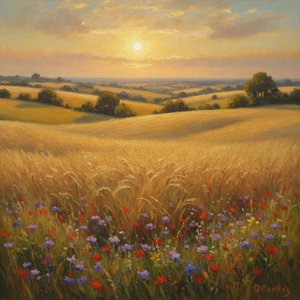
Golden Fields & Sun-Drenched Meadows: Capturing the Soul of Impressionist Landscapes
Immerse yourself in the luminous world of Impressionist landscapes. Discover how masters like Monet and Gauguin captured ephemeral light through plein air painting, and learn to bring the soul of sun-drenched meadows into your home with exquisite, hand-painted oil reproductions.

Beyond the Light: Capturing Raw Emotion and Subjective Vision in Post-Impressionist Landscapes
Explore the profound emotional depth of Post-Impressionist landscapes. Discover how masters like Van Gogh moved beyond light to capture raw human feeling through vibrant color and expressive texture in this expert art history retrospective.

The Beauty of Impermanence: Capturing Decay through Impressionist Eyes
Explore the profound beauty of impermanence through Impressionist and Post-Impressionist eyes. Discover how masters like Monet and Van Gogh captured fleeting light and the poetic essence of nature's transitions in our deep dive into art history and emotional landscapes.

Capturing the Soul: The Most Emotionally Moving Impressionist and Post-Impressionist Masterpieces
Discover the profound emotional depth of Impressionist and Post-Impressionist masterpieces. Explore how legends like Monet, Van Gogh, and Gauguin captured light and soul through evocative landscapes and vibrant brushwork for a timeless connection to art history.