


 Peržiūrėti realaus dydžio版
 Siųsti
 Dalintis
 Išsamiau
 Vadovas

 Atsisiųsti
 Panašūs eksponatai
 Rentgeno spindulių nuotrauka
 Diaporama
 Statistika
Italy

 Rodyti daugiau
A master of Socialist Realism known for his portraits of Lenin. Discover the powerful legacy of his Soviet era paintings today.
Get a print-ready file that goes far beyond the web preview. Every digital image we sell comes from a high-resolution master in our stock database — usually 5,000 to 15,000 pixels wide — so you can print large, crop tightly, or reproduce fine detail with confidence.
No file leaves our studio untouched. A digital expert checks the colors against the original painting and corrects them if needed, then improves clarity and detail with professional retouching tools — always staying faithful to the artist's brushwork and style. The result is an image that looks like the painting, not like a filtered scan.
You approve before you're done: our expert sends the image by e-mail within 72 hours for your review. Not satisfied? Ask for improvements or corrections, or request a refund if the quality falls short.
This is the quality relied on by publishers, design studios, galleries and print shops.
Skaitmeninis vaizdas
Atsisiųskite didelės raiškos failą asmeniniam naudojimui, spausdinimui ir kūrybiniams projektams. ( Perjungti į spausdinimą Pirkti rankomis tapytą reprodukciją)
Kiekvieną skaitinio vaizdo užsakymą papildė
Profesionalus skaitmeninis vaizdų pristatymas, garantuotas
Pasirinkę TopImpressionists.com, jūs ne tik gaunate paveikslėlį – jūs gaunate profesionaliai patobudintą skaitmeninį kūrinį, sukurtą itin tikniai ir užtikrinantį pasitenkinimą. Štai viską, kas automatiškai pritékia jūsų užsakymui:

Greitas nuotraukų gavimas el. paštu
Jūsų aukštos raiškos skaitmeninis vaizdo failas bus išsiųstas el. paštu per 72 valandas nuo užsakymo – jis bus paruoštas naudoti be jokių papildomų veiksmų.

Skaitmeninis failas su dirbtiniu intelektu
Jūsų meno kūrinys profesionaliai optimizuojamas naudojant pažangius dirbtinio intelekto įrankius ir rankinį redagavimą, užtikrinant maksimalią detalę, aiškumą ir spalvų tikslumą.

Nemokamas visam laikui pakartotinis siuntimas
Atsitiktinai ištrytikote ar praradote savo failą? Nebijokite – bet kuriuo metu atsiųsime jį jums vėl nemokamai.

Jokio importo mokesčio – niekada
Mėgaukitės savo meno kūriniu akimirka – skaitiniai failai visada yra neapmokestinami, todėl nereikės mokėti muitinės, mokesčių ar pristatymo mokesčių.

Spalvų tikslumo garantija
Naudodami profesionalią įrangą ir spalvų valdymo sistemas, užtikriname, kad jūsų skaitmeninis vaizdas kuo tiksliau atspindėtų originalias spalvas.

100 dienų patikimumo garantija
Jei nebuvosite patenkinti įsigyto skaitmeninio vaizdo, mes jį tališkai koreguosime arba grąžinsime 100% sumą per 100 dienų – be jokių klausimų.

100% pinigų grąžinimo garantija
Nesitenkinate? Gaukite visą sumokėtą sumą per 100 dienų nuo skaitmeninio failo gavimo – be jokių papildomų klausimų.

Nuolaidos dideliems užsakymams
Pirkti 3 nuotraukas – 10% nuolaida – Pirkti 5 – 15% nuolaida – Pirkti 10 ir daugiau – 20% nuolaida. Puikiai tinka kūrybiniams projektams, galerijoms bei agentūroms.
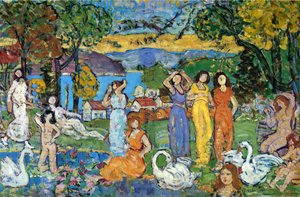
The painting Italy by Isaak Brodsky is a stunning representation of the Italian countryside, showcasing the artist's skill in capturing the essence of a bygone era. Created in 1911, this oil on canvas masterpiece is now housed in the Tretyakov Gallery in Russia.
Experience the beauty of Italy by Isaak Brodsky in your own home with a hand-made oil painting reproduction from TopImpressionists.com.
The Artist and His Work
Isaak Brodsky was a renowned Russian artist known for his realistic and detailed paintings. His work often featured everyday scenes, landscapes, and portraits, showcasing his ability to capture the beauty in mundane life. Italy is one of his most notable works, demonstrating his skill in depicting vibrant colors and textures. The painting showcases a bustling market scene, with a horse pulling a cart filled with fruit, including oranges and apples. The surrounding area is filled with people, some standing near the horse, while others are scattered throughout the market. The attention to detail in the painting is impressive, from the intricate fruit arrangements to the delicate pearl necklaces worn by some of the women.Recreating the Masterpiece
At TopImpressionists.com, we offer hand-made oil painting reproductions of Italy by Isaak Brodsky. Our talented artists use high-quality materials to recreate the original painting, ensuring that every detail is accurately captured. You can purchase a reproduction of this beautiful painting and enjoy it in the comfort of your own home. Some of the key features of our reproductions include:- High-quality materials: We use only the best materials to ensure that our reproductions are long-lasting and vibrant.
- Attention to detail: Our artists carefully study the original painting to ensure that every detail is accurately captured.
- Hand-made: Each reproduction is hand-painted by our talented artists, making every piece unique.
Experience the beauty of Italy by Isaak Brodsky in your own home with a hand-made oil painting reproduction from TopImpressionists.com.
问答 (or more naturally for a website heading): Klausimai ir atsakymai
Kas yra „Italy“?
„Italy“, autorius – Isaak Brodsky temos apima italy. Kartu jie apibendrina šio kūrinio tematiką.
Ar kūrinys „Italy“, autorius – Isaak Brodsky yra šviesus ar tamsus?
Įrašytos „Italy“, autorius – Isaak Brodsky reikšmės: šviesos intensyvumas – bright, luminansas – Gentle Luminance.
Kokia yra „Italy“, autorius – Isaak Brodsky dominuojanti spalva?
Dominuojantis „Italy“, autorius – Isaak Brodsky spalvos tonas yra Green to Violet Spectrum. Šis tonas yra pagrindinė paletės spalva.




Autoriaus biografija
A Life Shaped by Change
Isaak Izrailevich Brodsky entered the world in late 1883 in the village of Sofiyivka, located near Berdiansk in what is now Ukraine. His early years were rooted in a family of tradesmen, with his father working as a merchant and landowner. This upbringing provided him with a foundation that eventually led him toward the study of fine arts. He began his formal training at the Odessa Art School, where he learned under the guidance of instructors such as G. A. Ladyzhensky, K. K. Kostandi, and L. D. Iorini. These early years in Odessa were followed by a significant move to St. Petersburg in 1902.
In the imperial capital, Brodsky entered the Higher Art Institute of painting, sculpture, and architecture under the Imperial Academy of Arts. His time there was marked by intense study and competition. He spent five years working in the studio of Ilya Repin, a mentor who left a lasting impression on his approach to the canvas. Between 1909 and 1911, Brodsky traveled through Germany, France, Spain, and Italy, using academy funding to expand his view of the European landscape. During these travels, he spent time on the island of Capri, an experience that brought him into contact with other figures of the era.
The Development of a Style
Brodsky’s work underwent various shifts as the political and social landscape of Russia transformed. His early pieces often reflected the influences of the Silver Age and Art Nouveau. As he moved through the years following the 1917 revolution, his focus shifted toward the realities of the new Soviet era. He became a central figure in the formation of Socialist Realism, a style that demanded a clear and recognizable depiction of life. His paintings often captured the gravity of historical moments, such as the events of the Russian Civil War.
His technical skill was applied to a wide range of subjects, from landscapes to portraits of political leaders. Some of his notable works include:
- Fallen Leaves (1915), an oil on canvas piece that captures the atmosphere of autumn.
- The Execution of 26 Baku Commisaries, a painting noted for its stark realism and emotional weight.
- Portraits of prominent figures such as Vladimir Lenin and Joseph Stalin.
- Early Spring (1906), which shows an earlier, more impressionistic side of his landscape work.
By the 1930s, Brodsky was working frequently under government orders. His ability to document the era through precise portraiture and historical scenes made him a significant figure in the Soviet art establishment. In 1932, he earned the title of professor, and by 1934, he was appointed Director of the All-Russian Academy of Arts.
Legacy and Memory
Brodsky’s life ended in Leningrad in 1939. He left behind a substantial body of work and a collection of paintings that included pieces by masters like Repin, Surikov, and Levitan. His commitment to the arts was evident in his many contributions to museums; he donated hundreds of works to the Berdyansk Art Museum and helped establish various artistic societies.
Today, much of his personal history is preserved in the Brodsky House Museum in Saint Petersburg. This space maintains his former apartment, allowing visitors to see the environment where he lived and worked. His paintings remain part of major collections, including the State Tretyakov Gallery and the State Russian Museum, serving as historical records of a period defined by profound upheaval.

Isaak Brodsky
1883 - 1939
Pagrindinė informacija
- Artistic Movement Or Style: Socialist Realism
- Artists Or Movements Influenced By This Artist:
- Nikolai Timkov
- Aleksandr Laktionov
- Yuri Neprintsev
- Artists Who Influenced This Artist: ['Ilya Repin']
- Full Name: Isaak Izrailevich Brodsky
- Nationality: Russian
- Notable Artworks:
- Fallen Leaves
- Early Spring
- The Fairy Tale
- The Execution of 26 Baku Commisaries
- Portrait of J.V. Stalin
- Place Of Birth: Sofiyivka, Ukraine
- Date Of Birth: 1883
- Date Of Death: 1939