


 Peržiūrėti realaus dydžio版
 Siųsti
 Dalintis
 Išsamiau
 Vadovas

 Atsisiųsti
 Panašūs eksponatai
 Rentgeno spindulių nuotrauka
 Diaporama
 Statistika
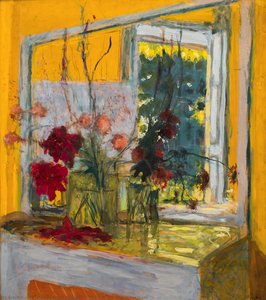
Window Opening on Nice


A sun-drenched view of the French coast unfolds through this vibrant blue window by Jean Dufy, capturing a serene Mediterranean mood that invites you to bring the light of Nice into your own home.
 Rodyti daugiau
Discover Jean Dufy (1888-1964), a French painter celebrated for vibrant depictions of Parisian life, circuses, horse races & music scenes. Explore his Fauvist & Cubist influences and decorative porcelain designs.
Šiame puslapyje rodomas meno kūrinys yra saugomas autorių teisių įstatymais, todėl neturime teisės legaliai kurti ar parduoti jo identiškos reprodukcijos. Ši apsauga užtikrinama remiantis tokiais tarptautiniais susitarimais kaip Bernės konvencija ir pagal nacionalines įstatymų nuostatas, įskaitant tas, kurias nurodo JAV autoriškos teisės įstatymas – 17-asis skyrius.
Šis metodas visiškai atitinka autorių teises, nes jame nėra kūrinio kopijavimo ar dubliavimo. Tai yra kūrybinė reinterpretacija – naujas paveikslas, kurį įkvėpė originalas, tačiau kuris nėra jo identiškas.
Giclée / Meno spausdinimas
Muziejų lygio „giclée“ arba drobos spausdinimas: greita gamyba ir lankstios apdailos parinktys. ( Pirkti rankomis tapytą reprodukciją Perejti prie skaitmeninių vaizdų)




P118B €10

P118H €10

P118W €10

P438Z €10

P508JH €12

P508YH €12

P805H €10

P805Z €10

P919BZ €10

P919G €10

P919XJ €10

P959ZH €10

P968JZ €12

W106C €8

W218G €10

W218JH €8

W218Y €10

W307PJ €10

W316G €10

W316PJ €8

W316Y €10

W398PJ €8

W4111J €10

W500HY €15

W500JH €15

W692G €12

W849H €8

W940BG €15

W953PJ €8




Standartinis
individualaus dydžio
CM
INCH
Pasirinkite iš mūsų nustatytų dydžių, atitinkančių originalaus meno kūrinio proporcijas.
Loading sizes...

plotis
aukštis
Įveskite jums reikiamą plotį ir aukštį, kad atvaizdas derėtų prie jūsų rėmo ar sienos. Spausdiną galima tik sumažinti, bet nepadidinti virš originalaus paveikslėlio dydžio, todėl keičiant proporcijas, dalis vaizdo prarandama. Prieš spausdinimą atsiųsime jums skaitmeninį maketą patvirtinimui. Šioje puslapio nuotraukoje matomas pjūvis nėra tikslus – jį rodo tik maketas.
Pristatymas visame pasaulyje () per 2 weeks, o ne įprastas 4/5 savaičių laikotarpis. (25 spalis)

Nemokamas greitasis pristatymas visame pasaulyje

Aukštos kokybės lininis drobė

Pilnas siuntimo draudimas

Muitinės mokesčių grąžinimo garantija

Tikro spalvų atitikimo garantija

100 dienų grąžinimo politika (tik esant įtaigoms)

100% pinigų grąžinimo garantija

Nuolaida dideliems užsakymams
 Stiklo variantas prieinamas tik pasirinkus dydį iki 110 cm

Window Opening on Nice
Giclée / Meno spausdinimas
Reprodukcijos dydis
-


Visų pasirinktų variantų kaina
€ 61
A Portal to Serenity: The Luminous World of Jean Dufy
In the quiet intimacy of a hotel room in Nice, Jean Dufy captures far more than a mere architectural detail; he invites us into a state of mind. Window Opening on Nice serves as a breathtaking threshold between the private sanctuary of an interior space and the boundless, sun-drenched expanse of the French Riviera. The composition is anchored by a large, vibrant blue window framed in crisp white trim, acting as a literal and metaphorical frame for the soul. Through this aperture, the viewer’s gaze is pulled irresistibly toward the shimmering ocean, where the horizon dissolves into a dream of summer. It is a painting that does not merely depict a view, but actively stirs the deep-seated human desire for travel, escape, and the pursuit of light.
The interior of the room is a masterclass in cozy, lived-in elegance. Dufy populates the scene with an array of furniture—sturdy chairs positioned near the window and a central dining table—that suggests a moment of pause in a busy life. Scattered throughout the composition are books, resting on surfaces and tucked near the window, hinting at a life of intellectual leisure and quiet contemplation. This arrangement creates a sense of "domestic wanderlust," where the comfort of the indoors meets the wild, rhythmic call of the sea. For the interior designer or collector, this piece offers a profound sense of depth, bringing the restorative energy of the Mediterranean coast into any room it inhabits.
Technically, the work reflects Dufy’s profound connection to the Fauvist movement, a style ignited by his early encounter with the works of Henri Matisse. The painting breathes through its use of color and light; the blues are not merely pigments but are infused with the clarity of the southern French sky. His brushwork, while maintaining structure, possesses an expressive fluidity that allows the atmosphere to feel palpable. There is a rhythmic quality to how the light hits the white trim and the scattered books, creating a visual melody that guides the eye from the foreground's tactile details to the distant, hazy blue of the coast.
Beyond its aesthetic brilliance, Window Opening on Nice carries a symbolic weight of peace and optimism. In an era where the world can feel increasingly fragmented, Dufy’s ability to find joy in the ephemeral—the way light hits a tabletop or the view from an open window—is a gift to the viewer. It is a piece that celebrates the beauty of the everyday and the restorative power of nature. Owning a reproduction of this masterpiece means more than decorating a wall; it means installing a permanent window to tranquility, a constant reminder that even within our most private spaces, the infinite horizon is always within reach.
问答 (or more naturally for a website heading): Klausimai ir atsakymai
Ar „Window Opening on Nice“, autorius – Jean Dufy naudoja ryškius kontrastus ar švelnias harmonijas?
„Window Opening on Nice“ kūryboje Balanced kontrastas susilieja su Balanced Harmony harmonija.
Kokia bendra "Window Opening on Nice" spalvų tonacija – šviesi ar tamsi?
Visapusiškai „Window Opening on Nice“ įtvirtinta kaip bright. Perceptinis ryškumas apibūdina, koks kūrinys atrodo šviesus ar tamsus.
Kokią vietą meno istorijoje užima „Window Opening on Nice“, autorius – Jean Dufy?
Istoriškai „Window Opening on Nice“ yra šio platesnio Modern laikotarpio Fauvism stiliaus kūrinys.
Susiję kūriniai




Autoriaus biografija
A Life Immersed in Light: The World of Jean Dufy
Jean Dufy, born in Le Havre in 1888, wasn’t merely a painter; he was a chronicler of joy, a celebrator of the ephemeral beauty found in everyday life. Coming from a large and artistically inclined family – his brother Raoul being the more renowned Fauvist painter – Jean initially pursued a conventional path as a clerk, but the allure of color proved too strong to resist. A pivotal moment arrived in 1906 when he encountered Henri Matisse’s *Fenêtre ouverte à Collioure* at an exhibition, igniting within him a passion for vibrant hues and expressive brushwork that would define his artistic journey. This early exposure wasn't simply imitation; it was the spark that set Dufy on a course to develop a uniquely personal vision. He began selling paintings in 1907, demonstrating an immediate connection with collectors who recognized the burgeoning talent within him.From Military Service to Parisian Society
The outbreak of World War I interrupted Dufy’s artistic momentum, forcing him into military service as an ambulance driver and later a cyclist in the artillery. Despite the grim realities of war, he continued to sketch, documenting his experiences and honing his observational skills. This period, though challenging, proved formative, instilling within him a deeper appreciation for life's fragility and the importance of capturing fleeting moments. Upon returning to Paris after the conflict, Dufy fully immersed himself in the artistic milieu of Montmartre, forging connections with prominent figures like André Derain, Georges Braque, and Pablo Picasso. His first exhibition of watercolors in 1914 marked a significant step forward, gaining him recognition within the Parisian art world. The 1920s saw Dufy’s style mature, characterized by dynamic compositions and a focus on scenes of contemporary life – bustling music halls, lively circuses, and exhilarating horse races.The Fauvist Spirit & Beyond
While often associated with Fauvism due to his brother Raoul's prominence in the movement, Jean Dufy carved out his own distinct artistic identity. He embraced the bold color palettes and expressive freedom of the Fauves but tempered them with a more decorative sensibility and a penchant for capturing the energy of modern Parisian society. His paintings weren’t simply representations of scenes; they were celebrations of life's pleasures – the thrill of the racecourse, the spectacle of the circus, the vibrant atmosphere of a cabaret show. Dufy wasn’t afraid to experiment with different styles, briefly exploring Cubism before settling into his signature stenographic technique: rapid, thin color washes applied over skeletal structures, creating a sense of movement and immediacy. This unique approach allowed him to capture the fleeting essence of his subjects with remarkable skill.A Versatile Artist: Porcelain & Public Commissions
Dufy’s artistic talents extended beyond painting. For three decades, he collaborated with Theodore Haviland in Limoges, designing exquisite porcelain patterns featuring floral motifs and charming animal scenes. This work demonstrates his versatility and his ability to translate his aesthetic sensibility into different mediums. In 1936, Dufy was commissioned, alongside his brother Raoul, to create a mural for the Palais de la Lumière et de l’Electricité at the 1937 International Exposition in Paris. Though he dedicated a year to the project, his contribution wasn't fully acknowledged by Raoul upon completion – a poignant reminder of the complexities within their sibling rivalry and artistic partnership. Despite this setback, Dufy continued to exhibit widely, with shows in New York in 1930 and 1938 further solidifying his international reputation.Legacy & Historical Significance
Jean Dufy’s work offers a captivating glimpse into the vibrant world of interwar France. His paintings are not grand historical statements but intimate celebrations of everyday life, imbued with a sense of joy, energy, and optimism. He captured the spirit of the Roaring Twenties and the Belle Époque with remarkable skill, creating images that continue to resonate with audiences today. While overshadowed by his brother Raoul in some respects, Jean Dufy’s unique artistic voice and versatile talents deserve recognition. His legacy lies in his ability to transform ordinary moments into extraordinary works of art, reminding us to appreciate the beauty and fleeting pleasures of life. He stands as a testament to the power of color, movement, and personal expression within the rich tapestry of 20th-century French painting.
Jean Dufy
1888 - 1964
Trumpa informacija apie kūrėją
- Full Name: Vincent Willem van Gogh
- Nationality: Dutch
- Date Of Birth: 1888
- Date Of Death: 1964
- Place Of Birth: Ghent, Belgium
- Notable Artworks:
- Sunflowers
- Bedroom in Arles
- The Starry Night
- Wheatfield with Crows
- Artistic Movement Or Style: Post-Impressionism
- Artists Who Influenced This Artist:
- Eugène Delacroix
- Edgar Degas
- Paul Gauguin
- Artists Or Movements Influenced By This Artist:
- Expressionism
- Modern art
Susiję straipsniai

Earthy Hues & Masterpieces: Top 10 Paintings with 'Mushroom' Tones |
Explore 10 iconic paintings with captivating 'mushroom' tones! Discover Van Gogh, Monet & Rembrandt’s masterpieces—earthy palettes, rich history & artistic techniques. Find museum-quality art reproductions and curated decor ideas at

Driftwood Tones: 10 Master Paintings for Serene Home Decor |
Find serenity with 10 famous paintings embracing 'driftwood' tones. Explore Monet, Renoir & Van Gogh’s masterpieces – Impressionism, landscapes & calming palettes. Museum-quality art reproductions at . Discover all masterpieces online!

Sandstone & Sunlight: 10 Masterpieces of Earth-Toned Art |
Journey through 10 iconic paintings bathed in 'sand' tones – from Van Gogh to Monet. Explore the stories, techniques & warm palettes of these timeless masterpieces. Find museum-quality art reproductions at and bring classic beauty home.

Slate Blue Masterpieces: 10 Iconic Paintings & Timeless Home Decor Ideas
Immerse yourself in the captivating world of slate blue! Explore 10 iconic paintings by Monet, Van Gogh & Renoir. Discover their stories, techniques & find museum-quality art reproductions for your home at .
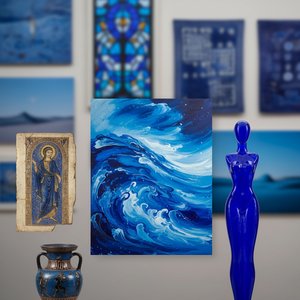
The Allure of Azure: Exploring the Symbolic & Aesthetic Depths of Blue in Art History
Explore the rich history of blue in art! Discover its symbolism, from ancient pigments to modern masterpieces by Kandinsky & Seurat. Uncover the psychological impact and cultural meanings behind this captivating hue.