

 Peržiūrėti realaus dydžio版
 Pasidalinti
 Dalintis
 Išsamiau
 Vadovas

 Atsisiųsti
 Panašūs eksponatai
 Rentgeno spindulių nuotrauka
 Automatinė diorama
 Statistika
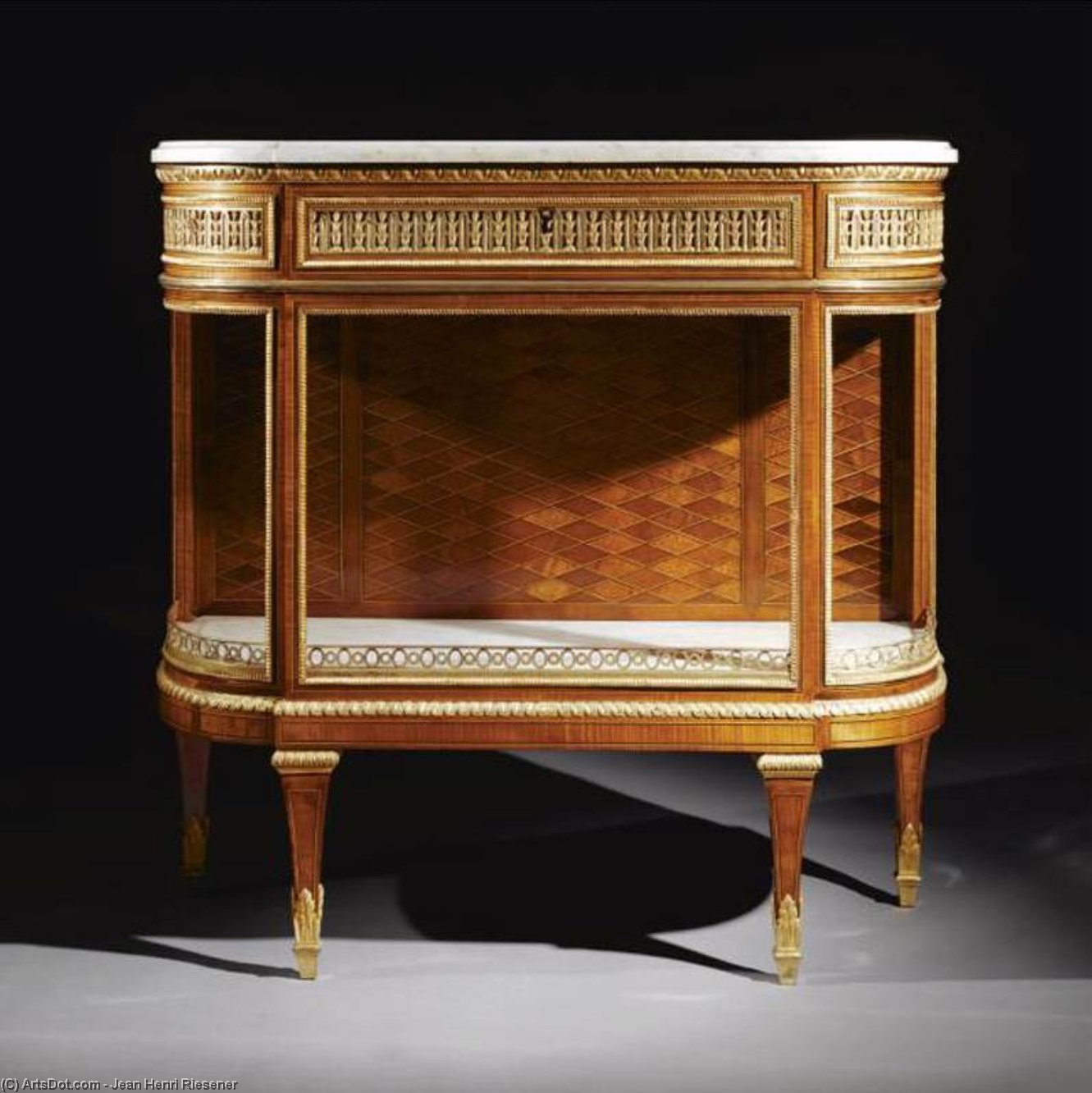
Console-Desserte
 1785
1785 91.0 x 99.0 cm
 Skaityti daugiau
A master of the Louis XVI neoclassical style, Jean Henri Riesener crafted legendary pieces like his trough-shaped sewing table for Marie Antoinette, inviting you to discover the pinnacle of 18th-century French artistry.
Gaukite spausdinimui paruoštą failą, kurio kokybė gerokai viršija internetinę peržiūrą. Kiekvienas mūsų parduodamas skaitmeninis vaizdas yra ištrauktas iš aukštos raiškos pagrindinio failo mūsų duomenų bazėje — paprastai jis siekia nuo 5 000 iki 15 000 pikselių plotio — todėl galite drąsiai spausdinti didelius formatus, apkirpti vaizdą ar suมั่น būti patikinti, kad išsaugosite visas smulkias detales.
Mūsų studijoje nė viena failo kopija nelieka neapdorota. Skaitmeninio vaizdo ekspertas lygiuo su originaliu paveikslu patikrina spalvas ir, jei reikia, jas koreguoja, o tada profesionaliais retušavimo įrankiais padidina aiškumą bei detales — visada išlaikydamas ištikimybę autoriaus teptuko traukoms ir stiliui. Rezultatas – vaizdas, kuris atrodo kaip tikras paveikslas, o ne kaip su filtrais apdorotas skenavimas.
Patvirtinate prieš pabaigą: mūsų ekspertas per 72 valandas atsiųsta vaizdą el. laišku jūsų peržiūrai. Nepasitenkinate? Paprašykite patobulinimų ar pataisymų arba prašykite pinigų grąžinimo, jei kokybė neatitinka jūsų lūkesčių.
Ši kokybė yra patikima leidybos įstaigoms, dizaino studijoms, galerijoms ir spaudos įmonėms.
Skaitmeninis vaizdas
Atsisiųskite didelės raiškos failą asmeniniam naudojimui, spausdinimui ir kūrybiniams projektams. ( Perjungti į spausdinamus版作品 Pirkti rankų darbo tapybą)
Kiekvieną skaitinio vaizdo užsakymą papildė
Profesionalus skaitmeninis vaizdų pristatymas, garantuotas
Pasirinkę TopImpressionists.com, jūs ne tik gaunate paveikslėlį – jūs gaunate profesionaliai patobudintą skaitmeninį kūrinį, sukurtą itin tikniai ir užtikrinantį pasitenkinimą. Štai viską, kas automatiškai pritékia jūsų užsakymui:

Greitas pristatymas el. paštu
Jūsų aukštos raiškos skaitmeninis vaizdo failas bus išsiųstas el. paštu per 72 valandas nuo užsakymo – jis bus paruoštas naudoti be jokių papildomų veiksmų.

Dirbtiniu intelektu tobulintas skaitmeninis failas
Jūsų meno kūrinys profesionaliai optimizuojamas naudojant pažangius dirbtinio intelekto įrankius ir rankinį redagavimą, užtikrinant maksimalią detalę, aiškumą ir spalvų tikslumą.

Nemokamas visam laikui pakartotinis siuntimas
Atsitiktinai ištrytikote ar praradote savo failą? Nebijokite – bet kuriuo metu atsiųsime jį jums vėl nemokamai.

Jokio importo mokesčio – niekada
Mėgaukitės savo meno kūrynu be jokių muitinės mokesčių, įkainų ar pristatymo išlaidų – skaitiniai failai visada yra neapmokestinami.

Spalvų tikslumo garantija
Naudodami profesionalią įrangą ir spalvų valdymo sistemas, užtikriname, kad jūsų skaitmeninis vaizdas kuo tiksliau atspindėtų originalias spalvas.

100 dienų patikimumo garantija
Jei nebuvosite patenkinti įsigyto skaitmeninio vaizdo, mes jį tališkai koreguosime arba grąžinsime 100% sumą per 100 dienų – be jokių klausimų.

100% pinigų grąžinimo garantija
Nesitenkinate? Gaukite visą sumokėtą sumą per 100 dienų nuo skaitmeninio failo gavimo – be jokių papildomų klausimų.

Nuolaidos dideliems užsakymams
Pirkti 3 nuotraukas – 10% nuolaida – Pirkti 5 – 15% nuolaida – Pirkti 10 ir daugiau – 20% nuolaida. Puikiai tinka kūrybiniams projektams, galerijoms bei agentūroms.
The Console-Desserte is a stunning example of neoclassical furniture designed by the renowned German ébéniste, Jean Henri Riesener. Created in 1785, this exquisite piece showcases Riesener's exceptional craftsmanship and attention to detail. The console table features intricate carvings, decorative elements, and a rich, dark brown finish, which suggests it could be made of mahogany or another similar hardwood.
The Musei Capitolini in Rome, Italy, is also home to an impressive collection of art and archaeological artifacts, including works by other notable artists. Visit /art/list/?Filter=A@D3ATXF-The-Museum-Musei-Capitolini-(Rome-Italy) to learn more.
Design and Features
The Console-Desserte has a flat top surface, providing ample space for placing items, and three drawers with brass handles or pulls. The table's legs are turned with a classic design, tapering slightly towards the bottom, which is typical of furniture from the 18th century. The overall design of the console table reflects the neoclassical style, characterized by straight lines, minimal ornamentation, and an emphasis on functionality. Key Features:- Intricate carvings and decorative elements
- Rich, dark brown finish
- Three drawers with brass handles or pulls
- Classic turned legs
Artist and Historical Context
Jean Henri Riesener was a prominent figure in the world of furniture making during the 18th century. He worked for the French royal family, including Queen Marie Antoinette, and created many exceptional pieces for the Palace of Versailles. The Console-Desserte is a testament to Riesener's skill and artistry, showcasing his ability to create functional and beautiful pieces that reflect the neoclassical style. For more information on Jean Henri Riesener and his work, visit /art/list/?Filter=8XZUAR-Jean-Henri-Riesener-Console-Desserte or https://en.wikipedia.org/wiki/Jean_Henri_Riesener.The Musei Capitolini in Rome, Italy, is also home to an impressive collection of art and archaeological artifacts, including works by other notable artists. Visit /art/list/?Filter=A@D3ATXF-The-Museum-Musei-Capitolini-(Rome-Italy) to learn more.
Klausimai ir atsakymai
Kokie kiti Žanas Henri Rizeris vardai yra žinomi?
Kiti Žanas Henri Rizeris, „Console-Desserte“ kūrybos autoriaus, vardai apima Johann Heinrich Riesener.
Kiek harmoningai dera „Console-Desserte“ – Žanas Henri Rizeris spalvos?
„Console-Desserte“ – Žanas Henri Rizeris pasižymi Strong Color Unity spalvų harmonija.
Kokia buvo Žanas Henri Rizeris amžius sukuriant „Console-Desserte“?
Žanas Henri Rizeris buvo 18 metų, kai 1785 m. sukūrė kūrinį „Console-Desserte“. Amžius apskaičiuotas remiantis gimimo metais 1767.
Autoriaus biografija
The Master of the Louis XVI Style
In the gilded era of late eighteenth-century France, few names commanded as much prestige within the royal workshops as Jean Henri Riesener. An eminent German ébéniste, or cabinetmaker, Riesener brought a level of meticulous artistry to Paris that would eventually define the early Neoclassical aesthetic known as the Louis XVI style. His journey from the Electorate of Cologne to the heart of the French court is a narrative of unparalleled skill and social ascent. After moving to Paris and apprenticing under the celebrated Jean-François Oeben, Riesener did more than just learn a trade; he inherited a legacy of excellence. His connection to his master was so profound that he eventually married Oeben's widow, further cementing his place within the lineage of France's most elite craftsmen.
Riesener’s career reached its zenith when he was formally named ébéniste ordinaire du roi. This title was not merely ceremonial; it signaled his role as a primary provider of luxury furniture for the French Crown. During the decade between 1774 and 1784, the scale of his commissions was staggering, reflecting a period where the French court engaged in furnishing projects of unprecedented opulence. He became a favorite of Queen Marie Antoinette, working alongside other masters like David Roentgen to create pieces that served as both functional furniture and profound statements of status and refined taste.
A Symphony of Marquetry and Form
The work of Riesener is characterized by a breathtaking intersection of utility and decorative splendor. He was a master of marquetry, the delicate art of inlaying different colored woods to create intricate patterns and pictorial scenes. His ability to manipulate materials allowed him to transform hard woods like walnut into fluid, organic compositions. Whether crafting a writing table or a complex chest of drawers, Riesener utilized a sophisticated palette of geometric designs and floral motifs that embodied the transition from the flowing curves of the Rococo to the more structured, disciplined lines of Neoclassicism.
Beyond the surface decoration, his technical mastery extended to the structural integrity and multi-functional design of his pieces. His creations often featured:
- Intricate Inlays: The use of contrasting shades of wood to create depth and visual movement.
- Gilt Bronze Accents: The integration of fine metalwork to complement the warmth of the wood.
- Hidden Complexity: The inclusion of concealed drawers and specialized compartments, such as those found in his sewing tables, designed for the private needs of the aristocracy.
To encounter a Riesener piece is to witness a sculptural masterpiece. His work, such as the exquisite trough-shaped sewing table or his magnificent roll-top desks, transcends mere furniture making. Each piece serves as a portal into a vanished era of aristocratic refinement, where every edge and inlay was designed to evoke the intellectualism and elegance of the Enlightenment.
Legacy of an Ébéniste
The historical significance of Jean Henri Riesener lies in his ability to capture the very spirit of an age. His furniture did not merely occupy space; it defined the atmosphere of the most important salons and private sanctuaries in France, from Saint-Cloud to Versailles. Through his dedication to the highest standards of craftsmanship, he helped establish a standard of excellence that would influence decorative arts for generations. Even as the political landscape of France underwent violent transformations, the enduring beauty of Riesener's work remained a testament to the heights of French decorative achievement, ensuring his place in history as one of the greatest cabinetmakers to ever grace the Parisian workshops.

Žanas Henri Rizeris
1767 - 1828 , Vokietija