

Shown: · With its frame:
 Peržiūrėti realaus dydžio版
 Pasidalinti
 Dalintis
 Išsamiau
 Vadovas

 Atsisiųsti
 Panašūs eksponatai
 Rentgeno spindulių nuotrauka
 Automatinė diorama
 Q&A
Q&A Statistika
- 75.0 x 63.0 cm


€ 239
Rankų darbo aliejinės reprodukcijos
Rankiniu būdu tapytas aliejus ant droblio jūsų pageidaujamame dydį ir rėmuose – tai mūsų menininkų pagal užsakymą sukurtas darbas. ( Perjungti į spausdinamus版作品 Perejti prie skaitmeninių vaizdų)
Size
·Standartinis dydis
pagal užsakymą
CM
INCH
Pasirinkite iš mūsų nustatytų dydžių, atitinkančių originalaus meno kūrinio proporcijas.
Loading sizes...

plotis
aukštis
Įveskite jums reikiamą plotį ir aukštį, kad paveikslas atitiktų jūsų rėmą ar sieną. Kadangi šis darbas yra rankinio darbo, siekiant išgauti kitokios formos dydį, paveikslas gali būti šiek tiek didesnis (nuo kraštų bus palikta daugiau erdvės) arba mažesnis – pasirinkite jums patogiausią variantą. Prieš pradedant tapyti, atsiųsime jums skaitmeninį maketą patvirtinimui. Šioje puslapio nuotraukoje matomas vaizdas nėra galutinis rezultatas – jį parodys tik sukurtas maketas.
 Skaityti daugiau
Finish
·
White €1

Blurside €1

Extended €1

P118B €10

P118H €10

P118W €10

P438Z €10

P508JH €12

P508YH €12

P805H €10

P805Z €10

P919BZ €10

P919G €10

P919XJ €10

P959ZH €10

P968JZ €12

W106C €8

W218G €10

W218JH €8

W218Y €10

W307PJ €10

W316G €10

W316PJ €8

W316Y €10

W398PJ €8

W4111J €10

W500HY €15

W500JH €15

W692G €12

W849H €8

W940BG €15

W953PJ €8

H24-GOLD €30

H24-SILVER €30

H36-GOLD €45

H36-SILVER €45
Shipped in a protective tube, ready for your own framer.
Above 105 cm the frame is shipped as a kit for a professional framer — read the details.
Extras
optionalWhat do the extras include?
Examples of what can be changed: Replace face with customer photo; Add pet (e.g., replace cat with dog); Include hidden message in background; Change background landscape or elements.
After order, TopImpressionists.com team will email client for instructions and provide a mockup preview
After order, TopImpressionists.com team will email client for instructions and provide a mockup preview
Pristatymas visame pasaulyje () per 3–4 savaites, o ne įprastai – per 5 savaites. (31 spalis). Kokybė lieka nepakeičiama.
Apsauginis lakas
Pavadinimo lentelė
Išgraviruotos bronzinės plokštelės detalės
This elegant plaque features the artist's name and the title of the artwork, finely engraved for a timeless presentation.
It is made from bronze with a refined, elegant finish. The text is precisely laser-engraved for a sharp and permanent result. Measuring 9x2 cm, the plaque is compact yet easy to read. It's built to be durable and scratch-resistant, offering a professional, museum-quality look. Mounting is simple thanks to the included adhesive backing.
Skaidrios akrilo plokštelės informacija
The plaque includes essential engraved details such as the artist's name, the title of the artwork, the date it was created, the type of media used-like oil on canvas or watercolor-a brief description of the piece, and a QR code that links to the complete artwork information.
It is crafted from clear acrylic, offering a sleek, modern appearance. The text is UV-engraved in black to ensure strong visual contrast. With a size of 10x15 cm, it ensures optimal readability. It comes equipped with two metal hooks for secure wall mounting. The plaque is designed to be weather-resistant, making it suitable for various environments, and it includes interactive features that work seamlessly with smartphone scanning.
Juodos akrilo plokštelės informacija
This elegant plaque includes engraved information such as the artist's name, the title of the artwork, the date it was created, the type of media used (like oil on canvas or watercolor), a short description of the artwork, and a QR code for quick access to more information.
The plaque itself is made from refined black acrylic with a premium finish. The text is laser-engraved in white for high contrast and readability. Its size is 10x15 cm, designed to be easy to read. It comes with two metal hooks for professional mounting. The design is sleek and fits any interior style. It is also weather-resistant and durable, with built-in digital integration for mobile compatibility.
Stiklo variantas prieinamas tik pasirinkus dydį iki 110 cm
 Stiklo variantas prieinamas tik pasirinkus dydį iki 110 cm
- Nemokamas greitasis pristatymas visame pasaulyje
- Aukštos kokybės lininis drobė
- Pilnas siuntimo draudimas
- Muitinės mokesčių grąžinimo garantija
- Tikro spalvų atitikimo garantija
- 100 dienų grąžinimo politika (tik esant įtaigoms)
- 100% pinigų grąžinimo garantija
- Nuolaida dideliems užsakymams


Kolekcinio objekto aprašas
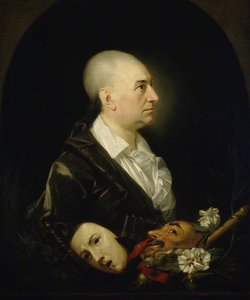
Admire Johann Zoffany's iconic portrait of David Garrick alongside Eva Maria Veigel, capturing the theatrical spirit of Georgian England at The Ashmolean Museum.
Autoriaus biografija
Johann Zoffany – XVIII amžiaus meistras! Žymus 'pokalbių scenų' kūrėjas, sujungiantis vokiečių tikslumą ir itališką stilių. Portretai, istorinės tapybos ir daugiau – rasite TopImpressionists.
About the painting
A Theatrical Soul Captured in Oil
In the quiet halls of The Ashmolean Museum of Art and Archaeology, there exists a portrait that does more than merely record a likeness; it breathes with the very essence of the eighteenth-century stage. Johann Zoffany’s 1763 masterpiece, David Garrick, is an evocative window into the heart of Enlightenment England. At first glance, we encounter the commanding presence of Garrick, the most celebrated actor of his era, rendered with a profound sense of dignity and intellectual depth. Zoffny does not present us with a mere performer in costume, but with a man whose very existence was intertwined with the dramatic arts. The composition is intimate yet grand, focusing on Garrick from the chest up against a somber, dark background that pushes his luminous features toward the viewer, demanding an immediate and visceral connection.
The technique employed by Zoffany is nothing short of masterful, showcasing the meticulous precision characteristic of the finest oil-on-canvas works of the period. Through subtle tonal gradations and a sophisticated command of light, the artist breathes life into the textures of the subject's attire—the crisp white collar contrasting sharply against the deep black of his formal coat. This interplay of light and shadow, or chiaroscuro, serves to sculpt Garrick’s face, highlighting a contemplative gaze that seems to look beyond the frame, perhaps lost in thought regarding a recent performance or a future script. For the discerning collector or interior designer, this painting offers a profound sense of classical elegance, making it an ideal centerpiece for spaces that value historical gravity and sophisticated drama.
The Dual Faces of Drama
Beyond the physical representation of a legendary actor, Zoffany weaves a complex tapestry of symbolism into the very fabric of the portrait. Floating near Garrick’s face are two iconic theatrical masks: the smiling visage of Comedy and the furrowed, mournful brow of Tragedy. These are not mere decorative elements; they are the dual pillars of the human experience that Garrick mastered on stage. The presence of these masks transforms the portrait from a standard biographical study into a profound meditation on the nature of performance and emotion. It suggests that behind the dignified gentleman lies the capacity for both joyous exuberance and profound sorrow, mirroring the duality of the human condition itself.
This symbolic layer adds an intellectual richness that elevates the artwork, making it much more than a decorative piece. It invites the viewer to contemplate the boundaries between reality and artifice, between the man and the persona. For those looking to adorn a home or gallery with a reproduction of this caliber, the painting provides a continuous source of conversation and inspiration. It embodies a period where art, intellect, and social status converged in a beautiful, theatrical display. To possess such a work is to hold a fragment of history—a moment frozen in 1763, where the spirit of the theatre remains eternally vibrant and hauntingly beautiful.
Klausimai ir atsakymai
Ar „David Garrick“ – Johanas Cofanis autorinės teisės leidžia daryti kopijas?
„David Garrick“ – Johanas Cofanis, saugomas The Ashmolean Museum of Art And Archaeology kolekcijoje, yra yra viešosios erdvės dalis – jo autorinė teisė pasibaigusi. Šis statusas nulemia, ar galima rengti vaizdo reprodukcijas.
Kokie yra originalaus „David Garrick“ matmenys?
Originalaus kūrinio „David Garrick“ – Johanas Cofanis matmenys yra 75 x 63 cm.
Ar galėčiau „David Garrick“ peržiūrėti kaip pilno ekrano nuotraukų rodyklę?
„David Garrick“ diapora prieinama puslapio Slaydšou kūrinio apžvalgos skiltyje.
Quick facts and art quiz
About Johanas Cofanis

Johanas Cofanis
1733 - 1810, Vokietija
Autoriaus biografija
Johann Zoffany: Gyvenimas ir Palikimas
Johann Zoffany, tikruoju vardu Johannes Josephus Zaufallij, gimęs 1733 metais Freiburge, Vokietijoje, buvo tapytojas, išgarsėjęs visų pirma Anglijoje ir Italijoje. Nors ankstyvosios vaikystės detalės lieka neaiškios, žinoma, kad jis nuo jaunumo sulaukė meninio ugdymo. Pradžioje jis mokėsi pas skulptorių, galbūt Melchior Paulus Ellwangen mieste, o vėliau studijavo su Martinu Speer Regensburge. Šis pamatinis laikotarpis padėjo pagrindą jo būsimai karjerai.
Kelionė į Italiją ir Angliją
1750 metais Zoffany išvyko į Romą, įstodamas į Agostino Masucci studiją, kur tobulino savo įgūdžius italų meno tradicijoje. Vėliau, 1760 metais, jis persikėlė į Angliją, pradžioje save išlaikydamas kurdamas dekoratyvinius dizainus laikrodžiams Stephen Rimbault. Šis laikotarpis buvo lūkis, nes jis ėmė užmegzti ryšius ir susipažinti su Londono meno scena.
Karališkosios globos ir meninis tobulėjimas
Zoffany greitai patraukė karaliaus George’o III ir karalienės Charlotte dėmesį, tapdamas mėgstamu karališkosios šeimos portretistu. Jo gebėjimas užfiksuoti neformalias akimirkas – pavyzdžiui, Karalienė Charlotte ir jos du vyresnieji vaikai (1765) – išskyrė jį nuo formaliau dirbančių teismo tapytojų. Jis buvo populiarus ir Austrijos imperatoriškojoje šeimoje, o 1776 metais imperatorienė Marija Teresija suteikė jam Šventosios Romos Imperijos barono titulą.
‘Pokalbių paveikslų’ meistras
Zoffany išgarsėjo dėl savo “pokalbių paveikslų” arba *conversazione* – neoficialių grupinio portreto žanro kūrinių, vaizduojančių socialinius susibūrimus. Jis puikiai sekėsi užfiksuoti asmenybes ir sąveikas šiuose scenarijuose, dažnai į paveikslus įtraukdamas žymius visuomenės, teatro ir literatūros veikėjus. Jo darbai, tokie kaip Cope šeima (1775), yra puikus to stiliaus pavyzdys, leidžiantis pažvelgti į jo patronų gyvenimą.
Pagrindiniai pasiekimai ir žymiausi darbai
- Uffizi tribūna (1772-1778): Galbūt garsiausias jo darbas, kruopščiai detalizuotas Florencijos Uffizi galerijos vaizdas.
- Dr William Hunter Teaching Anatomy at the Royal Academy (1779): Fascinuojantis medicinos švietimo ir mokslinių tyrimų portretas.
- George III (1771): Kilnus karaliaus portretas, demonstruojantis jo valdžią ir eleganciją.
- Colonel Mordaunt's Cock Match (1784-1786): Gyvas Indijos kolonijinio gyvenimo vaizdas, užfiksuojantis unikalų kultūrinį renginį.
Metai Indijoje ir vėlesnis gyvenimas
Nuo 1783 iki 1789 metų Zoffany gyveno Indijoje, kur portretavo žymius veikėjus, tokius kaip Warren Hastings ir Asaf-ud-Daula. Jo patirtis ten turėjo įtakos jo meniniam stiliui ir temoms. Įsimintina istorija iš šio laikotarpio – laivo katastrofa Andamanų salose, kur išgyvenusieji privertė imtis kraštutinių priemonių norėdami išgyventi.
Įtakos ir palikimas
Zoffany darbuose atsispindi vokiečių tikslumo ir itališko meno įtaka. Jį įkvėpė tokie menininkai kaip Agostino Masucci, jis semiasi įkvėpimo iš baroko tradicijos. Jo stilius turėjo įtakos jo bendraamžiams ir vėlesniems portretų bei socialinės tematikos tapytojams. Jis sujungė skirtingas meno tradicijas ir paliko ilgalaikį pėdsaką XVIII amžiaus mene.
Istorinė reikšmė
Johann Zoffany paveikslai suteikia vertingų įžvalgų apie jo laikmečio socialines paprotys, intelektualinį gyvenimą ir kultūrines vertybes. Jo “pokalbių paveikslai” siūlo intymius žymių asmenų portretus ir jų aplinką, o jo Indijos vaizdai prisideda prie mūsų supratimo apie kolonijinę istoriją. Jis išlieka reikšminga figūra meno istorijoje, švenčiamas dėl savo techninio įgūdžio, apgalvotų stebėjimų ir unikalios meninės vizijos.
Quick facts about Johanas Cofanis
- Gimimo Data: 1733
- Gimimo Vieta (Miestas, Šalis): Frankfurtas, Vokietija
- Meninis Stilius: Neoklasicizmas, Realizmas
- Mirties Data: 1810
- Pilietybė: Vokiečių
- Pilnas Vardas: Johann Zoffany
- Įtakoję Menininkai: ['Agostino Masucci']
- Įtakoti Menininkai/Judėjimai: ['Portretinė tapyba']
- Žymiausi Darbai:
- Tribuna of the Uffizi
- Dr William Hunter…
Johanas Cofanis
David Garrick
() ·
With its frame: · Hand-painted in oil on linen
Total