
Paveikslėlyje: · Su rėmu:
 Peržiūrėti realaus dydžio版
 Pasidalinti
 Dalintis
 Išsamiau
 Vadovas

 Atsisiųsti
 Panašūs eksponatai
 Rentgeno spindulių nuotrauka
 Automatinė diorama
 问答
问答 Statistika
- 47.0 x 63.0 cm


€ 241
Rankų darbo aliejinės reprodukcijos
Rankiniu būdu tapytas aliejus ant droblio jūsų pageidaujamame dydį ir rėmuose – tai mūsų menininkų pagal užsakymą sukurtas darbas. ( Perjungti į spausdinamus版作品 Perejti prie skaitmeninių vaizdų)
Dydis
·Standartinis dydis
pagal užsakymą
CM
INCH
Pasirinkite iš mūsų nustatytų dydžių, atitinkančių originalaus meno kūrinio proporcijas.
Kraunami dydžiai...

plotis
aukštis
Įveskite jums reikiamą plotį ir aukštį, kad paveikslas atitiktų jūsų rėmą ar sieną. Kadangi šis darbas yra rankinio darbo, siekiant išgauti kitokios formos dydį, paveikslas gali būti šiek tiek didesnis (nuo kraštų bus palikta daugiau erdvės) arba mažesnis – pasirinkite jums patogiausią variantą. Prieš pradedant tapyti, atsiųsime jums skaitmeninį maketą patvirtinimui. Šioje puslapio nuotraukoje matomas vaizdas nėra galutinis rezultatas – jį parodys tik sukurtas maketas.
 Skaityti daugiau
Baigiamasis etapas
·
Baltas apasutojimas €1

Išblėstantis šonas €1

Išplėstinis €1

P118B €10

P118H €10

P118W €10

P438Z €10

P508JH €12

P508YH €12

P805H €10

P805Z €10

P919BZ €10

P919G €10

P919XJ €10

P959ZH €10

P968JZ €12

W106C €8

W218G €10

W218JH €8

W218Y €10

W307PJ €10

W316G €10

W316PJ €8

W316Y €10

W398PJ €8

W4111J €10

W500HY €15

W500JH €15

W692G €12

W849H €8

W940BG €15

W953PJ €8

H24-GOLD €30

H24-SILVER €30

H36-GOLD €45

H36-SILVER €45
Siunčiama saugiame vamzdelyje, paruošta patys sukomentuoti jūsų rėmeliais.
Virš 105 cm rėmas siunčiamas kaip rinkinys profesionaliam rėmininkui — skaitykite detales.
Papildomos paslaugos
nebūtinaKą apima papildomos paslaugos?
Pavyzdžiai, ką galima pakeisti: pakeisti veidą nuotrauka su klientu; pridėti augintinį (pvz., pakeisti kucingą šuniu); įtraukti paslaptingą žinutę fone; pakeisti fono kraštotvę ar elementus.
Gavus užsakymą, TopImpressionists.com komanda susisieks su klientu el. paštu dėl nurodymų ir pateiks preliminarią maketą.
Gavus užsakymą, TopImpressionists.com komanda susisieks su klientu el. paštu dėl nurodymų ir pateiks preliminarią maketą.
Pristatymas visame pasaulyje () per 3–4 savaites, o ne įprastai – per 5 savaites. (12 lapkritis). Kokybė lieka nepakeičiama.
Apsauginis lakas
Pavadinimo lentelė
Išgraviruotos bronzinės plokštelės detalės
This elegant plaque features the artist's name and the title of the artwork, finely engraved for a timeless presentation.
It is made from bronze with a refined, elegant finish. The text is precisely laser-engraved for a sharp and permanent result. Measuring 9x2 cm, the plaque is compact yet easy to read. It's built to be durable and scratch-resistant, offering a professional, museum-quality look. Mounting is simple thanks to the included adhesive backing.
Skaidrios akrilo plokštelės informacija
The plaque includes essential engraved details such as the artist's name, the title of the artwork, the date it was created, the type of media used-like oil on canvas or watercolor-a brief description of the piece, and a QR code that links to the complete artwork information.
It is crafted from clear acrylic, offering a sleek, modern appearance. The text is UV-engraved in black to ensure strong visual contrast. With a size of 10x15 cm, it ensures optimal readability. It comes equipped with two metal hooks for secure wall mounting. The plaque is designed to be weather-resistant, making it suitable for various environments, and it includes interactive features that work seamlessly with smartphone scanning.
Juodos akrilo plokštelės informacija
This elegant plaque includes engraved information such as the artist's name, the title of the artwork, the date it was created, the type of media used (like oil on canvas or watercolor), a short description of the artwork, and a QR code for quick access to more information.
The plaque itself is made from refined black acrylic with a premium finish. The text is laser-engraved in white for high contrast and readability. Its size is 10x15 cm, designed to be easy to read. It comes with two metal hooks for professional mounting. The design is sleek and fits any interior style. It is also weather-resistant and durable, with built-in digital integration for mobile compatibility.
Stiklo variantas prieinamas tik pasirinkus dydį iki 110 cm
 Stiklo variantas prieinamas tik pasirinkus dydį iki 110 cm
- Nemokamas greitasis pristatymas visame pasaulyje
- Aukštos kokybės lininis drobė
- Pilnas siuntimo draudimas
- Muitinės mokesčių grąžinimo garantija
- Tikro spalvų atitikimo garantija
- 100 dienų grąžinimo politika (tik esant įtaigoms)
- 100% pinigų grąžinimo garantija
- Nuolaida dideliems užsakymams


Kolekcinio objekto aprašas
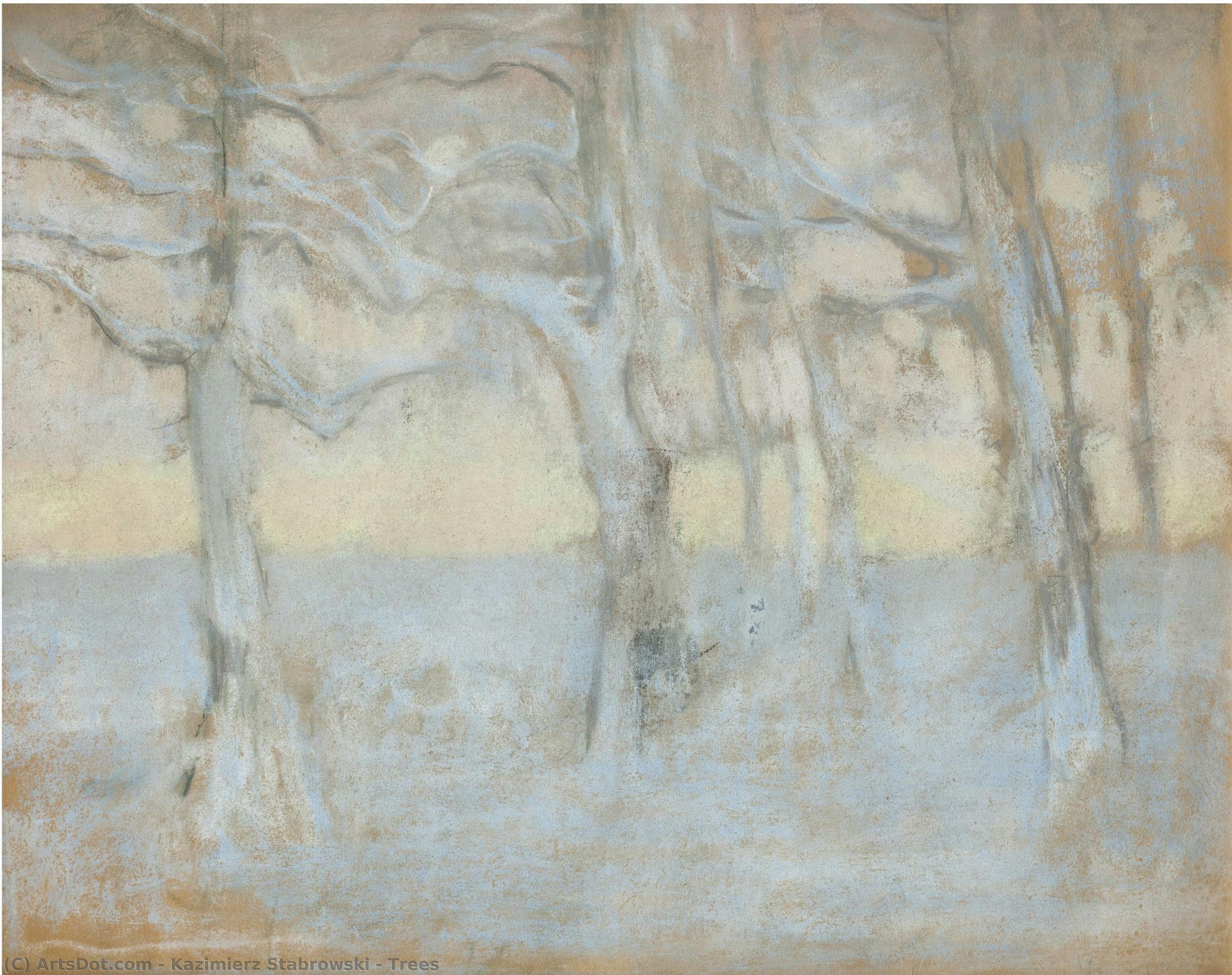
Explore Kazimierz Stabrowski's 'Trees' (1895), a mesmerizing pastel blending symbolism and romanticism. Witness nature's transformation in this unique Polish masterpiece.
Autoriaus biografija
Atraskite Kazimierą Stabrowskį (1869–1929), garsų Lenkijos paveislininką, žinomą dėl sapniškų simbolizmo kraštžemonių ir romantiškų scenų. Varšuvos dailės akademijos direktorius ir Teozofijos draugijos Lietuvoje kūrėjas.
Apie paveisdelį
Kazimierz Stabrowski's "Trees": A Symbolist Landscape of Transformation
- Artist: Kazimierz Stabrowski (1869-1929)
- Date: 1895
- Medium: Pastel on paper
- Size: 47 x 63 cm
Kazimierz Stabrowski's "Trees" is a captivating pastel drawing that transcends simple representation, offering instead a glimpse into the artist’s exploration of symbolism and romanticism within the natural world. This work, created in 1895, showcases a pivotal moment in Stabrowski's artistic development as he moves away from strict realism towards abstraction, while retaining a profound emotional depth.
Subject Matter & Composition
"Trees" depicts a cluster of trees set against what appears to be a beach or shoreline. The composition is dominated by the verticality of the tree trunks and branches, rendered with loose, flowing lines and blended colors. Unlike traditional landscape paintings that prioritize accurate depiction, Stabrowski prioritizes conveying an atmosphere and feeling. There's no clear focal point; instead, the eye wanders across the dense visual field created by the clustered trees, eventually settling on the hazy background suggesting a distant shoreline. The horizontal format emphasizes the breadth of the scene while maintaining a sense of intimacy through the close proximity of the trees in the foreground.
Style and Technique: A Shift Towards Abstraction
The artwork exemplifies a transition towards abstraction. Stabrowski’s technique is characterized by loose, gestural strokes that capture the essence of the trees rather than their precise form. The blending of colors—primarily muted tones of beige, grey, blue, and brown with subtle hints of yellow and green—creates a hazy, dreamlike effect. This soft palette contributes to the overall melancholic and contemplative mood. The use of pastels lends itself beautifully to this style, creating a velvety texture that enhances the sense of depth and dimension. The lines themselves are not sharp or defined but rather flow into one another, suggesting movement and growth within the trees. It's worth noting the similarities in tree depiction with those found in Mikalojus Konstantinas Čiurlionis’ “Winter” collection (1907), highlighting a shared artistic sensibility of the time.
Symbolism & Emotional Impact
Beyond its aesthetic qualities, "Trees" carries significant symbolic weight. The transforming trees represent change, growth, and potentially even spiritual evolution—themes central to Stabrowski’s interest in symbolism and romanticism. The artist's intention was not merely to depict a scene but to express ideas, feelings, and experiences through the landscape. The hazy atmosphere and muted colors evoke a sense of longing or introspection, inviting viewers to contemplate their own connection to nature and the passage of time. This work is more than just a depiction of trees; it’s an exploration of the human condition within the context of the natural world.
Historical Context & Artistic Significance
Created during a period of artistic experimentation, "Trees" reflects the broader shift away from realism and towards symbolism and abstraction in late 19th-century art. Stabrowski’s work stands as an important example of Polish Symbolism, demonstrating a desire to move beyond mere representation and explore deeper emotional and spiritual truths. His exploration of these themes, combined with his later involvement in the Theosophical Society, further enriches the interpretation of this evocative pastel drawing.
Klausimai ir atsakymai
Kokią spalvų paletę naudoja „Trees“ – Kazimieras Stabrauskas?
„Trees“ – Kazimieras Stabrauskas kūryboje naudojama Monochrome spalvų paletė, kuri apibūdina bendrą viso kūrinio spalvų charakterį.
Ar yra galima peržiūrėti „Trees“ – Kazimieras Stabrauskas asmenines nuotraukų rodyklę?
Galima peržiūrėti nuotraukų rodyklę: Slaydšou puslapį kūriniam „Trees“ – Kazimieras Stabrauskas.
Kokia „Trees“ kūrinio rūšis?
Kataloge „Trees“ – Kazimieras Stabrauskas priskirtas kategorijai WallArt. Ši kategorija padeda rasti panašius kūrinius.
Trumpos faktinės datos ir meno viktorina
Apie Kazimieras Stabrauskas

Kazimieras Stabrauskas
1869 - 1929, Baltarusija
Autoriaus biografija
ankstyvasis gyvenimas ir išsilavinimas
Kazimierius Stabrowskis, žymus lenkų paveikslasys, gimė 1869 m. Navahroudoke, Baltarusijoje. Vėliau jis studijavo Varšuvos dailės akademijoje, kur vėliau tapo direktoriu. Ši lemiama veikla ne tik pademonstravo jo meninį meistriškumą, bet ir sustiprino jo įtaką būsimajai menininkų kartai.meninė stilius ir iškilmingi darbai
Stabrowskio kūrybai būdingas sapniškas, simbolinis plotis, dažnai derinantis simbolizmo ir romantizmo elementus. Vienas iš jo garsiausių veikalų, Snieguolė (1891 m.), yra šio unikalaus stiliaus pavyzdys, kuris jau daugiau nei šimtą metų žavės meno mėgėjus.teozofinės draugijos įkūlimas Lenkijoje
Be meninių pasiekimų, Stabrowskis pritakė didelį vaidmenį įtvirtinant pirmąsias teozofinės draugijos ložes Lenkijoje. Ši filosofinė draugija, pagrįsta spiritualizmo ir okultizmo principais, dar labiau pabrėžia daugiasienės Stabrowskio prigimties gausumą.paliktis ir vėlesnieji metai
Stabrowskis mirė 1929 m. Garvoline, Lenkijoje, palikdamas paliktį, kuri ir šiandien įkvepia tiek menininkus, tiek meno mylėjus. Jo įtaka juntama įvairiuose lenkų meno aspektuose – nuo Varšuvos dailės akademijos iki daugybės jo simbolinių ir romantiškų paveikslų.išsaugoti Kazimierio Stabrowskio darbai TopImpressionists.com svetainėje
- kalnų dvasia (105 x 85 cm, Lietuvos meno fondas, Vilnius, Lietuva, ešteris ant drobės) – esminis Stabrowskio simbolinio stiliaus pavyzdys.
- Kolizejus mėnesino šviesoje (47 x 65 cm, Lietuvos meno fondas, Vilnius, Lietuva, pastelė) – šis kūrinys parodo Stabrowskio gebėjimą įamžinti eteriškus kraštovečius.
- medžiai (47 x 6ms cm, Lietuvos meno fondas, Vilnius, Lietuva, pastelė) – unikali realizmo ir abstrakčios vaizduotės derinys, būdingas vėlesniems Stabrowskio darbams.
muziejai, kuriuose eksponuojami Kazimierio Stabrowskio darbai TopImpressionists.com svetainėje
- Lietuvos meno fondas (Vilnius, Lietuva) – šioje institucijoje saugomi keli iš žinomų Stabrowskio darbų, įskaitant anksčiau minėtus.
Trumpa informacija apie Kazimieras Stabrauskas
- Gimimo Data: 1869 m. lapkričio 21 d.
- Gimimo Vieta: Kruplyany, Baltarusija
- Meninio Kryptis Arba Stilius: Simbolizmas
- Mirties Data: 1929 m. birželio 10 d.
- Tautybė: Lenkas
- Visas Vardas Ir Pavardė: Kazimierz Stabrowski
- Ūžtikrinę Šį Šį Menininką Įkvėpinęys Menininkai:
- Gustav Klimt
- Jean Sibelius
- Žinomos Kūriniai:
- Snieguolė
- Medžiai
- Romos. Fontana Dei Cavalli Marini

Kazimieras Stabrauskas
Trees
() ·
Su rėmu: · Rankiniu būdu tapyta aliejumi ant lineno
Viso suma