

Shown: · With its frame:
 Peržiūrėti realaus dydžio版
 Pasidalinti
 Dalintis
 Išsamiau
 Vadovas

 Atsisiųsti
 Panašūs eksponatai
 Rentgeno spindulių nuotrauka
 Automatinė diorama
 Q&A
Q&A Statistika
 Akrilas ant popieriaus
- Sieninis menas
- Fauvism
 1910
1910- Modernizmas
 27.0 x 26.0 cm
€ 237
Rankų darbo aliejinės reprodukcijos
Rankiniu būdu tapytas aliejus ant droblio jūsų pageidaujamame dydį ir rėmuose – tai mūsų menininkų pagal užsakymą sukurtas darbas. ( Perjungti į spausdinamus版作品 Perejti prie skaitmeninių vaizdų)
Size
·Standartinis dydis
pagal užsakymą
CM
INCH
Pasirinkite iš mūsų nustatytų dydžių, atitinkančių originalaus meno kūrinio proporcijas.
Loading sizes...

plotis
aukštis
Įveskite jums reikiamą plotį ir aukštį, kad paveikslas atitiktų jūsų rėmą ar sieną. Kadangi šis darbas yra rankinio darbo, siekiant išgauti kitokios formos dydį, paveikslas gali būti šiek tiek didesnis (nuo kraštų bus palikta daugiau erdvės) arba mažesnis – pasirinkite jums patogiausią variantą. Prieš pradedant tapyti, atsiųsime jums skaitmeninį maketą patvirtinimui. Šioje puslapio nuotraukoje matomas vaizdas nėra galutinis rezultatas – jį parodys tik sukurtas maketas.
 Skaityti daugiau
Finish
·
White €1

Blurside €1

Extended €1

P118B €10

P118H €10

P118W €10

P438Z €10

P508JH €12

P508YH €12

P805H €10

P805Z €10

P919BZ €10

P919G €10

P919XJ €10

P959ZH €10

P968JZ €12

W106C €8

W218G €10

W218JH €8

W218Y €10

W307PJ €10

W316G €10

W316PJ €8

W316Y €10

W398PJ €8

W4111J €10

W500HY €15

W500JH €15

W692G €12

W849H €8

W940BG €15

W953PJ €8

H24-GOLD €30

H24-SILVER €30

H36-GOLD €45

H36-SILVER €45
Shipped in a protective tube, ready for your own framer.
Above 105 cm the frame is shipped as a kit for a professional framer — read the details.
Extras
optionalWhat do the extras include?
Examples of what can be changed: Replace face with customer photo; Add pet (e.g., replace cat with dog); Include hidden message in background; Change background landscape or elements.
After order, TopImpressionists.com team will email client for instructions and provide a mockup preview
After order, TopImpressionists.com team will email client for instructions and provide a mockup preview
Pristatymas visame pasaulyje () per 3–4 savaites, o ne įprastai – per 5 savaites. (30 spalis). Kokybė lieka nepakeičiama.
Apsauginis lakas
Pavadinimo lentelė
Išgraviruotos bronzinės plokštelės detalės
This elegant plaque features the artist's name and the title of the artwork, finely engraved for a timeless presentation.
It is made from bronze with a refined, elegant finish. The text is precisely laser-engraved for a sharp and permanent result. Measuring 9x2 cm, the plaque is compact yet easy to read. It's built to be durable and scratch-resistant, offering a professional, museum-quality look. Mounting is simple thanks to the included adhesive backing.
Skaidrios akrilo plokštelės informacija
The plaque includes essential engraved details such as the artist's name, the title of the artwork, the date it was created, the type of media used-like oil on canvas or watercolor-a brief description of the piece, and a QR code that links to the complete artwork information.
It is crafted from clear acrylic, offering a sleek, modern appearance. The text is UV-engraved in black to ensure strong visual contrast. With a size of 10x15 cm, it ensures optimal readability. It comes equipped with two metal hooks for secure wall mounting. The plaque is designed to be weather-resistant, making it suitable for various environments, and it includes interactive features that work seamlessly with smartphone scanning.
Juodos akrilo plokštelės informacija
This elegant plaque includes engraved information such as the artist's name, the title of the artwork, the date it was created, the type of media used (like oil on canvas or watercolor), a short description of the artwork, and a QR code for quick access to more information.
The plaque itself is made from refined black acrylic with a premium finish. The text is laser-engraved in white for high contrast and readability. Its size is 10x15 cm, designed to be easy to read. It comes with two metal hooks for professional mounting. The design is sleek and fits any interior style. It is also weather-resistant and durable, with built-in digital integration for mobile compatibility.
Stiklo variantas prieinamas tik pasirinkus dydį iki 110 cm
 Stiklo variantas prieinamas tik pasirinkus dydį iki 110 cm
- Nemokamas greitasis pristatymas visame pasaulyje
- Aukštos kokybės lininis drobė
- Pilnas siuntimo draudimas
- Muitinės mokesčių grąžinimo garantija
- Tikro spalvų atitikimo garantija
- 100 dienų grąžinimo politika (tik esant įtaigoms)
- 100% pinigų grąžinimo garantija
- Nuolaida dideliems užsakymams


Kolekcinio objekto aprašas
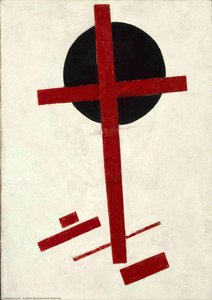
Kazimir Malevich's 'Self-Portrait' (1910) is a vibrant Fauvist masterpiece showcasing bold colors and a serious expression, embodying the spirit of early 20th-century modern art.
Autoriaus biografija
Kazimieras Malevičius (1878–1935) – ukrainiečių kilmės dailininkas, suprematizmo pradininkas ir abstraktaus meno pionierius. Ištyrinėkite jo ikonines kūrines, tokius kaip „Juodasis kvadratas“, geometrines formas ir grynos ekspresijos įtaką 20-ojo amžiaus menui.
About the painting
A Bold Statement of Form and Feeling
Kazimir Malevich's 1910 “Self-Portrait” is not merely a depiction of an individual; it’s a declaration. Painted in gouache on paper, this work stands as a pivotal example of the Fauvist movement – a radical departure from the naturalistic traditions that had dominated Western art for centuries. More than just a portrait, it's a concentrated distillation of color and form, a visual embodiment of Malevich’s burgeoning exploration of pure feeling and abstraction. The painting immediately commands attention with its vibrant palette: a striking red tie dominates the composition, juxtaposed against a background that seems to dissolve into an energetic swirl of blues and greens. This isn’t a realistic rendering; it's an emotional landscape rendered in pigment.
The Fauvist Impulse
Born from a reaction against Impressionism’s focus on capturing fleeting moments of light, Fauvism embraced the deliberate distortion of color for expressive effect. Artists like Henri Matisse and André Derain used intense hues – often divorced from naturalistic representation – to evoke moods and sensations directly. Malevich's “Self-Portrait” perfectly embodies this principle. The bold red isn’t simply a description of his tie; it’s a conduit for energy, confidence, or perhaps even defiance. The artist deliberately avoids subtle gradations, opting instead for flat areas of color that vibrate with intensity. This technique creates a sense of immediacy and raw emotion, pulling the viewer directly into the painting's core.
A Study in Geometric Simplicity
While firmly rooted in Fauvism, Malevich’s work is already hinting at his later development of Suprematism – an even more radical movement that sought to eliminate all representational elements from art. Notice the simplification of form within the portrait itself; the face is rendered with broad strokes and minimal detail, prioritizing the overall composition over a precise likeness. The background, too, is reduced to dynamic shapes and colors, suggesting movement and energy rather than a specific location. This deliberate reduction reflects Malevich’s belief that art should transcend the limitations of the visible world and tap into a realm of pure feeling and spirituality – a concept central to Suprematism.
Context within Post-Impressionism
To understand “Self-Portrait,” it's crucial to situate it within the broader context of Post-Impressionism. This movement, spanning from roughly 1886 to 1905, represented a diverse range of artistic approaches that reacted against Impressionism’s emphasis on capturing light and color. Artists like Paul Cézanne, Vincent van Gogh, and Paul Gauguin explored subjective experience, emotional intensity, and symbolic meaning in their work. Malevich's Fauvist tendencies align with this broader trend toward greater expressiveness and experimentation within the Post-Impressionist landscape. His exploration of color and form paved the way for the revolutionary developments that would characterize 20th-century art.
A Legacy of Abstraction
“Self-Portrait” is more than just a beautiful painting; it’s a foundational work in the history of modern art. It represents a crucial step toward abstraction, demonstrating Malevich's willingness to challenge conventional artistic norms and explore new ways of representing reality – or, perhaps more accurately, representing inner experience. Reproductions of this powerful image continue to resonate with viewers today, offering a glimpse into the mind of a visionary artist who fundamentally altered the course of art history. Explore high-quality reproductions on TopImpressionists.com for a stunning addition to your collection.
Klausimai ir atsakymai
Ar „Self-Portrait“ – Kazimieras Malevičius yra portretinė, peisžinio tipo ar kvadratinė kompozicija?
„Self-Portrait“ – Kazimieras Malevičius yra Kvadratinis formatas kompozicija. Prieš renkantis spausdinimo dydį, verta patikrinti proporcijas.
Kokio dydžio „Self-Portrait“ siūloma Popieriaus svetainė?
Rekomenduojamas derinimas kūriniui „Self-Portrait“ – Kazimieras Malevičius: Vidutinis dydis dydžio spausdinimas, skirtas Popieriaus svetainė.
Kaip medžiaga ir judėjimas susilieja darbe „Self-Portrait“?
„Self-Portrait“ sukurta naudojant Akrilas ant popieriaus, Fauvism stiliuje.
Quick facts and art quiz
About Kazimieras Malevičius

Kazimieras Malevičius
1878 - 1935, Ukraina
Autoriaus biografija
Kazimir Malevičius: Abstraktaus meno pionierius
Ankstyvasis gyvenimas ir įtakos
- 1878 m. Ukrainoje, Kyjė Oblastuje, gimęs Kazimiras Severinovičius Malevičius augo lenkų šeimoje, o jo ankstyvąjį gyvenimą formavo kaukas kaimiški Ukrainos kraštas ir jo turtinga liaudies kultūra.
- Šis vaikystės laikotarpis įsidėmėjo vertinimu tradiciniams meninei ekspresijos būdams, kurie vėliau subtiliai paveikė jo kūrybinį kelią.
- Nors oficialus mokymasis prasidėjo Kyjuje, Malevičius greitai ieškojo platesnių meninių horizontų, keliavo link Maskvos ir galiausiai prisijungė prie spartai vystančių Europos avangardo judėjimų.
- Pagrindinės įtakos: Ankstyvasis susidavimas su liaudies menu, kartu su troškimu moderniai ekspresijai, tapo jo unikalaus stiliaus pagrindu.
Meninė evoliucija ir pagrindiniai judėjimai
- Pradžioje Malevičius tyrinėjo įvairius stilius, įskaitant impresionizmą, simbolizmą, fauvizmą ir kubizmą. Lemiamą svarbią naudą jo kūrybai atliko 1912 m. lankytas Paryžius, kuris atvėrė jam paskutinius Europos meno pokyčius.
- Jis palaipsniui atsisakė vaizduojamųjų formų, siekdamas rasti gryną meninį kalbą, pagrįstą geometrinėmis formomis ir spalvomis.
- Tai paskatino apie 1915 m. susikūrintą suprematizmą – abstraklaus meno judėjimą, orientuotą į „gryviossios jausmo viršenybę“ menėje.
- Suprematizmas atsisakė bet kokio bandymo vaizduoti objektai iš matomosios pasaulio, priešingai – prioritetą teikdamas pagrindinėms geometrinės formoms, tokioms kaip kvadratams, ratams ir stačiagampiams.
Didieji pasiekimai ir žinomos kūriniai
- Juodasis kvadratas (1915): Tikriausiai jo garsiausias kūrinys, reprezentuojantis radikalų atsiskyrimą nuo tradicinio meno ir laikomas fundamentaliu abstrakčiosios tapybos elementu.
- Baltas ant balto (1918): Serija, tyrinėjanti formos ir spalvos grynumą, kurioje baltos geometrinės formos iškyla ant balto fono – taip stūmėdamos abstraktumą į jo ribas.
- Stroyuschiysya dom [Statomas namas] (1916): Ankstyvasis suprematizmo pavyzdys, parodantis jo unikalų žvilgsnį į Ukrainos kultūrą per abstrakčias formas.
- Jis taip pat plačiai rašė apie meno teoriją, išaiškindamas filosofinius supratimus, kurie stovi už suprematizmo, ir advocated su naują meninę sąmonę.
Istorinė reikšmė ir palikimas
- Malevičiaus kūryba kruopščiai paveikė 20-ojo amžiaus abstraktaus meno vystymąsi, įtakodama tokius judėjimus kaip minimalizmas ir konstruktyvizmas. >$He challenged conventional notions of representation and paved the way for non-objective art.
- Jis iššūkį metė įprastoms vaizduojamosios meno koncepcijoms ir atvėrė kelią neobjektyviam menui.
- Jo idėjos apie gryvąjį jausmą ir geometrinį abstraktumą ir šiandien kelia emocinę rezonansą menininkams.
- Nepaisant politinio persekiojimo Stalino vadovavimo laikais – kai iš pradžių buvo palaikomas, o vėliau slopinamas – Malevičius tvirtai laikėsi savo praktikos ir mokymo.
- Įtaka vėlesniems menininkams: Jis tiesiogiai paveikė tokius menininkus kaip El Lisickį ir netiesiogiai suformavo daugybę kitų per neblėstantį suprematizmo palikimą.
Vėlesnieji metai ir mirtis
- Vėlesniaisiais metais Malevičius grįžo prie figūratyvios tapybos, bandydamas suderinti savo abstrakčias principas su vaizduojamosiomis formomis.
- Jis toliau mokė ir rašė apie meną iki savo mirties Leningrade (dabar St. Peterburgas) 1935 m.
- Po jo mirties jo kūriniai dešimtmečius išliko santykinai mažai žinomi, tačiau 20-ojo amžiaus antrąją pusę susidenavo susidomėjimo banga, užtvirtinant jo vietą kaip vienos svarbiausių figūrų modernios meno istorijoje.
Quick facts about Kazimieras Malevičius
- Artistic Movement Or Style: Suprematizmas, Abstrakcija
- Artists Or Movements Influenced By This Artist:
- Minimalizmas
- Konstruktyvizmas
- Elis Lisiskis
- Artists Who Influenced This Artist:
- Kubizmas
- Fovizmas
- Impresionizmas
- Date Of Birth: 1878-02-23
- Date Of Death: 1935-05-15
- Full Name: Kazimiras Malevičius
- Nationality: Ukrainietis/Rusas
- Notable Artworks:
- Juodasis kvadratas
- Baltas ant balto
- Namų statybos
- Place Of Birth: Kijevas, Ukraina
Tyrinėkite meno kūrinius, suskirstytus pagal temas, stilius ir savybes.




Kazimieras Malevičius
Self-Portrait
() ·
With its frame: · Hand-painted in oil on linen
Total