

Shown: · With its frame:
 Peržiūrėti realaus dydžio版
 Pasidalinti
 Dalintis
 Išsamiau
 Vadovas

 Atsisiųsti
 Panašūs eksponatai
 Rentgeno spindulių nuotrauka
 Automatinė diorama
 Q&A
Q&A Statistika
Mountain Landscape Painted by hand in oil, brushstroke by brushstroke
 1890
1890 38.0 x 55.0 cm
€ 237
Rankų darbo aliejinės reprodukcijos
Rankiniu būdu tapytas aliejus ant droblio jūsų pageidaujamame dydį ir rėmuose – tai mūsų menininkų pagal užsakymą sukurtas darbas. ( Perjungti į spausdinamus版作品 Perejti prie skaitmeninių vaizdų)
Size
·Standartinis dydis
pagal užsakymą
CM
INCH
Pasirinkite iš mūsų nustatytų dydžių, atitinkančių originalaus meno kūrinio proporcijas.
Loading sizes...

plotis
aukštis
Įveskite jums reikiamą plotį ir aukštį, kad paveikslas atitiktų jūsų rėmą ar sieną. Kadangi šis darbas yra rankinio darbo, siekiant išgauti kitokios formos dydį, paveikslas gali būti šiek tiek didesnis (nuo kraštų bus palikta daugiau erdvės) arba mažesnis – pasirinkite jums patogiausią variantą. Prieš pradedant tapyti, atsiųsime jums skaitmeninį maketą patvirtinimui. Šioje puslapio nuotraukoje matomas vaizdas nėra galutinis rezultatas – jį parodys tik sukurtas maketas.
 Skaityti daugiau
Finish
·
White €1

Blurside €1

Extended €1

P118B €10

P118H €10

P118W €10

P438Z €10

P508JH €12

P508YH €12

P805H €10

P805Z €10

P919BZ €10

P919G €10

P919XJ €10

P959ZH €10

P968JZ €12

W106C €8

W218G €10

W218JH €8

W218Y €10

W307PJ €10

W316G €10

W316PJ €8

W316Y €10

W398PJ €8

W4111J €10

W500HY €15

W500JH €15

W692G €12

W849H €8

W940BG €15

W953PJ €8

H24-GOLD €30

H24-SILVER €30

H36-GOLD €45

H36-SILVER €45
Shipped in a protective tube, ready for your own framer.
Above 105 cm the frame is shipped as a kit for a professional framer — read the details.
Extras
optionalWhat do the extras include?
Examples of what can be changed: Replace face with customer photo; Add pet (e.g., replace cat with dog); Include hidden message in background; Change background landscape or elements.
After order, TopImpressionists.com team will email client for instructions and provide a mockup preview
After order, TopImpressionists.com team will email client for instructions and provide a mockup preview
Pristatymas visame pasaulyje () per 3–4 savaites, o ne įprastai – per 5 savaites. (29 spalis). Kokybė lieka nepakeičiama.
Apsauginis lakas
Pavadinimo lentelė
Išgraviruotos bronzinės plokštelės detalės
This elegant plaque features the artist's name and the title of the artwork, finely engraved for a timeless presentation.
It is made from bronze with a refined, elegant finish. The text is precisely laser-engraved for a sharp and permanent result. Measuring 9x2 cm, the plaque is compact yet easy to read. It's built to be durable and scratch-resistant, offering a professional, museum-quality look. Mounting is simple thanks to the included adhesive backing.
Skaidrios akrilo plokštelės informacija
The plaque includes essential engraved details such as the artist's name, the title of the artwork, the date it was created, the type of media used-like oil on canvas or watercolor-a brief description of the piece, and a QR code that links to the complete artwork information.
It is crafted from clear acrylic, offering a sleek, modern appearance. The text is UV-engraved in black to ensure strong visual contrast. With a size of 10x15 cm, it ensures optimal readability. It comes equipped with two metal hooks for secure wall mounting. The plaque is designed to be weather-resistant, making it suitable for various environments, and it includes interactive features that work seamlessly with smartphone scanning.
Juodos akrilo plokštelės informacija
This elegant plaque includes engraved information such as the artist's name, the title of the artwork, the date it was created, the type of media used (like oil on canvas or watercolor), a short description of the artwork, and a QR code for quick access to more information.
The plaque itself is made from refined black acrylic with a premium finish. The text is laser-engraved in white for high contrast and readability. Its size is 10x15 cm, designed to be easy to read. It comes with two metal hooks for professional mounting. The design is sleek and fits any interior style. It is also weather-resistant and durable, with built-in digital integration for mobile compatibility.
Stiklo variantas prieinamas tik pasirinkus dydį iki 110 cm
 Stiklo variantas prieinamas tik pasirinkus dydį iki 110 cm
- Nemokamas greitasis pristatymas visame pasaulyje
- Aukštos kokybės lininis drobė
- Pilnas siuntimo draudimas
- Muitinės mokesčių grąžinimo garantija
- Tikro spalvų atitikimo garantija
- 100 dienų grąžinimo politika (tik esant įtaigoms)
- 100% pinigų grąžinimo garantija
- Nuolaida dideliems užsakymams


Autoriaus biografija
Discover the serene landscapes of Louis Hayet (1864-1940), a TopImpressionists artist known for Pointillist paintings & evocative scenes. Explore his works at the Saint Louis Art Museum.
About the painting
Quick facts and art quiz
About Louis Hayet

Louis Hayet
1864 - 1940
Autoriaus biografija
Louis Hayet: A Painter of Parisian Light and Subtle Color
Born in Pontoise, a suburb just northwest of Paris, in 1864, Louis Hayet’s artistic journey was one shaped by both humble beginnings and an evolving engagement with the vibrant currents of late 19th-century art. His early life, marked by financial hardship and a quiet disposition, provided little indication of the distinctive visual language he would eventually develop. Yet, from his youth—as early as 1876—Hayet demonstrated a remarkable talent for drawing, a seed that blossomed through self-directed study and, crucially, a connection with the landscape painter Camille Pissarro and his son Lucien.
Initially apprenticed to his father, who worked as a travelling salesman, Hayet’s artistic pursuits were often relegated to stolen moments spent painting in the surrounding countryside. These early works—primarily watercolors—established a foundation of observation and an appreciation for the subtle shifts of light and color that would become hallmarks of his mature style. Crucially, he was introduced to the burgeoning world of Impressionism through Pissarro’s circle, absorbing influences from artists like Signac and Seurat, though ultimately forging his own unique path within this evolving artistic landscape.
The Pointillist Phase and Parisian Scenes
Around 1887, Hayet transitioned to the techniques of Neo-Impressionism, embracing the scientific approach championed by Paul Signac and Georges Seurat. This involved meticulously applying tiny dots or strokes of pure color – a process known as pointillism – to create an image through optical mixing in the viewer’s eye. His early pointillist works, such as “Market in Pontoise,” demonstrate this technique with remarkable precision and a delicate handling of light. These paintings capture the bustling atmosphere of everyday Parisian life—market scenes, café interiors, and glimpses into the city's vibrant entertainment venues – offering a unique perspective on urban modernity.
However, Hayet’s engagement with pointillism was not purely academic. He quickly moved beyond its rigid constraints, incorporating elements of his earlier training and developing a more expressive style. He experimented with color theory, influenced by Eugène Chevreul's research into the psychology of color, creating elaborate color wheels to predict how hues would interact. This scientific approach informed his palette and technique, resulting in paintings that shimmered with subtle luminosity and an almost ethereal quality.
Collaboration and Theatrical Design
A significant aspect of Hayet’s career involved his work as a decorative painter, particularly for the renowned stage designer Lugné-Poe. His skills were highly sought after, and he spent decades creating elaborate sets for theatrical productions, demonstrating an understanding of color and composition that extended beyond the canvas. This experience undoubtedly influenced his approach to painting, sharpening his eye for detail and his ability to capture fleeting moments of light and atmosphere.
Furthermore, Hayet’s association with Pissarro introduced him to Paul Cézanne, a pivotal figure in modern art. While direct influence is difficult to pinpoint, the emphasis on observation, structure, and the exploration of form evident in Cézanne's work likely resonated with Hayet’s evolving artistic sensibilities.
Legacy and Rediscovery
Despite exhibiting at prominent salons like the Salon des Indépendants and Le Barc de Boutteville, Hayet largely remained a relatively obscure figure during his lifetime. His output was often sporadic, dictated by commercial demands and periods of relative inactivity. He was notably overlooked by Bénézit’s comprehensive dictionary of artists, published in 1923, reflecting the lack of recognition he received for his contributions to Neo-Impressionism.
It wasn't until the mid-20th century that Hayet’s work began to attract serious attention. Today, his paintings are recognized as a significant contribution to both Neo-Impressionism and the broader landscape of French art at the turn of the 20th century. His delicate color palettes, meticulous brushwork, and evocative depictions of Parisian life continue to captivate viewers, offering a unique window into a world of subtle beauty and quiet observation. Works like “Market in Pontoise” are now held in prestigious collections, including the Cleveland Museum of Art, ensuring that this once-forgotten painter’s legacy endures.
Quick facts about Louis Hayet
- Full Name: Louis Hayet
- Nationality: French
- Date Of Birth: 1864
- Date Of Death: 1940
- Place Of Birth: Pontoise, France
- Notable Artworks:
- Market in Pontoise
- Banks of the Oise at Dawn
- Artistic Movement Or Style: Neo-Impressionism
- Artists Who Influenced This Artist:
- Camille Pissarro
- Georges Seurat
- Artists Or Movements Influenced By This Artist: ['Vincent van Gogh']
panašūs kūriniai
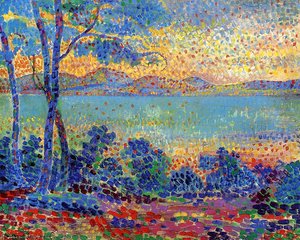


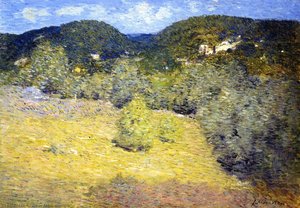


Mountain Landscape
·