

 Peržiūrėti realaus dydžio版
 Siųsti
 Dalintis
 Išsamiau
 Vadovas

 Atsisiųsti
 Panašūs eksponatai
 Rentgeno spindulių nuotrauka
 Diaporama
 Statistika
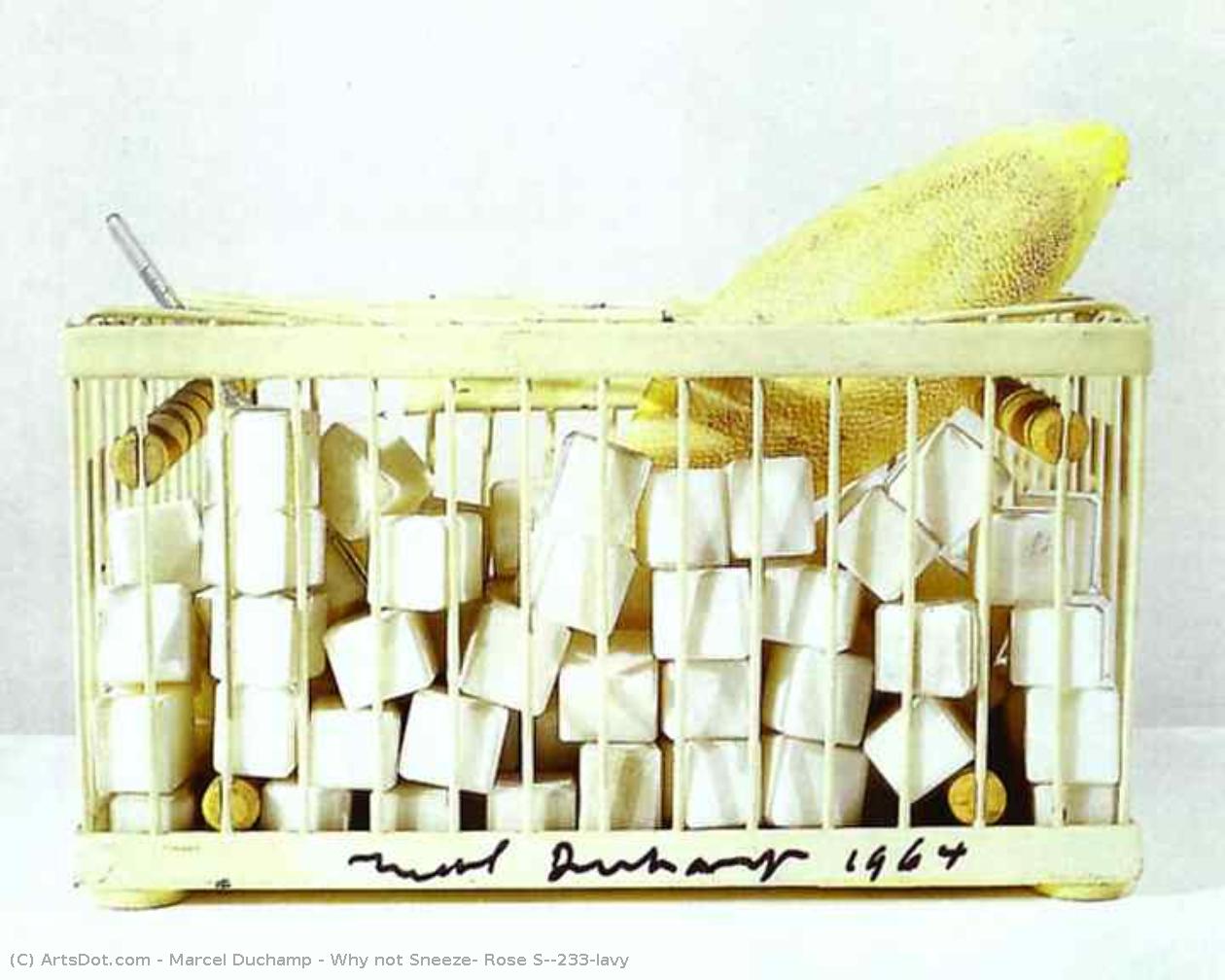
Why not Sneeze, Rose Sélavy
 Acrylic On Canvas
- WallArt
- Dada Gesamtkunstwerk
 1921
1921 12.0 x 22.0 cm
 Tate Modern
 Rodyti daugiau
Marcelis Diušanas – revoliucinis menininkas, iššūkį metęs dailės sampratai su dadaizmu ir „readymade“ kūriniais, tokiais kaip „Fontanas“. Pažinkite jo ikoninius darbus ir filosofinį poveikį!
Šiame puslapyje rodomas meno kūrinys yra saugomas autorių teisių įstatymais, todėl neturime teisės legaliai kurti ar parduoti jo identiškos reprodukcijos. Ši apsauga užtikrinama remiantis tokiais tarptautiniais susitarimais kaip Bernės konvencija ir pagal nacionalines įstatymų nuostatas, įskaitant tas, kurias nurodo JAV autoriškos teisės įstatymas – 17-asis skyrius.
Kaip pagarbią ir teisėtą alternatyvą, mes siūlome pagal užsakymą rankomis dažytus paveikslus, įkvėptus originalo. Mūsų įgudę ir profesionalūs menininkai kruopščiai tiria originalo stilių, nuotaiką ir meninę esmę, kad sukurtų naują, unikalią kūrinį, kuris sukelia tą paties jausmą – išlikdamas tuo tarciau originaliu, savarankišku kūrybiniu darbu.
Šis metodas visiškai atitinka autorių teises, nes jame nėra kūrinio kopijavimo ar dubliavimo. Tai yra kūrybinė reinterpretacija – naujas paveikslas, kurį įkvėpė originalas, tačiau kuris nėra jo identiškas.
Rankų darbo aliejinės reprodukcijos
Rankiniu būdu tapytas aliejus ant droblio jūsų pageidaujamame dydį ir rėmuose – mūsų menininkų darbas pagal užsakymą. ( Perjungti į spausdinimą Perejti prie skaitmeninių vaizdų)




P118B €10

P118H €10

P118W €10

P438Z €10

P508JH €12

P508YH €12

P805H €10

P805Z €10

P919BZ €10

P919G €10

P919XJ €10

P959ZH €10

P968JZ €12

W106C €8

W218G €10

W218JH €8

W218Y €10

W307PJ €10

W316G €10

W316PJ €8

W316Y €10

W398PJ €8

W4111J €10

W500HY €15

W500JH €15

W692G €12

W849H €8

W940BG €15

W953PJ €8




Standartinis
individualaus dydžio
CM
INCH
Pasirinkite iš mūsų nustatytų dydžių, atitinkančių originalaus meno kūrinio proporcijas.
Loading sizes...

plotis
aukštis
Įveskite jums reikiamą plotį ir aukštį, kad paveikslas atitiktų jūsų rėmą ar sieną. Kadangi šis darbas yra rankinio darbo, siekiant išgauti kitokio formos dydį, paveikslas gali būti šiek tiek didesnis (nuo kraštų bus palikta daugiau erdvės) arba mažesnis – pasirinkite jums patogiausią variantą. Prieš pradedant tapyti, atsiųsime jums skaitmeninį maketą patvirtinimui. Šioje puslapio nuotraukoje matomas vaizdas nėra galutinis rezultatas – jį parodys tik sukurtas maketas.
Ką galima pakeisti (pavyzdžiai): Pakeisti veidą į kliento nuotrauką; Pridėti augintinį (pvz., pakeisti katę šunimi); Įtraukti paslėptą žinutę fone; Pakeisti fono kraštovaizdį ar elementus.
Gavus užsakymą, TopImpressionists.com komanda susisieks su klientu el. paštu dėl instrukcijų ir pateiks maketo pavyzdį
Gavus užsakymą, TopImpressionists.com komanda susisieks su klientu el. paštu dėl instrukcijų ir pateiks maketo pavyzdį
Pristatymas visame pasaulyje () per 3–4 savaites, o ne įprastai – per 5 savaites. (22 spalis). Kokybė lieka nepakeičiama.

Nemokamas greitasis pristatymas visame pasaulyje

Aukštos kokybės lininis drobė

Pilnas siuntimo draudimas

Muitinės mokesčių grąžinimo garantija

Tikro spalvų atitikimo garantija

100 dienų grąžinimo politika (tik esant įtaigoms)

100% pinigų grąžinimo garantija

Nuolaida dideliems užsakymams
 Stiklo variantas prieinamas tik pasirinkus dydį iki 110 cm

Why not Sneeze, Rose Sélavy
Reprodukcijos technika
Reprodukcijos dydis
-


Visų pasirinktų variantų kaina
€ 235
A Provocative Pause: Unpacking “Why Not Sneeze, Rose Sélavy”
Marcel Duchamp’s "Why Not Sneeze, Rose Sélavy," painted in 1921, isn't merely a still life; it’s an audacious declaration. This deceptively simple image – a white box containing a yellow banana alongside several cups and spoons – immediately throws the viewer off balance, demanding they reconsider their assumptions about art itself. Duchamp, a pivotal figure in the Dada movement, wasn’t interested in replicating reality or expressing personal emotion through traditional means. Instead, he sought to dismantle established artistic conventions, forcing us to confront the very definition of what constitutes “art” and its role within society.
The painting's genesis lies within Duchamp’s exploration of chance and readymades – everyday objects presented as art without alteration. "Why Not Sneeze" exemplifies this approach perfectly. The choice of a banana, an utterly mundane item, elevates it to the status of subject matter through its placement within the box, transforming it into something worthy of contemplation. The inclusion of the cups and spoons further complicates the scene, suggesting a potential for consumption or ritual – elements deliberately devoid of inherent meaning, yet imbued with a subtle tension.
Dadaist Disruptions: Style and Technique
“Why Not Sneeze” is firmly rooted in the principles of Dadaism, a movement born from the disillusionment following World War I. Rejecting logic and reason, Dada artists embraced absurdity, chance, and anti-art sentiments. Duchamp’s technique reflects this ethos; he employed a precise, almost clinical approach to rendering the objects, using oil paint on canvas with a smooth, matte finish. There's no attempt at illusionistic depth or vibrant color – instead, the focus is entirely on the arrangement of the elements and their juxtaposition. The stark white box acts as a frame, isolating the objects and intensifying their impact.
Interestingly, Duchamp’s process involved a degree of chance. He reportedly placed the banana in the box after it had been emptied, allowing the positioning to be determined by accident. This element of randomness underscores the movement's core belief that art should not be dictated by conscious intention but rather emerge from unexpected encounters and unforeseen circumstances.
Symbolic Whispers: Interpretation and Context
The symbolism within “Why Not Sneeze” is deliberately ambiguous, inviting multiple interpretations. The banana itself has been suggested to represent fertility, sexuality, or even a subtle critique of consumer culture – a small, yellow object placed in an enclosed space, hinting at both abundance and confinement. The cups and spoons could symbolize hospitality, offering, or perhaps the act of consuming – again, devoid of any specific narrative but laden with potential meanings.
Furthermore, the title itself, “Why Not Sneeze?”, is a direct challenge to conventional artistic expectations. Duchamp’s question implies that there are no rules governing art, no prescribed methods for creating it. It's an invitation to embrace spontaneity and reject rigid constraints. The painting can be viewed as a meditation on the absurdity of artistic norms and a playful provocation against established aesthetic values.
A Timeless Dialogue: Emotional Impact and Legacy
Despite its seemingly simple composition, “Why Not Sneeze, Rose Sélavy” possesses a profound emotional impact. It’s unsettling, humorous, and thought-provoking – qualities that have cemented its place as one of the most significant works in modern art history. Duchamp's work continues to resonate today, prompting us to question our own perceptions of beauty, value, and the very nature of artistic expression. A reproduction of this iconic piece offers a unique opportunity to engage with a pivotal moment in art history and contemplate the enduring legacy of Marcel Duchamp’s revolutionary spirit.
问答 (or more naturally for a website heading): Klausimai ir atsakymai
Ar „Why not Sneeze, Rose Sélavy“ galima įsigyti kaip aukščiausios kokybės spausdinį?
Norėdami užsisakyti „Why not Sneeze, Rose Sélavy“, autorius – Marselis Diušanas spausdinį, tiesiog jį užsisakykite puslapio Kūrinio spausdinimas skiltyje: aukščiausios kokybės spausdinys ant medžio siuvinėjamų audinių arba archyvinio kanvas tipo popieriaus.
Kokią nuotaiką ir emociją sujungia „Why not Sneeze, Rose Sélavy“?
„Why not Sneeze, Rose Sélavy“ kūryboje Playful nuotaika lydi Playful emociją.
Kokį Marselis Diušanas kūrybos etapą atspindi „Why not Sneeze, Rose Sélavy“?
„Why not Sneeze, Rose Sélavy“ priklauso Marselis Diušanas kūrybos karjeros Dada Phase etapui. Ši klasifikacija susietas su kūrinio ryšiu su menininko evoliucija.
Autoriaus biografija
Revoliucijos Siela: Marcelio Duchampo Gyvenimas ir Menas
Marcelis Duchampas, gimęs Henri-Robert-Marcel Duchamp 1887 metais Blainville-Crevone, Normandijoje, nebuvo tik menininkas; tai buvo filosofinis provokatorius, kuris fundamentaliai pakeitė šiuolaikinės dailės eigą. Jo ankstyvieji metai, nors ir atrodę įprasti – auginami šeimoje, vertinusioje meninę raišką, su broliais sekusiais sėkmingas karjeras mene – numojo į artėjančią ikonoklastiją. Duchampas pradžioje ėjo formalų mokymąsi, įvaldydamas tradicinius metodus ir eksperimentuodamas su post-impresionistiniu stiliumi. Tačiau šis akademinis pagrindas netapo saviveiksle, o veikiau trampilinu, kuris iššūkį metė pačiai meno prigimsčiai, paskirčiai ir apibrėžčiai. Jis nenusitaręs tiesiog pavaizduoti pasaulį; jis siekė pakelti klausimus apie tai, kaip mes jį suvokime, ir kas sudaro meninę vertę. Šis neramus intelektualus smalsumas taptų jo gausios karjeros apibrėžiančiu bruoku.Nuo Kubizmo iki Dadaizmo: Atsisakymas Konvencijų
Duchampo meno kelionė buvo pažymėta nuolatiniu vystymusi, sąmoningu nustatyto normų atmetimu. Jo ankstyvas susidūrimas su kubizmu, matomas tokiuose darbuose kaip *Portretas šachmatininkų* (1911), parodė susidomėjimą fragmentuotais dariniais ir keliais požiūriais – tai atitraukimas nuo tradicinio vaizdavimo. Tačiau jis greitai perėjo už grynai estetinio rūpesčio, suprasdamas, kad tiesiog perkeliant vizualinius elementus nepakanka spręsti gilesnius klausimus, kurie jame sukosi. Pasaulinio karo siaubai sustiprino šį nepasitenkinimą, paskatindami Duchampą priimti dadaizmą – judėjimą, gimusią nusivylimo ir atmetimo logikai, protui bei tradiciniams meniniams vertybėms. Būtent dadaistinio rėmo viduje Duchampas tikrai pradėjo demontuoti įprastus meno suvokimus. Jis nebuvo suinteresuotas kurti gražius daiktus; jis norėjo provokuoti mintis, mesti iššūkius prielaidoms ir atskleisti estetinės vertinimo savivaledybę. Šiuo laikotarpiu gimė jo radikaliausias naujumas: „readymade“.Readymades ir Meno Subversija
„Readymade“ įvedimas – kasdieniai gamyklinius daiktus, atrinkti ir pateikti kaip menas – buvo Duchampo reikšmingiausias indėlis į 20-ąjį amžių. Tai nebuvo tiesiog rasti objektai; tai buvo sąmoningi meno subversijos aktai. Imdamasis kasdienio daikto, pavyzdžiui, vonios ( *Fontanas*, 1917), pasirašydamas „R. Mutt“ ir pateikdamas jį parodai, Duchampas išbandė pačią meninio įgūdžių ir autentiškumo apibrėžimą. Ar kūrinį sukūrė menininko ranka, ar menininko *idėja*? Šis klausimas tapo pagrindiniu jo praktikoje ir padėjo pamatus Konceptualiam Menui. Kiti žymūs „readymades“, tokie kaip *L.H.O.O.Q.* (1919), Mona Lizos atviruko reprodukcija, kurią išjuokė su ūsų ir barzda, buvo žaismingi, tačiau tikslingi kritikos istorijos ir įsitvirtinusių kultūrinių ikonų atžvilgiu. Šie darbai nebuvo skirti būti garbinamiems dėl jų estetinio kokybės; jie turėjo provokuoti diskusijas ir priversti žiūrovus persvarstyti savo išankstines nuomones apie tai, kas sudaro meną. Duchampas tikėjo, kad menas turėtų slypti mintyje, o ne tiesiog akyse.Palikimas ir Nuolatinis Įtaka
Marcelio Duchampo įtaka paskesnėms menininkų kartoms yra neprieinama. Jis fundamentaliai pakeitė mūsų supratimą apie meną, atidaręs kelią tokiems judėjims kaip Konceptualus Menas, Minimalizmas, Pop Art ir daugybė kitų. Jo pabrėžimas menininko idėjos – darbo koncepcijos – virš jo estetinio kokybės – ir toliau įkvepia menininkus šiandien.- Kubizmas: Ankstyvas fragmentuotų formų ir erdvės atvaizdų tyrinėjimai.
- Dadaizmas: Logikos, proto ir tradicinių meninių vertybių atmetimas, reaguojant į Pasaulinį karą I.
- Konceptualus Menas: Pabrėžiamas darbo idėja, o ne jo estetinės kokybės.

Marselis Diušanas
1887 - 1968 , Prancūzija
Trumpa informacija apie kūrėją
- Artisti Įtakojo:
- Konceptualus menas
- Pop'ierų menas
- Gimimo Data: 1887 m. liepos 28 d.
- Gimimo Vieta: Blainville, Prancūzija
- Meninis Stilius:
- Kubizmas
- Dadaizmas
- Konceptualus menas
- Mirimo Data: 1968 m. spalio 2 d.
- Pilnas Vardas: Marcelis Diušanas
- Tautybė: Prancūzų–amerikietis
- Žymiausi Kūriniai:
- Fontanas
- L.H.O.O.Q.
- Didysis stiklas
Susiję straipsniai

Dadaism Unveiled: The Beautiful Chaos of Art's Most Rebellious Movement
Explore the profound rebellion of Dadaism. Discover how this avant-garde movement emerged from the chaos of WWI to redefine art through absurdity, anti-logic, and a legacy that shaped Surrealism and Pop Art. A deep dive into the beautiful chaos of art history for the true enthusiast.

Pop Surrealism Unveiled: The Sophisticated Intersection of Vibrant Pop Art and Dreamlike Subconscious Landscapes
Explore the captivating world of Pop Surrealism. Discover how vibrant Pop Art meets dreamlike subconscious imagery through the works of masters like Jeff Soto and Ryan Heshka. An expert guide for discerning collectors seeking to understand this profound contemporary art movement.
Tyrinėkite meno kūrinius, suskirstytus pagal temas, stilius ir savybes.


