
 Peržiūrėti realaus dydžio版
 Pasidalinti
 Dalintis
 Išsamiau
 Vadovas

 Atsisiųsti
 Panašūs eksponatai
 Rentgeno spindulių nuotrauka
 Automatinė diorama
 Q&A
Q&A Statistika
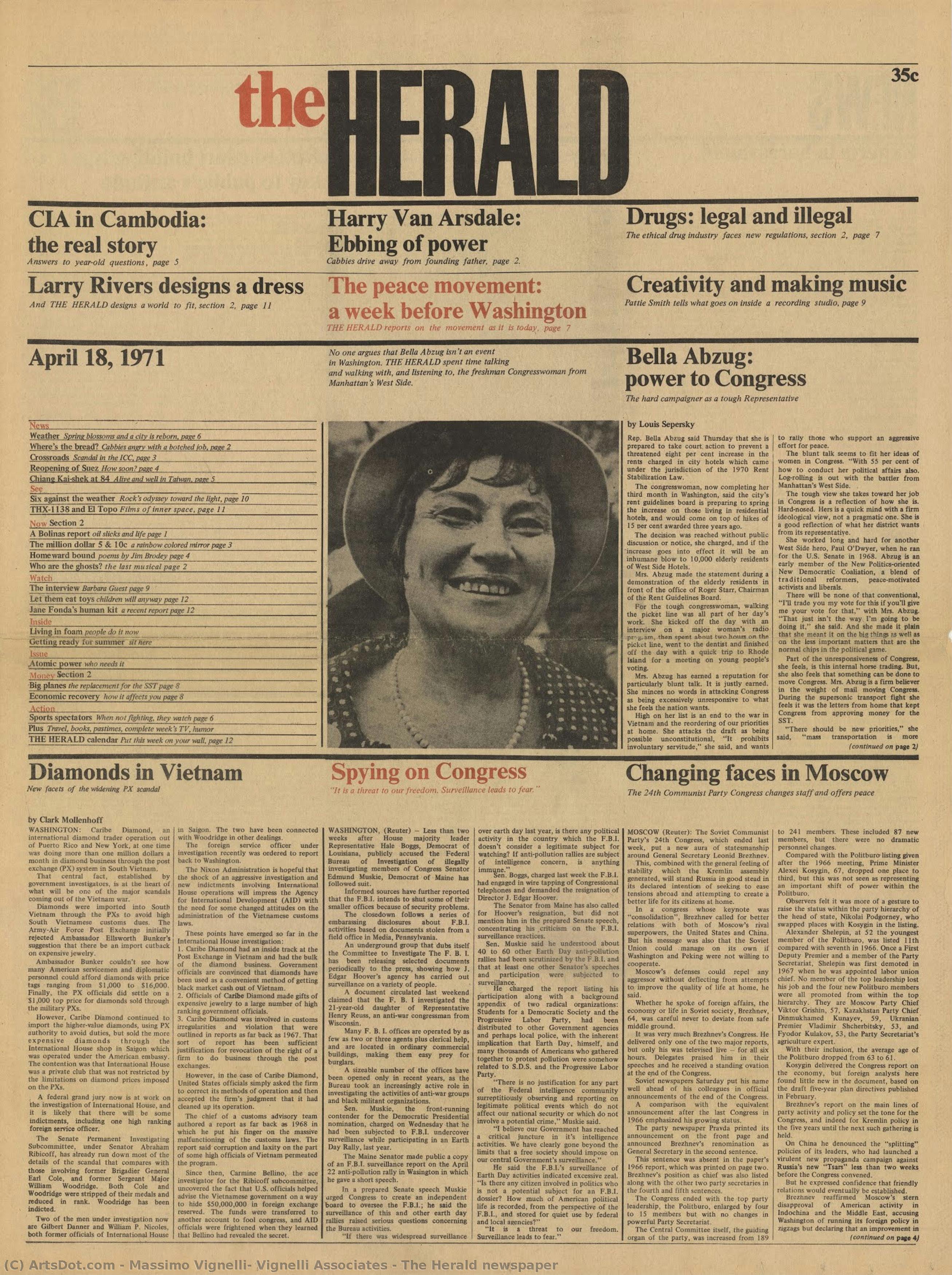
The Herald newspaper

- 43.0 x 57.0 cm


Experience the modernist grid design of The Herald newspaper by Massimo Vignelli (1971), showcasing vintage graphic communication art; discover this iconic piece today.
 Skaityti daugiau
Massimo Vignelli (1931-2014): Italijos dizaino ikona, garsėjanti minimalistine grafika, įskaitant Niujorko metro žemėlapį ir korporatyvinius identitetus. Atraskite jo palikimą!
Šiame puslapyje rodomas meno kūrinys yra saugomas autorių teisių įstatymais, todėl neturime teisės legaliai kurti ar parduoti jo identiškos reprodukcijos. Ši apsauga užtikrinama remiantis tokiais tarptautiniais susitarimais kaip Bernės konvencija ir pagal nacionalines įstatymų nuostatas, įskaitant tas, kurias nurodo JAV autoriškos teisės įstatymas – 17-asis skyrius.
Šis metodas visiškai atitinka autorių teises, nes jame nėra saugomo kūrinio kopijavimo ar dubliavimo. Tai yra kūrybinė reinterpretacija – naujas paveikslas, kurį įkvėpė originalas, tačiau kuris nėra jo identiškas.
Giclée / Meno spausdinimas
Muziejų lygio „giclée“ arba drobos spausdinimas: greita gamyba ir lankstios apdailos parinktys. ( Pirkti rankų darbo tapybą Perejti prie skaitmeninių vaizdų)




P118B €10

P118H €10

P118W €10

P438Z €10

P508JH €12

P508YH €12

P805H €10

P805Z €10

P919BZ €10

P919G €10

P919XJ €10

P959ZH €10

P968JZ €12

W106C €8

W218G €10

W218JH €8

W218Y €10

W307PJ €10

W316G €10

W316PJ €8

W316Y €10

W398PJ €8

W4111J €10

W500HY €15

W500JH €15

W692G €12

W849H €8

W940BG €15

W953PJ €8




Standartinis dydis
pagal užsakymą
CM
INCH
Pasirinkite iš mūsų nustatytų dydžių, atitinkančių originalaus meno kūrinio proporcijas.
Loading sizes...

plotis
aukštis
Įveskite jums reikiamą plotį ir aukštį, kad atvaizdas derėtų prie jūsų rėmo ar sienos. Spausdiną galima tik sumažinti, bet nepadidinti virš originalaus paveikslėlio dydžio, todėl keičiant proporcijas, dalis vaizdo prarandama. Prieš spausdinimą atsiųsime jums skaitmeninį maketą patvirtinimui. Šioje puslapio nuotraukoje matomas pjūvis nėra tikslus – jį rodo tik maketas.
Pristatymas visame pasaulyje () per 2 weeks, o ne įprastas 4/5 savaičių laikotarpis. (1 lapkritis)

Nemokamas greitasis pristatymas visame pasaulyje

Aukštos kokybės lininis drobė

Pilnas siuntimo draudimas

Muitinės mokesčių grąžinimo garantija

Tikro spalvų atitikimo garantija

100 dienų grąžinimo politika (tik esant įtaigoms)

100% pinigų grąžinimo garantija

Nuolaida dideliems užsakymams
 Stiklo variantas prieinamas tik pasirinkus dydį iki 110 cm

The Herald newspaper
Giclée / Meno spausdinimas
Reprodukcijos matmenys
-


Bendroji kaina
€ 61
The Grid of Modern Communication: Vignelli's The Herald
To encounter this piece is to step directly into the vibrant, structured chaos of mid-century New York journalism. This reproduction of The Herald newspaper from April 1971, conceived by Massimo Vignelli and his associates, is far more than mere ephemera; it is a meticulously designed artifact of visual communication history. It captures a moment when design principles—simplicity, functionality, and rigorous structure—were being aggressively applied to the seemingly unruly medium of print journalism. The very act of presenting this newspaper front page transforms what might be considered disposable media into a profound study in modernist graphic discipline.
A Masterclass in Structured Design
Vignelli’s genius, always rooted in an almost architectural understanding of space, is on full display here. The description notes the structure: a rigid grid of six columns and sixteen modules per column. This underlying skeleton dictates every element—the placement of headlines like "Diamonds in Vietnam," the accompanying portrait of the smiling woman, and the smaller articles detailing everything from spying congress to changing leaves in Moscow. Vignelli’s commitment to using a single typeface, Times Roman, across various weights and sizes, speaks volumes about his belief in universal legibility. It is a powerful testament to the idea that restraint—the disciplined use of negative space and consistent typography—can generate an overwhelming sense of order and sophistication.
Historical Resonance and Materiality
The year 1971 places this work within a fascinating cultural nexus, post-war modernism grappling with the burgeoning media landscape. While the paper itself ultimately folded due to distribution issues, its surviving design remains potent. For the collector or designer, understanding this context is key. This piece speaks to an era obsessed with efficiency and clarity in information transfer. When considering a reproduction for your space, you are not just acquiring art; you are curating a dialogue about how we consume knowledge—a conversation between the fleeting headline and the enduring power of good design.
Symbolism of the Grid
The grid itself functions as the primary symbolic element. In an age where digital information often feels overwhelming, this physical manifestation of order offers a visual anchor. It symbolizes control, but not oppressive control; rather, it suggests that even complex narratives—the confluence of international events and local interest—can be organized into digestible, beautiful patterns. The interplay between the large, arresting photograph and the tightly packed textual modules creates a dynamic tension, mirroring the very energy of a bustling city like New York in that era.
Bringing Modernist Precision Home
For interior design or gallery display, this piece offers an unparalleled opportunity to inject intellectual rigor into a space. It pairs beautifully with minimalist furniture, mid-century modern accents, or any setting that appreciates the clean lines of 20th-century industrial aesthetics. Owning this reproduction is an homage to Massimo Vignelli’s lifelong dedication to elevating the mundane—the daily newspaper—into something enduringly beautiful and intellectually stimulating.
Klausimai ir atsakymai
Kokiam stiliui priklauso „The Herald newspaper“?
Kūrinio „The Herald newspaper“ – Massimo Vignelli, Vignelli Associates stilius – Modernism. Ši klasifikacija leidžia šį darbą įtraukti į bendrą susijusių menininkų ir kūrinių kontekstą.
Kam rekomenduojamas naudojimui „The Herald newspaper“ spausdinys?
Rekomenduojamas „The Herald newspaper“ spausdinio naudojimas yra Statement.
Kokios yra „The Herald newspaper“ – Massimo Vignelli, Vignelli Associates proporcijų ir kokio dydžio?
„The Herald newspaper“ formatas yra Portrait, o originalo matmenys – 43 x 57 cm. Šie duomenys yra naudingi planuojant reprodukciją.
Autoriaus biografija
Formai, skirti gyvenimui: Massimo Vignelli pasaulis
1931 metais Milane gimęs Massimo Vignelli kelionė buvo nešviesčiamos ištikimybės modernaus dizaino principams pasikraustė. Nuo mažylės jis rodė prigimtą vizualinės komunikacijos supratimą, pradėjęs oficialų architektūros mokymąsi Politecnico di Milano, o vėliau tęsdamas jį Università Iuav di Venezia. Tačiau būtent staigomatė su gerbiamais Castiglioni broliais – Italijos pramoninio dizaino pionieriais – tikrai uždegė jo aistrą formuoti pasaulį per apgalvotus kūrybos procesus. Ši ankstyvoji patirtis įsidiegė jame tikėjimą funkcijomis, paprastumu ir elegantiškų sprendimų galia kasdienėms problemoms spręsti. Jis ne tiesiog kūrė daiktus; jis formavo patirtis, optimizavo sąveiką ir kasdienybę pakėlė į įsimintinumo lygį. Šis formavimo laikotarpis padėjo pagrindus karjerai, kuri peržengė kontinentus ir perdefinuos vizualinę kultūrą.Iš Italijos į Niujorką: Transatlantinė vizija
Vignelli kelias 1966 metais nukreipė jį į Ameriką, kur jis pasirodė itin svarbus įtvirtinant „Unimark International“ Niujorko biurą. Tai buvo lūžio momentas ne tik jo karjeroje, bet ir visos amerikietiško dizaino aplinkos peizaže. „Unimark“ greitai išpopuliarėjo, o Vignelli indėlis – ypač nepaukštiamas „American Airlines“ logotipas – sutvirtino jo reputaciją kaip korporatyvinės identitės meistro. Tačiau augantis kūrybinio filosofijos skirtumas paskatino jį pradėti nepriklausomą veiklą. 1971 metais, kartu su savo žmona ir visam gyvenimui bendradarbe Lella Vignelli, jis įkūrė „Vignelli Associates“. Šis partnerystės ryšys pasirodė neįtikėtinai derlingas, tapdamas sofistikuotų dizaino sprendimų sinonimu, apimdančių grafinį, interjero, produkto dizainą bei architektūrą. Firmos etika kėliniai įsitikinime, kad geras dizainas turi būti prieinamas, nestelintį laiką ir itin naudingas – tai principai, kuriuos jie nuosekliai gynė visos savo karjeros metu.Ikoniški kūriniai: Aiškumo palikimas
Massimo Vignelli įtarmis įsiliesinta į modernaus gyvenimo audinį. Galbūt jo žinomiausias pasiekimas yra 197apas 1972 metais atliktas Niujorko metro žemėlapių perrašymas. Nors pradžioje jis buvo kontroversiškas dėl atėjimo nuo griežto geografinio tikslumo, tai buvo drąsus pareiškimas apie aiškumą ir patogumą. Vignelli prioritetą teikė skaitomumui ir intuityviam navigavimui priešais tiesioginį vaizdinimą, sukuriant diagraminį žemėlapį, kuris kasdien vadovauja milijonams keliaujančiųjų. Šis projektas yra jo pagrindinės dizaino filosofijos pavyzdys: prioritetas skiriamas komunikacijai svarbiausia. Be metro žemėlapio, „Vignelli Associates“ paliko neištrinamas žymą daugybei prekių ženklų ir institucijų. Jų darbas „Bloomingdale’s“ – įskaitant ikonišką ruse bruntais popierinį širtą su paprastu baltu logotipu – apsipirkimo patirtį pavertė stiliaus išraiška. Jie projektavo baldus „Knoll“, pakuotę „Heller“ ir korporatyvines identitetas, kurios tapo akimirksniu atpažįstamais kokybės bei inovacijų simboliais. Jo Heller Rainbow Dinnerware rinkinys stovi kaip jo minimalistinės estetikos įrodymas, demonruodamas ryškias spalvas švarčiose geometrinėse formose. Tredicesima Triennale di Milano afiša pavyzdžiaja drąsų spalvų ir formų naudojimą, o Knoll Design apvalkalas parodo jo gebėjimą kurti stovingus vaizdus žinomoms prekėms.Nuolatinė įtaka: Už estetikos ribų
Massimo Vignelli poveikis išsiekia už individualius projektus; jis fundamentaliai pakeitė tai, kaip mes suvokiame patį dizainą. Jis buvo griežtas tipografinės disciplinos šalininkas, garsėjęs rinkiant ribotą šriftų paletę – tikėdamas, kad tikras kūrybiškumas slypi ne beginiuose pasirinkimuose, o meistriškame vykdyme naudojant kruopščiai parinktus įrankius. Jo knyga The Vignęlli Canon tapo dizainerių manifestu, ištraukiančiu jo aiškumo, paprastumo ir neįtikėtinės elegancijos principus. Jis ne tiesiog kūrė reginiai daiktus; jis siekė sukurti tvarką iš chaoso, bendrauti efektyviai ir pakelti žmogaus patirtį per apgalvotą dizainą. Jo darbai ir toliau įkvepia dizainerių kartas, primindami jiems, kad tikra inovacija slypi nereikalingų dalykų atmetime ir susikoncentravime į esminį. Rochester Institute of Technology priklauso „Vignelli Center for Design Studies“, kuris tarnauja kaip ilgalaikis jo palikimo pagarbos ženklas, saugondas plačią jo darbo archyvą ir skatinantis tolesnį revolucinių idėjų tyrimą. Jis mirė 2014 metais, tačiau jo dizainai išlieka galingai prateisę, formuodami mūsų pasaulį savo neįtikėtina elegancija ir nekliudoma ištikimybe aiškumui.
Massimo Vignelli, Vignelli Associates
1931 - 2014 , इटalija
Trumpa informacija
- Artistic Movement Or Style: Modernizmas, minimalizmas
- Date Of Birth: 1931 m. sausio 10 d.
- Date Of Death: 2014 m. gegužės 27 d.
- Full Name: Massimo Vignelli
- Nationality: Italių
- Notable Artworks:
- Heller Rainbow Dinnerware
- Tredicesima Triennale di Milano
- Knoll Design (nuotrauka)
- Place Of Birth: Milanas, Italija
Susiję straipsniai

TopImpressionists.com F.A.Q.: Discover the Vibrant Beauty of Our Premium Art Poster Prints
Explore the technical excellence of TopImpressionists.com's premium art poster prints. Discover how our 12-color pigment system and archival inks capture the luminous beauty of Impressionist masterpieces with unmatched color fidelity and museum-grade durability for the discerning collector.
Tyrinėkite meno kūrinius, suskirstytus pagal temas, stilius ir savybes.


