

Paveikslėlyje: · Su rėmu:
 Peržiūrėti realaus dydžio版
 Pasidalinti
 Dalintis
 Išsamiau
 Vadovas

 Atsisiųsti
 Panašūs eksponatai
 Rentgeno spindulių nuotrauka
 Automatinė diorama
 问答
问答 Statistika

€ 240
Rankų darbo aliejinės reprodukcijos
Rankiniu būdu tapytas aliejus ant droblio jūsų pageidaujamame dydį ir rėmuose – tai mūsų menininkų pagal užsakymą sukurtas darbas. ( Perjungti į spausdinamus版作品 Perejti prie skaitmeninių vaizdų)
Dydis
·Standartinis dydis
pagal užsakymą
CM
INCH
Pasirinkite iš mūsų nustatytų dydžių, atitinkančių originalaus meno kūrinio proporcijas.
Kraunami dydžiai...

plotis
aukštis
Įveskite jums reikiamą plotį ir aukštį, kad paveikslas atitiktų jūsų rėmą ar sieną. Kadangi šis darbas yra rankinio darbo, siekiant išgauti kitokios formos dydį, paveikslas gali būti šiek tiek didesnis (nuo kraštų bus palikta daugiau erdvės) arba mažesnis – pasirinkite jums patogiausią variantą. Prieš pradedant tapyti, atsiųsime jums skaitmeninį maketą patvirtinimui. Šioje puslapio nuotraukoje matomas vaizdas nėra galutinis rezultatas – jį parodys tik sukurtas maketas.
 Skaityti daugiau
Baigiamasis etapas
·
Baltas apasutojimas €1

Išblėstantis šonas €1

Išplėstinis €1

P118B €10

P118H €10

P118W €10

P438Z €10

P508JH €12

P508YH €12

P805H €10

P805Z €10

P919BZ €10

P919G €10

P919XJ €10

P959ZH €10

P968JZ €12

W106C €8

W218G €10

W218JH €8

W218Y €10

W307PJ €10

W316G €10

W316PJ €8

W316Y €10

W398PJ €8

W4111J €10

W500HY €15

W500JH €15

W692G €12

W849H €8

W940BG €15

W953PJ €8

H24-GOLD €30

H24-SILVER €30

H36-GOLD €45

H36-SILVER €45
Siunčiama saugiame vamzdelyje, paruošta patys sukomentuoti jūsų rėmeliais.
Virš 105 cm rėmas siunčiamas kaip rinkinys profesionaliam rėmininkui — skaitykite detales.
Papildomos paslaugos
nebūtinaKą apima papildomos paslaugos?
Pavyzdžiai, ką galima pakeisti: pakeisti veidą nuotrauka su klientu; pridėti augintinį (pvz., pakeisti kucingą šuniu); įtraukti paslaptingą žinutę fone; pakeisti fono kraštotvę ar elementus.
Gavus užsakymą, TopImpressionists.com komanda susisieks su klientu el. paštu dėl nurodymų ir pateiks preliminarią maketą.
Gavus užsakymą, TopImpressionists.com komanda susisieks su klientu el. paštu dėl nurodymų ir pateiks preliminarią maketą.
Pristatymas visame pasaulyje () per 3–4 savaites, o ne įprastai – per 5 savaites. (6 lapkritis). Kokybė lieka nepakeičiama.
Apsauginis lakas
Pavadinimo lentelė
Išgraviruotos bronzinės plokštelės detalės
This elegant plaque features the artist's name and the title of the artwork, finely engraved for a timeless presentation.
It is made from bronze with a refined, elegant finish. The text is precisely laser-engraved for a sharp and permanent result. Measuring 9x2 cm, the plaque is compact yet easy to read. It's built to be durable and scratch-resistant, offering a professional, museum-quality look. Mounting is simple thanks to the included adhesive backing.
Skaidrios akrilo plokštelės informacija
The plaque includes essential engraved details such as the artist's name, the title of the artwork, the date it was created, the type of media used-like oil on canvas or watercolor-a brief description of the piece, and a QR code that links to the complete artwork information.
It is crafted from clear acrylic, offering a sleek, modern appearance. The text is UV-engraved in black to ensure strong visual contrast. With a size of 10x15 cm, it ensures optimal readability. It comes equipped with two metal hooks for secure wall mounting. The plaque is designed to be weather-resistant, making it suitable for various environments, and it includes interactive features that work seamlessly with smartphone scanning.
Juodos akrilo plokštelės informacija
This elegant plaque includes engraved information such as the artist's name, the title of the artwork, the date it was created, the type of media used (like oil on canvas or watercolor), a short description of the artwork, and a QR code for quick access to more information.
The plaque itself is made from refined black acrylic with a premium finish. The text is laser-engraved in white for high contrast and readability. Its size is 10x15 cm, designed to be easy to read. It comes with two metal hooks for professional mounting. The design is sleek and fits any interior style. It is also weather-resistant and durable, with built-in digital integration for mobile compatibility.
Stiklo variantas prieinamas tik pasirinkus dydį iki 110 cm
 Stiklo variantas prieinamas tik pasirinkus dydį iki 110 cm
- Nemokamas greitasis pristatymas visame pasaulyje
- Aukštos kokybės lininis drobė
- Pilnas siuntimo draudimas
- Muitinės mokesčių grąžinimo garantija
- Tikro spalvų atitikimo garantija
- 100 dienų grąžinimo politika (tik esant įtaigoms)
- 100% pinigų grąžinimo garantija
- Nuolaida dideliems užsakymams


Kolekcinio objekto aprašas
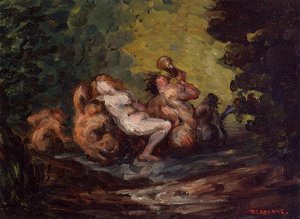
Experience Paul Cézanne's 'Neried and Tritons' (1867) – a Romantic masterpiece of mythology, rendered in oil on canvas. Own a stunning reproduction from TopImpressionists.com!
Autoriaus biografija
Paul Cézanne (1839–1906) – postimpresionistų pradininkas, jungiantis impresionizmą ir kubizmą. Tyrė geometrines formas, stilizuotus peizažus bei paveikslų kompozicijas, sukeldamas revoliuciją moderniajame mene.
Apie paveisdelį
A Romantic Dive: Paul Cézanne’s “Neried and Tritons”
Paul Cézanne's "Neried and Tritons," painted in 1867, isn’t merely a depiction of classical mythology; it’s a profound exploration of human emotion rendered through the lens of Romanticism. This oil-on-canvas masterpiece, created during a pivotal period in Cézanne’s artistic development, reveals an artist grappling with form, light, and the very essence of visual experience – a journey that would ultimately lead him to the forefront of Post-Impressionism. The painting immediately draws the viewer into a world of hazy beauty and subtle tension, a testament to Cézanne's early experimentation with dramatic themes and his burgeoning desire to capture not just what he saw, but how it *felt*.
The scene unfolds within a twilight realm, dominated by cool blues and greens that evoke the depths of the sea. Three figures command attention: a reclining woman, identified as a Nereid – one of the sea nymphs of Greek mythology – occupies the left side of the composition, her body partially submerged in what appears to be water. Beside her sits another figure, seemingly engaged in conversation, while a third stands tall and alert on the right. These aren’t idealized figures; they possess a palpable sense of vulnerability and quiet contemplation. The arrangement isn't one of rigid formality but rather an organic flow, mirroring Cézanne’s evolving approach to spatial representation – a move away from traditional perspective towards a more subjective, internalized view of reality.
Composition and the Language of Form
Cézanne’s genius lies in his manipulation of form and color. He employs loose, expressive brushstrokes—a hallmark of his style—to build up surfaces with layers of pigment. The figures aren't sharply defined; instead, they are rendered as masses of color and shape, suggesting volume and movement without relying on precise detail. Notice how the water itself isn’t depicted as a smooth surface but rather as a collection of overlapping planes, each reflecting light in a unique way. This technique anticipates Cézanne’s later explorations of geometric forms, foreshadowing his pivotal role in paving the way for Cubism.
The inclusion of two smaller figures in the background—one on the left and another near the right—adds depth and complexity to the scene. These secondary elements aren't merely decorative; they contribute to the overall sense of mystery and intrigue, hinting at a hidden narrative or perhaps simply emphasizing the isolation of the central figures. The bowl placed towards the top-left corner and the book resting on the bottom right are not just incidental details but rather carefully chosen symbols that invite interpretation – perhaps representing sustenance, knowledge, or the passage of time.
Romanticism’s Echoes and Cézanne's Path Forward
"Neried and Tritons" firmly establishes Cézanne within the Romantic tradition. The subject matter—mythological figures imbued with emotion—and the dramatic lighting are characteristic of this movement, which prioritized feeling over reason. However, unlike many Romantic painters who sought to evoke grand narratives or heroic ideals, Cézanne focuses on capturing a fleeting moment of quiet contemplation. He uses the mythological setting as a springboard for exploring universal themes of human experience – loneliness, vulnerability, and the search for meaning.
Despite its roots in Romanticism, “Neried and Tritons” also signals a crucial shift towards Cézanne’s unique artistic vision. The painting demonstrates his early experimentation with capturing the essence of form through color and light, laying the groundwork for his later innovations. It's a pivotal work that reveals an artist grappling with the complexities of representation and searching for new ways to express himself visually – a journey that would ultimately redefine modern art. The influence of artists like Fujishima Takeji, who similarly blended Romanticism and Impressionism within the yōga movement, can be seen in Cézanne’s exploration of light and atmosphere.
Own a Piece of Art History
TopImpressionists offers meticulously crafted, handmade oil painting reproductions of “Neried and Tritons,” allowing art enthusiasts to experience this iconic masterpiece firsthand. These reproductions capture the richness of color, texture, and emotional depth of Cézanne’s original work, bringing it into your home or studio with exceptional fidelity. Consider visiting the Graves Art Gallery in Sheffield, UK, for a chance to view the original painting and appreciate its impact on art history.
Explore our collection today and bring the evocative beauty of “Neried and Tritons” into your world.
Klausimai ir atsakymai
Kokį Polis Sezanas kūrybos etapą atitinka „Neried and Tritons“ data, nurodyta kaip 1867?
„Neried and Tritons“, sukurta 1867 m., priklauso Polis Sezanas kūrybinio karjeros laikotarpio Early Period.
Kur galiu įsigyti rankinio darbo „Neried and Tritons“ – Polis Sezanas reprodukciją?
Rankumų reprodukciją kūrinio „Neried and Tritons“ – Polis Sezanas galite užsakyti tiesiogiai jo Rankų darbo aliejinis reprodukcija puslapyje: rankomis dažyta aliejaus reprodukcija ant lininio drobos, gaminama pagal užsakymą.
Kokio Polis Sezanas kūrybos etapo dalis yra „Neried and Tritons“?
„Neried and Tritons“ atspindi Polis Sezanas kūrybinį laikotarpį Early Period.
Trumpos faktinės datos ir meno viktorina
Apie Polis Sezanas

Polis Sezanas
1839 - 1906, Prancūzija
Autoriaus biografija
Paul Cézanne: Modernumo Tėvo Vizija
Paulis Sezanas, gimęs 1839 m. sausio 19 d. Ekse, Prancūzijoje, stovi kaip monumentalus veikėjas, jungiantis trumpalaikius įspūdžius, būdingus impresionizmui, ir fragmentuotas formas, kurias atstovauja kubizmas. Jo kelionė nebuvo greita sėkmės istorija; tai buvo lėtas meninės ekspresijos procesas, pažymėtas savęs abejonėmis ir kritikos atmetimu, galiausiai sukūręs palikimą, kuris nepataisomai pakeitė moderniosios dailės eigą. Gime pasiturtingą šeimą – jo tėvas pirmiausia buvo skrybėčių pardavėjas, vėliau bankininkas – Sezanas mėgavosi finansiniu saugumu, neįprastu siekiantiems menininkams, suteikdamas jam laisvę skirti save savo aistrai be tiesioginio komercinės sėkmės spaudimo. Nors jo tėvas pirmiausia norėjo, kad jis pasirinktų teisines karjeros kelią, meno ekspresijos jėga buvo per stipri, ir jis galiausiai atsisakė teisės studijų, kad imtųsi tapymo – sprendimas, kuris apibrėš jo gyvenimą. Ankstyvosios įtakos apėmė romantizmą, vyravusį jo jaunystėje, ir Barbizono mokyklos dedikaciją peizažui, tačiau būtent susidūrus su tokiais menininkais kaip Paulis Gogenas ir Džordžas Seuratas, ir jų inovatyviomis spalvų ir formų priemonėmis, Sezanas pradėjo formuoti savo atskirą kelią.Nuo Tamsos Link Struktūros: Stiliaus Evoliucija
Sezano ankstyvieji darbai dažnai atspindėdavo dramatiškas, emocingas temas, būdingas romantizmo tapybai – tamsios paletės ir ekspresyvūs tepteliai dominuodavo jo drobėse. Tačiau ši pradinė fazė buvo tik žingsnis į daug analitiškesnį ir inovatyvesnį požiūrį. Nesitenkinęs tiesiog užfiksavus šviesos trumpalaikius įspūdžius, kaip tai vertino impresionistai, Sezanas išvyko ieškoti pagrindinės objektų struktūros supratimo ir atvaizdo. Jis siekė ne tik to, *ką* mato, bet ir *kaip* suvokia fundamentalias formas, sudarančias realybę. Tai jį paskatino suskaldyti natūralius pavidalus į jų geometrines ekvivalentus – kūrius, cilindrus, sferas – numatydamas kubistų revoliuciją dešimtmečius iki jos atsiradimo. Jo technika pasižymėjo mažais, kartotiniais tepteliais, kruopščiai sluoksniais sudedant sudėtingas spalvų ir tekstūrų erdves, sukuriant tvirtumo ir gylio pojūtį, anksčiau nematytą tapyboje. Jis nebuvo įsitikinęs dėl iliuzinio erdvės; vietoj to jis dažnai pateikė objektus iš kelių perspektyvų vienu metu, mėsdamas tradicinius perspektyvos principus ir priverčiant žiūrovą aktyviai bendradarbiauti su jo kompozicijų konstruktu. Šis sąmoningas iškraipymas nebuvo atsitiktinis, bet bandymas perteikti visapusiškesnį formos supratimą, atspindėti ne vien tik tam tikrą momentą laike, bet ir suvokimo sintezę.Peizažai, Natūrmortai ir Žmogaus Forma: Pagrindiniai Darbai ir Kartojantis Motyvas
Sezano kūriniai yra nepaprastai įvairūs, apimantys peizažus, natūrmortus, portretus ir maudynių scenas, tačiau visus juos suvienija jo unikalus požiūris į formą ir spalvą. Tvenkinys Jas de Bouffan, nutapytas 1880 m., pavyzdu rodo jo peizažo darbą, parodydamas jo gebėjimą užfiksuoti gamtos esmę atidžiai suderinus formas ir tonus. Portretas Émile Zola, sukurtas 1866 m., parodo jo besivystantį stilių ir suteikia įtikinamą žvilgsnį į jo artimo draugo ir bendražygio rašytojo intelektinį intensyvumą. Jo natūrmortai, pavyzdžiui, tie, kuriuose yra obuolių ir kitų vaisių, nėra tik objektų atvaizdai, bet ir tūrio, šviesos ir erdvių santykių tyrimai. Mont Sainte-Victoire serija tapo Sezano obsesija – kartojantis motyvas, kuris leido jam nuolat tyrinėti formą ir perspektyvą per dešimtmečius. Šie paveikslai nėra tik kalno atvaizdai; tai tyrimai apie tai, kaip mes suvokiamo gylį, tūrį bei šviesos ir šešėlio sąveiką. Galiausiai, jo Maudytojų serija, kuriame vaizduojami nuogi figūros idiliškuose peizažuose, atspindi gilų žmogaus formos tyrimą ir jos ryšį su gamta, dažnai įkvėptą amžinybės ir tylios kontempliacijos.Palikimas, Sukurtas Inovacijomis: Sezano Įtaka Moderniajame Mente
Paulio Sezano poveikis paskesnėms menininkų kartoms yra neįvertinamas. Jis plačiai laikomas „modernaus meno tėvu“ dėl jo novatoriškų indėlių į paveikslinę kalbą, atidaręs kelią daugeliui pagrindinių XX amžiaus meninių judėjimo tendencijų. Pablo Pikaso ir Džordžas Brakas buvo giliai įsipareigoję Sezano geometrinių formų ir daugybės perspektyvų pabrėžimui, kurie tapo centriniais kubizmo principais. Jo drąsus spalvų vartojimas taip pat įkvėpė Fauvistų judėjimą, kuriam vadovavo tokie menininkai kaip Henri Matisas, kurie priėmė ryškias, ne natūralias spalvas. Net surrealistų menininkai rado atgarsį Sezano tyrimuose subjektyvaus suvokimo ir psichologinės gylio srityse. Be konkrečių judėjimo tendencijų, Sezano įsitikinimas menininko asmeniniu viziju ir jo atmetimas tradicinių akademinių apribojimų išlaisvino daugybę tapytojų tyrinėti naujas ekspresijos formas. Jis paragino peržiūrėti pačią reprezentacijos apibrėžimą, perkeldamas dėmesį nuo realybės imituojamosios imitacijos iki vizualinės patirties konstrukcijos, pagrįstos pogrindine struktūra ir subjektyviu suvokimu. Jo mirtis 1906 metais pažymėjo ne pabaigą, bet pradžią – naujos epochos aušrą meno istorijoje, kurią giliai paveikė jo revoliucinis vizijas.Trumpa informacija apie Polis Sezanas
- Artistic Movement Or Style: Postimpresionizmas
- Artists Or Movements Influenced By This Artist:
- Kubizmas
- Fovizmas
- Surrealizmas
- Artists Who Influenced This Artist:
- Romantizmas
- Barbizon mokykla
- Polis Gogenas
- Ž. Seuras
- Date Of Birth: 1839-01-19
- Date Of Death: 1906-10-22
- Full Name: Polis Sezanas
- Nationality: Prancūzas
- Notable Artworks:
- Pirmtakas Jas de Bouffan
- Portretas E. Zola
- Miškas
- Mont Sainte-Victoire serija
- Maudynės
- Place Of Birth: Ekso, Prancūzija
panašūs kūriniai


Tyrinėkite meno kūrinius, suskirstytus pagal temas, stilius ir savybes.


Polis Sezanas
Neried and Tritons
() ·
Su rėmu: · Rankiniu būdu tapyta aliejumi ant lineno
Viso suma