

Paveikslėlyje: · Su rėmu:
 Peržiūrėti realaus dydžio版
 Pasidalinti
 Dalintis
 Išsamiau
 Vadovas

 Atsisiųsti
 Panašūs eksponatai
 Rentgeno spindulių nuotrauka
 Automatinė diorama
 问答
问答 Statistika


€ 239
Rankų darbo aliejinės reprodukcijos
Rankiniu būdu tapytas aliejus ant droblio jūsų pageidaujamame dydį ir rėmuose – tai mūsų menininkų pagal užsakymą sukurtas darbas. ( Perjungti į spausdinamus版作品 Perejti prie skaitmeninių vaizdų)
Dydis
·Standartinis dydis
pagal užsakymą
CM
INCH
Pasirinkite iš mūsų nustatytų dydžių, atitinkančių originalaus meno kūrinio proporcijas.
Kraunami dydžiai...

plotis
aukštis
Įveskite jums reikiamą plotį ir aukštį, kad paveikslas atitiktų jūsų rėmą ar sieną. Kadangi šis darbas yra rankinio darbo, siekiant išgauti kitokios formos dydį, paveikslas gali būti šiek tiek didesnis (nuo kraštų bus palikta daugiau erdvės) arba mažesnis – pasirinkite jums patogiausią variantą. Prieš pradedant tapyti, atsiųsime jums skaitmeninį maketą patvirtinimui. Šioje puslapio nuotraukoje matomas vaizdas nėra galutinis rezultatas – jį parodys tik sukurtas maketas.
 Skaityti daugiau
Baigiamasis etapas
·
Baltas apasutojimas €1

Išblėstantis šonas €1

Išplėstinis €1

P118B €10

P118H €10

P118W €10

P438Z €10

P508JH €12

P508YH €12

P805H €10

P805Z €10

P919BZ €10

P919G €10

P919XJ €10

P959ZH €10

P968JZ €12

W106C €8

W218G €10

W218JH €8

W218Y €10

W307PJ €10

W316G €10

W316PJ €8

W316Y €10

W398PJ €8

W4111J €10

W500HY €15

W500JH €15

W692G €12

W849H €8

W940BG €15

W953PJ €8

H24-GOLD €30

H24-SILVER €30

H36-GOLD €45

H36-SILVER €45
Siunčiama saugiame vamzdelyje, paruošta patys sukomentuoti jūsų rėmeliais.
Virš 105 cm rėmas siunčiamas kaip rinkinys profesionaliam rėmininkui — skaitykite detales.
Papildomos paslaugos
nebūtinaKą apima papildomos paslaugos?
Pavyzdžiai, ką galima pakeisti: pakeisti veidą nuotrauka su klientu; pridėti augintinį (pvz., pakeisti kucingą šuniu); įtraukti paslaptingą žinutę fone; pakeisti fono kraštotvę ar elementus.
Gavus užsakymą, TopImpressionists.com komanda susisieks su klientu el. paštu dėl nurodymų ir pateiks preliminarią maketą.
Gavus užsakymą, TopImpressionists.com komanda susisieks su klientu el. paštu dėl nurodymų ir pateiks preliminarią maketą.
Pristatymas visame pasaulyje () per 3–4 savaites, o ne įprastai – per 5 savaites. (4 lapkritis). Kokybė lieka nepakeičiama.
Apsauginis lakas
Pavadinimo lentelė
Išgraviruotos bronzinės plokštelės detalės
This elegant plaque features the artist's name and the title of the artwork, finely engraved for a timeless presentation.
It is made from bronze with a refined, elegant finish. The text is precisely laser-engraved for a sharp and permanent result. Measuring 9x2 cm, the plaque is compact yet easy to read. It's built to be durable and scratch-resistant, offering a professional, museum-quality look. Mounting is simple thanks to the included adhesive backing.
Skaidrios akrilo plokštelės informacija
The plaque includes essential engraved details such as the artist's name, the title of the artwork, the date it was created, the type of media used-like oil on canvas or watercolor-a brief description of the piece, and a QR code that links to the complete artwork information.
It is crafted from clear acrylic, offering a sleek, modern appearance. The text is UV-engraved in black to ensure strong visual contrast. With a size of 10x15 cm, it ensures optimal readability. It comes equipped with two metal hooks for secure wall mounting. The plaque is designed to be weather-resistant, making it suitable for various environments, and it includes interactive features that work seamlessly with smartphone scanning.
Juodos akrilo plokštelės informacija
This elegant plaque includes engraved information such as the artist's name, the title of the artwork, the date it was created, the type of media used (like oil on canvas or watercolor), a short description of the artwork, and a QR code for quick access to more information.
The plaque itself is made from refined black acrylic with a premium finish. The text is laser-engraved in white for high contrast and readability. Its size is 10x15 cm, designed to be easy to read. It comes with two metal hooks for professional mounting. The design is sleek and fits any interior style. It is also weather-resistant and durable, with built-in digital integration for mobile compatibility.
Stiklo variantas prieinamas tik pasirinkus dydį iki 110 cm
 Stiklo variantas prieinamas tik pasirinkus dydį iki 110 cm
- Nemokamas greitasis pristatymas visame pasaulyje
- Aukštos kokybės lininis drobė
- Pilnas siuntimo draudimas
- Muitinės mokesčių grąžinimo garantija
- Tikro spalvų atitikimo garantija
- 100 dienų grąžinimo politika (tik esant įtaigoms)
- 100% pinigų grąžinimo garantija
- Nuolaida dideliems užsakymams


Kolekcinio objekto aprašas
Paul Sérusier (1864-1927) emerged as a key figure in the Symbolist movement, profoundly impacting the development of Synthetism and cloisonnism. His collaboration with Gauguin at Pont-Aven solidified his reputation as an innovator, establishing him as one of France’s foremost artists.
Autoriaus biografija
Paul Sérusier (1864-1927) – prancūzų postimpresionistas, kluaizonizmo pionierius ir „Nabis“ judėjimo įkvėpėjas. Žymiausi darbai: "Talismanas". Atstovavo sintetizmą ir moderniosios dailos plėtrą.
Apie paveisdelį
A Primal Encounter in Breton Color
In the vibrant tapestry of late nineteenth-century French art, few works capture the raw, unbridled energy of folk tradition quite like Paul Sérusier's La Lutte bretonne. Completed in 1890, this masterpiece serves as a profound window into the soul of Brittany, moving far beyond a mere depiction of a wrestling match to become an evocative exploration of human struggle and cultural identity. The scene unfolds with an immediate, visceral intensity, placing the viewer directly within a circle of onlookers gathered to witness a physical altercation between two men. As they grapple in the center of the frame, the surrounding crowd—composed largely of women adorned in the iconic, intricate white coifs of Breton tradition—stands as a silent, watchful collective, their presence grounding the chaotic movement of the fighters in a sense of communal ritual.
The painting is a triumph of Cloisonnism, a bold stylistic departure from the soft, atmospheric nuances of traditional Impressionism. Heavily influenced by the mentorship of Paul Gauguin, Sérusier utilized thick, dark outlines to encase patches of saturated color, much like the leaded glass of a cathedral window. This technique strips away unnecessary anatomical detail in favor of a powerful, flattened graphic impact. The artist’s palette is particularly striking; he employs energetic bursts of reds and yellows that seem to pulse against the canvas, mirroring the heat and exertion of the wrestling match itself. For the discerning collector or interior designer, this use of pigment offers a dynamic focal point, capable of injecting a sense of rhythmic vitality and warmth into any sophisticated space.
Symbolism and the Spirit of the Nabis
Beyond its surface-level action, La Lutte bretonne is steeped in the symbolic preoccupations of the Nabis movement. During this era, artists sought to reject the polished, artificial perfection of the Parisian salons, turning instead toward what they perceived as the "primitive" and authentic beauty of rural life. The wrestling match serves as a potent metaphor for opposing forces—the tension between strength and vulnerability, or perhaps the struggle of tradition against the encroaching modernity of the Belle Époque. Every brushstroke is an intentional step away from realism and toward Synthetism, where the goal is to synthesize the external observation of nature with the internal emotional response of the artist.
To possess a reproduction of this work is to invite a piece of art history into one's home that celebrates the beauty of the unadorned and the profound depth of folk heritage. The painting does not merely decorate a wall; it commands attention through its structural boldness and its ability to evoke a sense of timelessness. Whether placed in a contemporary gallery setting or a classic study, Sérusier’s work continues to resonate with anyone moved by the intersection of raw human emotion and the deliberate, masterful application of color and form.
Klausimai ir atsakymai
Kaip suformuota „La lutte bretonne“ – Polius Serizjė spalvų kompozicija?
„La lutte bretonne“ – Polius Serizjė spalvų kompozicijoje Bold kontrastas susilieja su Unified Palette harmonija.
Kokia „La lutte bretonne“ – Polius Serizjė nuotaika yra apibūdinama?
„La lutte bretonne“ dvelkia Serene atmosfera.
Kokia pagrindinė spalva dominuoja kūrynije „La lutte bretonne“ – Polius Serizjė?
Dominuojantis „La lutte bretonne“ – Polius Serizjė atspalvis yra Green to Violet Spectrum.
Trumpos faktinės datos ir meno viktorina
Apie Polius Serizjė

Polius Serizjė
1864 - 1927, Prancūzija
Autoriaus biografija
Ankstyvieji gyvenimo ir kūrybos metai
Pranciškus Serjusier (Louis-Paul-Henri Sérusier), gimęs 1864 metų lapkričio 9 dieną Paryžiuje, buvo prancūzų dailininkas, kuris paliko ryškų pėdsaką moderniosios meno istorijoje. Jo kelias į meną prasidėjo Akademijoje Žulian (Académie Julian), kur jis studijavo viduryje aštuntojo dešimtmečio ir greitai tapo mokytoju. Šis laikotarpis žymėjo jo kūrybinės karjeros pradžią, kuri vėliau atvedė jį į abstraktaus meno pradininkų poziciją bei įkvėpimo šaltinį avangardinei “Nabis” grupei, sintetizmui ir kluaizonizmui. Serjusier nebuvo vien tik tapytojas; jis buvo vizionierius, kuris drąsiai ieškojo naujų meno formų ir išreiškimo būdų.
Kūrybinis laikotarpis ir Pont-Aveno įtaka
1888 metų vasarą Serjusier nuvyko į Pont-Aven, Bretanijos regioną, kur susibūrė nedidelė menininkų grupė, sutelkusi dėmesį aplink Paul Gauguin. Būtent ten, po Gaugueno griežtos priežiūros, jis sukūrė paveikslą “Talismanas” – radikalų kluaizonizmo eksperimentą, kuris priartėjo prie grynos abstrakcijos ribos. Šis darbas atskleidė jo novatorišką stilių ir ryžtą eksperimentuoti su naujomis technikomis. Kaip postimpresionistas, Serjusier tapo “Les Nabis” grupės nariu kartu su Pierre Bonnard, Édouard Vuillard ir Maurice Denis. Nors jis nebuvo toks žinomas kaip jo kolegos, Serjusier indėlis abstraktaus meno plėtrai yra nepaneigiamas.
Svarbiausi darbai ir palikimas
Serjusier sukūrė daugybę reikšmingų darbų, tarp kurių:
- “Lietaus audra” (L'Averse), 1893 m., Musée d’Orsay, Paryžius – paveikslas perteikia atmosferos pojūtį ir spalvų harmoniją.
- “Portretas Paul Ranson”, 1890 m., Musée d’Orsay, Paryžius – atspindi Serjusier meistriškumą portreto žanre.
- “Melancholija”, 1890 m. – gili emocinė kompozicija, perteikianti žmogaus vidinį pasaulį.
- “Gyvatės valgytojai” (The Snake Eaters), 1894 m., Muzeum Narodowe, Varšuva – simbolinis darbas, kupinas paslaptingumo ir alegorijų.
Vėlesniais metais Serjusier dėstė Akademijoje Ranson ir 1921 metais išleido knygą “ABC de la peinture”. Jis mirė 1927 metų spalio 7 dieną Morlaix mieste, palikęs po savęs turtingą meno paveldą.
Meno srovės ir įtaka
Serjusier kūrybai didelę įtaką padarė kluaizonizmas – stilius, pasižymintis ryškiais, plokščiais formomis, atskirtais tamsiomis kontūrais. Ši srovė, iškilusi devynioliktojo amžiaus pabaigoje, turėjo reikšmingos įtakos moderniosios meno raidai. Serjusier eksperimentavo su spalvomis ir formomis, siekdamas perteikti ne tik vizualų vaizdą, bet ir emocinę būseną bei simbolinę prasmę. Jo darbai atspindi jo filosofinį požiūrį į meną – norą išlaisvinti spalvas nuo daiktų apribojimų ir leisti joms kalbėti sava kalba.
Pagrindiniai akcentai: * Pranciškus Serjusier buvo prancūzų dailininkas, kuris pradėjo abstraktaus meno raidą ir įkvėpė “Nabis” judėjimą. * Jis studijavo Akademijoje Žulian ir vėliau dėstė Akademijoje Ranson. * Serjusier kūrybai didelę įtaką padarė kluaizonizmas, stilius, pasižymintis ryškiais formomis ir spalvomis.
Trumpa informacija apie Polius Serizjė
- Gimimo Data: 1864 m. lapkričio 9 d.
- Gimimo Vieta: Paryžius, Prancūzija
- Meninis Stilius: Postimpresionizmas
- Mirties Data: 1927 m. spalio 7 d.
- Pilnas Vardas: Louis-Paul-Henri Sérusier
- Tautybė: Prancūzas
- Įtakoję Menininkai: ['Paul Gauguin']
- Įtakoti Judėjimai: ['Nabis']
- Žymiausi Darbai:
- Talizmanas
- L'Averse
panašūs kūriniai


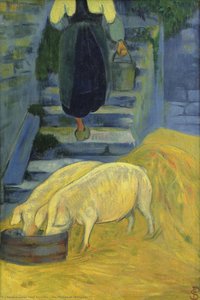


Polius Serizjė
La lutte bretonne
() ·
Su rėmu: · Rankiniu būdu tapyta aliejumi ant lineno
Viso suma