

Shown: · With its frame:
 Peržiūrėti realaus dydžio版
 Pasidalinti
 Dalintis
 Išsamiau
 Vadovas

 Atsisiųsti
 Panašūs eksponatai
 Rentgeno spindulių nuotrauka
 Automatinė diorama
 Q&A
Q&A Statistika
- 73.0 x 92.0 cm


€ 239
Rankų darbo aliejinės reprodukcijos
Rankiniu būdu tapytas aliejus ant droblio jūsų pageidaujamame dydį ir rėmuose – tai mūsų menininkų pagal užsakymą sukurtas darbas. ( Perjungti į spausdinamus版作品 Perejti prie skaitmeninių vaizdų)
Size
·Standartinis dydis
pagal užsakymą
CM
INCH
Pasirinkite iš mūsų nustatytų dydžių, atitinkančių originalaus meno kūrinio proporcijas.
Loading sizes...

plotis
aukštis
Įveskite jums reikiamą plotį ir aukštį, kad paveikslas atitiktų jūsų rėmą ar sieną. Kadangi šis darbas yra rankinio darbo, siekiant išgauti kitokios formos dydį, paveikslas gali būti šiek tiek didesnis (nuo kraštų bus palikta daugiau erdvės) arba mažesnis – pasirinkite jums patogiausią variantą. Prieš pradedant tapyti, atsiųsime jums skaitmeninį maketą patvirtinimui. Šioje puslapio nuotraukoje matomas vaizdas nėra galutinis rezultatas – jį parodys tik sukurtas maketas.
 Skaityti daugiau
Finish
·
White €1

Blurside €1

Extended €1

P118B €10

P118H €10

P118W €10

P438Z €10

P508JH €12

P508YH €12

P805H €10

P805Z €10

P919BZ €10

P919G €10

P919XJ €10

P959ZH €10

P968JZ €12

W106C €8

W218G €10

W218JH €8

W218Y €10

W307PJ €10

W316G €10

W316PJ €8

W316Y €10

W398PJ €8

W4111J €10

W500HY €15

W500JH €15

W692G €12

W849H €8

W940BG €15

W953PJ €8

H24-GOLD €30

H24-SILVER €30

H36-GOLD €45

H36-SILVER €45
Shipped in a protective tube, ready for your own framer.
Above 105 cm the frame is shipped as a kit for a professional framer — read the details.
Extras
optionalWhat do the extras include?
Examples of what can be changed: Replace face with customer photo; Add pet (e.g., replace cat with dog); Include hidden message in background; Change background landscape or elements.
After order, TopImpressionists.com team will email client for instructions and provide a mockup preview
After order, TopImpressionists.com team will email client for instructions and provide a mockup preview
Pristatymas visame pasaulyje () per 3–4 savaites, o ne įprastai – per 5 savaites. (31 spalis). Kokybė lieka nepakeičiama.
Apsauginis lakas
Pavadinimo lentelė
Išgraviruotos bronzinės plokštelės detalės
This elegant plaque features the artist's name and the title of the artwork, finely engraved for a timeless presentation.
It is made from bronze with a refined, elegant finish. The text is precisely laser-engraved for a sharp and permanent result. Measuring 9x2 cm, the plaque is compact yet easy to read. It's built to be durable and scratch-resistant, offering a professional, museum-quality look. Mounting is simple thanks to the included adhesive backing.
Skaidrios akrilo plokštelės informacija
The plaque includes essential engraved details such as the artist's name, the title of the artwork, the date it was created, the type of media used-like oil on canvas or watercolor-a brief description of the piece, and a QR code that links to the complete artwork information.
It is crafted from clear acrylic, offering a sleek, modern appearance. The text is UV-engraved in black to ensure strong visual contrast. With a size of 10x15 cm, it ensures optimal readability. It comes equipped with two metal hooks for secure wall mounting. The plaque is designed to be weather-resistant, making it suitable for various environments, and it includes interactive features that work seamlessly with smartphone scanning.
Juodos akrilo plokštelės informacija
This elegant plaque includes engraved information such as the artist's name, the title of the artwork, the date it was created, the type of media used (like oil on canvas or watercolor), a short description of the artwork, and a QR code for quick access to more information.
The plaque itself is made from refined black acrylic with a premium finish. The text is laser-engraved in white for high contrast and readability. Its size is 10x15 cm, designed to be easy to read. It comes with two metal hooks for professional mounting. The design is sleek and fits any interior style. It is also weather-resistant and durable, with built-in digital integration for mobile compatibility.
Stiklo variantas prieinamas tik pasirinkus dydį iki 110 cm
 Stiklo variantas prieinamas tik pasirinkus dydį iki 110 cm
- Nemokamas greitasis pristatymas visame pasaulyje
- Aukštos kokybės lininis drobė
- Pilnas siuntimo draudimas
- Muitinės mokesčių grąžinimo garantija
- Tikro spalvų atitikimo garantija
- 100 dienų grąžinimo politika (tik esant įtaigoms)
- 100% pinigų grąžinimo garantija
- Nuolaida dideliems užsakymams


Kolekcinio objekto aprašas
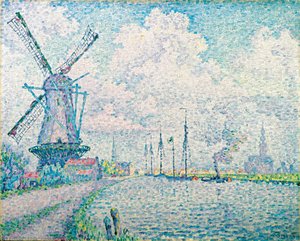
A serene Neo-Impressionist view of a windmill and tranquil boats by Paul Signac captures the luminous essence of 1898 through masterful Pointillism, inviting you to bring this peaceful Dutch scene into your collection.
Autoriaus biografija
Paul Signac (1863-1935) – svarbus neoimpresionizmo atstovas ir taškinio tapybos meistras. Atraskite ryškius pajūrio peizažus, uostų vaizdus ir jo įtaką moderniajai dailai!
About the painting
A Symphony of Light and Color in Edam
In the quietude of the late nineteenth century, few landscapes capture the essence of tranquil maritime life as poignantly as Paul Signac’s Dutch Mill at Edam. Created in 1898, this masterpiece serves as a window into a world where time seems to slow, anchored by the majestic presence of a windmill that stands as a sentinel over the shimmering waters. The scene is far more than a mere depiction of a Dutch landscape; it is a meticulously orchestrated dance of light and atmosphere. As the eye wanders across the canvas, one encounters a serene arrangement of boats drifting upon the water, their forms softly integrated into the surrounding environment. A few solitary figures are scattered throughout the composition, adding a touch of human narrative to the vastness of the scene, suggesting a moment of quiet reflection or the rhythmic, peaceful labor of life by the canal.
The true soul of this painting lies in Signac’s mastery of Neo-Impressionism. Moving beyond the spontaneous brushstrokes of his predecessors, Signac employed the rigorous technique of Pointillism to achieve a scientific yet deeply emotional harmony. Rather than blending pigments on a palette, he applied tiny, distinct dots of pure, unadulterated color directly onto the canvas. This method relies on the viewer's eye to perform the final act of creation, optically mixing the vibrant hues to produce a luminosity that feels almost alive. In Dutch Mill at Edam, this technique allows the sunlight to appear as if it is vibrating against the sails of the mill and dancing upon the ripples of the water, creating a sense of depth and brilliance that traditional blending could never achieve.
A Timeless Addition to the Sophisticated Interior
For the discerning collector or interior designer, this reproduction offers much more than visual beauty; it provides an emotional anchor for a room. The painting’s palette—a sophisticated blend of soft blues, earthy tones, and luminous highlights—possesses a unique ability to evoke feelings of peace and stability. It is a piece that invites contemplation, making it an ideal centerpiece for a study, a quiet reading nook, or a grand living space where one wishes to introduce a sense of historical depth and classical elegance.
Integrating such a high-quality hand-painted reproduction into a modern decor scheme allows for a striking contrast between contemporary minimalism and the rich, textured heritage of the Post-Impressionist era. The structural rhythm of the windmill and the rhythmic application of color dots provide a sophisticated texture that complements both neutral palettes and more eclectic, colorful environments. To own this work is to possess a fragment of art history—a tribute to the scientific beauty of light and the enduring charm of the Dutch landscape, rendered with the precision and passion of a true master.
Klausimai ir atsakymai
Ką vaizduoja „Dutch Mill at Edam“ – Polis Sinjakas ir kokią nuota sukelia?
„Dutch Mill at Edam“ – Polis Sinjakas sujungia windmill, boats, water, people, sails, sky ir Serene atmosferą.
Kokią nuotaiką „Dutch Mill at Edam“ – Polis Sinjakas suteikia interjerui?
Savo Serene nuotaika „Dutch Mill at Edam“ siūloma Living Room erdvei.
Kokio spalvų ryškumo turi „Dutch Mill at Edam“ – Polis Sinjakas?
Šiame paveikslėlyje „„Dutch Mill at Edam“ – Polis Sinjakas“ spalvų intensyvumas yra Balanced.
Quick facts and art quiz
About Polis Sinjakas

Polis Sinjakas
1863 - 1935, Prancūzija
Autoriaus biografija
Harmoninė Paulio Signaco vizija
1863 metais Paryzuje gimęs Paulis Viktoras Jules Signacas tapo lemiama figūra moderniosios dailės evoliucijoje, neatsiejama nuo neoimpresionizmo gimimo ir plėtros. Pradinai trauktas architektūros, jaunystėje sutikęs Claude Moneto parodą, savyje užkindino neblėstančią sureikšmingą meilę tapybai, nukreipdama jį į kelią, kuris vėliau peržengė spalvų teorijos ir meninės išraiškos ribas. Signacas nebuvo tik paprastas paveikslautojas; jis buvo skruplius šviesos, spalvos ir pačios vizualinio suvokimo mokslo tyrinėtojas. Jo ankstyvieji darbai, nors ir rodė impresionistinius polinkius, greitai evoliucionavo po gilaus Georges Seurat poveikio, suformuojant partnerystę, iš kurios gimė taškinė tapyba – technika, pasižyminti itin tikimais, atskirais gryros spalvos tašukais, intended to blend optically in the viewer’as akims. Tai nebuvo tik estetinio siekio; tai buvo bandymas sistemizuoti tapybą, įtvirtinti ją moksliniuose principuose ir iššūkti tradicines meno normas.Dialogas su Seurat ir neoimpresionizmo gimimas
1884 metais susitikimas tarp Signaco ir Seurat atros lėmė transformaciją abiem menininkams. Juos vienijavo fascinacija Eugène Delacroix rašais apie spalvų teoriją, ypač jo tyrimais apie papildomus kontrastus ir spalvos poveikį emocijoms. Kartu jie pradėjo griežtą šių principų tyrimą, paversdami juos revolucione tapybos technika. Signacas visiškai priėmė Seurat viziją, atsisakydamas trumpalaikių impresionistinių traukų dėl tikslaus, apskaičiuoto spalvos taškelių pritaikymo. Boulevard de Clly (1886) stovi kaip ankstyvas šio naujo požiūrio įrodymas, rodantis Signaco kruopštumą ir siekį per mokslinį prizmę įamžinti miesto gyvenimo trapumą ir vibraciją. Tačiau jų bendradarbiavimas nebuvo tik techninis; jis buvo intelektualus, skatintas bendru noru tapybą pakelti į griežtos mokslo lygmenį. Signacas tapo ištikimu Seurat idėjų šalininku, nenuobliaudamas neoimpresionizmo ir gindamas jo principus prieš kritikus. Tragiška 1891 metais Seurat mirtis paliko Signacą kaip pagrindinį jų bendros meninės vizijos gynėją – vaidmenį, kurį jis priėmė su nekliudoma atsidavimu.Pajūrio sapnai ir meninė nepriklausomybė
Po Seurat mirties Signaco meninė kelionė įgavo naują dimensiją, giliai įkvėptą jo meilės burėjimui ir Viduržemio jūros pakrantės žavesio. 1892 metais jis atrado Saint-Tropez, įsikūrė ten, kur atsirado namai, tapę menininkų于 refugium ir nesibaigiančios įkvėpimo šaltiniu. Mirgantys vandens paviršiai, saulės apšauktos uostai ir vaizdingi pakario miesteliai suteikė idealią aplinką tyrinėti šviesos ir spalvos sąveiką. The Red Buoy, Saint-aupez (1895) yra šio laikotarpio pavyzdys, demonruojantis jo taškinės tapybos meistriškumę įamžinant gyvą spalvų gama ir dinamišką jūros energiją. Jo technika evoliucionavo, tapdama skystesne ir išraišmingesne, tačiau išlaikė savo mokslinį pagrindą. Jis pradėjo eksperimentuoti su didesniais traukais ir plačiau naudojama paleta, žengdamas toli už Seurat tikslaus taškavimo metodo ribų. Signaco kelionės išsiplėtė už Prancūzijos ribų, apimdami Italiją, Olandiją ir net Konstantinopolį, kur kiekviena kelionė praturtino jo meninę kalbą ir išplėtė horizontus.Avangardas globėjas ir ilgalaikis palikimas
Be savo asmeninių meninių siekių, Signacas vaidino kritinę vaidmenį skatinant moderniosios dailės plėtrą savo vadovaujant Société des Artistes Indépendants bendrijai. Kaip prezidentas nuo 1908 metų iki mirties 1935 metais, jis gynė meninę laisvę ir suteikė platformą kylančiam talentams, įskaitant Henri Matisse, André Derain ir kitus fauvizmo bei kubizmo pionierius. Jis buvo vienas iš pirmųjų, atpažinęs ir palaikęs jų revoliucinius darbus, rodydamas kontroversiškus paveikslus, kurie iššūkė konvencines estetinės normos. Signaco siekis įtrauktį ir gebėjimas priimti naujoves padėjo suformuoti 20-osios amžiaus meno kryptį. Jo teorinės darbinės knygos, ypač From Eugène Delacroix to Neo-Impressionism (1899), dar tvirtai įtvirtino jo poziciją kaip lygiavertės intelektualinės figūros pasaulyje. Paulio Signaco palikimas išsiekia daug toli už jo užburiančius paveikslus; jis buvo vizionierius, skrupilus teorininkas ir ištikimas globėjas, kuris giliai paveikė moderniosios dailės kelią, palikdamas neištriniamą žymą būsimiesiems menininkų kartoms.Svarbios datos ir pasiekimai
- 1863 m.: Gimė Paryzuje, Prancūzijoje.
- 1884 m.: Kartu su Georges Seurat įkūrė Société des Artistes Indépendants bendriją.
- 1886 m.:
Įamžino paveikslą *Boulevard de Clichy*, esantį kaip vienas svarbiausių ankstyvojo taškinio stiliaus pavyzdžių. - 1895 m.: Sukūrė paveikslą *The Red Buoy, Saint-Tropez*, demonruojantį jo meistriškumą pajūrio vaizduose.
- 1899 m.: Išleido knygą *From Eugène Delacroix to Neo-Impressionism*, esančią esminiu spalvų teorijos veikaliniu.
- 1908 – 1935 m.: Dirbo kaip Société des Artistes Indépendants prezidentas, gindamas avangardinius menininkus.
- 1935 m.: Mirė Paryzuje, pasiekęs 72 metus, palikdamas sau turtingą meninę paveldą.
Quick facts about Polis Sinjakas
- Gimimo Data: 1863 m. lapkričio 11 d.
- Gimimo Vieta: Paryžius, Prancūzija
- Menininkai Kuriuos Įtakojo:
- Henri Matisse
- Fauvizmas
- Meninis Stilius: Neo-Impresionizmas, Pointilizmas
- Mirties Data: 1935 m. rugpjūčio 15 d.
- Pilnas Vardas: Paul Victor Jules Signac
- Tautybė: Prancūzas
- Įtakoję Menininkai:
- Claude Monet
- Georges Seurat
- Žymiausi Darbai:
- Boulevard de Clichy
- The Red Buoy
- La Valleuse
- The Velodrome
panašūs kūriniai




Tyrinėkite meno kūrinius, suskirstytus pagal temas, stilius ir savybes.


Polis Sinjakas
Dutch Mill at Edam
() ·
With its frame: · Hand-painted in oil on linen
Total