

Shown: · With its frame:
 Peržiūrėti realaus dydžio版
 Pasidalinti
 Dalintis
 Išsamiau
 Vadovas

 Atsisiųsti
 Panašūs eksponatai
 Rentgeno spindulių nuotrauka
 Automatinė diorama
 Q&A
Q&A Statistika
 Acrylic On Canvas
- WallArt
- German Romanticism
 1809
1809- 19th Century
 225.0 x 189.0 cm
 Hamburgas Kunsthalle
€ 239
Rankų darbo aliejinės reprodukcijos
Rankiniu būdu tapytas aliejus ant droblio jūsų pageidaujamame dydį ir rėmuose – tai mūsų menininkų pagal užsakymą sukurtas darbas. ( Perjungti į spausdinamus版作品 Perejti prie skaitmeninių vaizdų)
Size
·Standartinis dydis
pagal užsakymą
CM
INCH
Pasirinkite iš mūsų nustatytų dydžių, atitinkančių originalaus meno kūrinio proporcijas.
Loading sizes...

plotis
aukštis
Įveskite jums reikiamą plotį ir aukštį, kad paveikslas atitiktų jūsų rėmą ar sieną. Kadangi šis darbas yra rankinio darbo, siekiant išgauti kitokios formos dydį, paveikslas gali būti šiek tiek didesnis (nuo kraštų bus palikta daugiau erdvės) arba mažesnis – pasirinkite jums patogiausią variantą. Prieš pradedant tapyti, atsiųsime jums skaitmeninį maketą patvirtinimui. Šioje puslapio nuotraukoje matomas vaizdas nėra galutinis rezultatas – jį parodys tik sukurtas maketas.
 Skaityti daugiau
Finish
·
White €1

Blurside €1

Extended €1

P118B €10

P118H €10

P118W €10

P438Z €10

P508JH €12

P508YH €12

P805H €10

P805Z €10

P919BZ €10

P919G €10

P919XJ €10

P959ZH €10

P968JZ €12

W106C €8

W218G €10

W218JH €8

W218Y €10

W307PJ €10

W316G €10

W316PJ €8

W316Y €10

W398PJ €8

W4111J €10

W500HY €15

W500JH €15

W692G €12

W849H €8

W940BG €15

W953PJ €8

H24-GOLD €30

H24-SILVER €30

H36-GOLD €45

H36-SILVER €45
Shipped in a protective tube, ready for your own framer.
Above 105 cm the frame is shipped as a kit for a professional framer — read the details.
Extras
optionalWhat do the extras include?
Examples of what can be changed: Replace face with customer photo; Add pet (e.g., replace cat with dog); Include hidden message in background; Change background landscape or elements.
After order, TopImpressionists.com team will email client for instructions and provide a mockup preview
After order, TopImpressionists.com team will email client for instructions and provide a mockup preview
Pristatymas visame pasaulyje () per 3–4 savaites, o ne įprastai – per 5 savaites. (31 spalis). Kokybė lieka nepakeičiama.
Apsauginis lakas
Pavadinimo lentelė
Išgraviruotos bronzinės plokštelės detalės
This elegant plaque features the artist's name and the title of the artwork, finely engraved for a timeless presentation.
It is made from bronze with a refined, elegant finish. The text is precisely laser-engraved for a sharp and permanent result. Measuring 9x2 cm, the plaque is compact yet easy to read. It's built to be durable and scratch-resistant, offering a professional, museum-quality look. Mounting is simple thanks to the included adhesive backing.
Skaidrios akrilo plokštelės informacija
The plaque includes essential engraved details such as the artist's name, the title of the artwork, the date it was created, the type of media used-like oil on canvas or watercolor-a brief description of the piece, and a QR code that links to the complete artwork information.
It is crafted from clear acrylic, offering a sleek, modern appearance. The text is UV-engraved in black to ensure strong visual contrast. With a size of 10x15 cm, it ensures optimal readability. It comes equipped with two metal hooks for secure wall mounting. The plaque is designed to be weather-resistant, making it suitable for various environments, and it includes interactive features that work seamlessly with smartphone scanning.
Juodos akrilo plokštelės informacija
This elegant plaque includes engraved information such as the artist's name, the title of the artwork, the date it was created, the type of media used (like oil on canvas or watercolor), a short description of the artwork, and a QR code for quick access to more information.
The plaque itself is made from refined black acrylic with a premium finish. The text is laser-engraved in white for high contrast and readability. Its size is 10x15 cm, designed to be easy to read. It comes with two metal hooks for professional mounting. The design is sleek and fits any interior style. It is also weather-resistant and durable, with built-in digital integration for mobile compatibility.
Stiklo variantas prieinamas tik pasirinkus dydį iki 110 cm
 Stiklo variantas prieinamas tik pasirinkus dydį iki 110 cm
- Nemokamas greitasis pristatymas visame pasaulyje
- Aukštos kokybės lininis drobė
- Pilnas siuntimo draudimas
- Muitinės mokesčių grąžinimo garantija
- Tikro spalvų atitikimo garantija
- 100 dienų grąžinimo politika (tik esant įtaigoms)
- 100% pinigų grąžinimo garantija
- Nuolaida dideliems užsakymams


Kolekcinio objekto aprašas
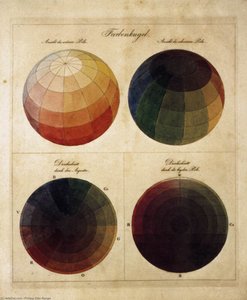
Experience 'Colour Spheres' by Philipp Otto Runge – a mesmerizing 1809 engraving depicting vibrant color spheres arranged in a harmonious circular design. A captivating piece of Romantic art.
Autoriaus biografija
Philipp Otto Runge (1777–1810) – vokiečių romantizmo tapytojas, žinomas dėl simbolinių peizažų, portretų ir novatoriškos spalvų teorijos („Spalvų sfera“). Atraskite jo mistišką meną ir ilgalaikį įtaką.
About the painting
A Symphony of Color: Philipp Otto Runge’s “Colour Spheres”
Philipp Otto Runge's "Colour Spheres," painted in 1809, isn’t merely a depiction of spheres; it’s an intensely personal and profoundly symbolic exploration of color theory, spirituality, and the very essence of perception. Created during a pivotal moment in German Romanticism – a period grappling with tradition versus innovation, reason versus emotion – Runge sought to move beyond the constraints of academic painting and forge a new visual language rooted in his own deeply felt inner world. The work, now housed within the Kunsthalle in Hamburg, Germany, is a testament to this ambition, radiating an almost palpable sense of contemplative energy.
The composition itself is deceptively simple: four distinct spheres dominate the canvas, each imbued with a unique chromatic harmony. These aren’t static objects; they appear to pulse with light and movement, their surfaces shimmering with subtle gradations of color. Runge masterfully employs a technique reminiscent of both pastel drawing and early Impressionism – delicate layering of translucent washes creates an ethereal quality, while careful attention to value and hue establishes a remarkable sense of depth and luminosity. The spheres aren’t rendered with photographic realism; instead, they are idealized forms, suggesting a connection to the divine or the abstract realms of consciousness. The choice of materials—engraving media—contributes to this luminous effect, allowing for a richness of tone rarely achieved with oil paint alone.
The Roots of Color Theory and Spiritual Symbolism
Runge’s fascination with color stemmed from his deep engagement with the philosophy of Jakob Böhme, a 17th-century German mystic who believed that colors possessed inherent spiritual significance. Böhme posited that each hue corresponded to a specific stage of human development or a particular aspect of the divine. Runge sought to translate these esoteric ideas into visual form, believing that color could be used to unlock deeper levels of understanding and experience. His work reflects this intellectual pursuit, moving beyond mere representation to become a vehicle for conveying complex philosophical concepts.
The arrangement of the spheres themselves is laden with symbolic meaning. The central sphere, predominantly red, often represents passion, energy, and earthly existence – the realm of the senses. The green sphere embodies growth, harmony, and connection to nature. Blue signifies intellect, contemplation, and the spiritual realm. Yellow, positioned furthest from the viewer, evokes joy, enlightenment, and divine grace. The circular arrangement suggests a cyclical process—a journey through different states of consciousness or stages of life. It’s important to note that Runge's color theory was radically different from prevailing scientific understanding at the time; he prioritized subjective experience over objective measurement.
A Dialogue with Goethe and the Romantic Spirit
Runge’s work resonated deeply with his contemporary, Johann Wolfgang von Goethe, who shared a profound interest in color theory. The two artists engaged in extensive correspondence, exchanging ideas about the nature of perception and the expressive potential of color. Indeed, Runge's exploration of color was heavily influenced by Goethe’s theories on optics and aesthetics. This intellectual exchange highlights the vibrant artistic and philosophical ferment of the early 19th century – a period marked by a renewed interest in spirituality, emotion, and the power of individual experience.
Furthermore, “Colour Spheres” embodies the core tenets of German Romanticism: an emphasis on intuition, imagination, and the sublime. It rejects the rationalism of the Enlightenment in favor of a more subjective and emotionally charged approach to art. The painting’s evocative atmosphere—its sense of mystery, wonder, and spiritual yearning—captures the essence of this artistic movement perfectly. It invites the viewer not simply to *see* the colors but to *feel* them, to connect with their own inner world.
Collecting a Timeless Masterpiece
Reproductions of “Colour Spheres” offer a remarkable opportunity to bring Runge’s visionary aesthetic into any interior space. The delicate layering and luminous quality of the original are faithfully reproduced in high-quality prints, allowing the painting's subtle nuances to shine through. Whether displayed as a statement piece or incorporated into a more restrained color scheme, this artwork will undoubtedly serve as a focal point, sparking conversation and inspiring contemplation. Consider commissioning a hand-painted reproduction – a truly unique and authentic representation of this seminal work of German Romantic art.
Klausimai ir atsakymai
Kam rekomenduojamas naudojimui „Colour Spheres“ spausdinys?
Rekomenduojamas „Colour Spheres“ spausdinio naudojimas yra Statement.
Koks kontrastas yra darbe „Colour Spheres“ – Filipas Oto Rungė?
Šviesos ir tamsos kontrastas kūriniame „Colour Spheres“ yra nurodytas kaip Statement. Kontrastas aprašo, kaip stipriai skiriasi šviesios ir tamsios sritys.
Ar „Colour Spheres“ galima peržiūrėti papildydami realybę?
„Colour Spheres“ – Filipas Oto Rungė puslapio Peržiūra papildintajai realybei funkcija naudoja papildytojąjį realybės technologiją, kad suderinamame įrenginyje parodytų kūrinį jūsų erdvėje.
Quick facts and art quiz
About Filipas Oto Rungė

Filipas Oto Rungė
1777 - 1810, Vokietija
Autoriaus biografija
Gyvenimo Šviesa: Philipp Otto Runge ir Vokiečių Romantizmo Dvasia
Philipp Otto Runge, vardas skambantis augančios Vokiečių Romantizmo dvasioje, buvo menininkas, kurio tragiškai trumpa gyvenimo kelionė paneigė jo vizijos gilumą ir originalumą. Gimęs 1777 metais Volgaste, tuomet Švedijos Pomeranijoje, šeimoje, susijusioje su laivų statyba ir Prūsijos aristokratija, Runge’s ankstyvieji metai buvo pažymėti ligomis, ugdant kontempliatyvią prigimtį, kuri giliai paveikė jo meninę kūrybą. Šis fizinio silpnumo laikotarpis taip pat skatino ankstyvą talentą *siluetų iškirpimui*, praktiką, kurios jis tęsė visą gyvenimą – tai liudija apie jo įgimtą gebėjimą distiliuoti formą ir emocijas nepaprastu tikslumu. Formalus mokymasis prasidėjo vėliau nei daugeliui kitų, iš pradžių komercine stažuote Hamburge, brolio Danieliaus firmoje. Tačiau meninės ekspresijos troškimas pasirodė stipresnis, todėl 1799 metais jis nuvyko į Kopenhagą studijuoti tapybos pas Jens Juel. Tai buvo tikrasis Runge’s kelionės pradžios momentas tapti vienu iš Vokietijos inovatyviausių ir dvasiškai orientuotų menininkų.Romantinio Simbolizmo Aušra
Runge’s meninis vystymasis buvo giliai paveiktas persikėlimo į Dresdeną 1801 metais, kur jis susipažino su svarbiais veikėjais, tokiais kaip Caspar David Friedrich ir Ludwig Tieck. Būtent čia jis sutiko Pauline Bassenge, kurią vedė 1804 metais. Šiuo laikotarpiu augo susidomėjimas Jakob Böhme’s mistiniais raštais, kurių filosofinės visos harmonijos paieškos giliai rezonavo su Runge’s pačiais dvasiniais polinkiais. Lemingas momentas įvyko 1803 metais, kai netikėtai susitiko Johann Wolfgang von Goethe Weimarėje, užmezgant draugystę, pagrįstą bendrais spalvų teorijos ir meninės ekspresijos interesais. Ši pažintis pasirodė transformuojančia, skatinant Runge’s gilinti simbolinę meno kalbą ir tyrinėti visų dalykų tarpusavio sąsajas. Jo ankstyvieji darbai pradėjo atspindėti šią augančią Romantikos jautrumą, pereinant nuo Neoklasicizmo santūrumo prie emociškai įkrauto kraštovaizdžio ir portretų, perteikiančių asmeninę reikšmę. Pavyzdžiui, *Hülsenbeck Vaikai* (1805) nėra tik portretas, bet jaudinantis šeimos artumo ir vaikystės nekaltumo vaizdas, atliktas beveik eteriška kokybe.Spalva kaip Kosminė Kalba
Runge’s ilgiausia išliekanti palikimas slypi jo novatoriškame darbe spalvų teorijos srityje. Jis tikėjo, kad spalva nėra tiesiog vizualus reiškinys, bet fundamentalinė jėga, formuojanti mūsų suvokimą ir atspindinti dievybinę tvarką. Šis įsitikinimas lėmė jo *Farben-Kugel* (Spalvų Sfera) sukūrimą, paskelbtą 1810 metais, netrukus prieš laiku nutikusią mirtį nuo tuberkuliozės trisdešimt trejų metų amžiaus. Spalvų sfera nebuvo tik mokslinis traktatas; tai buvo bandymas susieti visą spalvų spektrą su trimatimi forma, kurioje balta ir juoda atstovavo priešingus polius, o pagrindinės spalvos – mėlyna, geltona ir raudona – simbolizavo krikščionišką Trejybę. Mėlyna reprezentavo Dievą ir naktį, raudona simbolizavo rytą, vakarą ir Jėzų, o geltona įkūnijo Šventąją Dvasią. Runge’s kruopštūs disko spalvų maišymo eksperimentai buvo bandymas pateikti empirinį pagrindą jo teoriniam karkasui, demonstruojant, kaip spalvas galima harmoningai derinti, kad būtų sukurtas didžiulis atspalvių diapazonas. Ši tyrinėjimai nebuvo izoliuoti; jie buvo susiję su jo menine praktika, formuojant simbolinį spalvų naudojimą jo paveiksluose ir piešiniuose.Nebaigta ‘Paros Laiko’ Simfonija
Runge įsivaizdavo *Gesamtkunstwerk* – totalų meno kūrinį – kuris sujungtų tapybą, poeziją, muziką ir architektūrą į vieningą jutiminę patirtį. Šis ambicingiausias reiškinys atsirado jo serijoje *Tageszeiten* (Paros Laikai), pradėtoje 1803 metais. Projektas apėmė keturis monumentalūs paveikslus, vaizduojančius rytą, vidurdienį, vakarą ir naktį, kuriuos kiekvieną buvo numatyta žiūrėti specialiai pastatytame pastate kartu su muzika ir poezija. Nors buvo užbaigtos tik dvi “Ryto” versijos, viso ciklo brėžiniai atskleidžia Runge’s gilų simbolizmo supratimą ir norą įamžinti laiko dvasinį esmę. Šie darbai žymėjo nukrypimą nuo tradicinės kraštovaizdžio tapybos, suteikdami gamtai religinę ir emocinę reikšmę. Jis siekė ne tik atvaizduoti išorįnį pasaulį, bet perteikti jo vidinę harmoniją ir dievybinį buvimą. Koncepcija buvo revoliucinė tuo metu, numatydama vėlesnius abstraktaus meno ir multimedijos instaliacijų pokyčius.Ilgalaikis Poveikis
Nors jo karjerą sutrumpino liga, Philipp Otto Runge’s poveikis Vokiečių Romantizmui ir šiuolaikinio meno plėtrai yra neabejotinas. Jo spalvų teorijos tyrinėjimai įtakojo ištisas kartas menininkų, įskaitant tuos, susijusius su Bauhaus judėjimu. Jo pabrėžimas simbolizmui ir emocinei ekspresijai nutiesė kelią vėlesniems Ekspresionistų tapytojams. Runge’s unikalus mokslo tyrimų, dvasinio įsitikinimo ir meninės inovacijos mišinys tebežavi ir įkvepia. Jis išlieka svarbia figūra meno istorijoje – vizionieriumi, kuris drįso tyrinėti paslėptus žmogaus suvokimo gylumus ir visos Visatos paslaptis per spalvos, formos ir simbolizmo kalbą. Jo darbai nėra tik paveikslai; jie yra langai į pasaulį, apšviestą vidinės vizijos, kviečiantys mus apmąstyti gilią visų dalykų tarpusavio sąsają.Quick facts about Filipas Oto Rungė
- Gimimo Data: 1777
- Gimimo Vieta: Wolgast, Vokietija
- Meninis Stilius: Romantizmas
- Mirties Data: 1810
- Pilietybė: Vokiečių
- Pilnas Vardas: Philipp Otto Runge
- Įtakoję Menininkai:
- Jakob Böhme
- Johann Goethe
- Įtakoti Menininkai: ['Caspar David Friedrich']
- Žymiausi Darbai:
- Hülsenbeck vaikai
- Didelis rytas
- Spalvų sfera
Tyrinėkite meno kūrinius, suskirstytus pagal temas, stilius ir savybes.

Filipas Oto Rungė
Colour Spheres
() ·
With its frame: · Hand-painted in oil on linen
Total