

Paveikslėlyje: · Su rėmu:
 Peržiūrėti realaus dydžio版
 Pasidalinti
 Dalintis
 Išsamiau
 Vadovas

 Atsisiųsti
 Panašūs eksponatai
 Rentgeno spindulių nuotrauka
 Automatinė diorama
 问答
问答 Statistika
- 41.0 x 33.0 cm


€ 240
Rankų darbo aliejinės reprodukcijos
Rankiniu būdu tapytas aliejus ant droblio jūsų pageidaujamame dydį ir rėmuose – tai mūsų menininkų pagal užsakymą sukurtas darbas. ( Perjungti į spausdinamus版作品 Perejti prie skaitmeninių vaizdų)
Dydis
·Standartinis dydis
pagal užsakymą
CM
INCH
Pasirinkite iš mūsų nustatytų dydžių, atitinkančių originalaus meno kūrinio proporcijas.
Kraunami dydžiai...

plotis
aukštis
Įveskite jums reikiamą plotį ir aukštį, kad paveikslas atitiktų jūsų rėmą ar sieną. Kadangi šis darbas yra rankinio darbo, siekiant išgauti kitokios formos dydį, paveikslas gali būti šiek tiek didesnis (nuo kraštų bus palikta daugiau erdvės) arba mažesnis – pasirinkite jums patogiausią variantą. Prieš pradedant tapyti, atsiųsime jums skaitmeninį maketą patvirtinimui. Šioje puslapio nuotraukoje matomas vaizdas nėra galutinis rezultatas – jį parodys tik sukurtas maketas.
 Skaityti daugiau
Baigiamasis etapas
·
Baltas apasutojimas €1

Išblėstantis šonas €1

Išplėstinis €1

P118B €10

P118H €10

P118W €10

P438Z €10

P508JH €12

P508YH €12

P805H €10

P805Z €10

P919BZ €10

P919G €10

P919XJ €10

P959ZH €10

P968JZ €12

W106C €8

W218G €10

W218JH €8

W218Y €10

W307PJ €10

W316G €10

W316PJ €8

W316Y €10

W398PJ €8

W4111J €10

W500HY €15

W500JH €15

W692G €12

W849H €8

W940BG €15

W953PJ €8

H24-GOLD €30

H24-SILVER €30

H36-GOLD €45

H36-SILVER €45
Siunčiama saugiame vamzdelyje, paruošta patys sukomentuoti jūsų rėmeliais.
Virš 105 cm rėmas siunčiamas kaip rinkinys profesionaliam rėmininkui — skaitykite detales.
Papildomos paslaugos
nebūtinaKą apima papildomos paslaugos?
Pavyzdžiai, ką galima pakeisti: pakeisti veidą nuotrauka su klientu; pridėti augintinį (pvz., pakeisti kucingą šuniu); įtraukti paslaptingą žinutę fone; pakeisti fono kraštotvę ar elementus.
Gavus užsakymą, TopImpressionists.com komanda susisieks su klientu el. paštu dėl nurodymų ir pateiks preliminarią maketą.
Gavus užsakymą, TopImpressionists.com komanda susisieks su klientu el. paštu dėl nurodymų ir pateiks preliminarią maketą.
Pristatymas visame pasaulyje () per 3–4 savaites, o ne įprastai – per 5 savaites. (6 lapkritis). Kokybė lieka nepakeičiama.
Apsauginis lakas
Pavadinimo lentelė
Išgraviruotos bronzinės plokštelės detalės
This elegant plaque features the artist's name and the title of the artwork, finely engraved for a timeless presentation.
It is made from bronze with a refined, elegant finish. The text is precisely laser-engraved for a sharp and permanent result. Measuring 9x2 cm, the plaque is compact yet easy to read. It's built to be durable and scratch-resistant, offering a professional, museum-quality look. Mounting is simple thanks to the included adhesive backing.
Skaidrios akrilo plokštelės informacija
The plaque includes essential engraved details such as the artist's name, the title of the artwork, the date it was created, the type of media used-like oil on canvas or watercolor-a brief description of the piece, and a QR code that links to the complete artwork information.
It is crafted from clear acrylic, offering a sleek, modern appearance. The text is UV-engraved in black to ensure strong visual contrast. With a size of 10x15 cm, it ensures optimal readability. It comes equipped with two metal hooks for secure wall mounting. The plaque is designed to be weather-resistant, making it suitable for various environments, and it includes interactive features that work seamlessly with smartphone scanning.
Juodos akrilo plokštelės informacija
This elegant plaque includes engraved information such as the artist's name, the title of the artwork, the date it was created, the type of media used (like oil on canvas or watercolor), a short description of the artwork, and a QR code for quick access to more information.
The plaque itself is made from refined black acrylic with a premium finish. The text is laser-engraved in white for high contrast and readability. Its size is 10x15 cm, designed to be easy to read. It comes with two metal hooks for professional mounting. The design is sleek and fits any interior style. It is also weather-resistant and durable, with built-in digital integration for mobile compatibility.
Stiklo variantas prieinamas tik pasirinkus dydį iki 110 cm
 Stiklo variantas prieinamas tik pasirinkus dydį iki 110 cm
- Nemokamas greitasis pristatymas visame pasaulyje
- Aukštos kokybės lininis drobė
- Pilnas siuntimo draudimas
- Muitinės mokesčių grąžinimo garantija
- Tikro spalvų atitikimo garantija
- 100 dienų grąžinimo politika (tik esant įtaigoms)
- 100% pinigų grąžinimo garantija
- Nuolaida dideliems užsakymams


Kolekcinio objekto aprašas
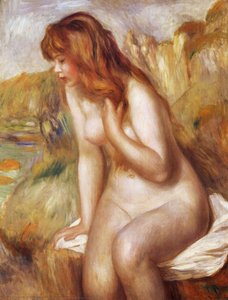
Renoir's 'Bather, Seated Nude' (1895) captures serene beauty & feminine grace. A quintessential Impressionist piece showcasing light, color & naturalism.
Autoriaus biografija
Pjeras Ogiustas Renuaras (Pierre-Auguste Renoir) – Prancūzų tapytojas, vienas iš garsiausių impresionizmo atstovų. Jo ikoninės drobės įkvėpė daugybę šiuolaikinės meno mokymų ir įvykdė svartą istoriją. Žiūrėtojams įtraukianti šviesos ir spalvos kompozicija.
Apie paveisdelį
Bather, Seated Nude: A Study in Serenity by Renoir
Pierre-Auguste Renoir's Bather, Seated Nude, painted in 1895, is a captivating example of his mature Impressionist style. Measuring 41 x 33 cm and rendered in oil on canvas, this piece exemplifies Renoir’s ability to capture the beauty of the human form within a tranquil natural setting. More than just a depiction of a nude woman, it's an exploration of light, color, and the fleeting moments that define everyday life.
Composition and Artistic Technique
The painting portrays a nude woman seated gracefully on the ground, her legs crossed in a posture of relaxed contemplation. The background subtly suggests trees and foliage, creating a sense of enclosure without being overly detailed. Scattered cloth items and a chair add depth to the scene, grounding the figure within its environment. Renoir’s signature Impressionistic technique is evident in his loose brushstrokes and vibrant use of color. He doesn't strive for photographic realism; instead, he prioritizes capturing the *impression* of light and atmosphere. The colors blend seamlessly, creating a warm and inviting ambiance that draws the viewer into the scene. Notice how Renoir uses subtle variations in tone to suggest form and volume, rather than relying on harsh outlines.
Historical Context & Influences
Bather, Seated Nude emerged during a period of significant artistic evolution. While influenced by earlier movements like Romanticism and Realism, Renoir is most celebrated for his pivotal role in the Impressionist movement. This movement, which gained momentum in the late 19th century, rejected the rigid conventions of academic painting, instead embracing spontaneity and capturing fleeting moments of modern life. Renoir’s focus on everyday subjects—people enjoying leisure activities in natural settings—was a hallmark of this new artistic approach. The subject matter itself reflects a shift away from historical or mythological themes towards depictions of contemporary society. Renoir's work stands alongside that of contemporaries like Claude Monet and Edgar Degas, all seeking to redefine the purpose and aesthetic of painting.
Symbolism & Emotional Impact
Beyond its technical brilliance, Bather, Seated Nude carries a subtle symbolic weight. The nude figure, traditionally associated with themes of beauty, vulnerability, and connection to nature, is presented not as an object of desire but as a subject of quiet contemplation. The serene setting and relaxed posture evoke feelings of peace and tranquility. Renoir’s masterful use of light contributes significantly to the emotional impact; it bathes the scene in a warm glow, creating a sense of intimacy and inviting the viewer to share in this moment of solitude. The painting isn't about overt drama or narrative; instead, it invites viewers to appreciate the simple beauty of human existence and the restorative power of nature.
Comparison with Other Artists & Legacy
While both Renoir and Paul Cézanne explored the human form in their works, their approaches differed significantly. Cézanne’s style was more structured and geometric, emphasizing volume and solidity. In contrast, Renoir prioritized capturing the fleeting effects of light and atmosphere, resulting in a softer, more lyrical aesthetic. Bather, Seated Nude exemplifies this distinction perfectly. The painting's enduring appeal lies in its ability to evoke a sense of timeless beauty and tranquility, solidifying Renoir’s place as one of the most beloved Impressionist painters.
Klausimai ir atsakymai
Kiek plačiai žinomas Pjero Augustas Renaras kūrinys „Bather, Seated Nude“?
„Bather, Seated Nude“ – Pjero Augustas Renaras populiarumumo lygis yra Recognized.
Kokia technika sukurta „Bather, Seated Nude“ – Pjero Augustas Renaras?
„Bather, Seated Nude“ – Pjero Augustas Renaras technika – Oil On Canvas. Kopijos siekia atkartoti šios technikos vaizdą.
Kokią emociją sukelia „Bather, Seated Nude“ – Pjero Augustas Renaras spalvos?
„Bather, Seated Nude“ – Pjero Augustas Renaras sujungia Dark paletę su Tranquil tonu.
Trumpos faktinės datos ir meno viktorina
Apie Pjero Augustas Renaras

Pjero Augustas Renaras
1841 - 1919, Prancūzija
Autoriaus biografija
Pjero Ogusto Renaro: Šviesos ir Džiaugsmo Simfonija
Gimė 1841 m. vasario 25 d. Limuže, Prancūzijoje, Pjero Ogusto Renaras – tai menininko kelionės istorija nuo kuklių porceliano dailininko pradžių iki tapybos meistro, kuris įkūnijo impresionizmo esmę. Jo ankstyvieji metai, praleisti Paryžiuje su šeima, ieškant ekonominių galimybių, formavo jo meninę jautriąją pusę. Veršantis miestas, kupinas gyvybingo gatvės gyvenimo ir įvairių žmonių, tapo daugelio vėlesnių darbų įkvėpimu. Iš pradžių mokykloje dirbdamas porceliano dailininku – praktinis būdas patenkinti finansinius poreikius – jaunas Renaras rādavo pasislėpdamas muziejuje Liuve, kruopščiai studijuodamas Senosios Meistrų kūrybą ir ugdydamas grožio suvokimą, kuris tapo jo stiliaus požymiu. Šis ankstyvas susidūrimas su menu uždegė jame aistrą, pranokusią paprastą meistriškumą; tai buvo pašaukimas įamžinti šviesos ir gyvenimo nepalioviai kintančias savybes ant drobės. Vėliau jis įstojo į Čarlzo Gleiro studiją, kur užmezgė draugystę su būsimaisiais impresionistų judėjimo lyderiais Klodu Monė, Alfredu Sisleiu ir Frederiku Baziliu – lemiamas momentas, padėjęs pagrindą visam meniniam stiliui.Nuo Realizmo iki Šviesaus Impresionizmo
Renaro meno raida buvo nuostabi transformacija, paveikta įvairių meistrų. Iš pradžių jis prisiartėjo prie Gustave Courbet ir Édouard Manet realizmo, vertindamas jų atsidavimą vaizduoti šiuolaikinį gyvenimą sąžiningai ir tiesiogiai. Tačiau būtent Peterio Paulo Rubenso ir Žano-Antuano Vato dvelkianti paletė bei jausmingos formos tikrai jį sužavėjo, įskiepydamos jo darbams gilią grožio vertinimo dozę ir polinkį vaizduoti džiaugsmo ir laisvalaikio scenas. Šie ankstyvieji įtaka susijungė, kai Renaras pradėjo formuoti savo unikalų stilių, pasižymintį ryškiomis spalvomis, sulaužytais potėpiais ir dėmesiu sutartinai sugauti šviesos nepalioviai kintančių efektų. Dalyvavimas 1874 m. pirmojo impresionistinio parodymo buvo lūžio momentas, nors iš pradžių susilaukė kritikos iš tradicinių meno ratų. Šis drąsus žingsnis paskelbė atsisakymą nuo akademinių konvencijų ir naujos meninės vizijos priėmimo – vienos, kuri siekė ne tik tai, ką mato akys, bet ir kaip jaučiasi patiriant tam tikrą momentą. Tokie paveikslai kaip Šokiai „Le Moulin de la Galette“ (1876) puikiausiai iliustruoja šį požiūrį, panardinant žiūrovus į Paryžiaus naktinio gyvenimo gyvybingą atmosferą su dryžuotu saulės šviesa ir džiaugsmingais veikėjais.Užfiksuojant Gyvenimo Nepalioviai Kintančius Momentus: Pagrindiniai Darbai ir Temos
Renaro kūrinys yra gyvenimo paprastų malonumų šventė – intymūs susitikimai, saulės pamirštos pakrantės ir žmogaus formos spindesio grožis. Palasūdinimas laivuose (1880–81) galbūt yra vienas iš jo labiausiai žinomų darbų, kuriame vaizduojama draugiška grupė mėgaujasi atsipalaiduojančiu popietės momentu ant Senos. Paveikslas yra meistriškumo pamoka, kaip užfiksuoti šviesą ir judesį, veikėjai prausti šiltais saulės spinduliais, o atspindžiai mirguliuoja vandenyje. Po vonios (1885–87) parodo Renaro išskirtinį įgūdžių moters nuotakos vaizdavime, pabrėžiant subtilias odos spalvas ir gražias pozas. Jo paveikslai nėra tik realybės atvaizdai; jie yra persunktinti šilumos, intymumo ir džiaugsmo jausmu, kuris giliai rezonuoja su žiūrovais. Jis nebuvo įsitikinęs didžiulių istorinių pasakojimų ar dramatiškų alegorijų vaizdavimu; vietoj to jis sutelkdavo dėmesį į kasdieniame gyvenime slypinčio grožio užfiksavimą, paaukštindamas paprastus momentus į meno kūrinius. Šokiai Bougival, dar vienas garsus kūrinys, parodo jo gebėjimą sugauti nepalioviai kintančių įspūdžių ir atmosferos efektų, sukurti judesio ir spontaniškumo jausmą.Pokyčiai Link Formos ir Struktūros: Vėlesni Metai ir Palikimas
1890-ųjų dešimtmetyje Renaro stilius patyrė reikšmingų pokyčių. Nors jis niekada visiškai neatmetė savo impresionistinių šaknų, jis pradėjo krypti link labiau skulptūrinio ir klasikinio požiūrio, įkvėptas kelionių į Italiją ir atnaujinto formos bei struktūros susidomėjimo. Šis pokytis buvo dalinai paskatintas ir fiziniais apribojimais – artritas palaipsniui sumažino jo mobilumą, priversdamas jį prisitaikyti prie savo technikos. Nepaisant šių iššūkių, Renaras toliau tapė su nepajudinamam atsidavimu, sukurdamas kūrinius, pasižymėjusius pilnesniais figūrų siluetais ir šiltesne palete. Jo vėlesni paveikslai dažnai atspindi labiau apmąstymo nuotaiką, tačiau jie išlaiko tą pačią esminę grožio šventimo temą, kuri apibrėžė jo ankstyvąjį darbą. Be meninių pasiekimų, Renaro palikimas tęsiasi per jo šeimą; sūnus Žanas Renaras tapo garsiu režisieriumi, perduodamas kūrybiškumo dvasią tarp kartų. Pjero Ogusto Renaras mirė 1919 m., palikęs ilgai trunkantį darbų rinkinį, kuris ir toliau įkvepia ir džiugina publikas visame pasaulyje. Jis išlieka vienu mėgstamiausių figūrų meno istorijoje, šlovinamas dėl savo gebėjimo užfiksuoti gyvenimo džiaugsmą ir žmogaus patirties grožį nepriekaištinga jautrumu ir malone.Amžinas Įtaka
- Renaro įtaka vėlesnėms menininkų kartoms neatsiejama. Jo dėmesys šviesai, spalvai ir nepalioviai kintančių momentų užfiksavimas atidarė kelią daugeliui moderniųjų meninių judėjimo krypčių.
- Jo grožio ir jausmingumo šventė iki šiol rezonuoja su publikomis visame pasaulyje, todėl jo darbai yra visuotinai patrauklūs.
- Jis atliko lemiamą vaidmenį įtvirtinant impresionizmo kaip svarbų faktorių meno istorijoje, iššaukdamas tradicinius konvencijų ir atverdamas naujas galimybes meninei raiškai.
- Jo paveikslų nuolatinis populiarumas – daugybė plakatų, kalendorių ir kitos prekės – liudija jo darbo amžiną kokybę.
Trumpa informacija apie Pjero Augustas Renaras
- Artistic Movement Or Style: Impresionizmas
- Artists Or Movements Influenced By This Artist: Impresionizmas
- Artists Who Influenced This Artist:
- Rubensas
- Vataus
- Kurbetas
- Manė
- Date Of Birth: 1841 m. vasario 25 d.
- Date Of Death: 1919 m. gruodžio 3 d.
- Full Name: Pjero Augustas Renuaras
- Nationality: Prancūzas
- Notable Artworks:
- Šokis Muleno de la Galetė
- Valgomojo plaukimo vakarėlis
- Po vonios
- Šokas Bugivalą
- Place Of Birth: Limožas, Prancūzija
panašūs kūriniai




Tyrinėkite meno kūrinius, suskirstytus pagal temas, stilius ir savybes.


Pjero Augustas Renaras
Bather, Seated Nude
() ·
Su rėmu: · Rankiniu būdu tapyta aliejumi ant lineno
Viso suma